
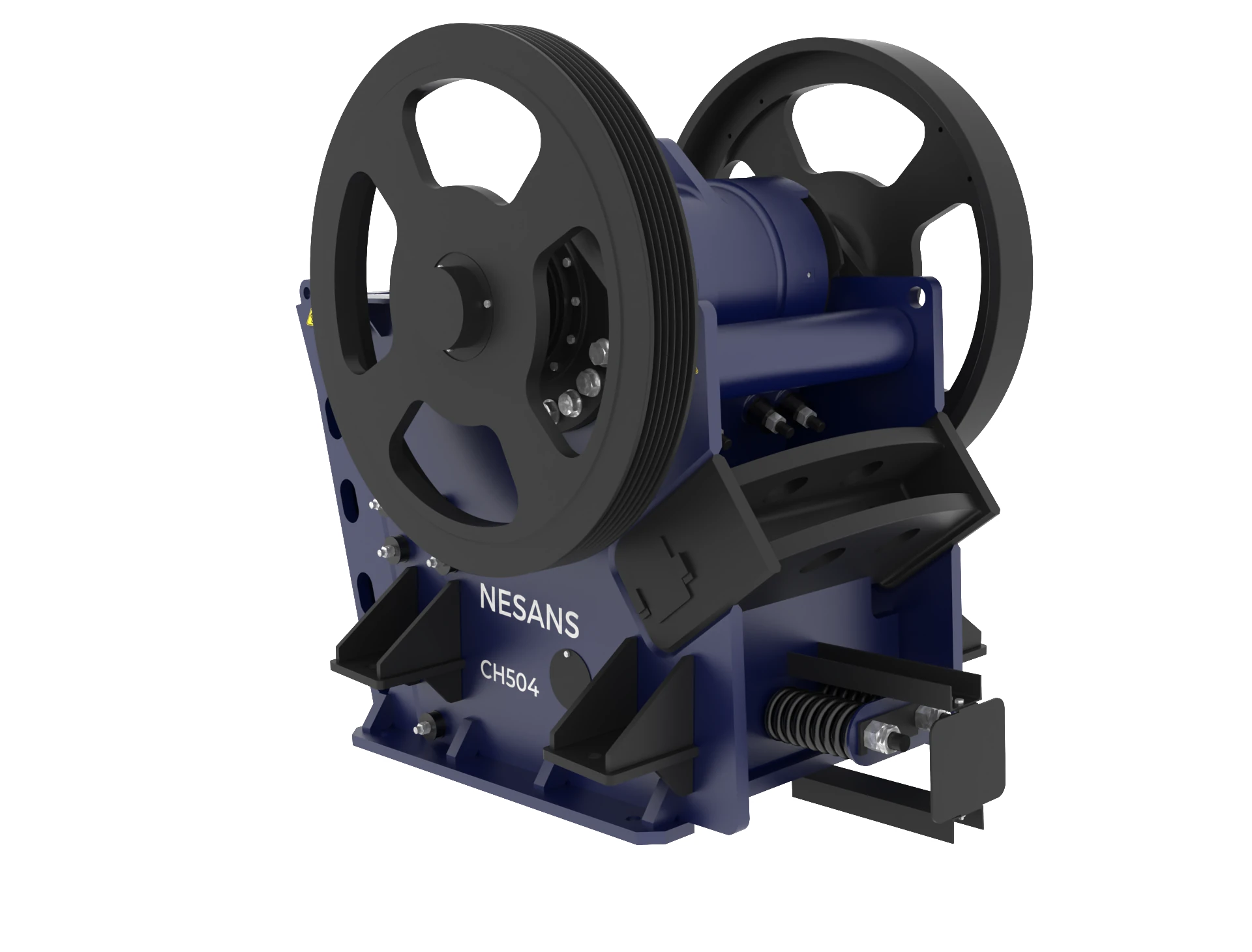
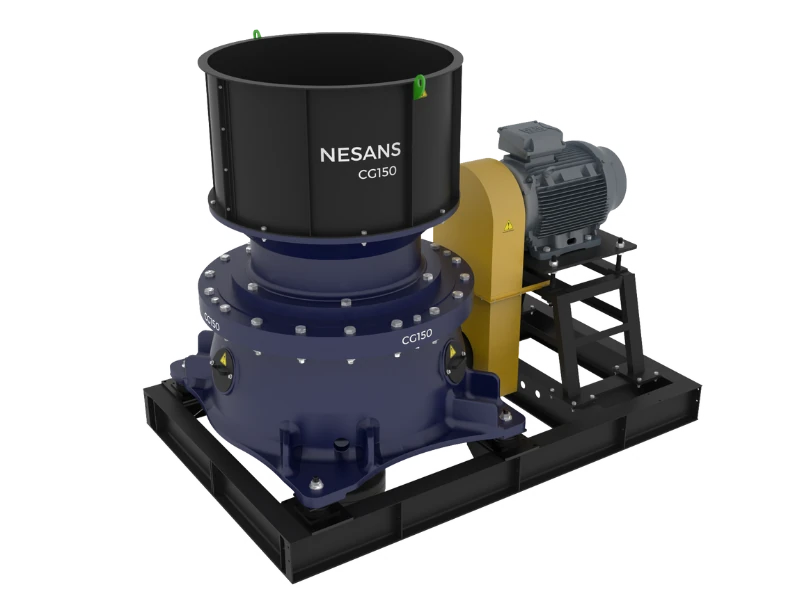
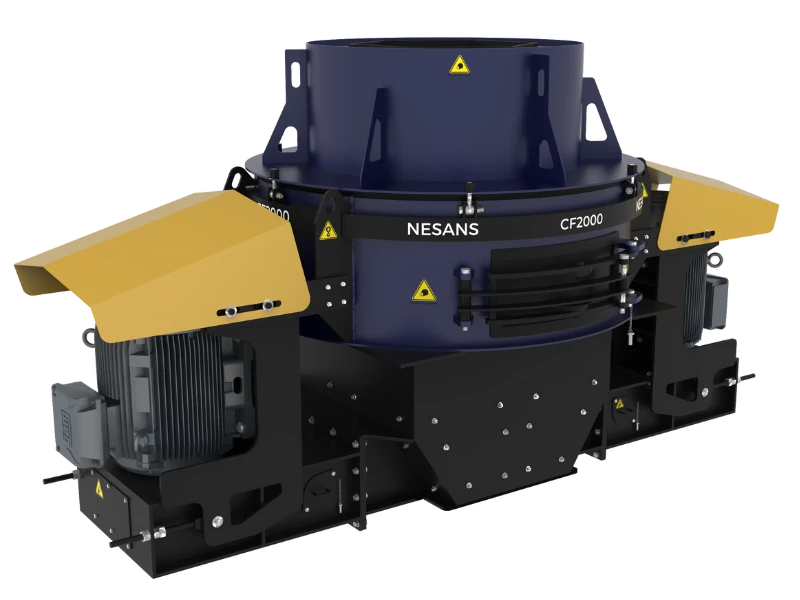
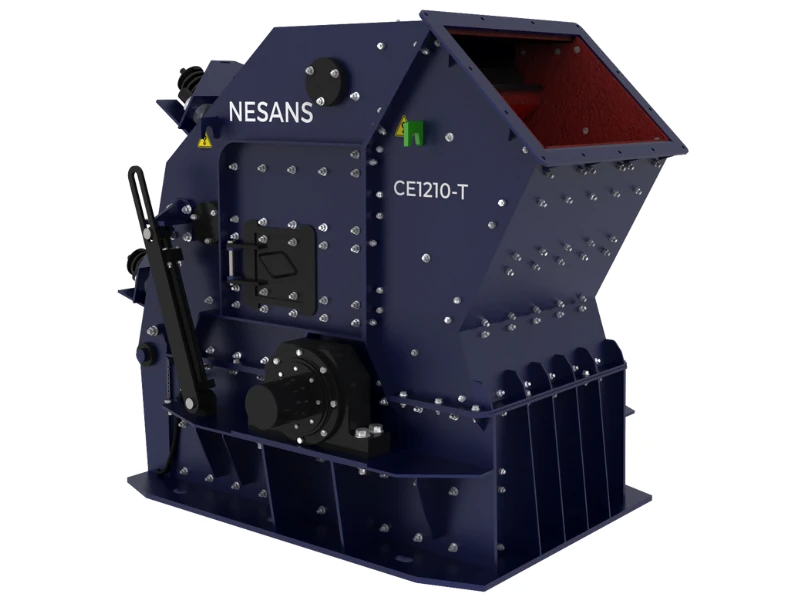
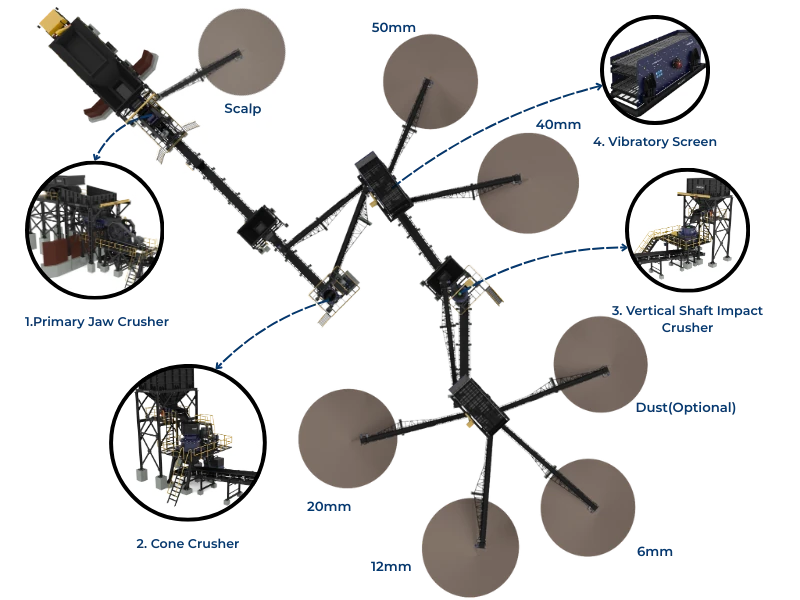
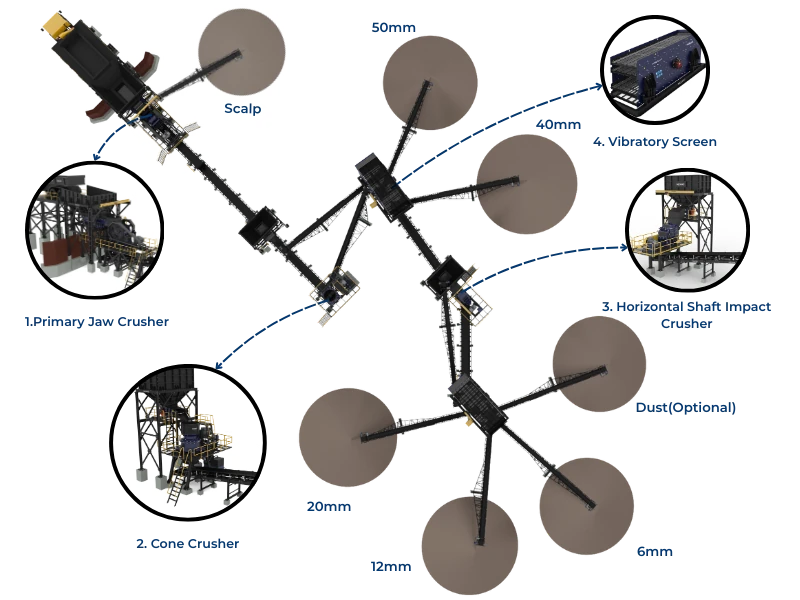
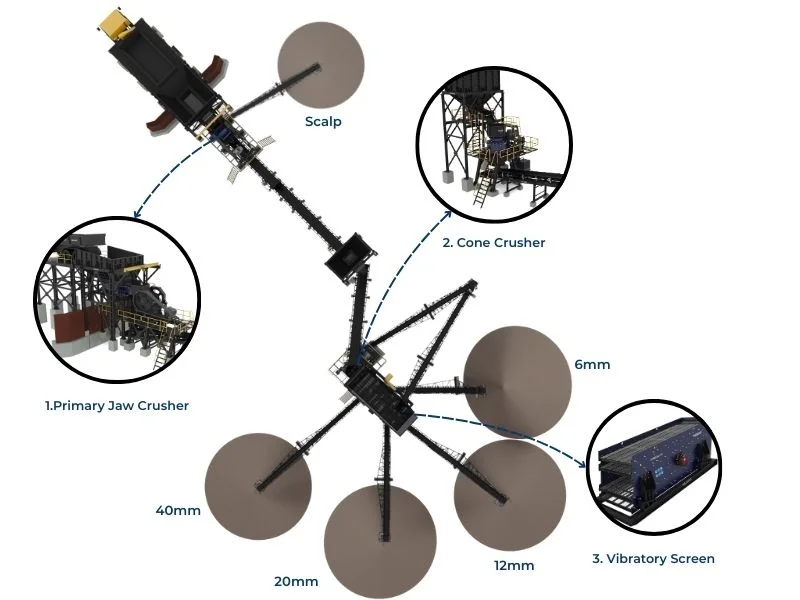
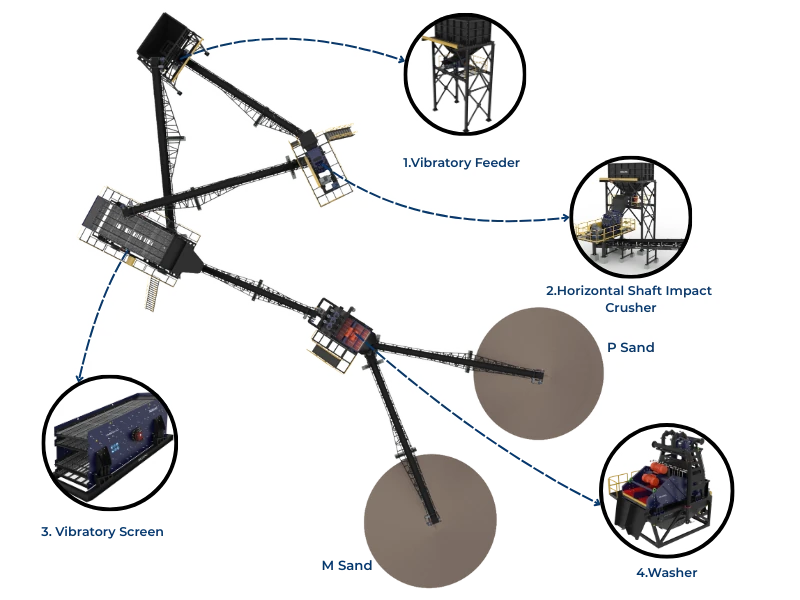



Every tonne of sub-spec fines a plant makes is a tonne it crushed, powered and handled — then could not sell. Waste fines are a triple loss: lost product, wasted energy, and a disposal headache. Cutting them is one of the highest-return improvements a producer can make, because the rock is already paid for.
This article frames waste fines as a yield problem, quantifies what each percentage point costs, and ranks the levers — from choke feeding to fines recovery — that turn waste back into saleable product.
Yield is the number that matters
Yield is the fraction of feed that leaves as saleable product. Every point of waste fines is a point off yield, and because the cost of crushing is spread over the saleable tonnes, a lower yield raises the cost of every tonne you do sell:
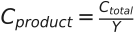
where  is the yield fraction. Drop yield from 0.92 to 0.85 and the cost per saleable tonne rises by about 8% — before counting the disposal cost of the fines themselves.
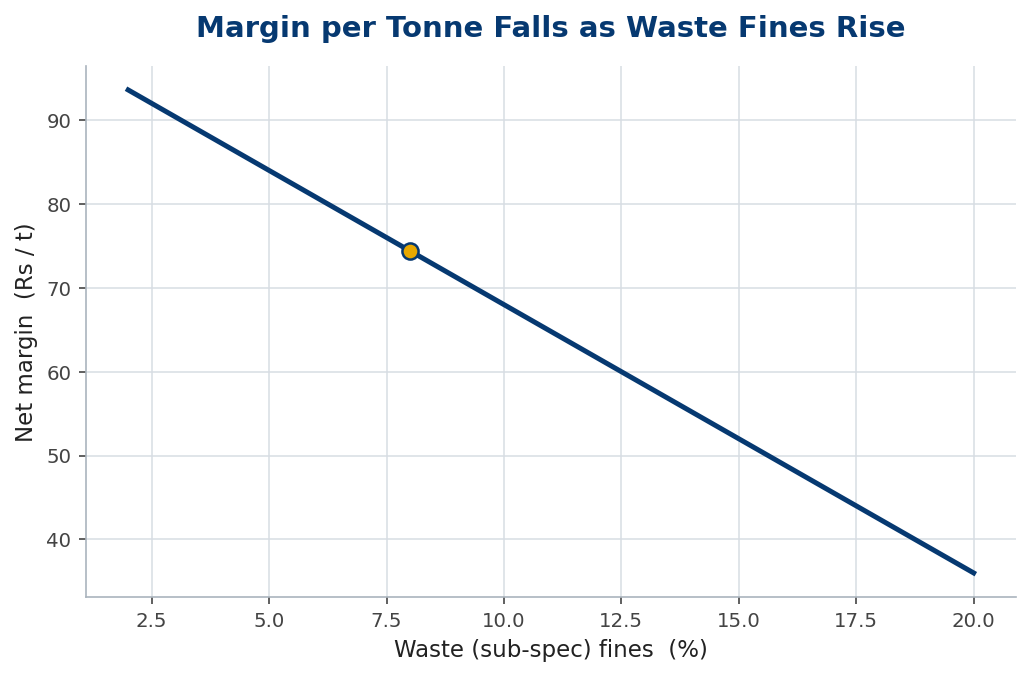
Worked example 1 — the cost of a point
A plant feeds 200 t/h at a total operating cost of Rs 90/t of feed. At 92% yield the product costs  ; at 85% it costs
  — Rs 8 more on every saleable tonne. Across 6,000 hours that is roughly
  tonnes of lost product a year. Yield is where the money is.
Where the fines come from — and the levers
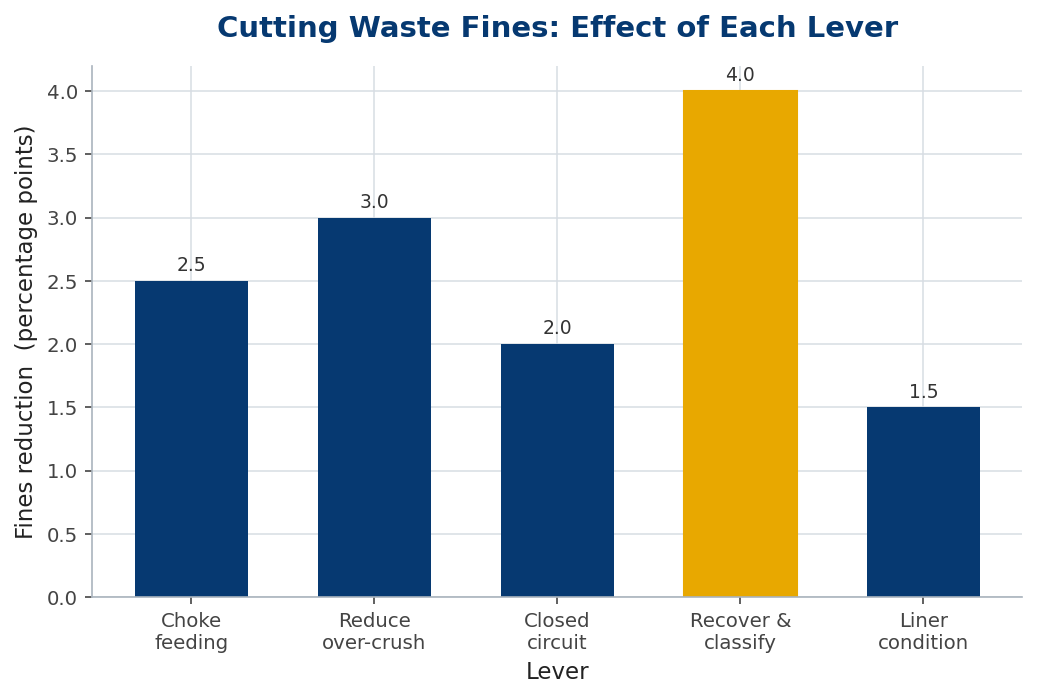
Excess fines are made, not given. Over-crushing — reducing more than the product needs — is the prime source: a crusher running starved, with worn liners, or set too tight grinds saleable sizes into dust. The levers, in rough order of impact, are recovering and classifying the fines you do make, reducing over-crush, closing the circuit, choke feeding, and keeping liners in condition.
Worked example 2 — turning waste into product
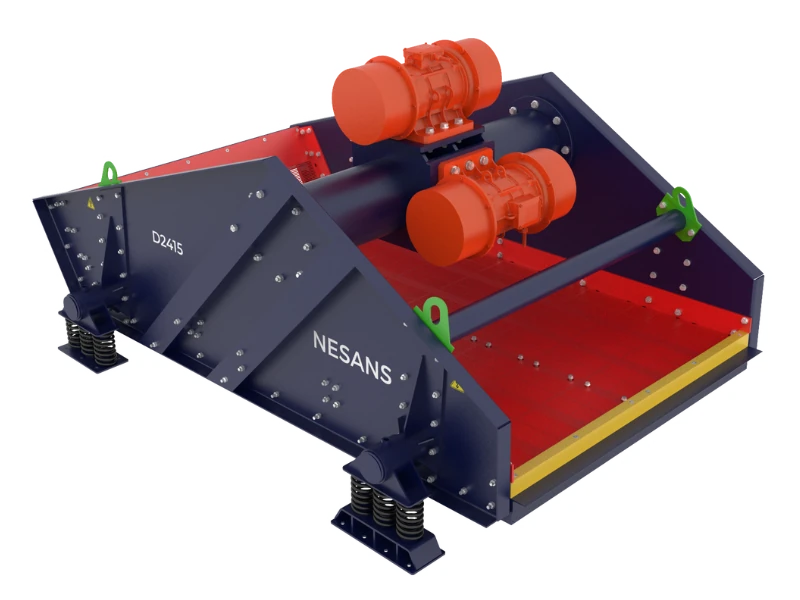
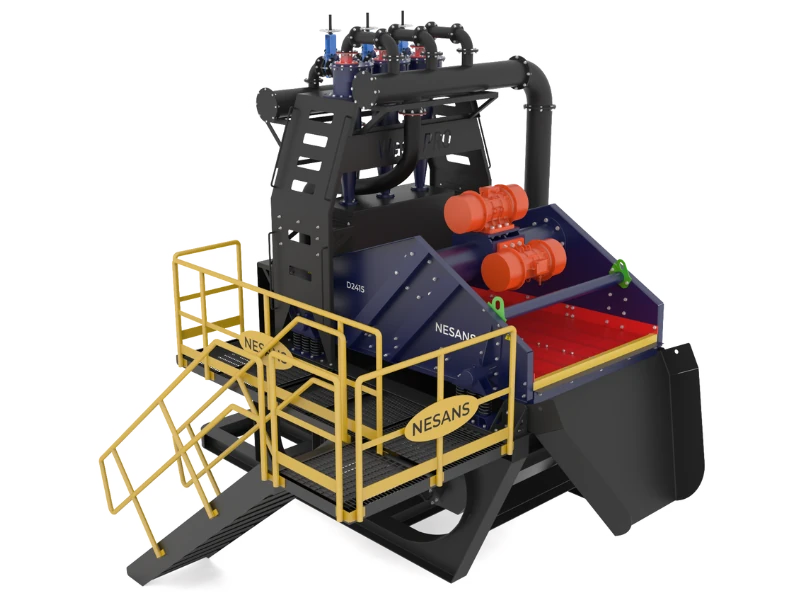
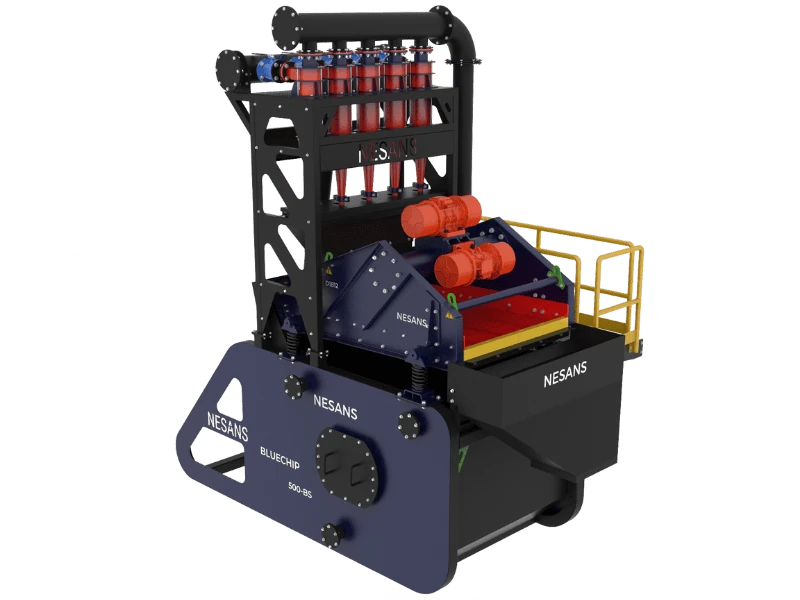
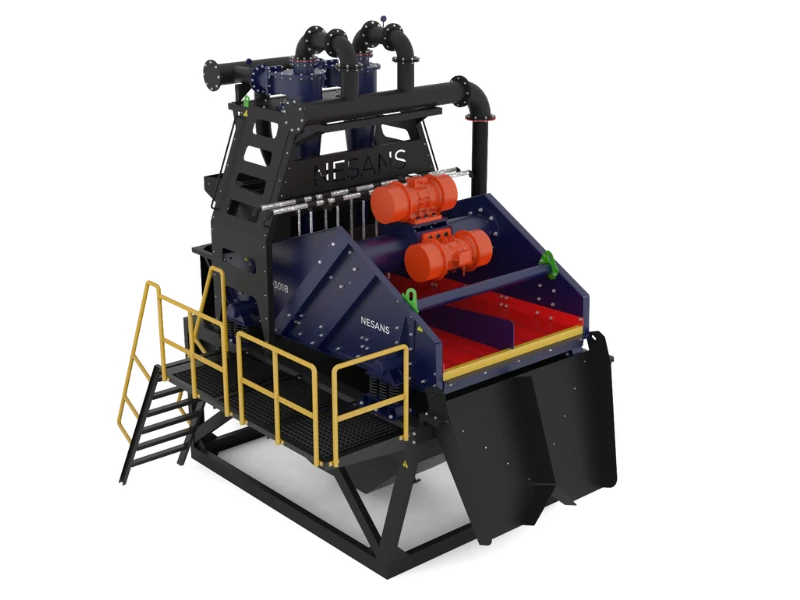
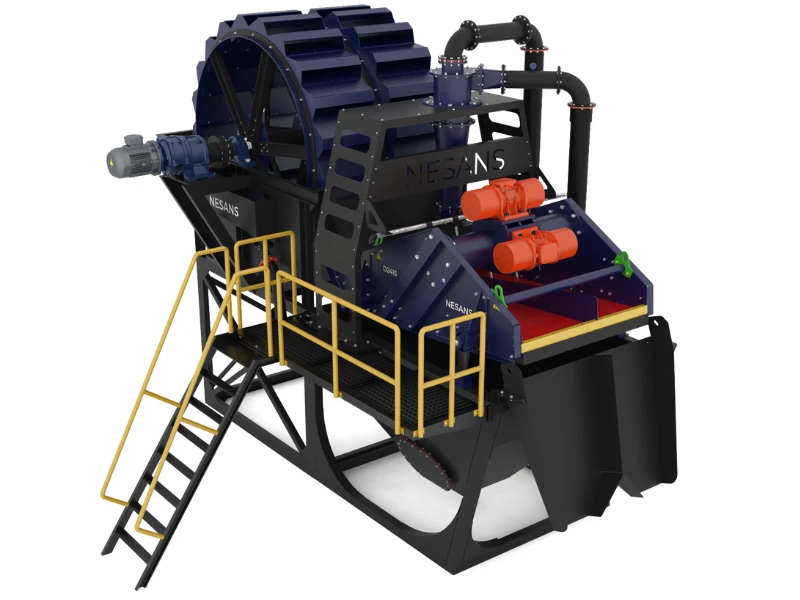
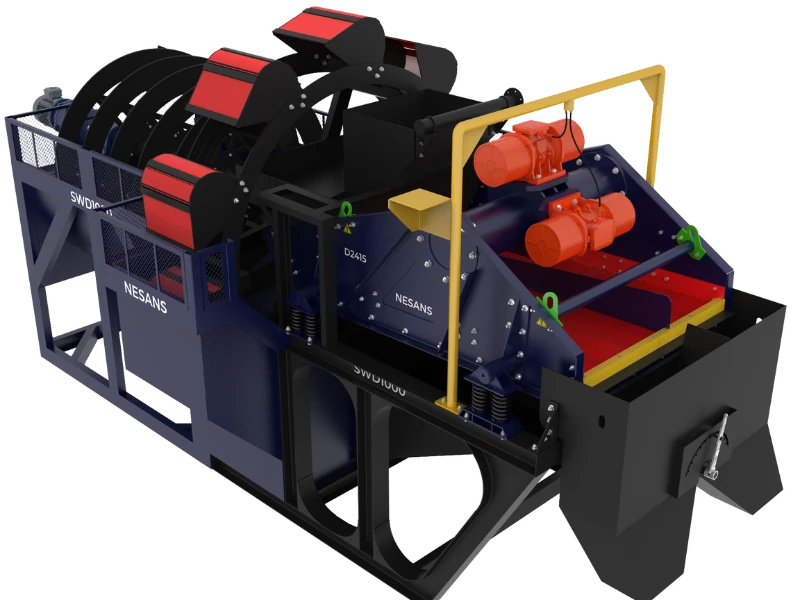
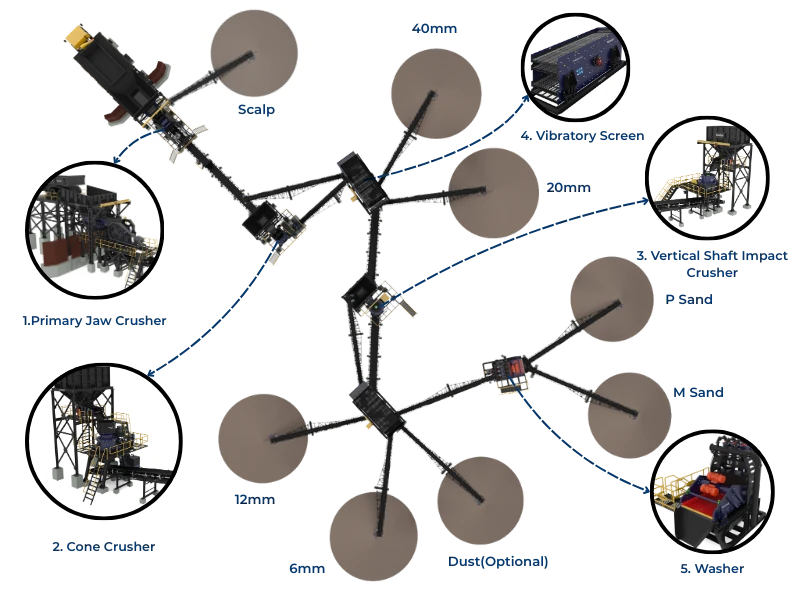
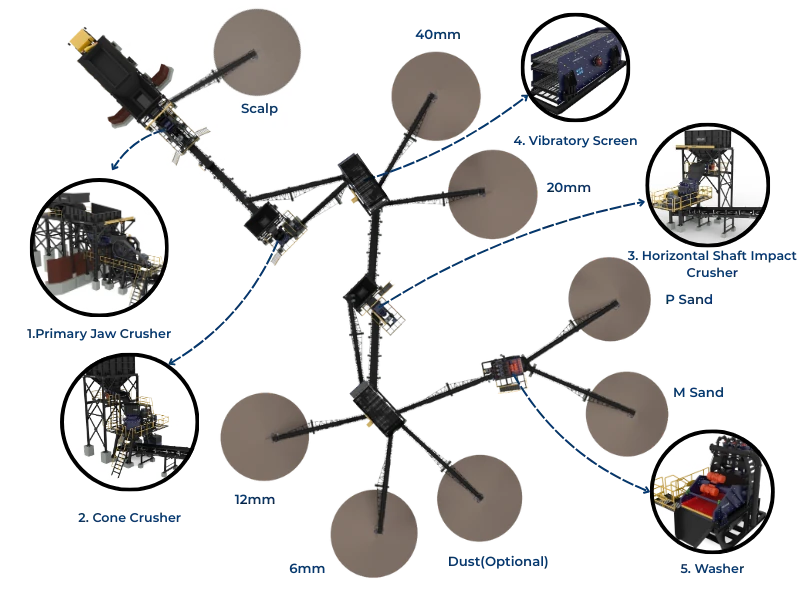
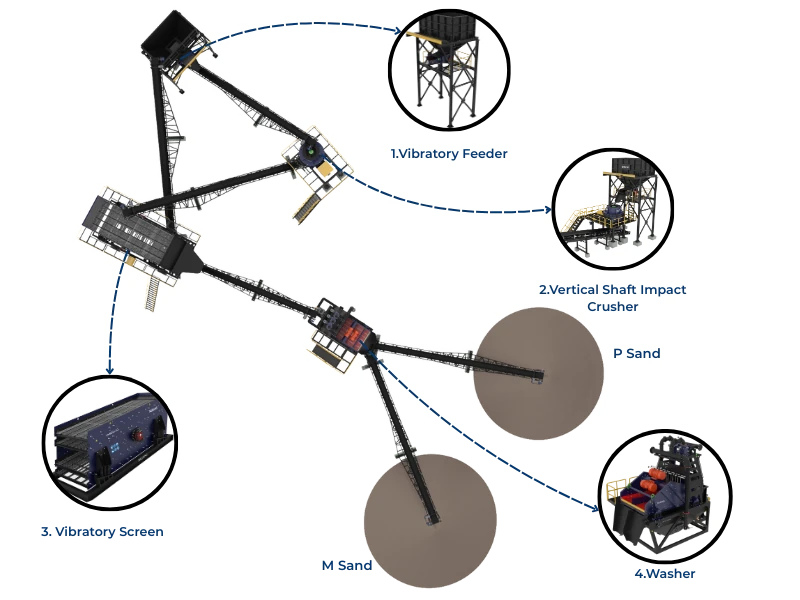
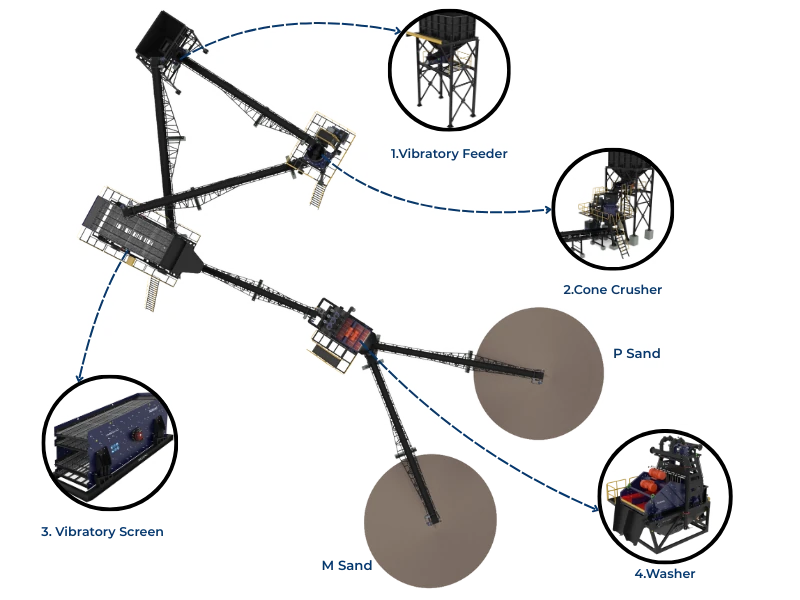
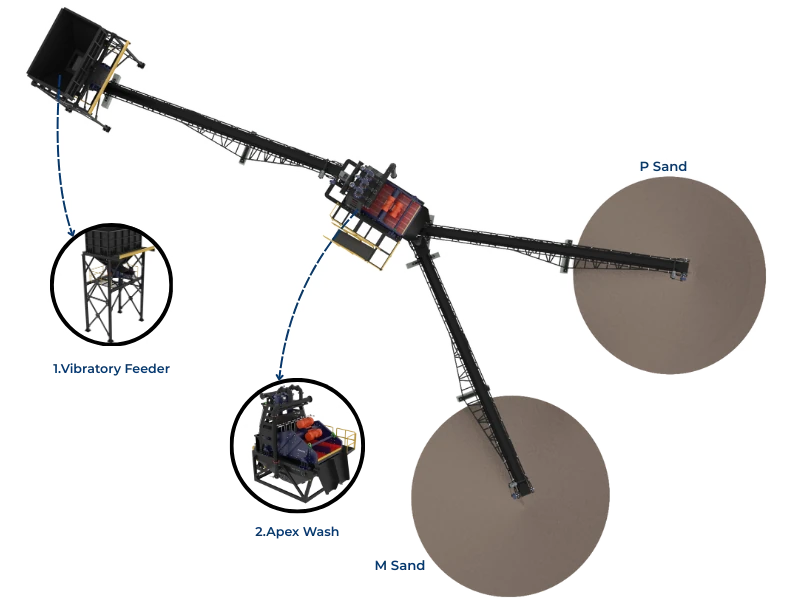
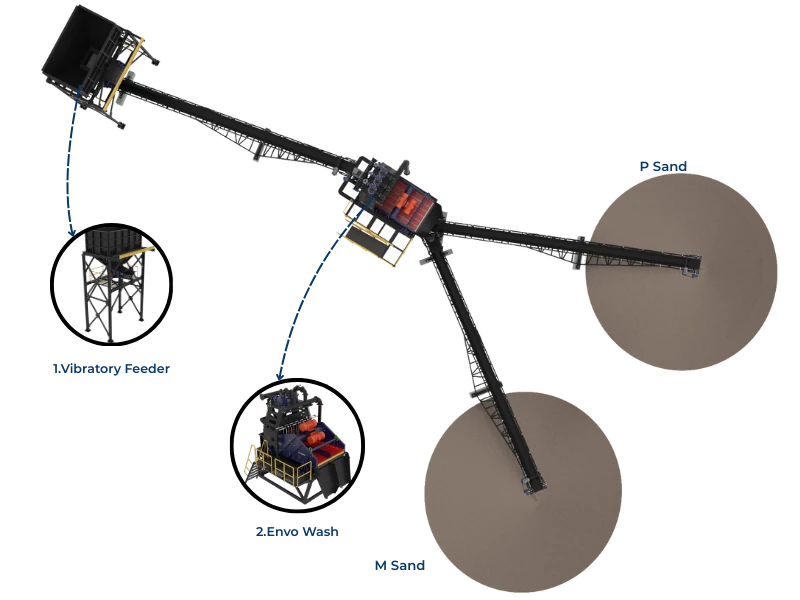
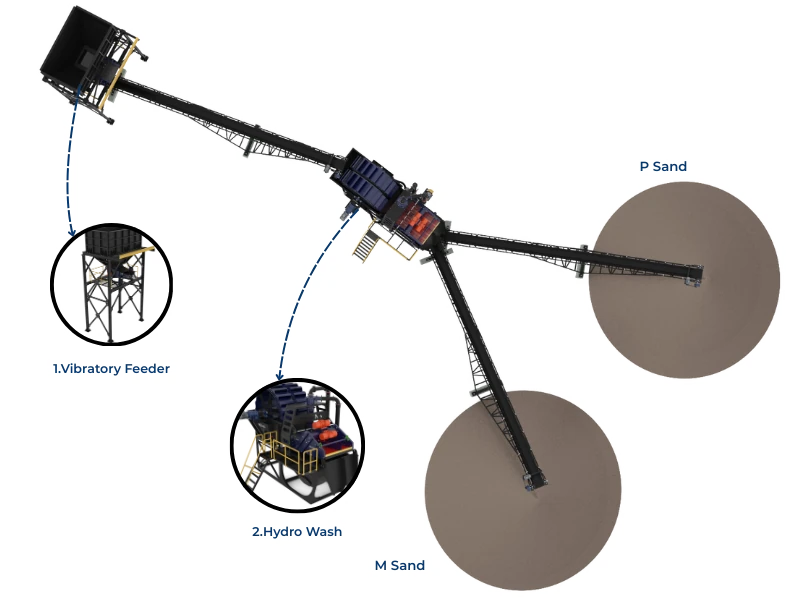
Often the cheapest yield gain is not making fewer fines but selling the ones you make. A washing and classification circuit — a cyclone and dewatering screen — can recover a clean, well-graded manufactured sand from a stream previously dumped as waste. If 4% of feed shifts from a disposal cost to a saleable product at Rs 400/t, a 200 t/h plant turns  of waste into revenue. The fines were never the problem; throwing them away was.
| Lever | Mechanism | Typical effect |
|---|---|---|
| Recover & classify fines | wash + cyclone to a product | largest — waste becomes revenue |
| Reduce over-crush | right setting, fewer passes | fewer fines made |
| Close the circuit | screen out & control top size | less needless reduction |
| Choke feeding | rock-on-rock, even reduction | steadier gradation |
| Liner condition | sharp, in-spec chamber | less attrition to dust |
In practice
Measure yield as a headline KPI, not just throughput — a plant can be ‘busy’ and unprofitable if it makes its tonnes into waste. Attack over-crush first (it is free): choke-feed the crushers, hold the setting, and stop reducing finer than the product needs. Then ask the bigger question — can the waste fines become a manufactured sand? Increasingly the answer is yes, and the recovery circuit pays back fast because it monetises rock you have already crushed and powered.
Common mistakes
- Chasing throughput over yield. Busy is not profitable if the tonnes leave as waste.
- Over-crushing. Tight settings and worn liners grind saleable sizes into dust — reduce only as far as the product needs.
- Dumping recoverable fines. A wash-and-classify circuit often turns waste into a saleable manufactured sand.
Running a yield audit: find the loss stream by stream
You cannot cut what you have not located, and waste fines hide in different streams for different reasons. A yield audit is a structured mass balance that follows the feed through the plant and pins the fines loss to the stage that makes it — turning a vague ‘we make too much dust’ into a ranked list of where and why.
The method is a survey: sample and sieve every major stream — feed, each crusher discharge, each screen product and oversize, the wash overflow — at steady state, and reconcile the masses so they balance. The minus-spec fraction appearing at each stage shows where it is generated: a jump in fines across a particular crusher fingers over-crushing there; a high fines content in a wash overflow points to saleable sand being lost rather than made.
The audit routinely overturns assumptions. A plant convinced its tertiary cone was the culprit may find the real loss is a screen sending on-size back for need-less recrushing, or a wash plant whose weir is set to pour fine sand away. Because the balance quantifies each loss in tonnes per hour, it also prices them — so the improvement effort goes to the biggest, cheapest win rather than the most visible one.
Make the audit periodic, not a one-off. Feed, liner condition and settings all drift, and the fines balance drifts with them; a quarterly survey keeps the picture current and catches a developing loss — a wearing liner quietly making more dust — while it is still small. The plants that hold the highest yields are the ones that measure where their fines come from, rather than guessing.
The bottom line
Waste fines are lost yield, and yield drives cost per tonne:  . Cutting over-crush makes fewer fines; recovering and classifying turns the rest into product.
Track yield as a headline number, choke-feed and hold settings to stop making needless fines, and build the recovery circuit that sells the fines you do make — the highest-return tonnes on the plant are the ones you were about to throw away.
Frequently asked questions
Why do waste fines cost so much?
They are a triple loss — lost product, the energy already spent crushing them, and a disposal cost — and they cut yield, raising the cost of every saleable tonne.
What is the biggest lever on fines?
Often recovering and classifying them into a saleable manufactured sand, followed by cutting over-crush with the right setting and a choke feed.
How does yield affect cost per tonne?
Cost per saleable tonne is total cost divided by yield: a fall from 92% to 85% yield raises product cost about 8% before disposal.
Key takeaways
- Waste fines are lost yield; raises cost on every sold tonne.
- Over-crush is the main source — choke-feed, hold settings, keep liners sharp.
- The biggest win is often recovering fines into a saleable manufactured sand.
- Track yield, not just throughput, as a headline KPI.
