





Two badly shaped particles can pass every strength test and still ruin a mix. Flat, flaky chips and long, splintery pieces pack poorly, leave more voids, demand more water or bitumen and break under load — which is why specifications cap the flakiness and elongation indices of quality aggregate.
This article defines both indices and their simple arithmetic, shows how crusher choice drives them, and connects shape to the packing and durability it governs.
What the indices measure
Both are mass percentages found with slotted and length gauges. The flakiness index is the proportion of particles whose thickness is less than 0.6 of their mean sieve size; the elongation index is the proportion whose length exceeds 1.8 of it:

| Index | Particle fails if | Gauge |
|---|---|---|
| Flakiness | thickness < 0.6 × mean size | slotted sieve |
| Elongation | length > 1.8 × mean size | length gauge |
Worked example 1
From a 2000 g test fraction, 360 g passes the slotted gauge (flaky) and 240 g is retained on the length gauge (elongated):

An 18% flakiness is good for most concrete and road work; many specs cap flakiness around 25–35% and the combined index near 40%.
Crusher choice drives shape
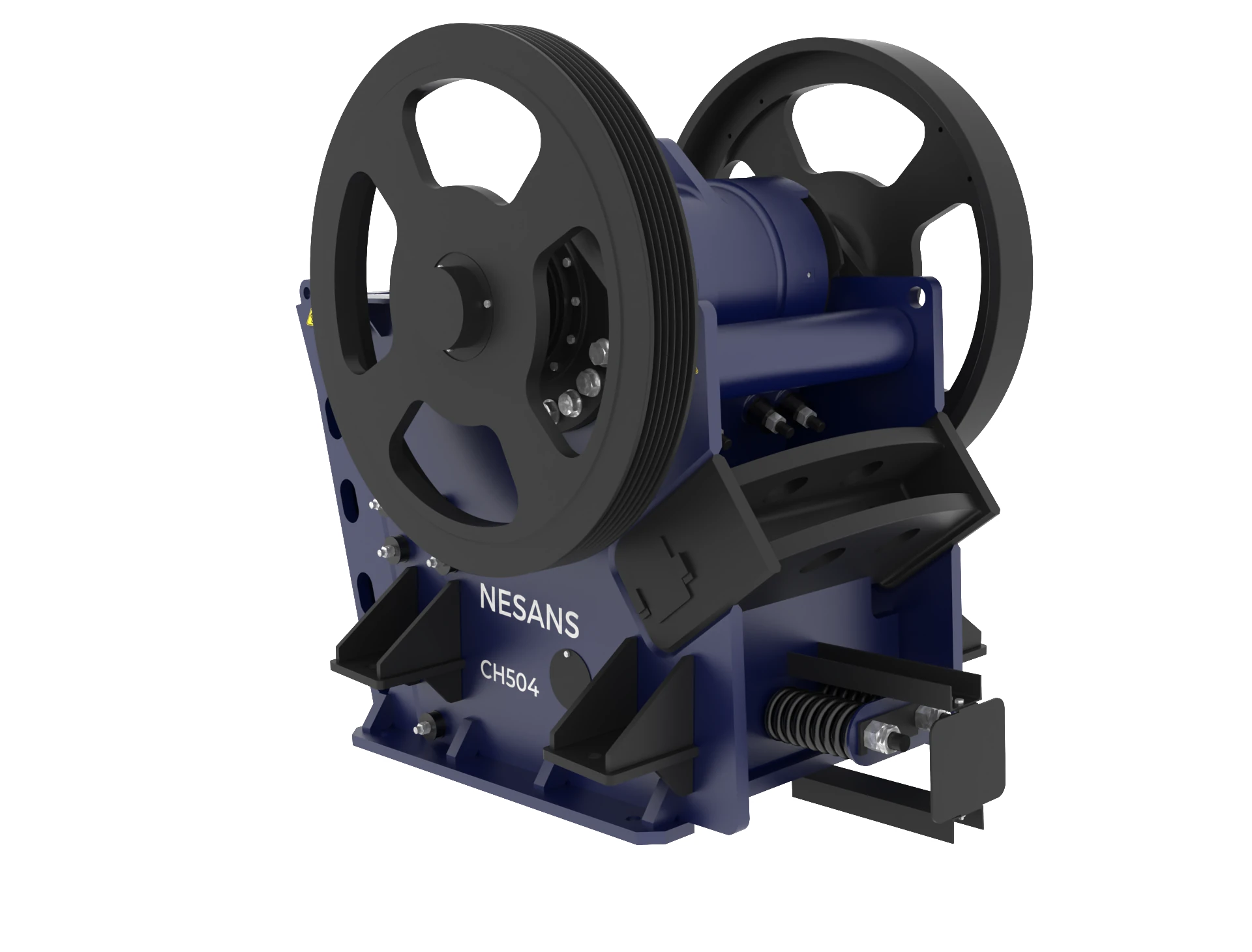
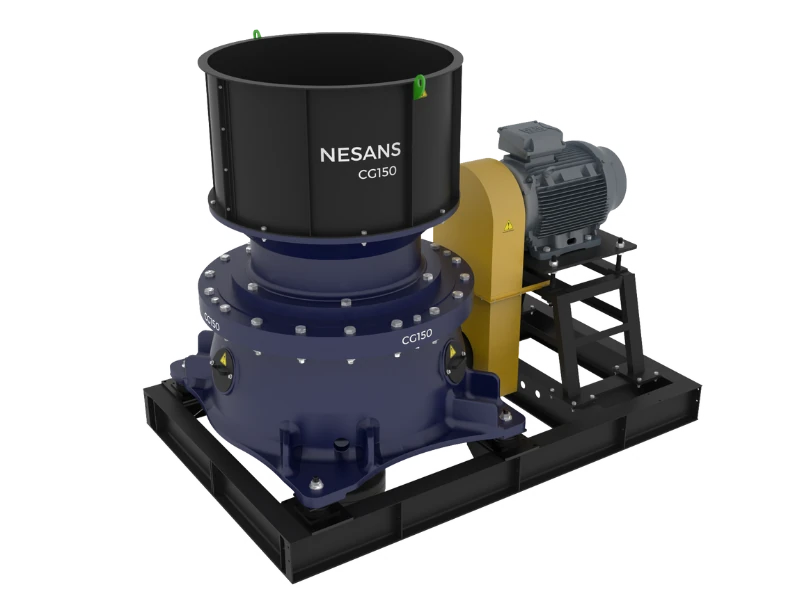
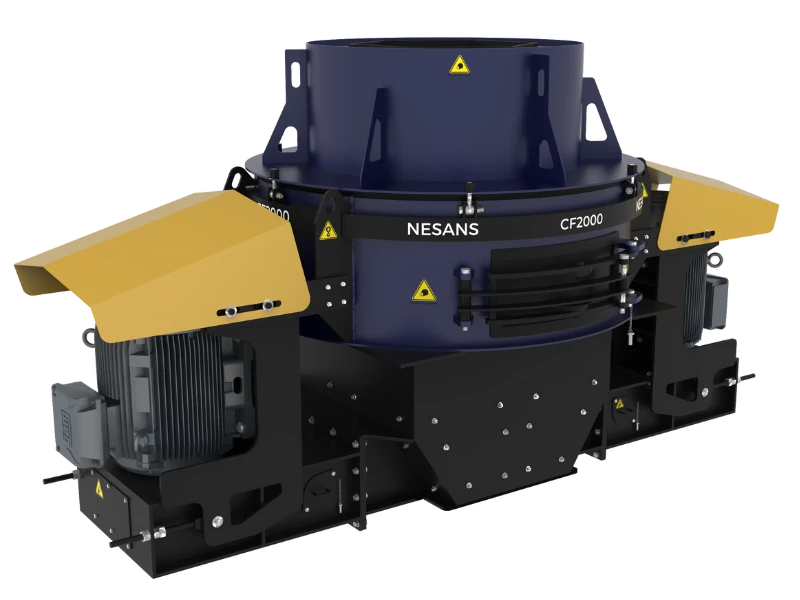
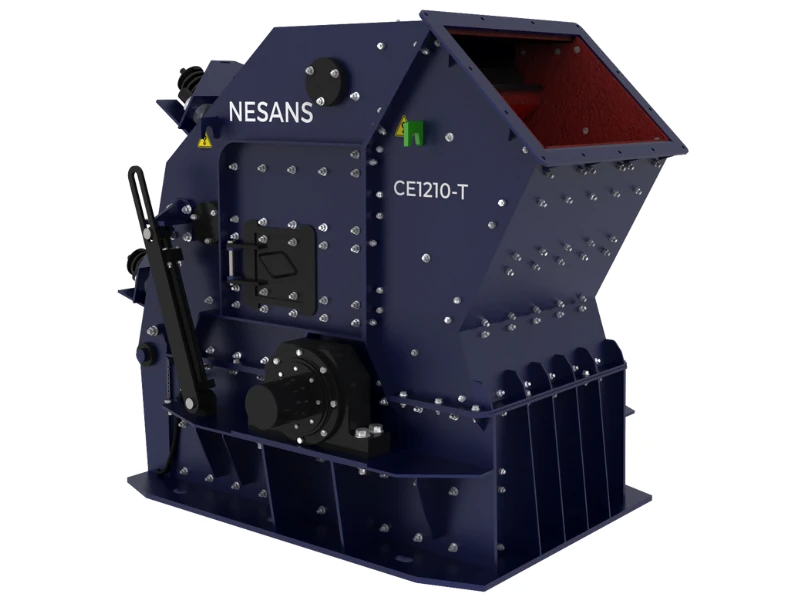
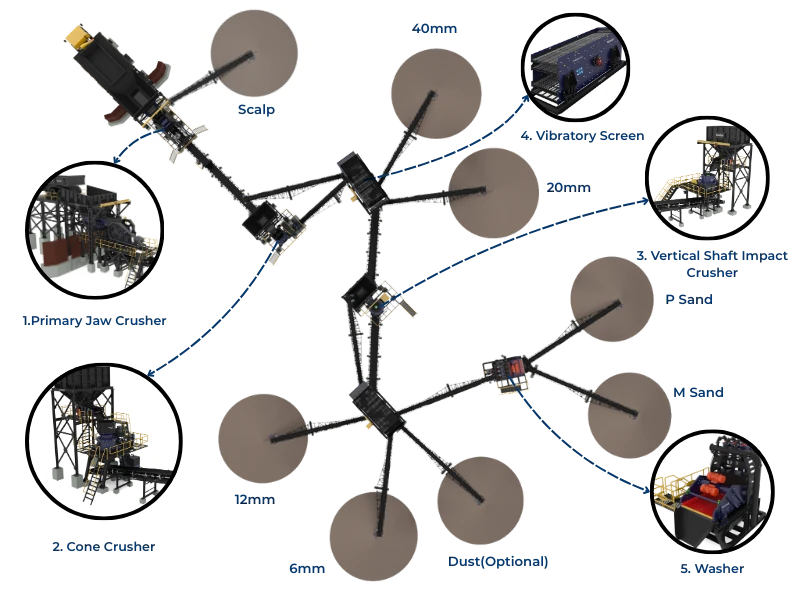
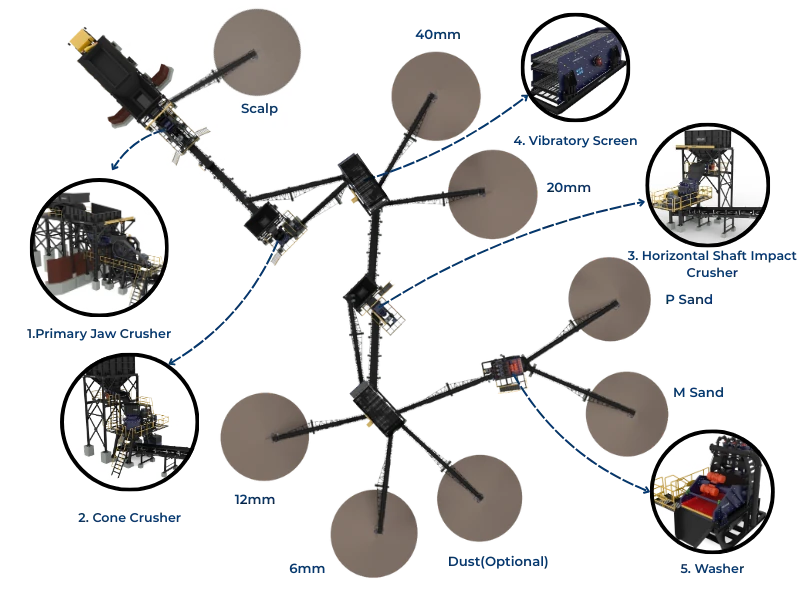
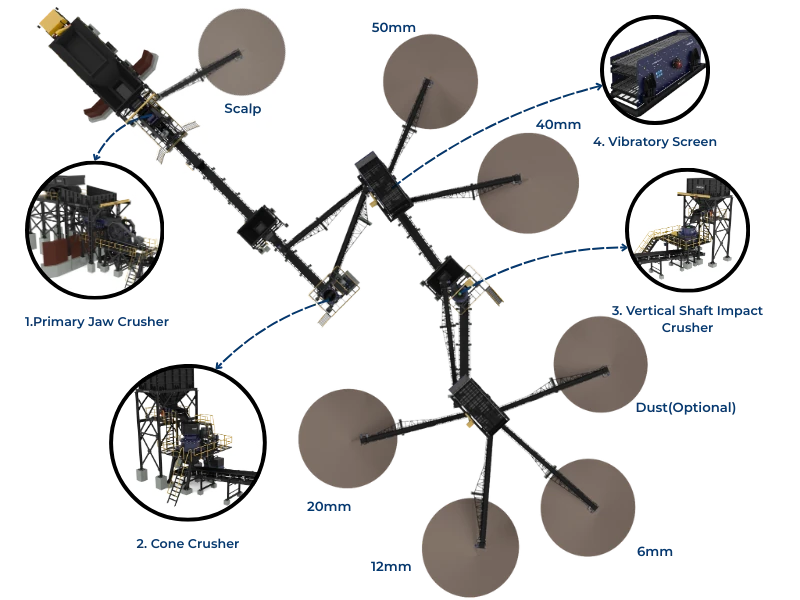
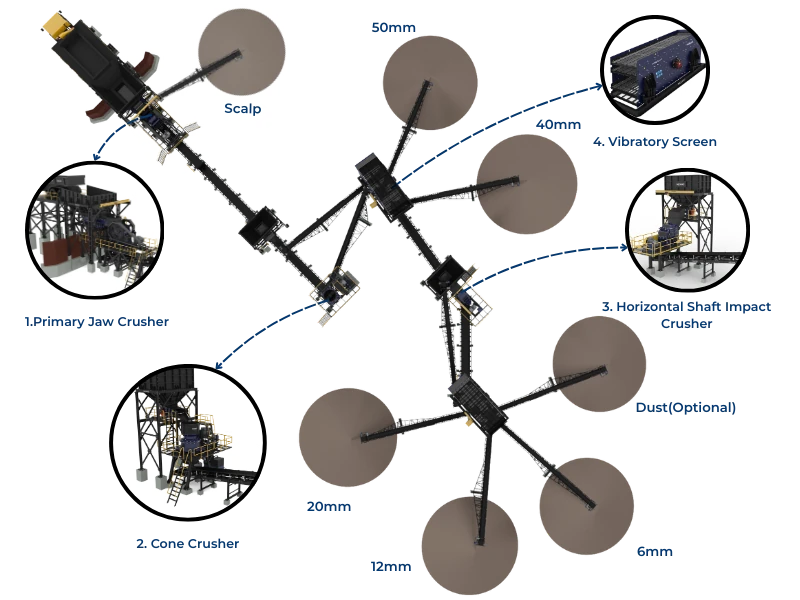
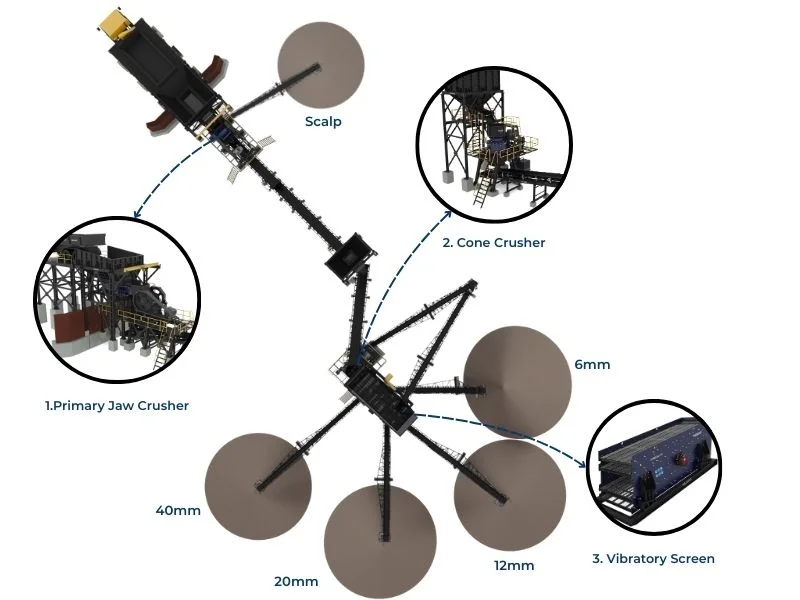
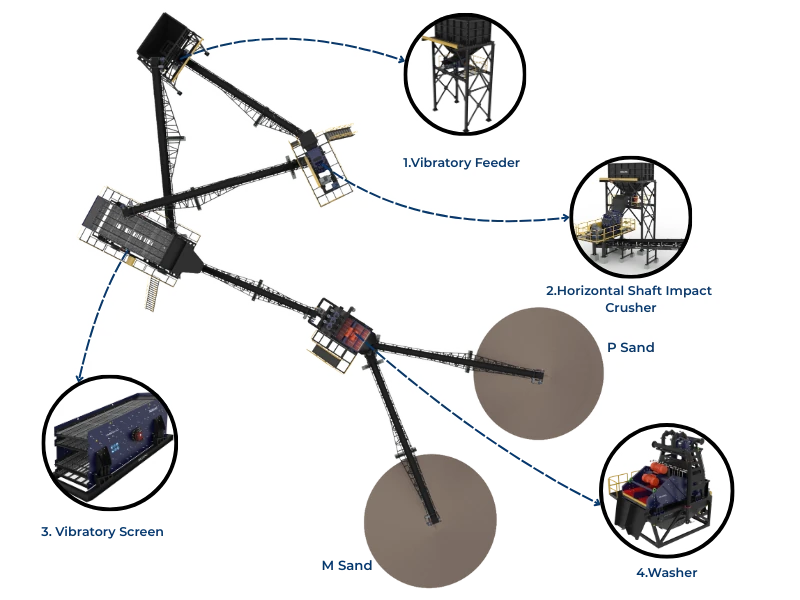
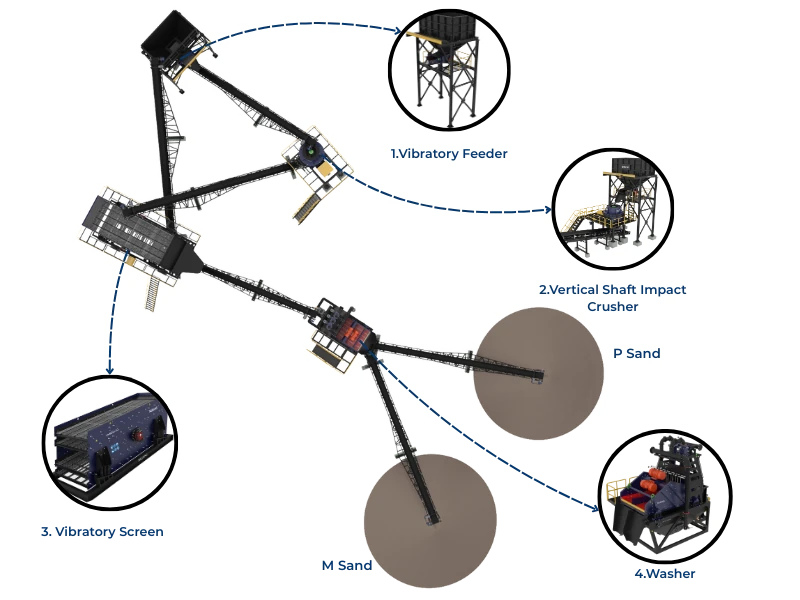
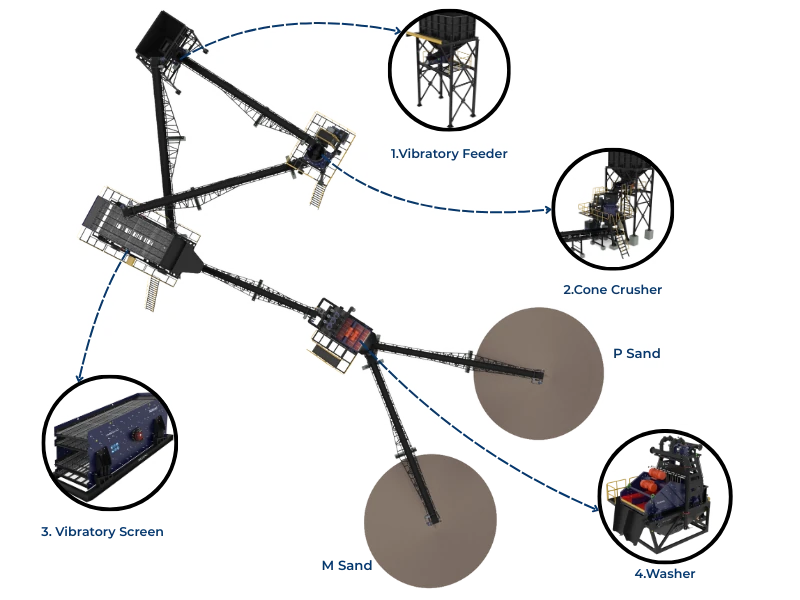
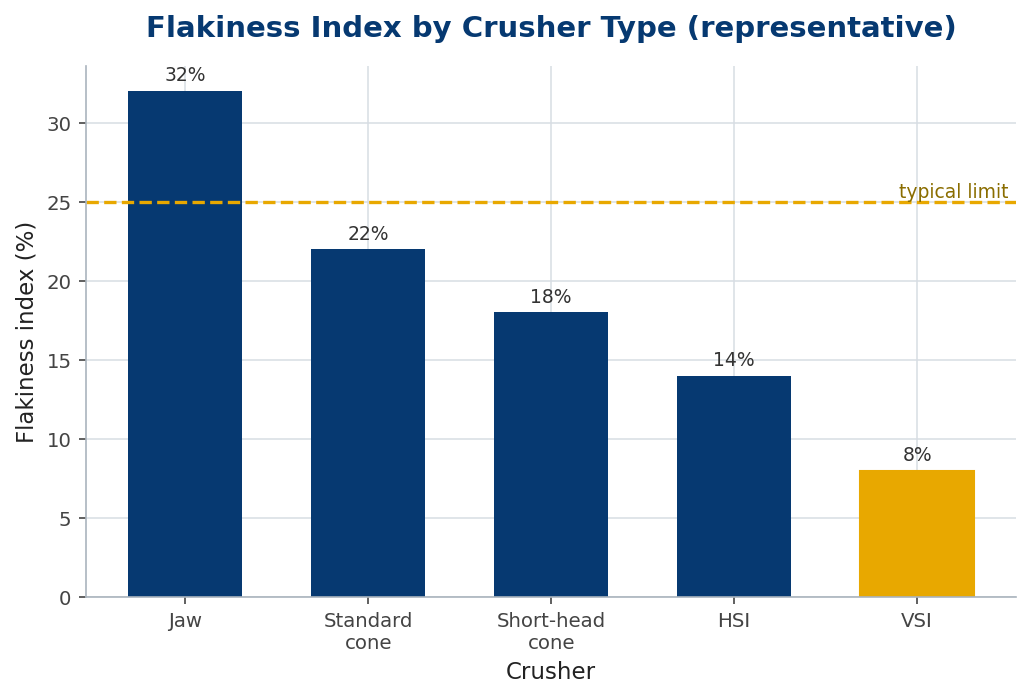
Shape is made in the crusher, not corrected afterwards. Jaws and standard cones — which break by compression between two surfaces — tend to make more flaky particles; impact crushers, and especially vertical-shaft impactors (VSIs) that break rock against rock, make far more cubical product.
Why shape governs packing
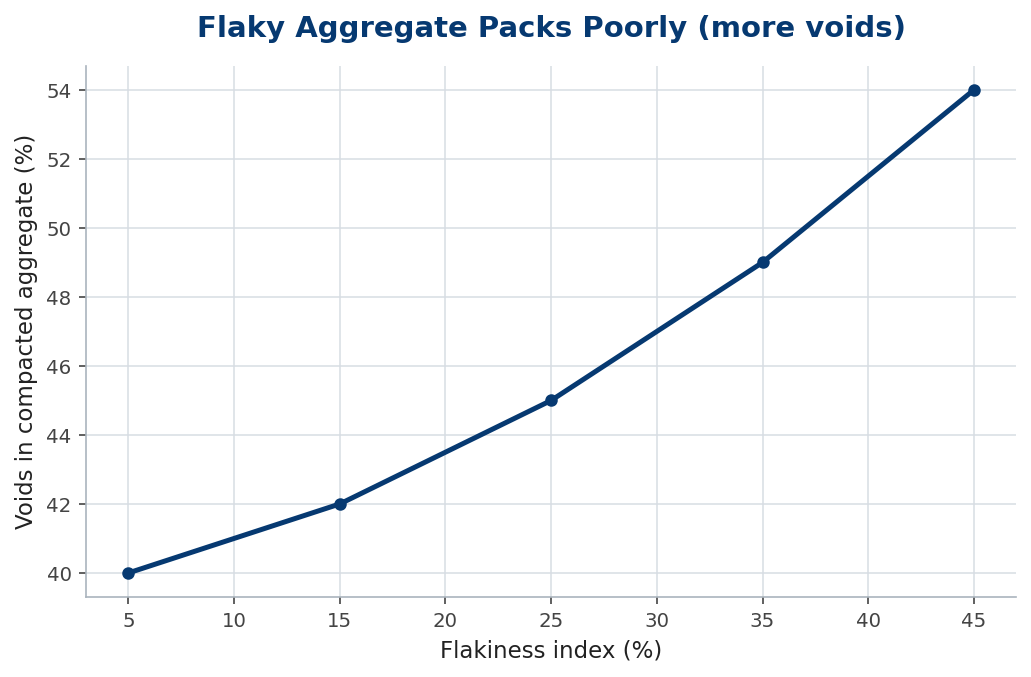
The cost of flakiness shows up as voids. Flaky particles cannot nest, so the compacted aggregate holds more empty space — space a concrete must fill with cement paste and an asphalt with bitumen, both expensive and both reducing strength when overdone.
Worked example 2 — fixing a failing product
Suppose a cone-only circuit makes a 33% flakiness aggregate that just fails a 25% road spec. Adding a VSI as a tertiary shaping stage typically pulls flakiness into the low teens, comfortably inside the limit, while also tightening the gradation. The same rock, the same primary and secondary — a different last stage — turns a reject into a premium product. Shape is a flowsheet decision, made by choosing where and how the final reduction happens.
In practice
Test shape on the same schedule as grading, because both drift as liners wear and the feed changes. Watch the closed-side setting: running a crusher too tight to chase size often worsens shape, so there is a genuine trade-off between fineness and cubicity to manage. And feed your shaping stage well — a VSI starved or fed off-centre cannot cubicise what it barely touches. Shape is cheap to monitor and expensive to ignore, since a customer rejects a flaky load long before a strength test would.
Common mistakes
- Expecting a cone to cubicise. Compression crushing makes flakes; add an impactor or VSI for shape.
- Over-tightening to chase size. A very tight setting can worsen flakiness — balance fineness against shape.
- Testing shape rarely. Flakiness drifts with wear; trend it alongside grading.
What flaky aggregate costs in the mix
Shape is not an abstract quality number; it shows up directly on the materials bill, because flaky and elongated particles pack badly and a badly packing aggregate must be paid for in binder. The voids between poorly shaped particles are voids the cement paste or bitumen has to fill, so every point of excess flakiness raises the paste demand, and paste is the expensive part of the mix.
In concrete, flaky aggregate raises both water and cement demand for the same workability, lifting the water-cement ratio (and so weakening the concrete) or forcing more cement (and so raising the cost) to compensate. It also bleeds and segregates more readily and finishes poorly. The flaky stone that looked cheaper at the quarry buys a more expensive, weaker concrete — a false economy paid for by the mix designer.
In asphalt the penalty is mechanical as well as economic: flaky particles break under the roller during compaction, changing the gradation and leaving a less stable, less durable mat. This is why bituminous specifications cap combined flakiness and elongation tightly, and why a wearing-course aggregate almost always has to come from a shaping crusher rather than a flaky jaw product.
So read the flakiness index as a cost-and-performance number, not just a compliance one. A producer who invests in shape — a cone configured for cubicity, or a VSI — sells an aggregate that lets the customer cut paste, binder and cement, and that commands a premium for doing so. The shape of the stone and the cost of the mix it goes into are the same conversation.
The bottom line
Flakiness and elongation are simple mass percentages, but they govern the voids, the binder demand and the strength of everything the aggregate goes into. Cap them, measure them, and recognise that shape is decided in the crusher.
When shape fails, look to the last stage. An impactor or VSI cubicises what a cone cannot, turning a rejected flaky product into a premium cubical one without touching the rest of the circuit.
Frequently asked questions
What flakiness is acceptable?
Many specs cap flakiness around 25–35% and the combined flakiness plus elongation near 40%, tighter for surface courses. The governing standard decides.
Which crusher makes the most cubical product?
Vertical-shaft impactors (rock-on-rock) make the most cubical aggregate, followed by other impactors; jaws and standard cones make the most flaky.
Can I fix shape without a new crusher?
Only at the margin — setting and feed tweaks help a little. Real shape improvement needs an impact/VSI shaping stage.
Key takeaways
 and
and  are mass percentages from slotted and length gauges.
- Flaky and elongated particles raise voids, binder demand and the risk of breakage.
- Shape is made in the crusher — VSIs cubicise where cones cannot.
- Trend shape with grading; balance a tight setting against the cubicity it costs.
