











A bituminous road is mostly stone — bitumen is barely 5% of the mix by weight. So the aggregate, not the binder, decides whether the surface ruts, ravels, polishes or strips. India’s MoRTH specifications and IRC codes pin down exactly which aggregate properties a bituminous mix demands, and they are stricter than the limits for concrete or base layers.
This article sets out the aggregate requirements for bituminous mixes — strength, shape, durability and adhesion — and the gradation bands that the job-mix formula must hit.
Why bituminous mixes are demanding
A bituminous surface carries traffic directly on the stone, held together by a thin bitumen film. That puts a unique set of demands on the aggregate: it must resist abrasion and impact under wheel loads, hold a cubical shape so the mix is stable, absorb little water so it stays durable, and — critically — bond to bitumen without stripping in the presence of water. MoRTH sets a numerical limit for each.
Worked example 1 — a layer-by-layer screen
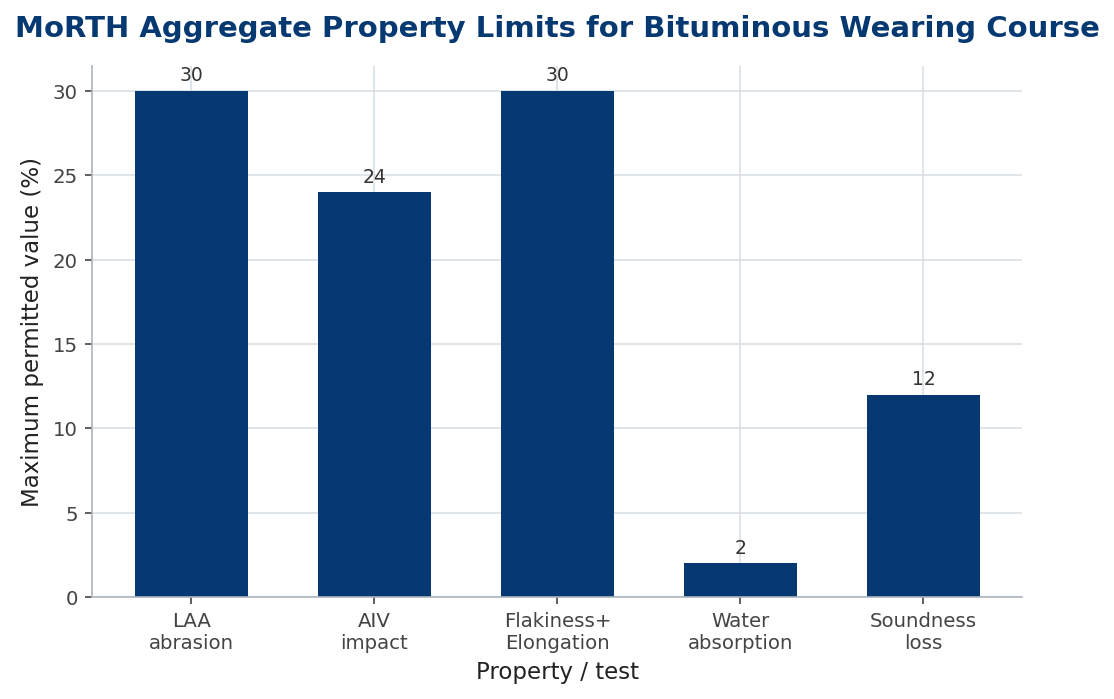
A quarry offers stone at LAA 28%, AIV 22%, combined flakiness and elongation 28%, water absorption 1.6%. Against the bituminous-concrete limits (LAA ≤30, AIV ≤24, shape ≤30, absorption ≤2) it passes every gate — fit for the wearing course. Raise the LAA to 33% and it fails the surface but still serves the bituminous base (≤35) — the same ladder logic that governs all road aggregate.
Shape, adhesion and the stripping risk
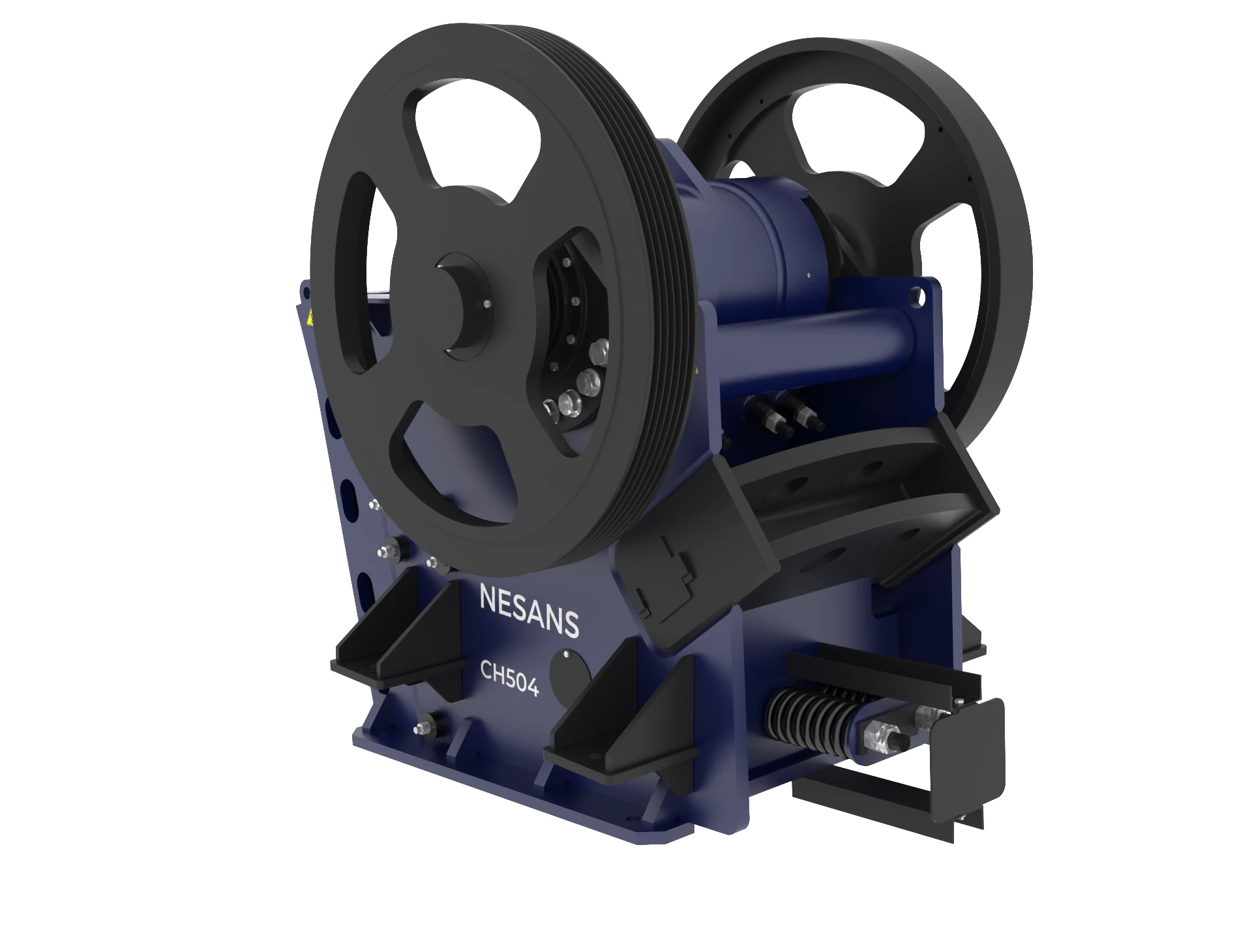
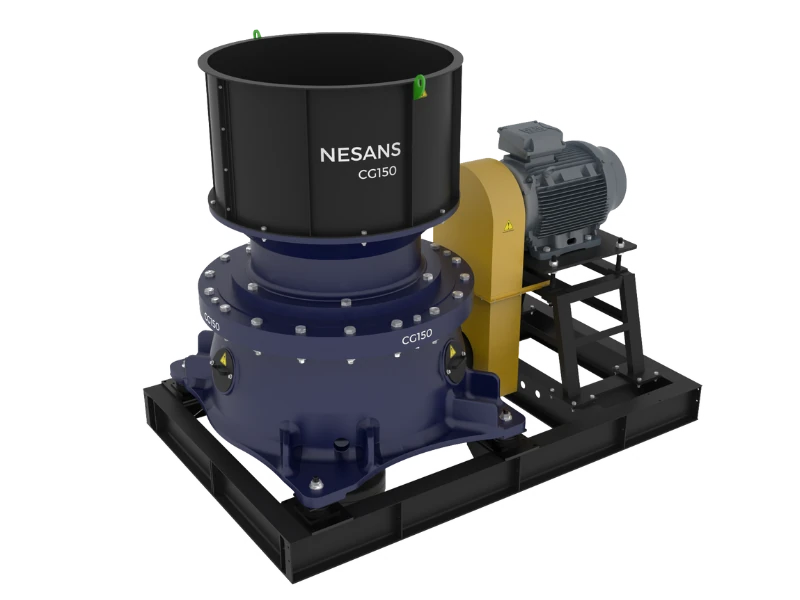
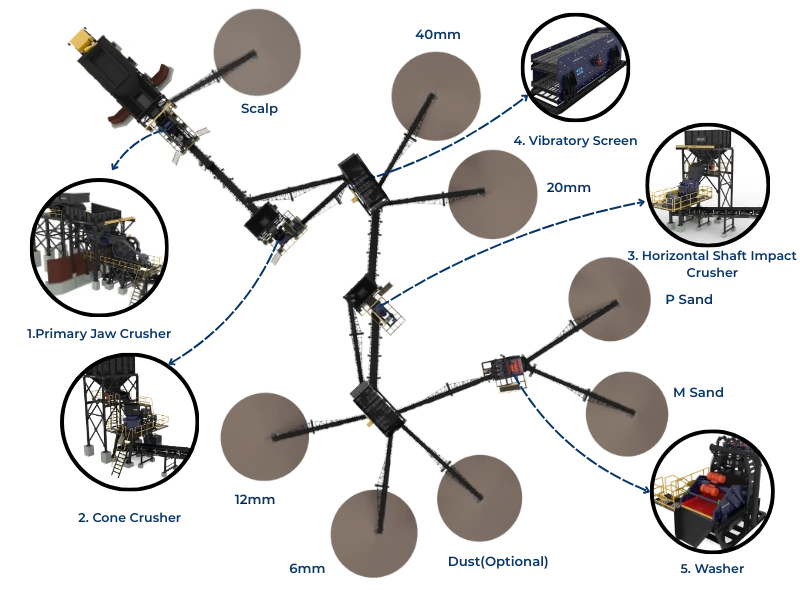
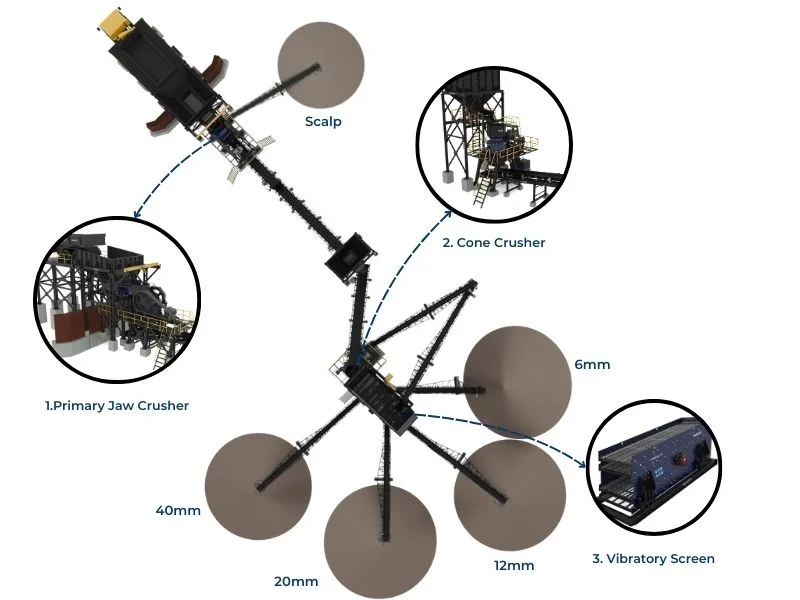
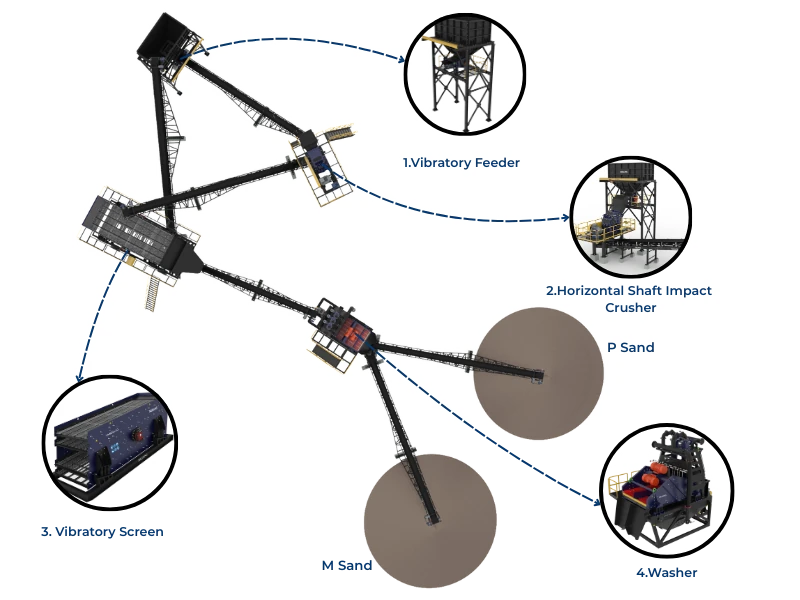
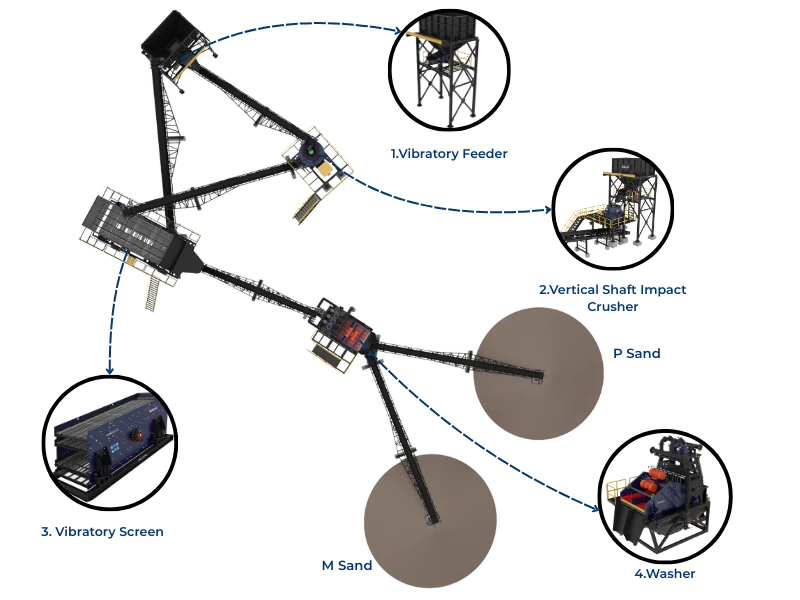
Two requirements catch producers out. Shape: flaky and elongated particles break under compaction and reduce stability, so combined flakiness and elongation is capped — which usually means the stone must come from a well-configured cone or VSI, not a flaky jaw product. Adhesion: some aggregates (siliceous, polished) strip from bitumen when water gets in, so a coating and stripping test is mandatory, and an anti-stripping agent or hydrated lime is often required regardless.
Worked example 2 — the filler that makes the mastic
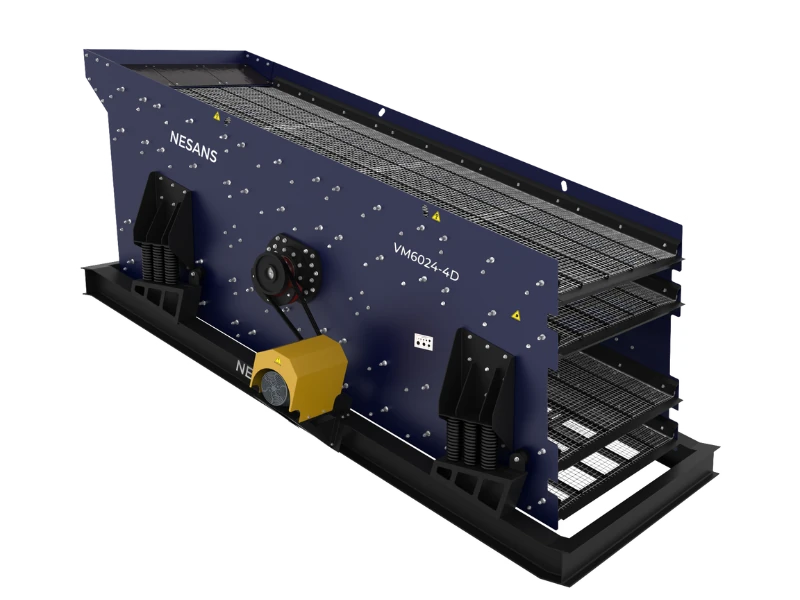
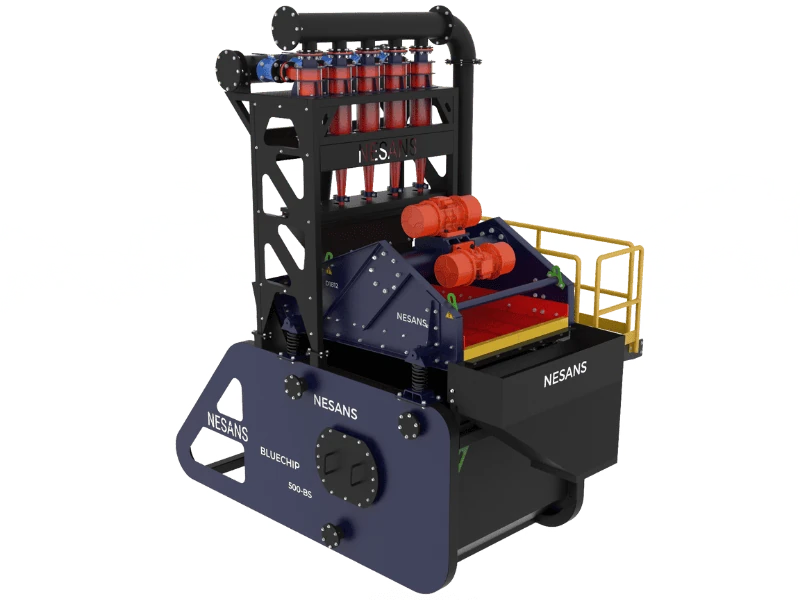
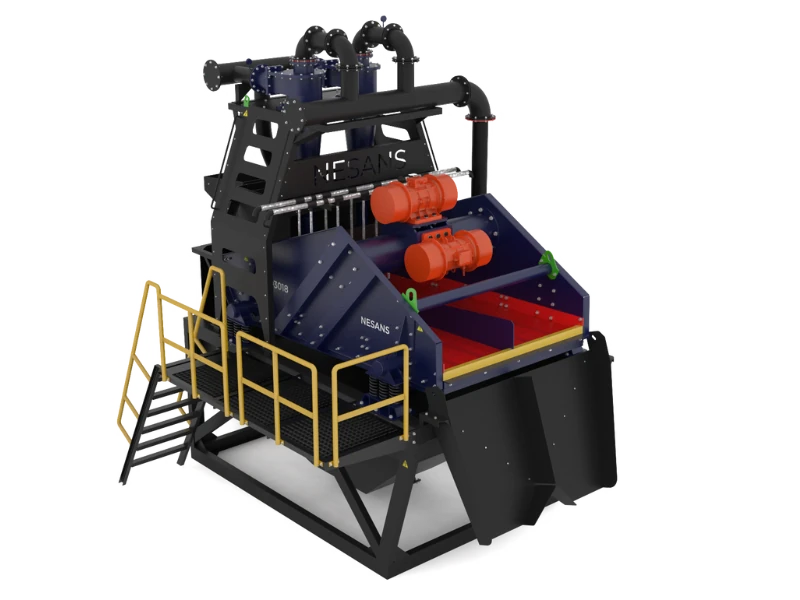
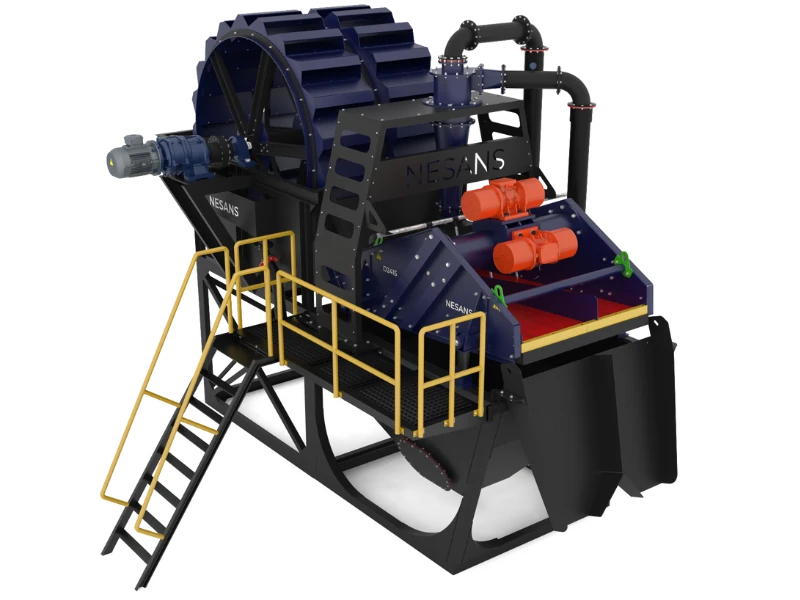
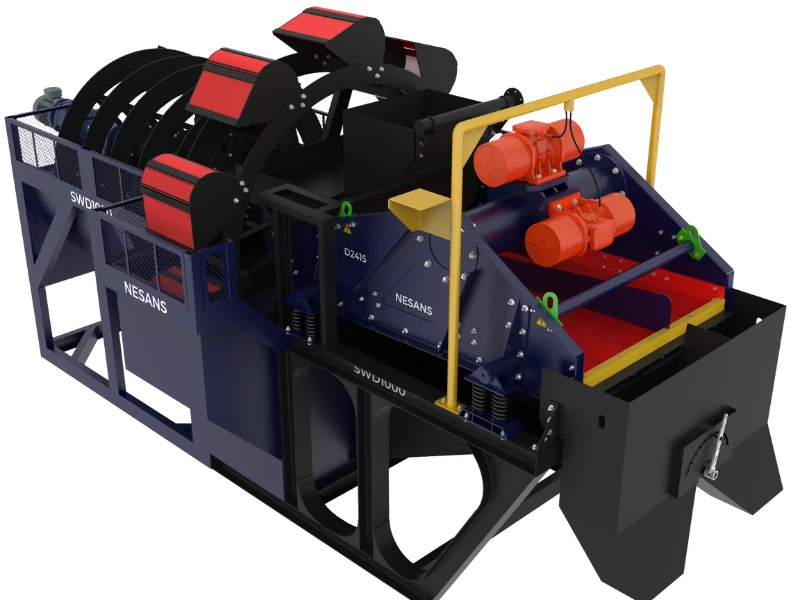
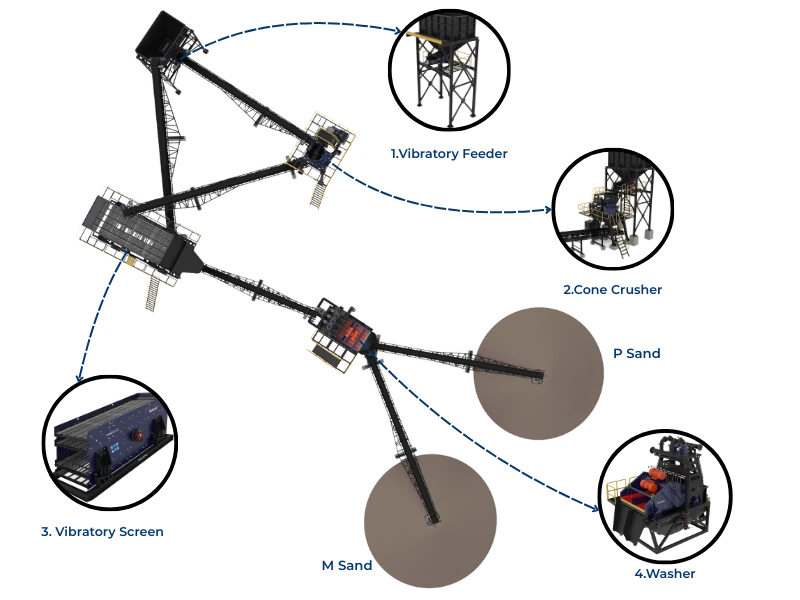
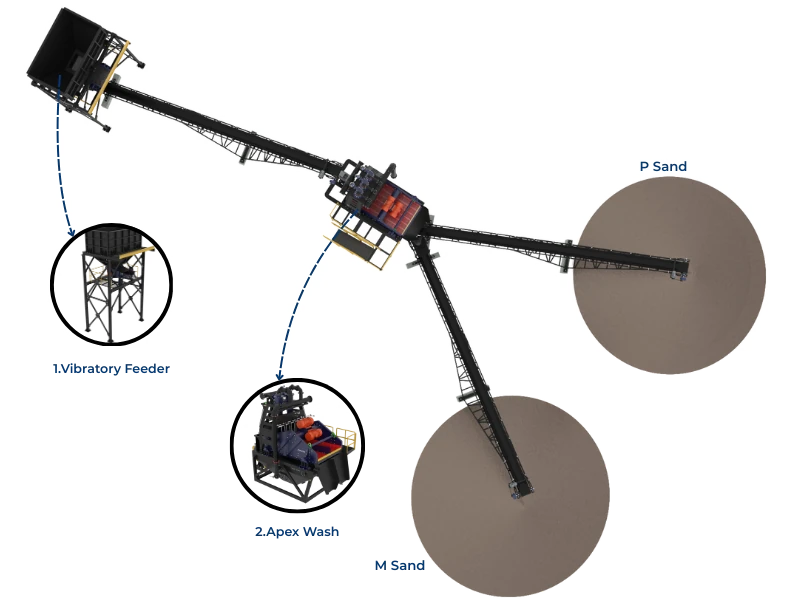
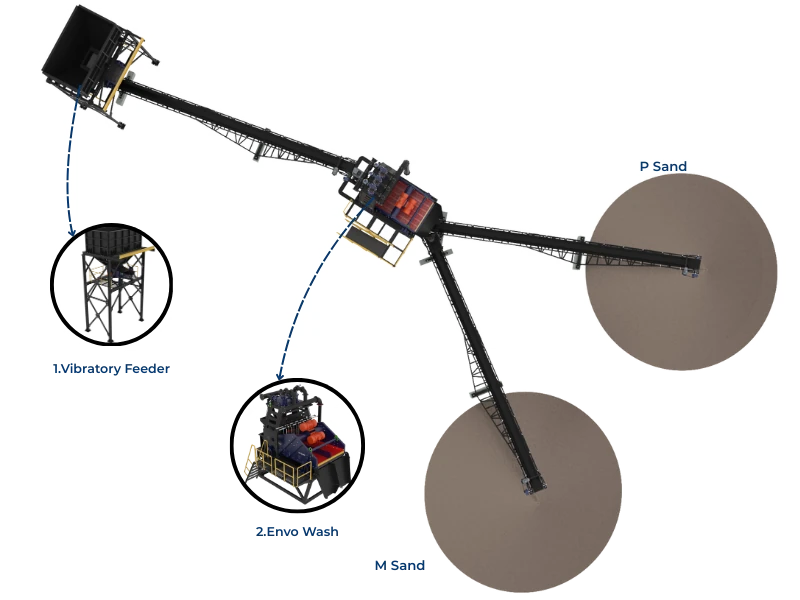
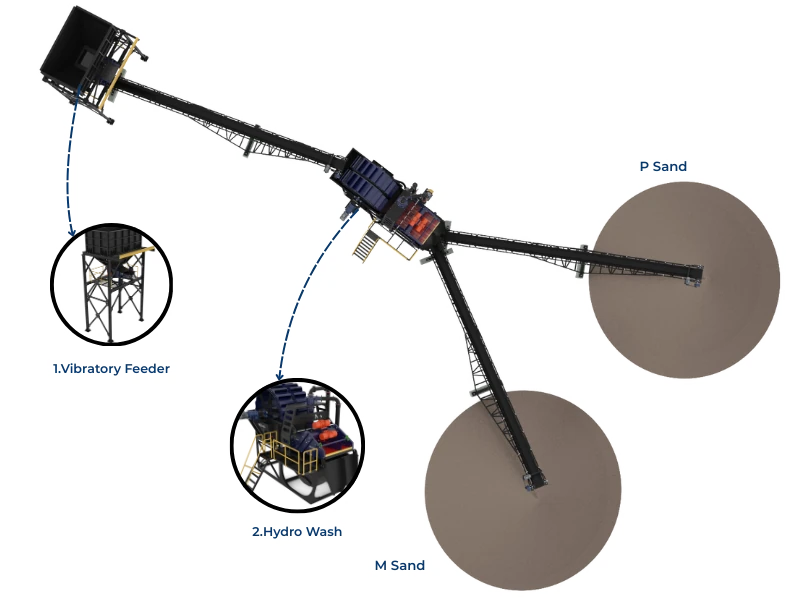
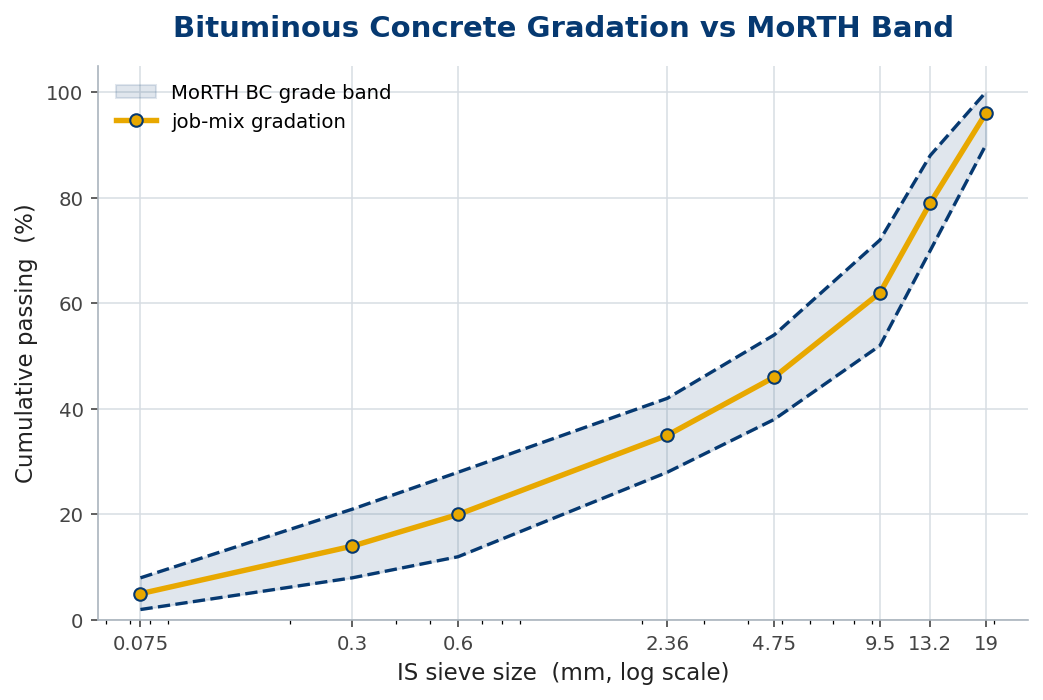
The fraction passing 0.075 mm — the filler — is small but decisive: with bitumen it forms the mastic that binds the mix. MoRTH bands it tightly (typically 4–8% for a wearing course). Too little and the mix is tender and ravels; too much and it stiffens, demands more bitumen and turns brittle. A crusher product carrying 12% minus-0.075 mm must be screened or washed down to the band — the filler is a spec to hit, not a leftover to tolerate.
| Property | Test | Why it matters on a bituminous road |
|---|---|---|
| Abrasion / impact | LAA, AIV | resists traffic wear and shock |
| Shape | Flakiness + elongation | stability under compaction |
| Durability | Water absorption, soundness | resists weathering |
| Adhesion | Coating & stripping | bond to bitumen, anti-strip |
| Filler | Passing 0.075 mm | forms the binding mastic |
In practice
Produce to the bituminous spec deliberately: configure the crusher for shape (a cone or VSI for the wearing course, not a flaky output), and control the filler with screening or washing so the minus-0.075 mm lands inside the band. Run the stripping test on every source and budget for an anti-stripping additive on siliceous stone. Keep the whole property suite on one record per source, and trend it as the quarry advances — a deposit good for bituminous work today can weather into a base-only stone as you mine into it.
Common mistakes
- Ignoring shape. Flaky stone fails stability even if it passes strength — make a cubical product.
- Treating filler as a leftover. The minus-0.075 mm is a tight spec band; screen or wash to hit it.
- Skipping the stripping test. Some stones debond from bitumen in water; test every source and add anti-strip where needed.
Testing the bond: stripping, immersion and the lime fix
Of all the bituminous-aggregate requirements, adhesion is the one that fails roads quietly and expensively, so it earns its own test regime. When water gets between the bitumen film and the stone, a poorly bonded aggregate strips — the binder peels off, the mix ravels and the surface disintegrates from the bottom up, often invisibly until potholes appear. Siliceous, acidic and polished stones are the usual offenders.
Two tests gauge the risk. The coating and stripping test and the static immersion test coat aggregate with bitumen, immerse it in water for a set time and temperature, and assess the area of stone that remains coated. A high retained-coating percentage means a durable bond; a low one warns that the pairing of this aggregate and this binder will strip in service. The test must be run for each aggregate-binder combination, because adhesion is a property of the pair, not of the stone alone.
Where the bond is marginal, the standard remedy is an anti-stripping additive, and the most reliable is hydrated lime. Added at a small dose — typically around 1–2% by weight of aggregate — lime chemically improves the bitumen-to-stone bond and stiffens the mastic, and many specifications mandate it on siliceous aggregates regardless of the immersion result. Liquid amine anti-strip agents are an alternative where lime handling is impractical.
The practical rule: never assume adhesion from strength. A stone can ace LAA, AIV and shape and still strip, so run the immersion test on every source-and-binder pair, budget for lime or an anti-strip agent on the suspect ones, and re-test if the binder source changes. The cost of the additive is trivial against the cost of a wearing course that fails from the bottom in its first wet season.
The bottom line
In a bituminous mix the aggregate carries the road, so MoRTH demands tight limits on strength, shape, durability, adhesion and filler. A cubical, hard, low-absorption stone that bonds to bitumen and hits the gradation band is the whole job.
Crush for shape, control the filler to the band, test for stripping, and keep the property suite per source — and the surface resists rutting, ravelling and stripping for the life the design intended.
Frequently asked questions
What aggregate properties does a bituminous wearing course need?
Low LAA and AIV (strength), low flakiness/elongation (shape), low water absorption and soundness loss (durability), good bitumen adhesion, and a filler within band.
Why is particle shape so important in bituminous mixes?
Flaky, elongated particles break under compaction and reduce mix stability; MoRTH caps combined flakiness and elongation, favouring cubical cone/VSI product.
What is the role of filler (passing 0.075 mm)?
It forms the bitumen mastic that binds the mix. Too little ravels, too much embrittles — MoRTH bands it tightly.
Key takeaways
- In bituminous mixes the aggregate carries the traffic — limits are tighter than for base.
- Strength (LAA, AIV), shape, durability, adhesion and filler are all gated.
- Crush for a cubical shape and control filler to the band; flaky stone fails stability.
- Run the stripping test per source and add anti-strip on siliceous aggregate.
