
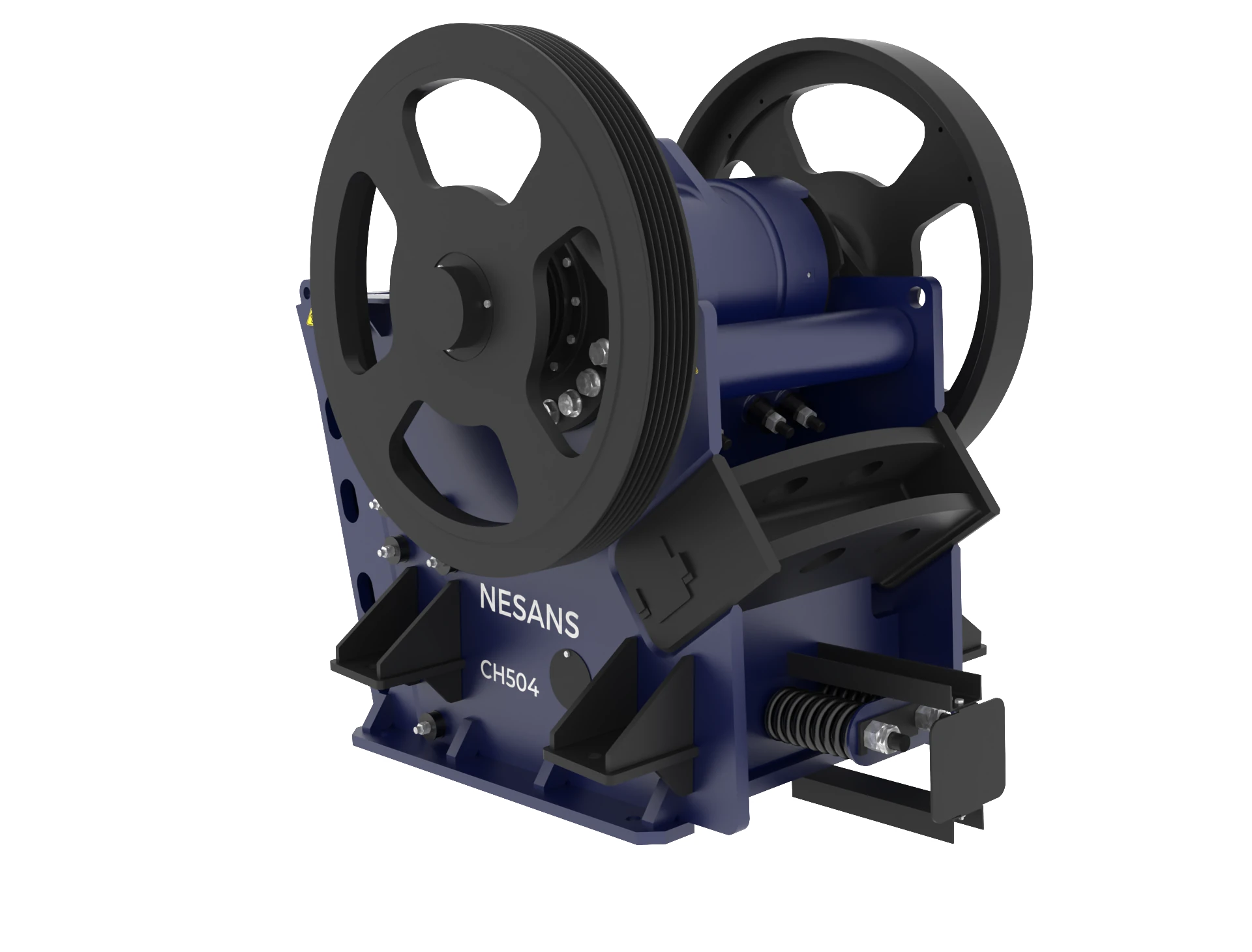
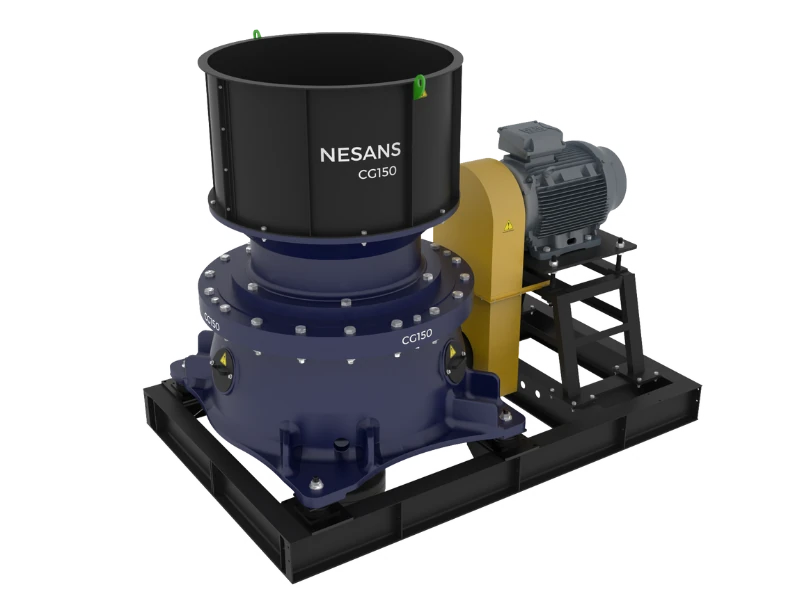
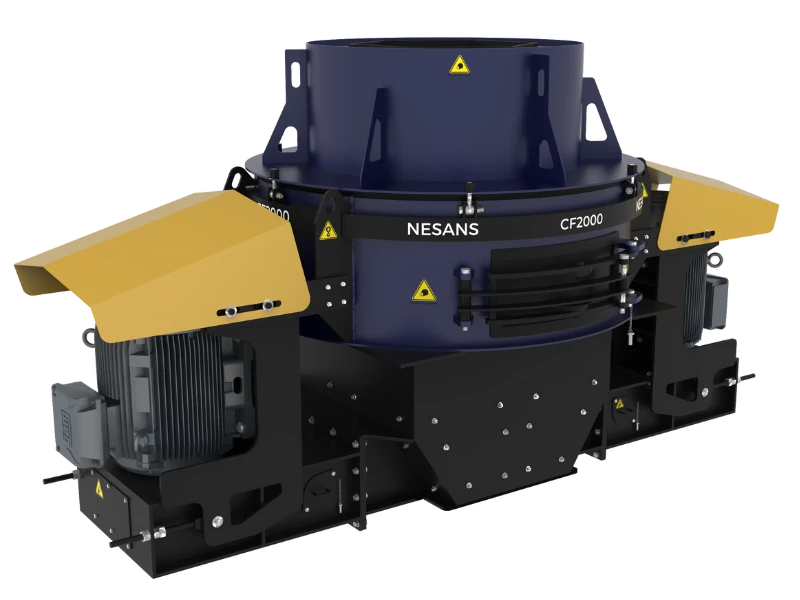
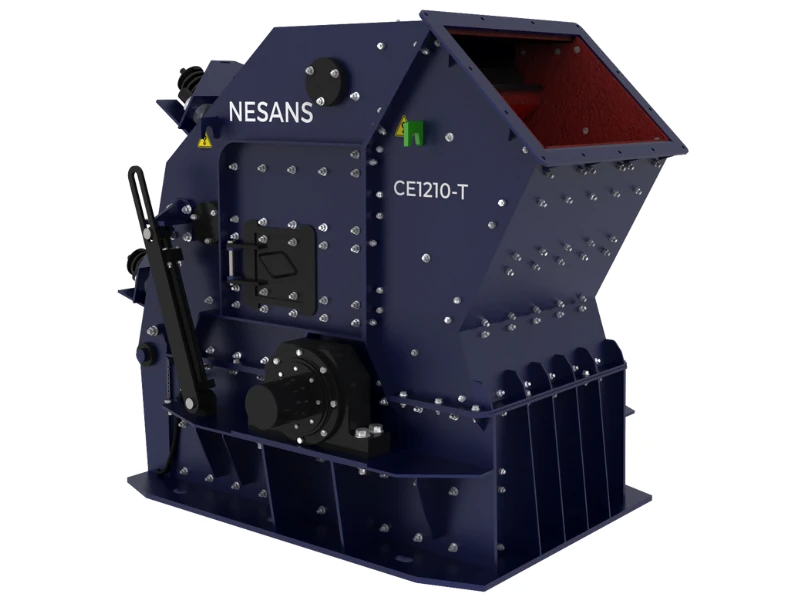







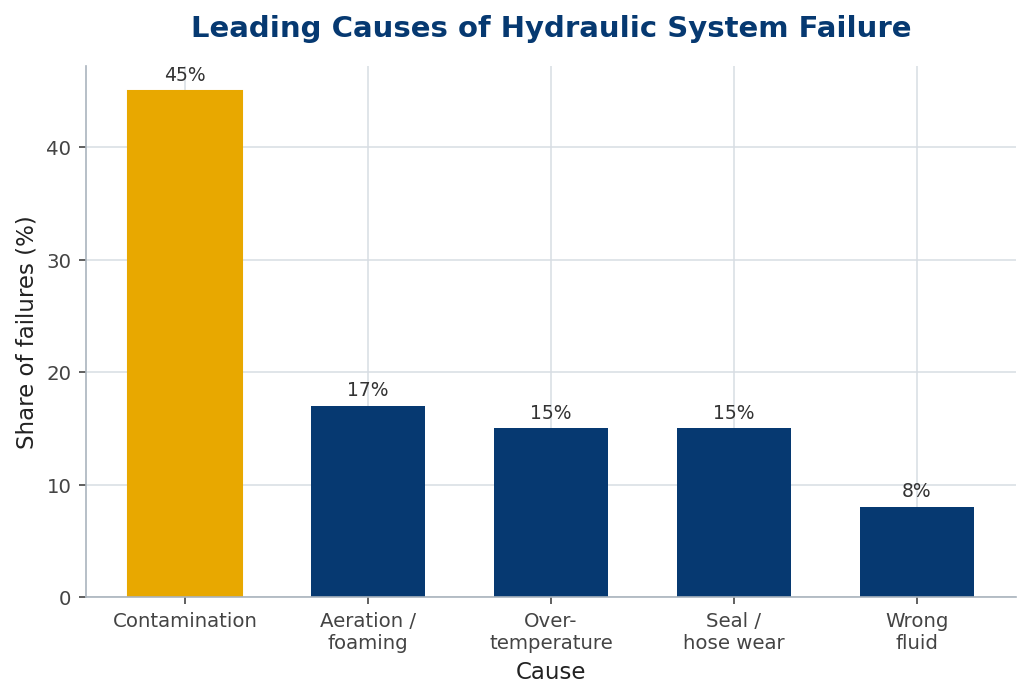
Modern crushers run on oil as much as on steel: hydraulics clamp the bowl, adjust the setting, relieve on tramp metal and tension the toggle. When that hydraulics misbehaves the whole crusher stops — and the cause is almost never a mystery. It is, overwhelmingly, dirt.
This article ranks the real causes of hydraulic failure, puts numbers on how oil cleanliness governs component life, and lays out the few disciplines that keep a crusher’s hydraulics reliable.
What the hydraulics do
On a cone or jaw, the hydraulic circuits handle setting adjustment, overload relief (passing tramp iron without breaking the machine), clamping and clearing. They run at high pressure and tight clearances — which is exactly why contamination, not wear, is their dominant enemy.
Cleanliness governs life
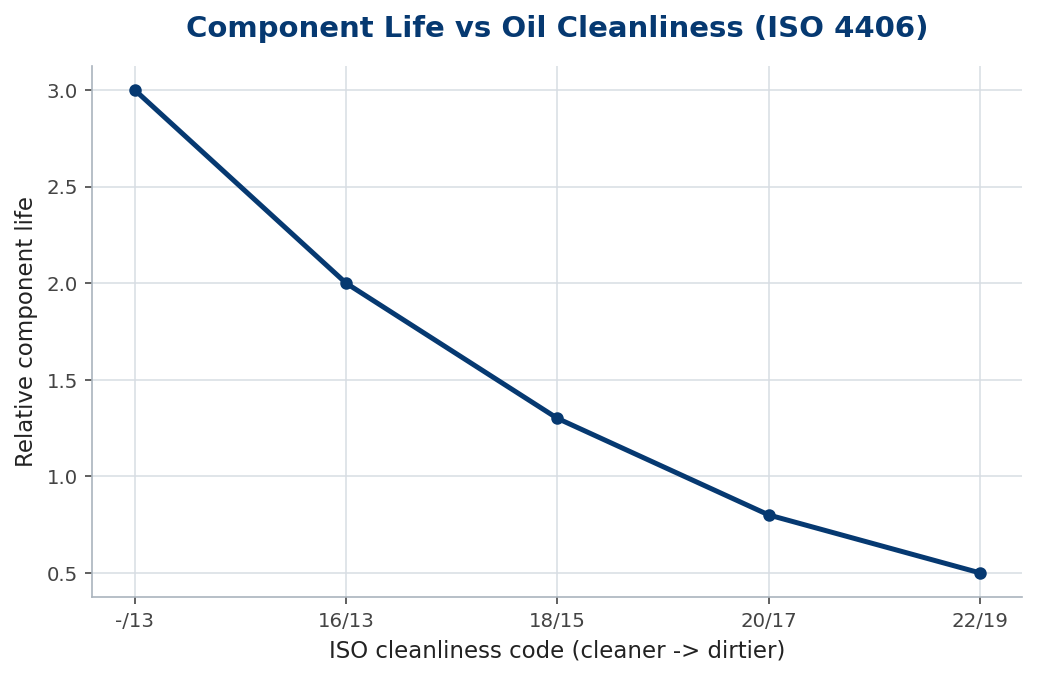
Hydraulic component life is tied directly to the oil’s particle count, rated by the ISO 4406 cleanliness code. Every step dirtier roughly halves the life of pumps and valves, because micron-sized particles erode the very clearances that make the system work.
Worked example 1 — the value of a filter
Move a system from an ISO 22/19 code to 18/15 — two steps cleaner — and from the trend in Figure 2 the relative component life rises roughly from 0.5 to 1.3, about a 2.5× gain. A better filter and a sealed reservoir, costing a fraction of one pump, pay for themselves the first time they prevent a valve failure mid-shift.
The other failure modes
Contamination leads, but three others matter. Aeration and foaming — air drawn in through a low reservoir or a leaking suction — makes the system spongy and damages pumps. Over-temperature thins the oil until it no longer seals or lubricates, often from a fouled cooler. And the wrong fluid — topped up with a non-spec oil — can swell seals or strip additives. Each is a discipline more than a repair.
| Failure mode | Root cause | Defence |
|---|---|---|
| Contamination | ingress, no filtration | filter to a target ISO code |
| Aeration / foam | air ingress, low oil | seal suction, keep level |
| Over-temperature | fouled cooler, overload | clean cooler, monitor temp |
| Wrong fluid | non-spec top-up | label, control stores |
Worked example 2 — the relief circuit check
The overload-relief circuit is what saves a crusher when tramp iron arrives: it lifts the bowl or opens the setting, passes the steel, then resets. If its accumulator has lost charge or its relief valve is silted, the crusher cannot relieve and a tramp event breaks a casting instead. A monthly check — verify the accumulator pre-charge and watch the reset behaviour after a deliberate test — is cheap insurance against a six-figure failure. Reliability here is literally structural.
In practice
Treat the hydraulic oil as a component, not a consumable: sample it on a schedule, trend the ISO code and the wear metals, and change it on condition rather than calendar. Keep ingress out — breather desiccators, proper seals, clean fill practices — because it is far cheaper to exclude dirt than to filter it out. And keep the reservoir full and cool; most aeration and over-temperature problems trace back to a low level or a fouled cooler that a daily walk-round would catch.
Common mistakes
- Topping up blind. Non-spec oil swells seals and strips additives; control what goes in.
- No oil analysis. Without an ISO code trend you cannot see contamination until it fails something.
- Neglecting the relief circuit. A silted relief valve turns a tramp event into a broken casting.
The accumulator: the heart of the relief circuit
The component that lets a crusher survive tramp iron is the hydraulic accumulator, and it deserves its own attention because when it fails, it fails silently and the crusher loses its protection without warning. An accumulator stores energy in a compressed gas (nitrogen) behind a bladder or piston; on a tramp-iron event it lets the relief cylinders move fast, opening the setting to pass the steel, then pushes them back to reset. It is the spring that makes overload relief instant.
Its health rests on the gas pre-charge. The nitrogen pressure must sit at the manufacturer’s value — below the system pressure by a set margin — and nitrogen slowly permeates out over months, so the pre-charge falls. A flat or low accumulator cannot move fast enough to relieve, and the tramp event that should have lifted the bowl instead breaks a casting. The accumulator looks fine from outside right up to the moment it does not protect.
So the pre-charge is a scheduled check, not a fit-and-forget. Measuring the gas pre-charge periodically (with the hydraulic side de-pressurised), topping up the nitrogen, and testing the relief response — deliberately triggering relief and watching it open and reset cleanly — confirms the protection is live. It is a few minutes of work guarding a casting worth lakhs and the days of downtime its failure brings.
Treat the accumulator and relief circuit as the crusher’s seat belt: invisible until the crash, useless if neglected, decisive if maintained. Clean oil keeps the relief valve free; a correct pre-charge keeps the accumulator quick; and a periodic relief test proves both — together they are the difference between a tramp event that is a brief stop and one that is a broken machine.
The bottom line
Crusher hydraulics fail mostly from contamination, and component life tracks the ISO 4406 cleanliness code step for step. Filter to a target, exclude ingress, and keep the oil cool and full, and the dominant failure mode largely disappears.
Sample the oil like a component, test the overload-relief circuit on a schedule, and the hydraulics stop being the reason the crusher is down — and start being the reason it survives the next piece of tramp iron.
Frequently asked questions
What is the biggest cause of hydraulic failure?
Contamination by far. Micron particles erode the tight clearances of pumps and valves; cleanliness, rated by ISO 4406, governs their life.
How much does cleaner oil help?
Roughly a doubling of component life for each step cleaner on the ISO code. A better filter and sealed reservoir are among the cheapest reliability buys.
Why test the relief circuit?
It protects the crusher from tramp iron. A silted relief valve or a flat accumulator means a tramp event breaks a casting instead of relieving.
Key takeaways
- Contamination is the dominant hydraulic failure mode — design against ingress.
- Component life tracks the ISO 4406 cleanliness code; each step dirtier roughly halves it.
- Watch aeration, over-temperature and wrong-fluid top-ups as the other modes.
- Sample oil on a schedule and test the overload-relief circuit monthly.
