
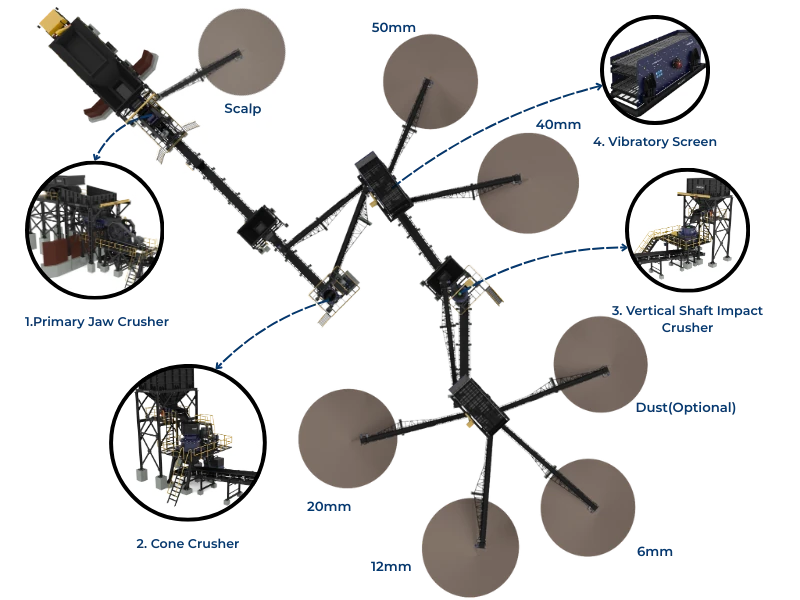
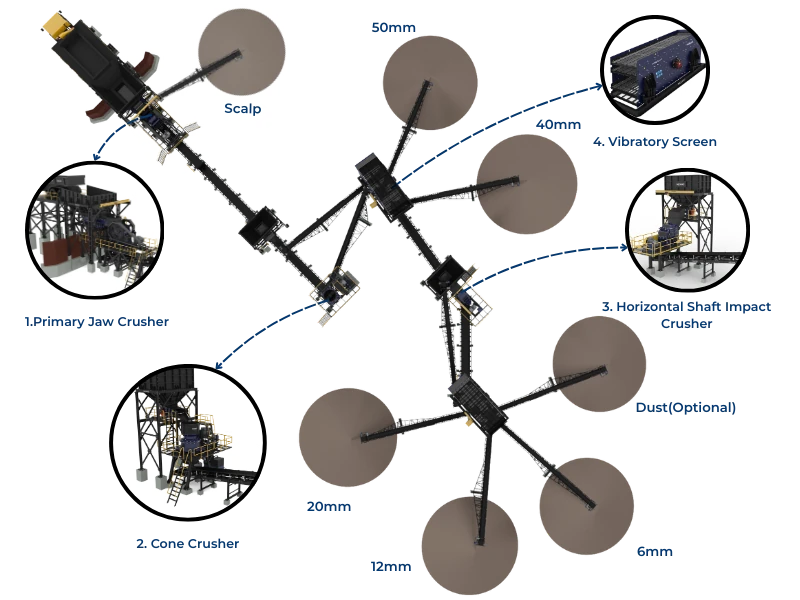
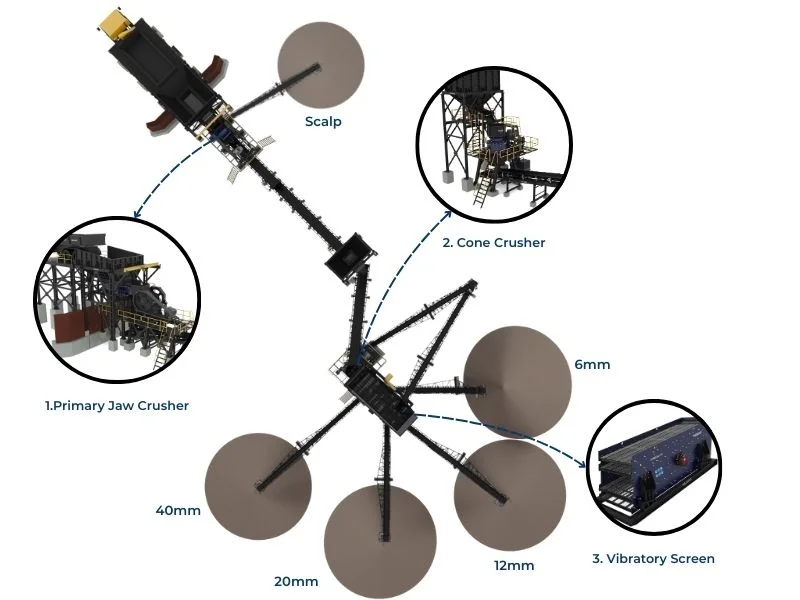
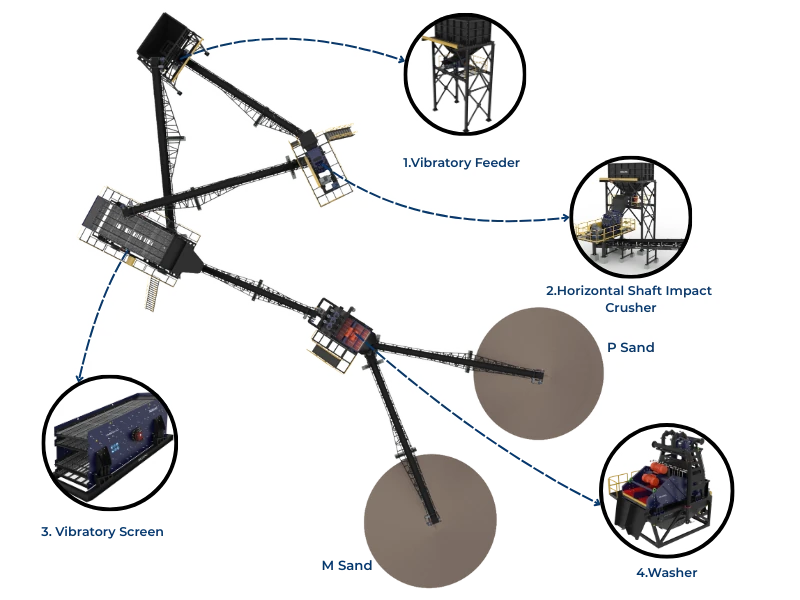
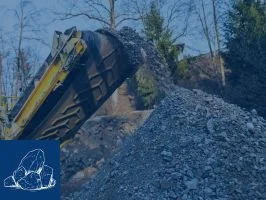
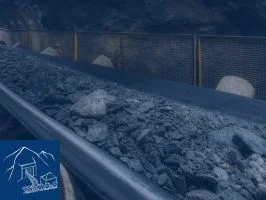






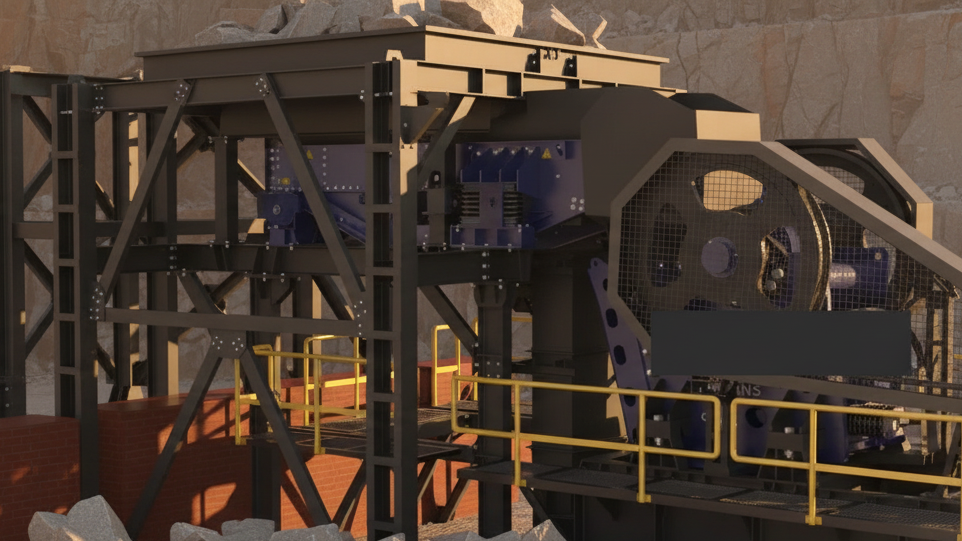
The relationship between quarry blasting practices and crusher performance represents one of the most significant yet frequently overlooked optimization opportunities in aggregate production. Fragment size distribution from blasting directly impacts crusher throughput, wear costs, power consumption, and final product quality. Understanding this relationship enables plant operators to collaborate with blasting contractors for substantial production improvements.
The Blasting-Crushing Connection: Understanding the Full Impact
Every aspect of crusher operation traces back to the material delivered from the blast face. Poor fragmentation creates a cascade of problems that multiply through the entire crushing circuit, while optimized blasting can dramatically improve plant efficiency and reduce operating costs.
Fragment Size Distribution Impact on Primary Crushers
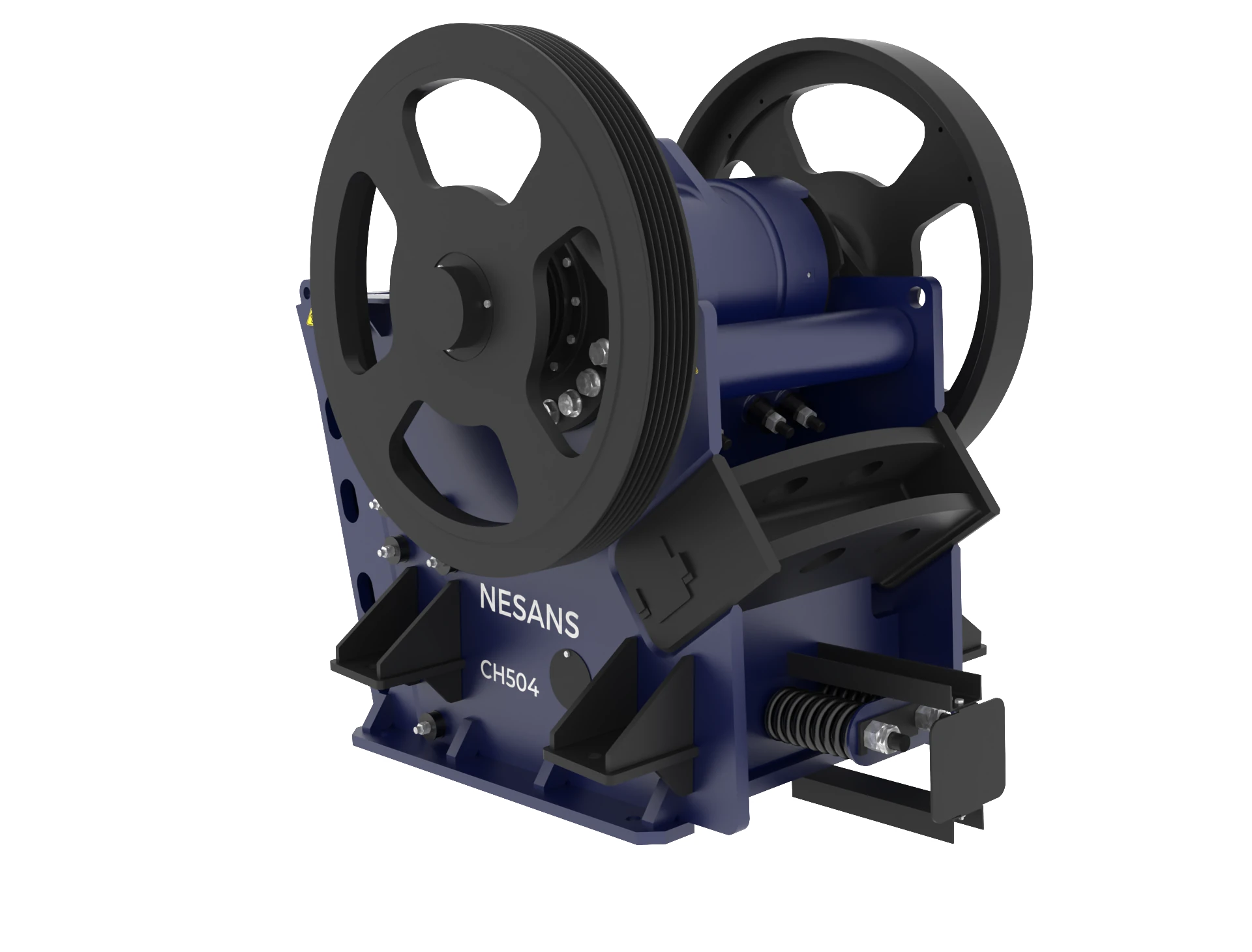
Primary jaw crushers are designed to handle specific feed size distributions. When blasting produces oversized material or excessive fines, the crusher cannot operate efficiently:
| Fragment Characteristic | Impact on Jaw Crusher | Operational Consequence |
|---|---|---|
| Oversized boulders (>80% CSS) | Bridging at feed opening | Production stops, manual breaking required |
| Excessive fines (<25mm) | Reduced crushing efficiency | Material passes through without size reduction |
| Uneven size distribution | Irregular power draw | Motor overloading, inconsistent throughput |
| Elongated/flat fragments | Poor nip angle engagement | Material rejection, reduced capacity |
| Optimal 80% passing F80 | Smooth crusher operation | Maximum throughput, minimal wear |
Fragmentation Quality Assessment
Before adjusting blasting parameters, establish baseline fragmentation quality through systematic measurement:
Visual assessment method:
- Photograph muckpile from consistent angle and distance
- Use scale reference (1m rod) in each image
- Document oversized boulder count per blast
- Record percentage of visible fines on surface
Dig-time analysis:
- Measure excavator cycle time per bucket
- Track bucket fill factor consistency
- Document loader productivity (tonnes/hour)
- Note frequency of boulder handling delays
Software-based fragmentation analysis:
- WipFrag, Split-Desktop, or similar image analysis tools
- Provides quantitative P80, P50, uniformity index
- Enables before/after comparison of blast designs
Blasting Parameters and Their Effect on Fragmentation
Understanding how each blasting parameter affects fragment size allows for systematic optimization. Changes should be made incrementally with careful documentation of results.
Burden and Spacing Optimization
Burden (B) and spacing (S) determine energy distribution in the rock mass. The relationship between these parameters controls fragmentation uniformity:
| Parameter Relationship | Fragmentation Effect | Typical Application |
|---|---|---|
| S/B = 1.15 (tight pattern) | Finer, more uniform fragmentation | Harder rock, jaw crusher feed |
| S/B = 1.25 (standard) | Balanced fragmentation and cost | Medium hardness rock |
| S/B = 1.40 (wide pattern) | Coarser fragmentation, lower cost | Soft rock, large primary crusher |
Burden calculation for Indian hard rock:
Burden (B) = 25 to 35 × hole diameter (mm)
For 115mm holes: B = 2.9 to 4.0 metres
Typical granite: B = 3.2 metres
Spacing = B × 1.15 to 1.25 = 3.7 to 4.0 metres
Explosive Energy and Powder Factor
Powder factor (kg explosive per cubic metre of rock) is the primary control for fragmentation energy. Higher powder factors produce finer fragmentation but increase blasting costs:
| Rock Type | Powder Factor Range (kg/m³) | Expected P80 (mm) |
|---|---|---|
| Soft limestone | 0.25 - 0.35 | 400 - 500 |
| Medium granite | 0.35 - 0.50 | 350 - 450 |
| Hard basalt | 0.50 - 0.70 | 300 - 400 |
| Very hard quartzite | 0.60 - 0.85 | 250 - 350 |
Calculating optimal powder factor:
Volume per hole = B × S × Bench height (H)
Example: 3.2 × 3.7 × 10 = 118.4 m³

Explosive per hole = Volume × Powder factor
For granite: 118.4 × 0.45 = 53.3 kg per hole

Total explosive = Holes × kg per hole
100 holes × 53.3 = 5,330 kg per blast
Timing Sequence and Delay Optimization
Electronic detonators enable precise timing that dramatically improves fragmentation uniformity. Proper delay sequencing allows each row to move before subsequent rows fire:
Inter-row delay calculation:
- Minimum delay = Burden ÷ burden velocity + safety margin
- Burden velocity typically 4-6 m/ms for granite
- For 3.2m burden: 3.2 ÷ 5 = 0.64ms + 20% margin = ~10ms between rows
Electronic vs conventional timing comparison:
| Detonator Type | Timing Accuracy | Fragmentation Benefit | Cost Increase |
|---|---|---|---|
| Non-electric (NONEL) | ±5-10% | Baseline | - |
| Electronic (1ms accuracy) | ±0.1% | 15-25% finer P80 | Rs 50-80/hole |
Optimizing Fragmentation for Indian Crusher Circuits
Different crusher types have distinct fragmentation requirements. Matching blast design to your primary crusher maximizes overall circuit efficiency.
Fragmentation Targets for Jaw Crushers
Jaw crushers require specific fragment characteristics for optimal performance:
| Jaw Crusher Size | Feed Opening | Target P80 | Maximum Boulder |
|---|---|---|---|
| 36×24 (900×600) | 750mm | 450mm | 600mm |
| 42×30 (1050×750) | 900mm | 550mm | 700mm |
| 48×36 (1200×900) | 1000mm | 650mm | 850mm |
Optimal jaw crusher feeding:
- 80% of material should be less than 80% of feed opening
- No material larger than 85% of feed opening
- Minimal fines (<25mm) to maximize crushing efficiency
- Cubical shape preferred over elongated fragments
Impact on Secondary and Tertiary Crushers
Primary crusher product distribution affects the entire downstream circuit:
Cascade effect of poor primary fragmentation:
- Oversized primary product overloads secondary crusher
- Secondary recirculation increases by 30-50%
- Screen overloading causes blinding and carryover
- Final product quality deteriorates
- Overall plant capacity drops 20-40%
Economic Analysis: Blasting Cost vs Crushing Cost
The relationship between blasting investment and crushing costs follows a clear economic principle: money spent on better fragmentation almost always returns multiples in reduced crushing costs.
Cost-Benefit Calculation Framework
Example: 200 TPH aggregate plant analysis
Current blasting cost:
Powder factor: 0.35 kg/m³
Explosive cost: Rs 45/kg bulk emulsion
Blasting cost: 0.35 × 45 = Rs 15.75/m³
At 2.7 t/m³: Rs 5.83/tonne blasting cost

Improved blasting (higher powder factor):
Powder factor: 0.50 kg/m³
Blasting cost: 0.50 × 45 = Rs 22.50/m³
At 2.7 t/m³: Rs 8.33/tonne blasting cost
Additional cost: Rs 2.50/tonne
Crushing cost savings from better fragmentation:
| Cost Category | Poor Fragmentation | Optimized Fragmentation | Savings |
|---|---|---|---|
| Primary crusher wear (Rs/t) | Rs 12.00 | Rs 8.50 | Rs 3.50 |
| Secondary crusher wear (Rs/t) | Rs 8.00 | Rs 6.00 | Rs 2.00 |
| Power consumption (Rs/t) | Rs 18.00 | Rs 14.50 | Rs 3.50 |
| Maintenance labor (Rs/t) | Rs 3.50 | Rs 2.50 | Rs 1.00 |
| Total savings | Rs 10.00/t |
Net benefit: Rs 10.00 savings - Rs 2.50 additional blasting = Rs 7.50/tonne profit improvement
At 200 TPH, 10 hours/day, 300 days/year:
Annual production: 600,000 tonnes
Annual savings: Rs 7.50 × 600,000 = Rs 45,00,000 (Rs 45 lakhs)
Additional Benefits Beyond Direct Cost Savings
Optimized fragmentation delivers benefits that extend beyond immediate cost calculations:
- Increased throughput: 15-25% capacity improvement from smooth material flow
- Reduced downtime: Fewer boulder handling stops, less bridging
- Extended equipment life: Lower peak loads reduce fatigue damage
- Better product quality: More consistent gradation, improved shape
- Lower hauling costs: Better muckpile fragmentation improves loader productivity
Rock Mass Characterization for Blast Design
Effective blast design requires understanding the rock mass structure and properties. Different geological conditions require different approaches.
Rock Property Assessment
Key rock properties affecting fragmentation:
| Property | Measurement Method | Impact on Blast Design |
|---|---|---|
| Uniaxial compressive strength | Lab testing (MPa) | Higher UCS requires higher powder factor |
| Joint spacing | Field mapping (metres) | Closer joints allow wider burden |
| Joint orientation | Strike and dip measurement | Affects face stability and backbreak |
| Weathering grade | Visual assessment | Weathered zones need reduced charging |
Adjusting for Geological Variability
Indian quarries often encounter significant geological variation. Adaptive blast design strategies:
For zones with closer joint spacing:
- Reduce powder factor by 15-25%
- Increase burden and spacing slightly
- Use smaller diameter holes if possible
For massive, tight rock zones:
- Increase powder factor by 20-30%
- Reduce burden and spacing
- Consider satellite holes for corner breaking
Practical Implementation: Working with Blasting Contractors
Effective collaboration between plant operators and blasting contractors is essential for optimization success.
Establishing Performance Metrics
Define clear, measurable targets for blast performance:
- Fragmentation P80: Target maximum fragment size at 80% passing
- Oversize percentage: Maximum acceptable boulders requiring secondary breaking
- Fines generation: Acceptable percentage of material below 25mm
- Muckpile profile: Toe position, height, spread requirements
- Dig rate target: Excavator productivity benchmark
Data Collection and Communication
Establish systematic feedback between crushing and blasting operations:
Daily tracking metrics:
- Primary crusher throughput (TPH actual vs rated)
- Boulder handling frequency and duration
- Power consumption per tonne
- Feeder bridging incidents
Weekly blast-to-crusher correlation:
- Match crusher performance to specific blast zones
- Document blast parameters used in each zone
- Calculate crushing cost per blast zone
- Identify best and worst performing blast designs
Common Blasting Problems and Crusher Symptoms
Learn to identify blasting issues by observing crusher behavior:
Diagnostic Table: Crusher Symptoms and Blasting Causes
| Crusher Symptom | Probable Blasting Cause | Recommended Action |
|---|---|---|
| Frequent bridging at feed opening | Excessive oversize from insufficient powder factor | Increase powder factor 15-20%, tighten pattern |
| High fines in ROM material | Over-blasting or excessive powder factor | Reduce powder factor, increase burden |
| Irregular power draw | Inconsistent fragment distribution | Improve timing sequence, check deck loading |
| Excessive jaw plate wear | High percentage of hard, blocky fragments | Optimize fragmentation for shape, not just size |
| Low throughput despite sized material | Elongated fragment shape causing packing | Adjust timing for better collision fragmentation |
Advanced Optimization Techniques
Blast Movement Monitoring
GPS-equipped blast movement monitors (BMMs) provide precise data on rock movement during blasting, enabling more accurate post-blast ore tracking and grade control.
Vibration and Air Overpressure Control
When quarries are near communities, vibration limits may restrict blast design options. Strategies to maintain fragmentation while controlling vibration:
- Electronic detonator precision timing to reduce peak particle velocity
- Smaller holes with tighter patterns vs larger holes with wider patterns
- Deck loading to distribute energy release over time
- Pre-splitting to control backbreak and vibration direction
Implementation Checklist for Optimization Program
Phase 1: Baseline establishment (2-4 weeks)
- □ Document current blasting parameters and costs
- □ Install fragmentation photography system
- □ Establish crusher performance baseline metrics
- □ Calculate current cost per tonne breakdown
Phase 2: Trial optimization (4-8 weeks)
- □ Select test area with consistent geology
- □ Implement modified blast design (one variable at a time)
- □ Track crusher performance from test material
- □ Document cost changes and production impacts
Phase 3: Full implementation (ongoing)
- □ Apply optimized parameters to standard operations
- □ Continue monitoring and adjustment
- □ Develop zone-specific blast designs for geology variations
- □ Share results with blasting contractor for continuous improvement
By understanding the fundamental relationship between blasting and crushing, and implementing systematic optimization programs, aggregate producers can achieve significant improvements in both productivity and profitability. The investment in better blasting consistently delivers returns that far exceed the additional explosives cost.
