
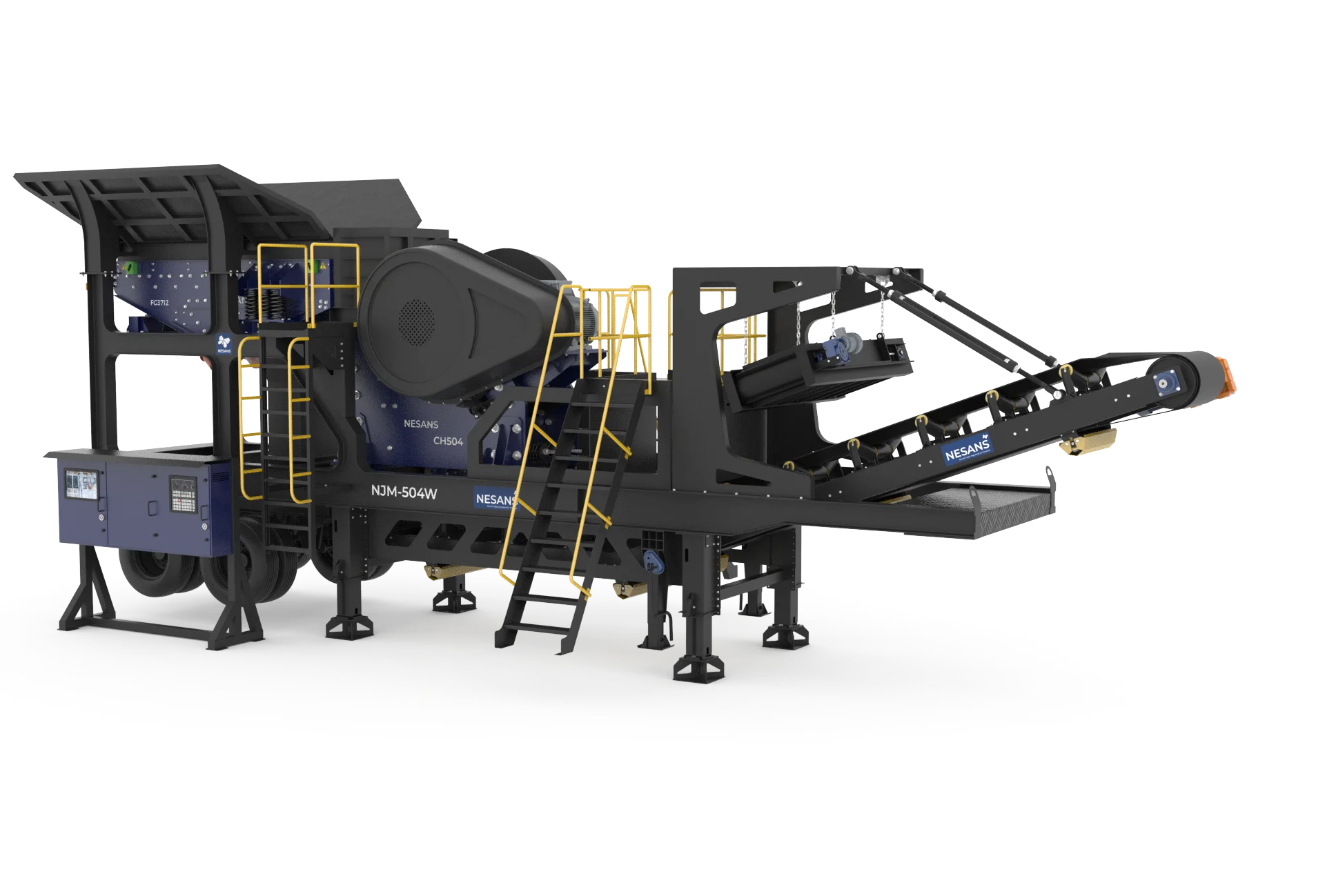
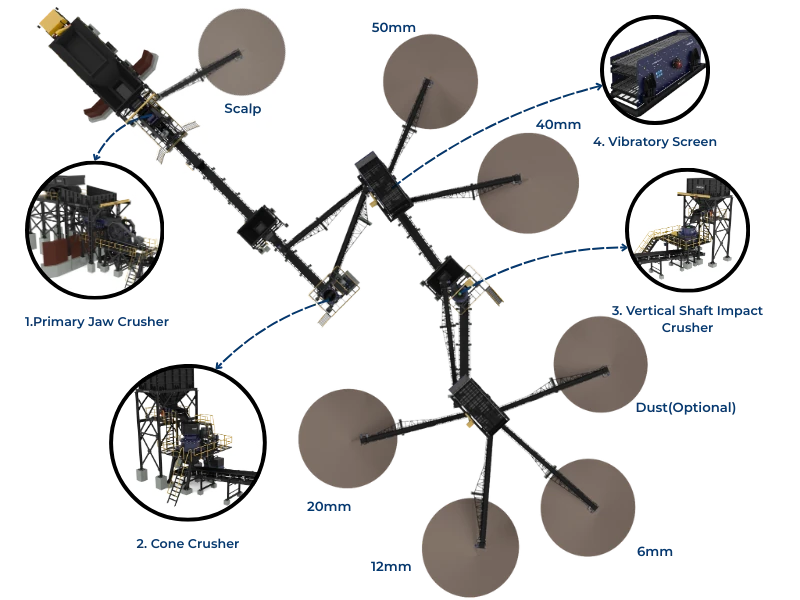
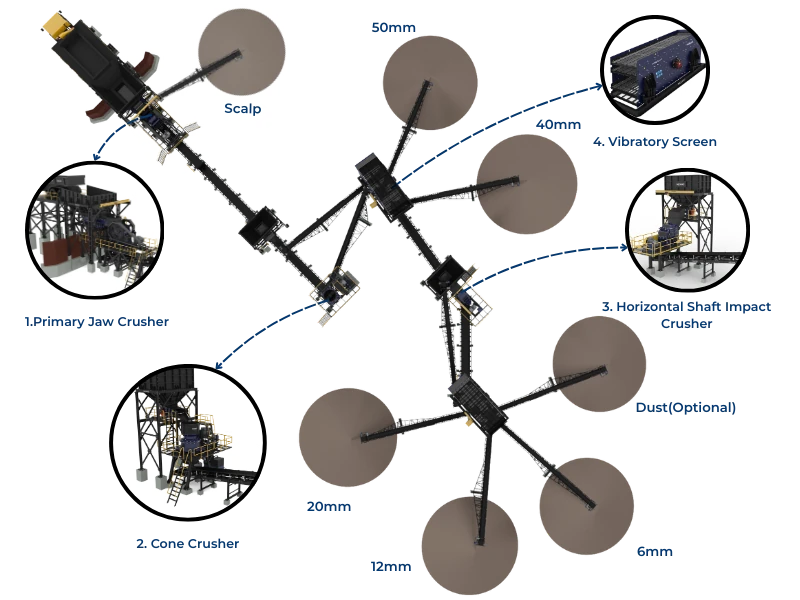
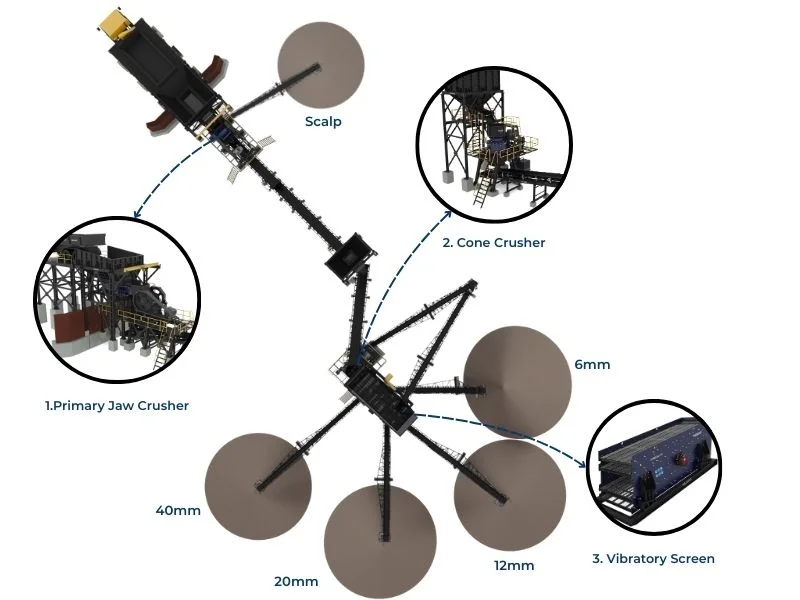
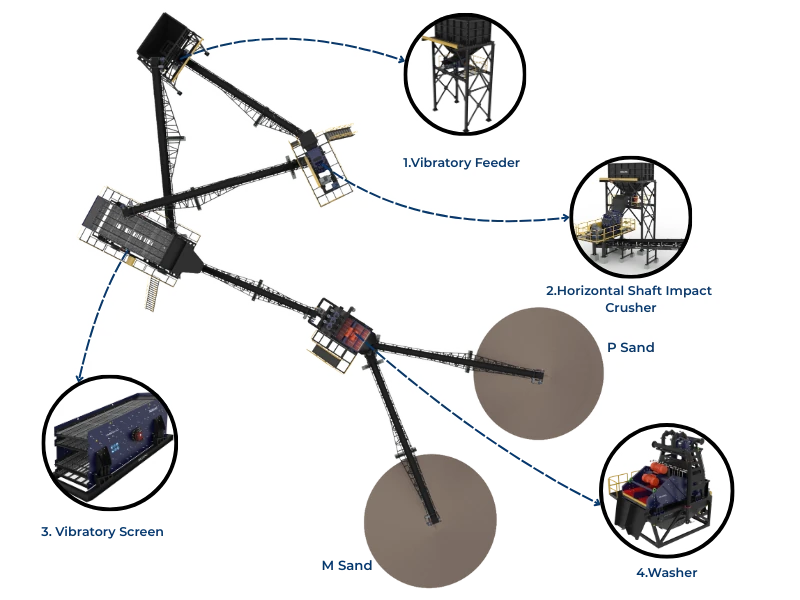








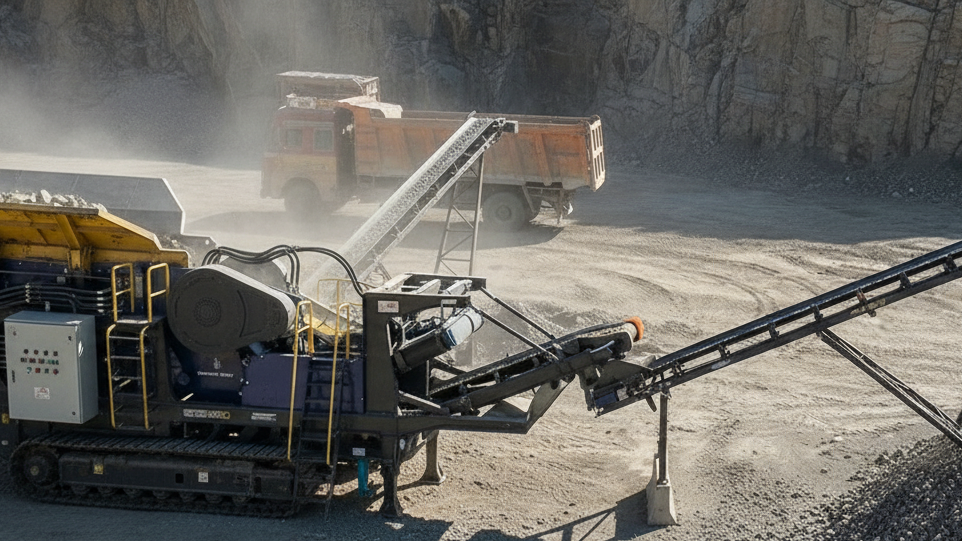
Mobile jaw crushers rely heavily on hydraulic systems for critical functions including CSS adjustment, toggle protection, conveyor raising, track propulsion, and crusher clearing. Understanding these hydraulic circuits and their common failure modes enables operators to diagnose problems quickly and minimize downtime in field conditions where workshop facilities are limited.
Mobile Jaw Crusher Hydraulic System Architecture
Modern mobile jaw crushers integrate multiple hydraulic circuits that serve different functions. Understanding this architecture is essential for effective troubleshooting.
Primary Hydraulic Circuits
Most mobile jaw crushers incorporate several distinct hydraulic systems:
| Circuit | Function | Typical Pressure | Flow Requirement |
|---|---|---|---|
| CSS adjustment | Hydraulic toggle adjustment | 200-280 bar | Low flow, high force |
| Tramp release | Protect from uncrushable material | 250-350 bar preset | Accumulator backed |
| Track propulsion | Machine mobility | 250-350 bar | High flow for speed |
| Conveyor fold | Transport configuration | 150-200 bar | Medium flow |
| Feeder functions | Feeder height, grizzly angle | 150-200 bar | Low flow |
Hydraulic Power Unit Components
The central hydraulic power unit (HPU) supplies all circuits:
Key components and their functions:
- Hydraulic reservoir: Typically 150-300 litres, provides cooling and deaeration
- Main pump: Variable displacement piston pump, 80-150 L/min
- Charge pump: Fixed displacement gear pump for pilot circuits
- Return filter: 10-25 micron filtration before reservoir
- Pressure filter: 3-10 micron filtration on critical circuits
- Oil cooler: Air-oil or water-oil heat exchanger
- Accumulator bank: Nitrogen charged for tramp release
Common Hydraulic Problems and Diagnostic Procedures
Problem 1: CSS Adjustment Not Responding
The hydraulic CSS adjustment system is critical for maintaining product size specification. When it fails to respond, production quality suffers.
Symptoms:
- CSS setting doesn't change when adjustment is commanded
- Adjustment moves in one direction only
- Erratic or jerky movement during adjustment
- Hydraulic noise during adjustment attempts
Diagnostic procedure:
- Check hydraulic fluid level: Low fluid causes pump cavitation and loss of pressure
- Verify system pressure: Connect gauge to CSS circuit test point; should read 200-280 bar
- Check solenoid valve operation: Listen for click when command is given
- Inspect cylinder for external leaks: Check rod seal and port connections
- Verify toggle wear status: Worn toggles may prevent adjustment range
Common causes and solutions:
| Cause | Diagnosis Method | Solution |
|---|---|---|
| Solenoid valve failure | No click when activated, no flow | Replace solenoid coil or complete valve |
| Cylinder seal failure | External leak at rod, internal bypass | Reseal or replace cylinder |
| Relief valve stuck open | Low circuit pressure on gauge | Clean or replace relief valve |
| Pump wear | Low flow at correct pressure | Check pump efficiency, replace if <80% |
| Blocked filter | High pressure drop across filter | Replace filter element |
Problem 2: Tramp Iron Release System Failure
The tramp release system protects the crusher from catastrophic damage when uncrushable material enters. System failure puts the entire crusher at risk.
Symptoms:
- Crusher stalls instead of releasing on tramp iron
- Toggle plate breaks without accumulator release
- Accumulator pressure gauge shows low or zero pressure
- Relief valve chattering or leaking
Diagnostic procedure:
- Check accumulator pre-charge pressure: Should be 60-70% of system working pressure
- Verify nitrogen pressure: Use proper nitrogen charging kit, never use air
- Test relief valve setting: Confirm opens at specified pressure (typically 280-350 bar)
- Check pilot circuit operation: Verify pilot valve shifts correctly
- Inspect accumulator bladder: Check for rupture or fatigue failure
Accumulator pre-charge specifications (typical):
| System Pressure | Pre-charge Pressure | Minimum Acceptable |
|---|---|---|
| 280 bar | 170-190 bar | 150 bar |
| 320 bar | 195-220 bar | 175 bar |
| 350 bar | 210-240 bar | 190 bar |
Critical safety note: Accumulators store significant energy. Always follow proper lockout/tagout procedures and use nitrogen charging equipment rated for hydraulic accumulator service.
Problem 3: Track Drive System Issues
Track propulsion problems strand the machine, requiring costly heavy equipment transport.
Symptoms:
- One or both tracks won't move
- Slow track speed despite full throttle
- Track moves in one direction only
- Excessive track motor heating
- Jerky or uncontrollable track movement
Diagnostic procedure:
- Check pilot pressure: Track controls require pilot circuit pressure (25-50 bar)
- Verify joystick/pedal function: Check for broken cable, stuck valve
- Test track motor relief valves: Cross-port reliefs protect from over-pressure
- Check final drive oil level: Low level causes planetary gear damage
- Measure case drain flow: Excessive flow indicates motor wear
Track drive troubleshooting table:
| Symptom | Probable Cause | Test Method | Solution |
|---|---|---|---|
| No movement either direction | Pilot pressure failure | Check pilot pressure gauge | Repair pilot pump or relief |
| Slow movement only | Main pump low flow | Flow test pump output | Adjust/replace pump |
| Movement one direction only | Directional valve stuck | Manual valve override | Clean or replace valve |
| Excessive motor heating | Cross-port relief leaking | Infrared temperature check | Adjust or replace relief |
| Track won't hold on slope | Brake release valve failure | Check brake release pressure | Replace brake valve |
Hydraulic Fluid Analysis and Maintenance
Proper hydraulic fluid condition is fundamental to system reliability. Mobile crushers operate in dusty environments that accelerate fluid contamination.
Fluid Contamination Control
Target cleanliness levels for mobile crusher hydraulics:
| Circuit Type | ISO Cleanliness Target | Maximum Acceptable |
|---|---|---|
| Servo/proportional valves | 16/14/11 | 17/15/12 |
| Piston pumps and motors | 17/15/12 | 18/16/13 |
| Gear pumps and vane motors | 18/16/13 | 19/17/14 |
| Cylinders and general circuits | 19/17/14 | 20/18/15 |
Fluid Analysis Parameters
Regular oil analysis provides early warning of developing problems:
Key analysis parameters:
- Particle count: ISO 4406 cleanliness code
- Water content: Karl Fischer titration, target <0.1%
- Viscosity: At 40°C, should be within ±10% of new oil
- Total acid number (TAN): Indicates oxidation, should be <2.0
- Wear metals: Iron, copper, bronze indicate component wear
Interpretation guidelines:
| Parameter | Normal | Caution | Critical |
|---|---|---|---|
| Iron (ppm) | <25 | 25-75 | >75 |
| Copper (ppm) | <15 | 15-40 | >40 |
| Silicon (ppm) | <15 | 15-25 | >25 |
| Water (%) | <0.05 | 0.05-0.1 | >0.1 |
| Viscosity change (%) | ±5% | ±5-10% | >±10% |
Filter Maintenance Schedule
Filter condition directly impacts system cleanliness and component life:
| Filter Location | Change Interval | Bypass Indicator Action |
|---|---|---|
| Return filter | 500 hours or indicator | Change immediately if triggered |
| Pressure filter | 1000 hours or indicator | Change immediately, investigate cause |
| Pilot filter | 500 hours | N/A - no bypass on most designs |
| Case drain filter | 1000 hours | Change and sample for motor wear |
| Breather | 250 hours or visual | Replace if discolored or damaged |
Temperature Management
Hydraulic oil temperature affects viscosity, seal life, and overall system performance. Mobile crushers in Indian conditions face particular challenges during summer months.
Operating Temperature Limits
| Temperature Range | System Status | Required Action |
|---|---|---|
| 30-50°C | Cold start range | Allow warm-up, avoid full load |
| 50-70°C | Optimal operating range | Normal operation |
| 70-80°C | Acceptable but elevated | Monitor, check cooler function |
| 80-90°C | Warning range | Reduce load, investigate cooling |
| >90°C | Shutdown required | Stop immediately, prevent damage |
Cooling System Troubleshooting
Oil cooler inspection checklist:
- □ Check cooler fins for debris blockage
- □ Verify cooling fan operation and direction
- □ Test thermostat valve operation (if equipped)
- □ Check cooler bypass valve setting
- □ Inspect for internal core blockage
- □ Verify adequate airflow around cooler
Temperature reduction strategies:
- Clean cooler cores daily in dusty conditions
- Install pre-filter screens on cooling air intake
- Consider upgrading to larger cooler for hot climate operation
- Ensure hydraulic tank is at proper fill level for heat dissipation
- Maintain proper oil viscosity grade for ambient conditions
Field Repair Procedures
Emergency Hose Repair
Hydraulic hose failures are common in the field. Proper temporary repairs get the machine operational while permanent repairs are arranged.
Essential field repair kit contents:
- Assorted reusable hose fittings (field-attachable)
- Hose lengths in common sizes (1/4", 3/8", 1/2", 3/4")
- O-rings for common fitting sizes
- Thread sealant tape and paste
- Adjustable wrenches and fitting tools
- Clean rags and plugs for open ports
Hose repair procedure:
- Relieve system pressure completely
- Clean area around fittings thoroughly
- Remove damaged hose, plug open ports immediately
- Measure required hose length accurately
- Install new fittings with proper torque
- Refill system and bleed air before starting
Cylinder Seal Replacement
External cylinder leaks can often be repaired in the field with proper preparation:
Field seal replacement procedure:
- Fully retract cylinder and block securely
- Remove gland retaining hardware
- Extract gland and rod assembly
- Clean all components thoroughly
- Install new seal kit with proper orientation
- Lubricate seals with clean hydraulic oil
- Reassemble with proper torque sequence
Preventive Maintenance Schedule
Daily Checks
- Check hydraulic fluid level
- Inspect for visible leaks at all connections
- Monitor system temperature during operation
- Check accumulator pressure gauges
- Verify all functions operate correctly
Weekly/250-Hour Service
- Sample hydraulic fluid for analysis
- Clean oil cooler cores
- Check filter condition indicators
- Inspect hoses for wear, rubbing, weathering
- Verify all valve manual overrides function
- Check accumulator pre-charge pressure
Monthly/500-Hour Service
- Change return line filters
- Check pump case drain flow (wear indicator)
- Inspect cylinder rods for scoring or damage
- Test all relief valve settings
- Verify track drive final drive oil levels
Quarterly/1000-Hour Service
- Change all hydraulic filters
- Complete hydraulic fluid analysis
- Flush pilot circuit if contamination suspected
- Calibrate pressure gauges
- Check all hydraulic cylinder condition
Systematic hydraulic maintenance and rapid troubleshooting capability keeps mobile jaw crushers productive in demanding field conditions. Investing in proper diagnostic tools, spare parts inventory, and operator training delivers significant returns through reduced downtime and extended component life.
