
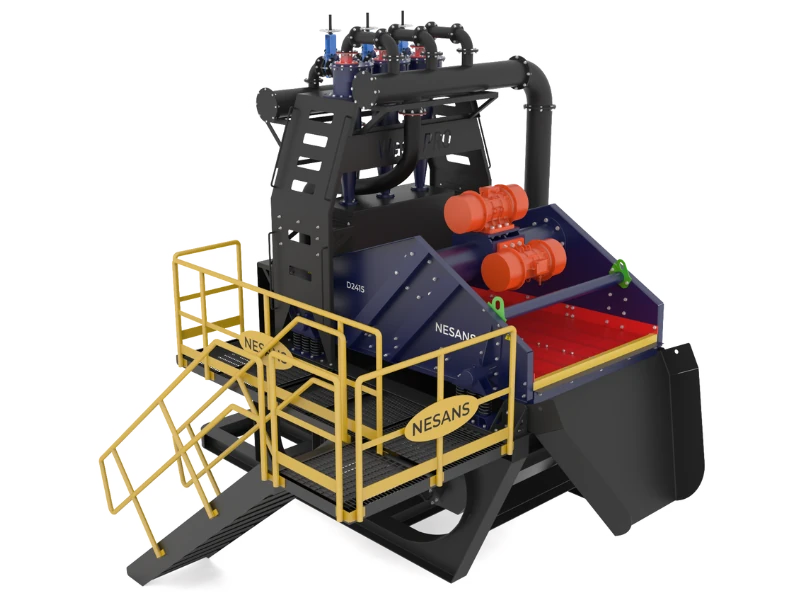
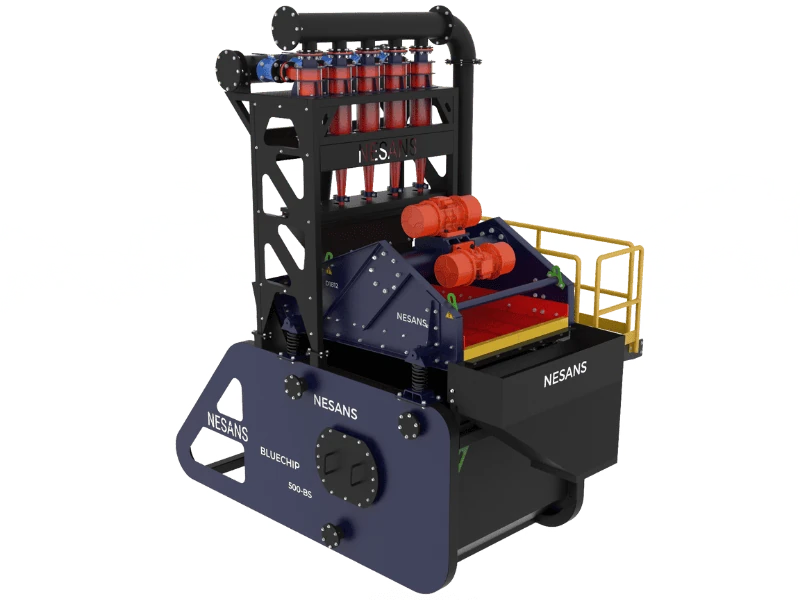
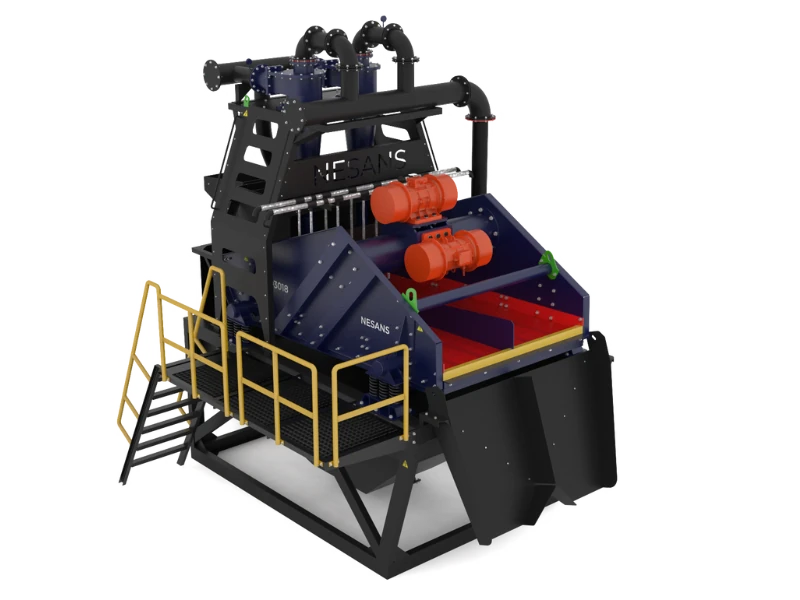
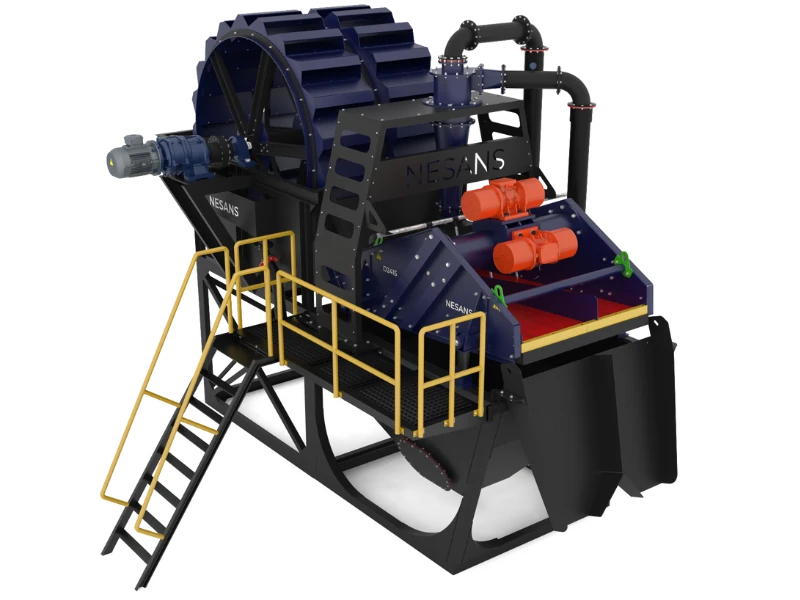
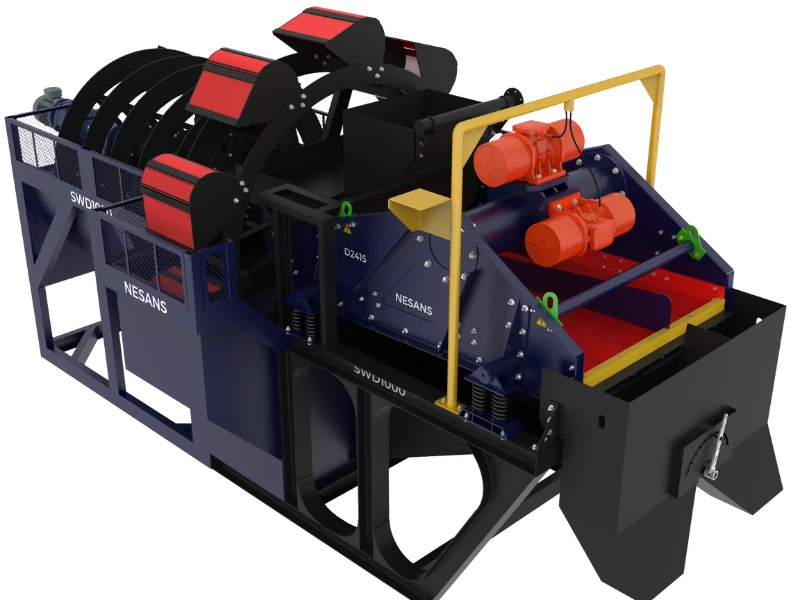
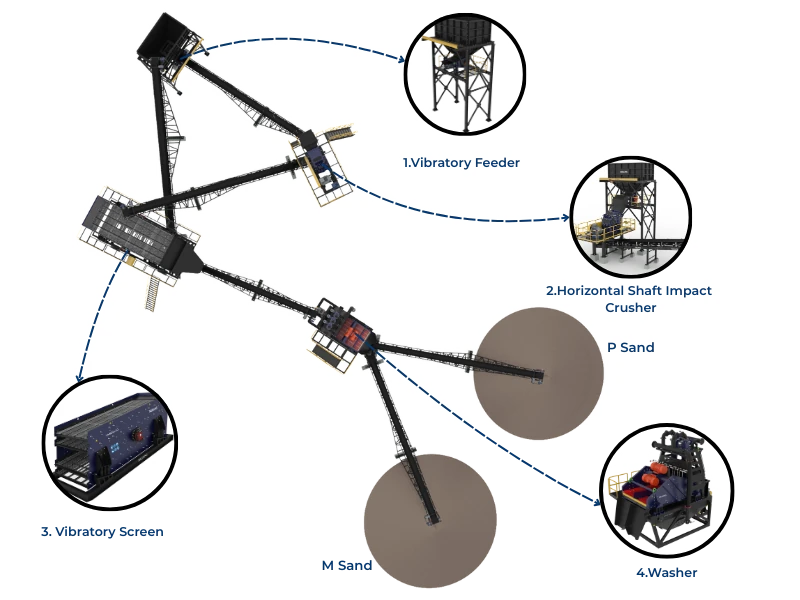
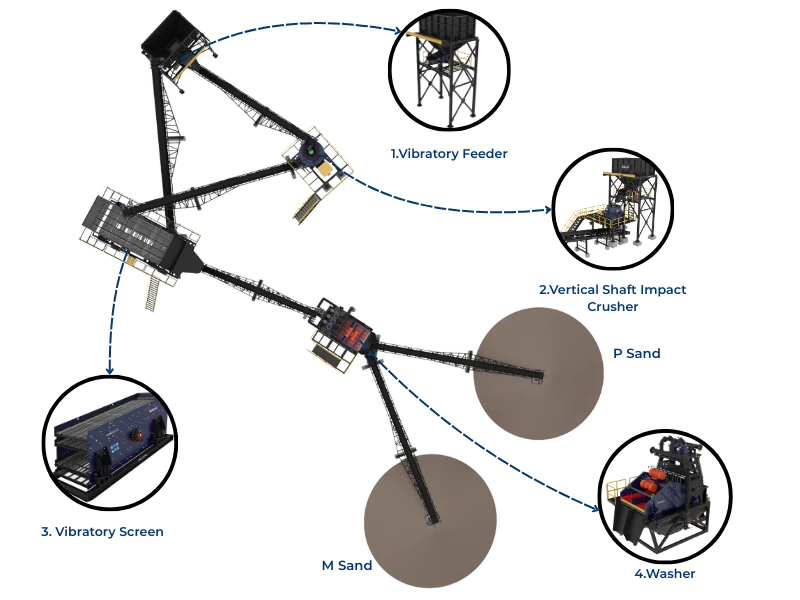
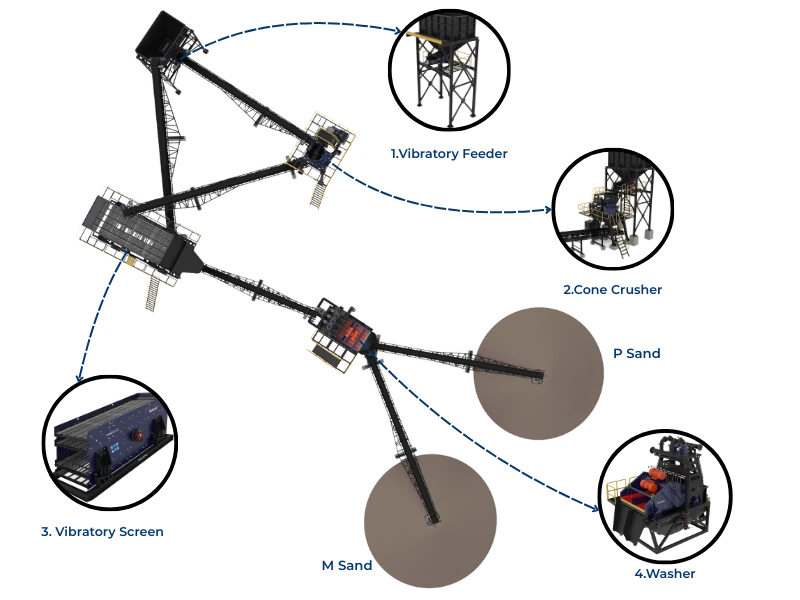
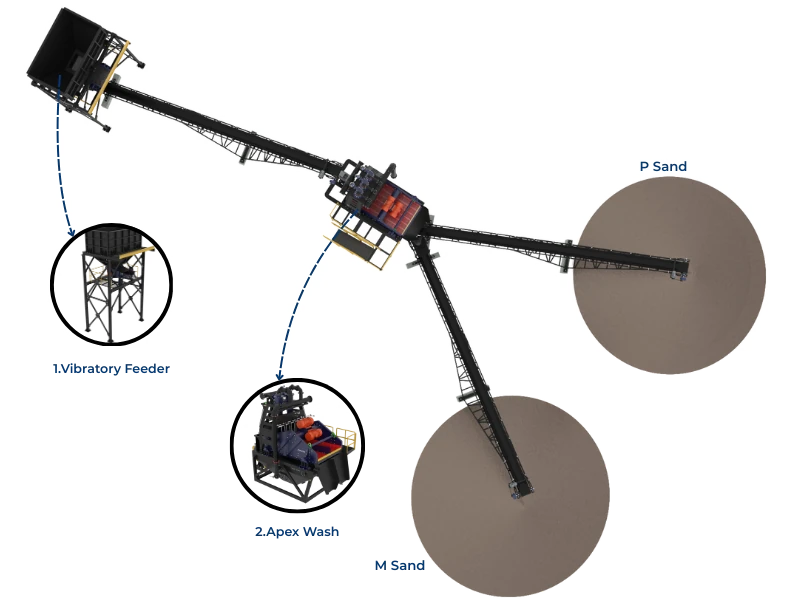
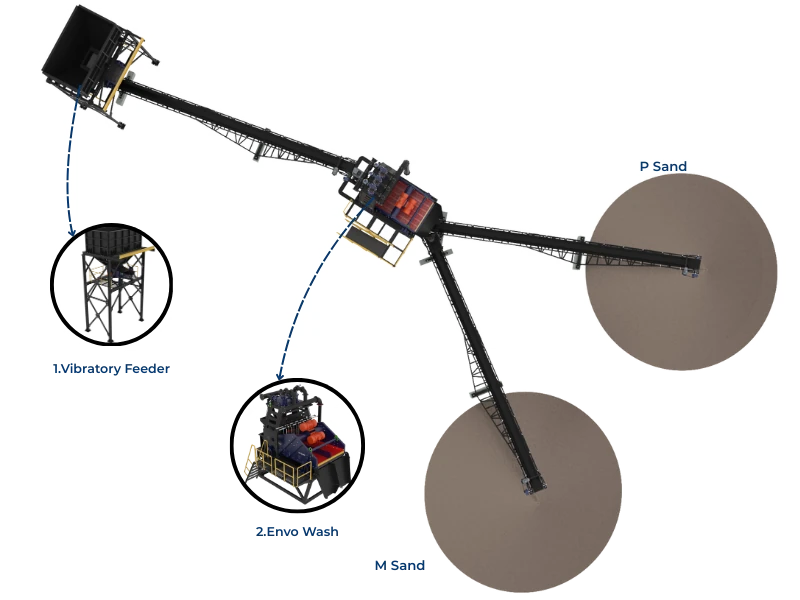







The fine material washer — the screw, or bucket-wheel’s cousin — does an unglamorous but vital job: it washes silt off sand and dewaters it, while trying not to throw the saleable fine sand out with the dirty water. Size it wrong and you either ship dirty sand or pour money over the overflow weir. Size it right and it recovers a clean, well-graded product.
This article explains how a screw washer works, how the overflow weir governs the loss of fine sand, and how to size the unit for both tonnage and the fines you want to keep.
How a screw washer works
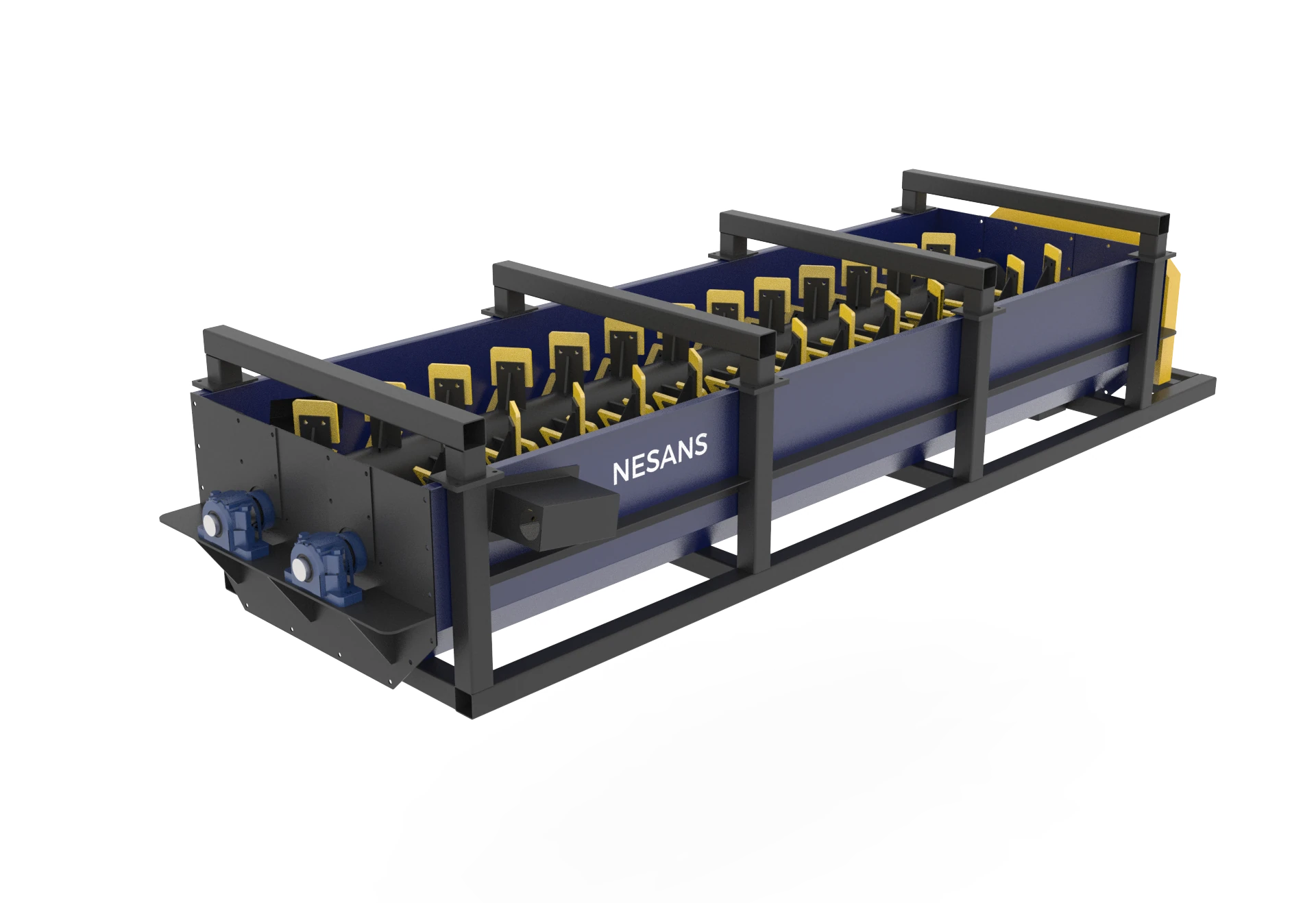
Slurry enters a sloped tank. The heavy sand settles into a pool and is dragged up the incline by a slow-turning screw (or twin screws), draining as it climbs and discharging as a damp, washed sand. The light silt and clay stay suspended and overflow a weir at the low end with the dirty water. The machine is, in effect, a settling pool with a conveyor in the bottom.
The weir governs what you keep — and lose
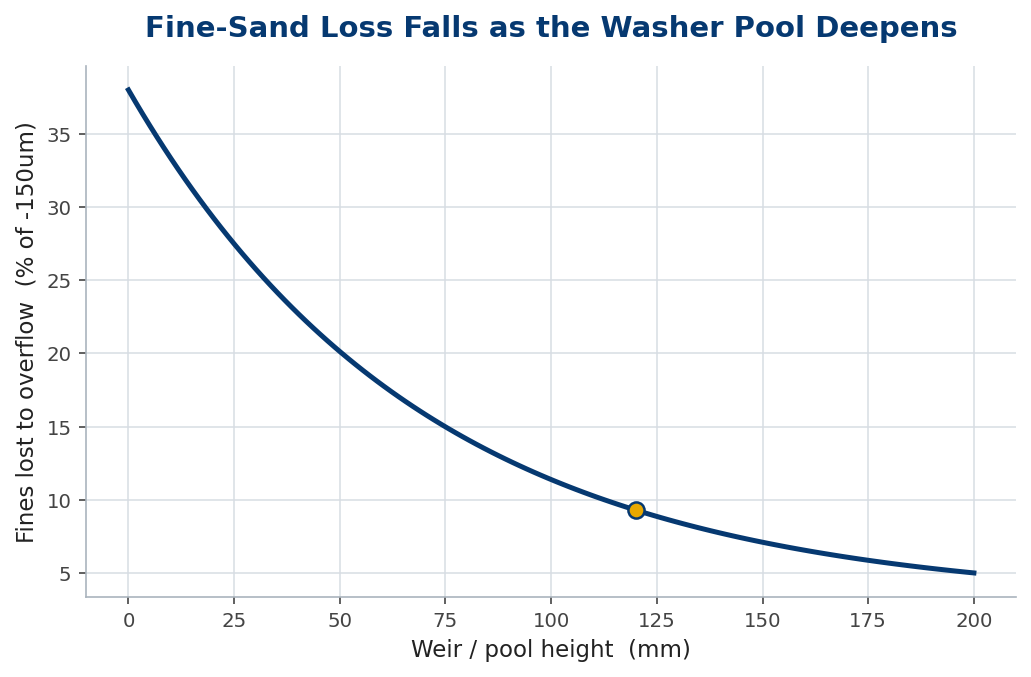
The single most important adjustment is the overflow weir height, which sets the pool depth and the overflow velocity. A low weir means a shallow pool and a fast overflow that carries fine sand out with the silt — lost product. Raise the weir and the pool deepens, the overflow slows, and more fine sand settles and is recovered. The trade is between cleaner sand (more silt removed) and higher yield (less fine sand lost).
Worked example 1 — the cost of a low weir
A screw washer treats 120 t/h of sand. Running with a shallow pool, it loses about 18% of its minus-150 µm fraction over the weir; raising the weir cuts that to about 6%. If the fines are 20% of the feed, that recovered 12 points is  of saleable sand — roughly
 flowing over the weir. The weir setting is a revenue dial.
Worked example 2 — when the screw can't keep the fines
Raising the weir helps, but a single screw washer has a limit: push the pool too deep and the sand short-circuits or the unit floods. When the sand carries a lot of valuable ultra-fine (below ~75 µm) that even a deep pool cannot settle, the answer is to pair the washer with a hydrocyclone and dewatering screen ahead of or instead of it — the cyclone recovers the ultra-fines centrifugally that gravity in the screw cannot. Knowing the screw’s settling limit tells you when to add classification rather than chase the weir.
| Lever | Effect | Trade-off |
|---|---|---|
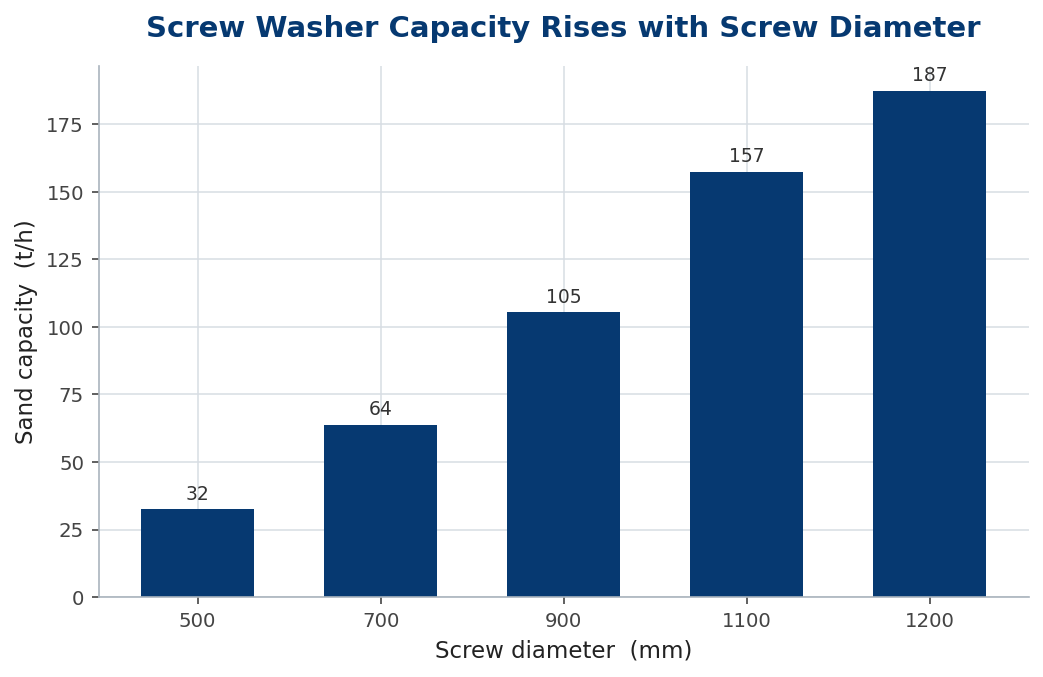
| Screw diameter | sand tonnage | capital, footprint |
| Weir / pool height | fine-sand recovery | cleanliness vs yield |
| Screw speed | drainage & throughput | too fast = wet, fines lost |
| Add cyclone | recovers ultra-fines | extra circuit cost |
In practice
Size the screw diameter for the peak sand tonnage, then treat the weir as the fine-tuning dial between product cleanliness and yield — and tune it to the money, recovering every saleable fine you can without leaving silt in the sand. Run the screw slow enough to drain the sand properly; speed buys throughput at the cost of wet, fines-losing discharge. And know the unit’s settling limit: where the product is rich in ultra-fines, a cyclone-and-dewatering-screen circuit will hold what the screw alone cannot.
Common mistakes
- Running a low weir. A shallow, fast pool pours saleable fine sand over the overflow — raise it to recover yield.
- Over-speeding the screw. Fast screws discharge wet sand and lose fines; run slow enough to drain.
- Expecting a screw to hold ultra-fines. Below ~75 µm, add a cyclone — gravity settling has a limit.
Twin screws, rising-current classification and gradation control
A single screw washer recovers and dewaters, but it cannot finely control the gradation of the sand it makes — it keeps essentially everything that settles. Where the product must hit a target fineness modulus, the washer is paired with a rising-current classifier: an upward water flow in the settling pool that carries the finest particles up and over with the overflow while the coarser sand sinks to the screw. By tuning the upward current, the operator sets the cut and so the product’s fineness.
This turns the washer from a simple recovery device into a gradation tool. Too much fine in the sand (a low fineness modulus, a thirsty concrete sand) is corrected by raising the current to float more fines away; too coarse a product is corrected by easing the current to retain more fines. The rising-current cell, in effect, gives the screw washer the classifying control that a plain settling pool lacks.
The twin-screw configuration, meanwhile, addresses tonnage and dewatering rather than classification. Two screws share the load across a wider tank, lifting throughput and giving the sand a longer, gentler drainage path up the incline for a drier discharge. For high-tonnage duties a twin-screw unit does what a single screw cannot without running so fast that it loses fines — capacity without sacrificing drainage.
Specify accordingly: a single screw for straightforward recovery and dewatering; a twin screw where tonnage or a drier cake demands it; and a rising-current classifier bolted onto either where the product gradation must be controlled, not merely recovered. The weir still sets the coarse-fines balance, but the rising current is what lets a screw washer make a sand to a specification rather than just to a heap.
The bottom line
A fine material washer settles and dewaters sand while overflowing silt; the screw diameter sets tonnage and the overflow weir sets the balance between clean sand and recovered fines. The weir is a revenue dial.
Size the diameter for the peak, tune the weir to the money, run the screw slow to drain, and add a cyclone for ultra-fines — and the washer ships clean sand without pouring product over the weir.
Frequently asked questions
How does a screw washer recover sand?
Sand settles in a sloped pool and is dragged up and drained by a slow screw, discharging as washed, damp sand; silt and clay overflow a weir with the dirty water.
Why does the overflow weir height matter?
It sets the pool depth and overflow speed. A low weir loses fine sand over the overflow; a higher weir slows the overflow and recovers it.
When do I need a cyclone as well?
When the sand carries valuable ultra-fines (below ~75 micron) that gravity settling in the screw cannot hold — a hydrocyclone recovers them centrifugally.
Key takeaways
- Screw diameter sets tonnage; the overflow weir sets clean-sand vs fines recovery.
- A low weir pours saleable fine sand over the overflow — the weir is a revenue dial.
- Run the screw slow enough to drain; speed loses fines and ships wet sand.
- For ultra-fines below ~75 micron, add a hydrocyclone — gravity settling has a limit.
