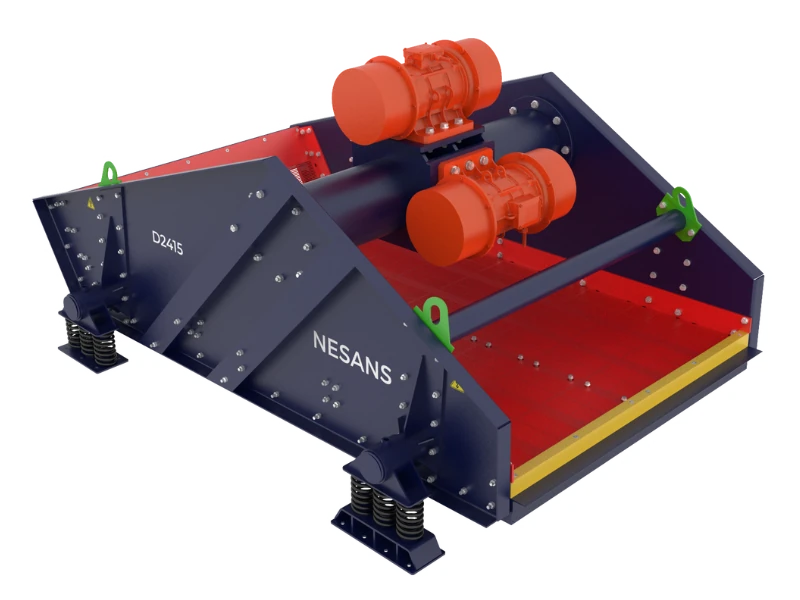
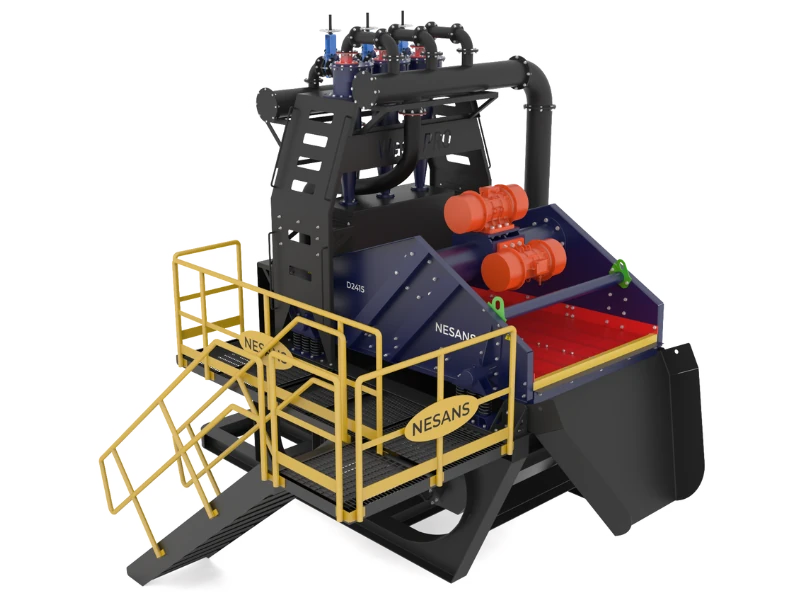
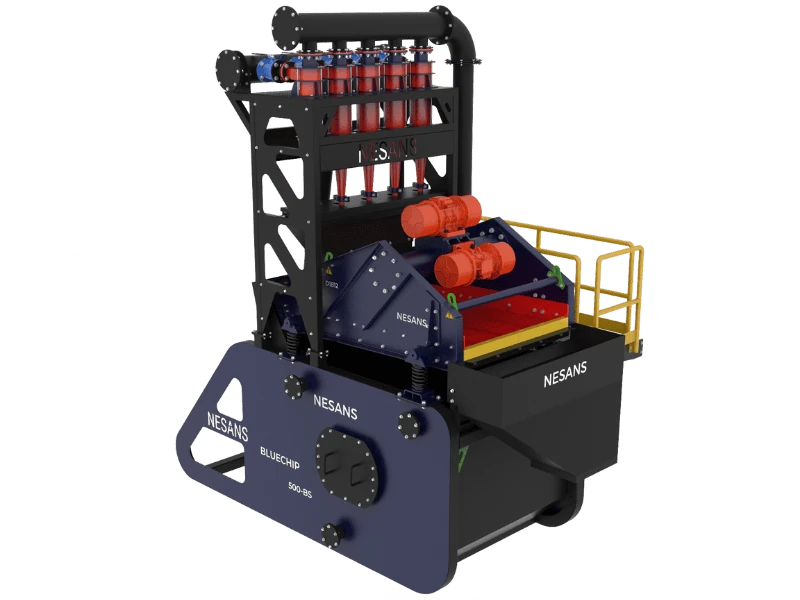
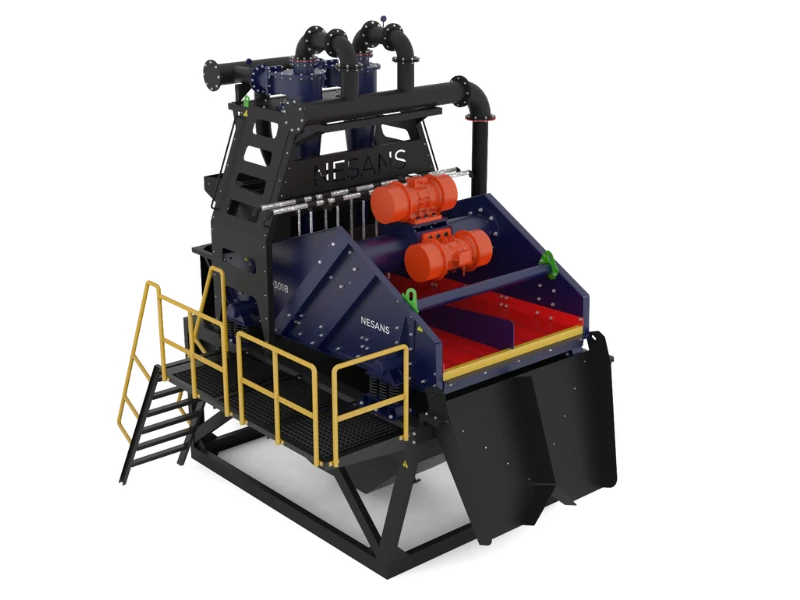
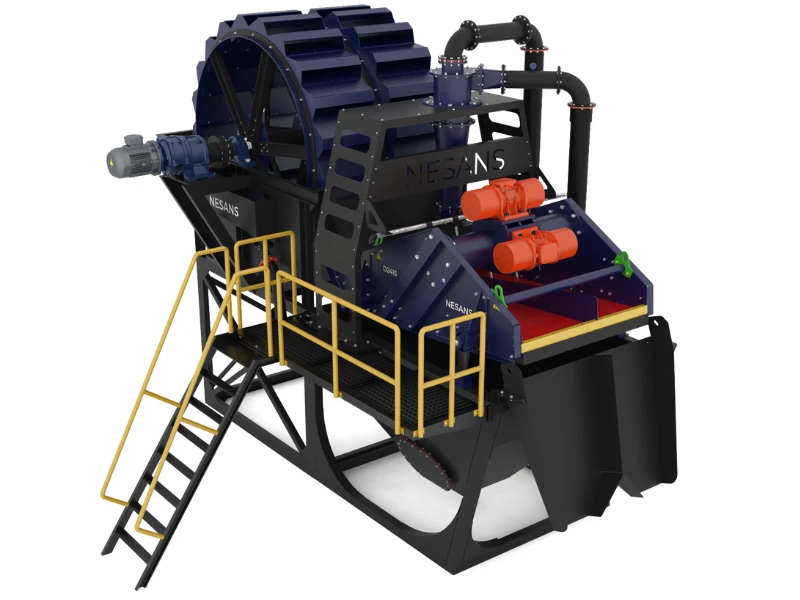
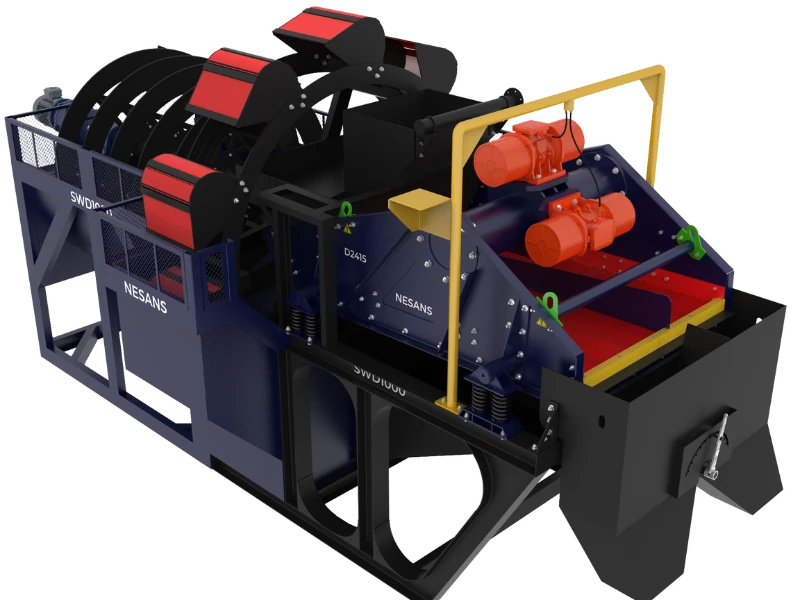
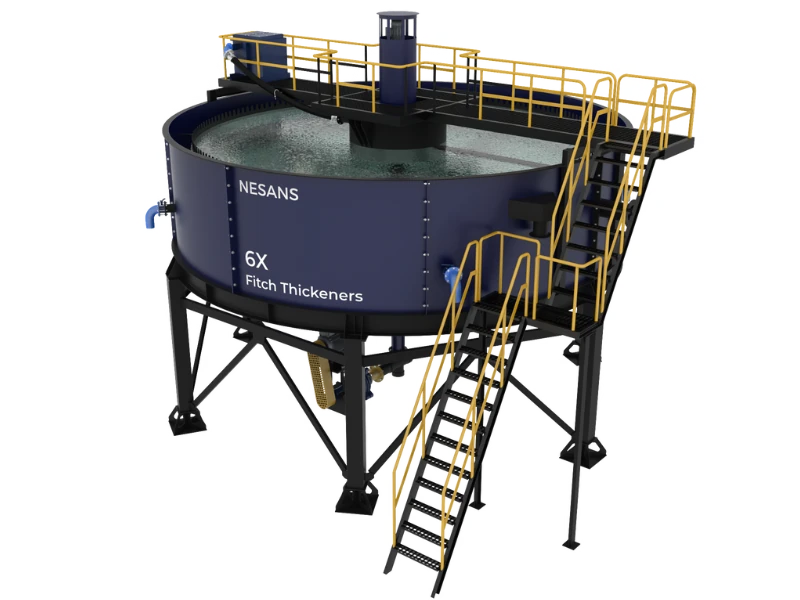
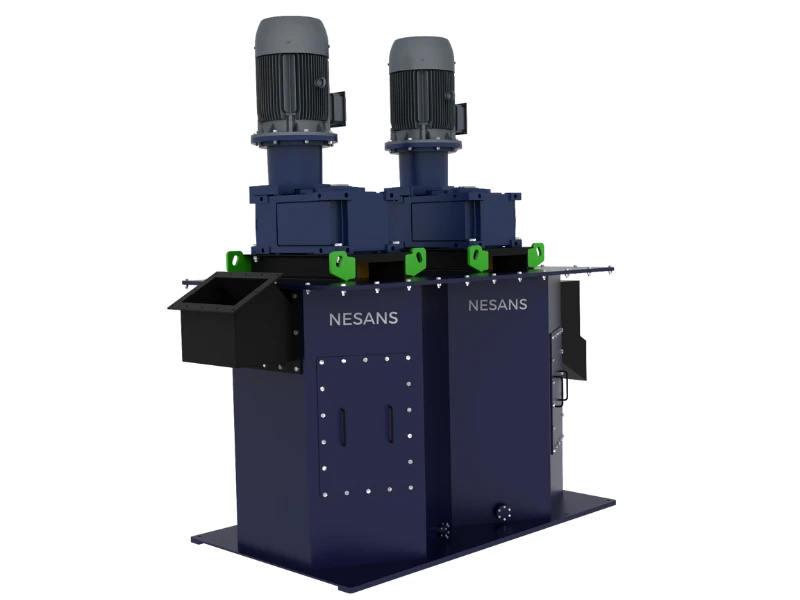






Flocculant systems are essential for efficient water management in sand washing and aggregate processing plants. Proper flocculant selection, dosing, and system operation enables rapid settling of fine particles, allowing water recycling while producing clean water for discharge or reuse. Understanding flocculant chemistry and application techniques helps operators optimize chemical costs while meeting environmental requirements.
Understanding Flocculant Chemistry
Types of Flocculants
Flocculants are high-molecular-weight polymers that cause fine particles to aggregate into larger, faster-settling flocs:
| Type | Charge | Molecular Weight | Typical Application |
|---|---|---|---|
| Anionic polyacrylamide | Negative (-) | 15-25 million | Most mineral and sand applications |
| Cationic polyacrylamide | Positive (+) | 5-15 million | Organic-rich waste, municipal sludge |
| Non-ionic polyacrylamide | Neutral | 8-15 million | Acidic slurries, special applications |
| Polyamine/polyDADMAC | Strong positive | Low (coagulant) | Primary treatment, charge neutralization |
Flocculation Mechanism
Effective flocculation involves several mechanisms working together:
- Charge neutralization: Polymer counters particle surface charge
- Bridging: Long polymer chains connect multiple particles
- Patch flocculation: Localized charge patches attract particles
- Sweep flocculation: Growing flocs capture smaller particles
Factors Affecting Flocculant Performance
| Factor | Effect on Performance | Optimization Approach |
|---|---|---|
| pH | Affects polymer charge and activity | Adjust pH to optimal range (6.5-8.5 typical) |
| Solids concentration | Higher solids need more flocculant | Dilute feed if necessary, adjust dose |
| Particle size distribution | Finer particles harder to flocculate | May need coagulant + flocculant |
| Water hardness | Calcium/magnesium affect polymer activity | Select appropriate polymer grade |
| Temperature | Cold water reduces reaction rate | Increase mixing time or dose |
| Competing ions | Can consume flocculant | Increase dose or pretreat water |
Flocculant Preparation Systems
Dry Polymer Makeup Units
Most industrial flocculants are supplied as dry powder requiring controlled mixing:
Three-tank system components:
- Wetting chamber: Initial water contact, prevents lumping
- Mixing tank: Mechanical agitation for polymer hydration
- Aging/storage tank: Final maturation before use
Makeup procedure:
- Fill mixing tank with clean water to setpoint
- Start mixer at moderate speed
- Create vortex in wetting chamber with water flow
- Add dry polymer slowly through wetting chamber
- Continue mixing for 45-60 minutes minimum
- Transfer to aging tank, allow 30+ minutes maturation
Critical parameters:
| Parameter | Typical Range | Consequence of Error |
|---|---|---|
| Solution concentration | 0.1-0.5% (1-5 g/L) | Too high: poor mixing, waste; Too low: weak flocs |
| Water temperature | 15-30°C | Cold: slow hydration; Hot: polymer degradation |
| Mixing time | 45-90 minutes | Too short: incomplete hydration, poor performance |
| Mixer speed | Moderate vortex | Too fast: polymer degradation; Too slow: lumping |
Emulsion Polymer Systems
Liquid emulsion polymers offer faster makeup but higher chemical cost:
Advantages:
- Faster preparation (10-20 minutes)
- No dust handling
- Easier dosing control
- Compact equipment
Disadvantages:
- Higher cost per active kilogram
- Shorter shelf life (6-12 months)
- Temperature sensitive storage
Solution Concentration Guidelines
Optimize concentration for best performance and cost:
| Application | Stock Solution | Dosing Solution | Notes |
|---|---|---|---|
| Sand washing | 0.25-0.5% | 0.025-0.05% | Dilute before dosing point |
| Thickener feed | 0.3-0.5% | 0.05-0.1% | Good mixing essential |
| Belt press feed | 0.3-0.5% | 0.1-0.2% | Higher concentration for shear resistance |
Dosing System Design
Dosing Point Location
Proper dosing point location is critical for flocculant effectiveness:
Optimal characteristics:
- Good initial mixing with slurry
- Adequate retention time for floc formation
- Minimal shear after floc formation
- Accessible for adjustment and maintenance
Common dosing locations:
| Equipment | Dosing Location | Notes |
|---|---|---|
| Thickener | Feedwell inlet or dilution zone | Avoid adding after feedwell |
| Clarifier | Inlet pipe or mixing chamber | Need flash mixing zone |
| Cyclone overflow | Discharge pipe, before launder | Use inline static mixer |
| Settling pond | Inlet channel with baffles | Create mixing then calm zone |
Dosing Pump Selection
| Pump Type | Advantages | Disadvantages | Best Application |
|---|---|---|---|
| Peristaltic | No contact with fluid, good accuracy | Tube wear, pulsing flow | Small flows, accurate dosing |
| Progressive cavity | Handles viscous solutions, steady flow | Stator wear, higher cost | Larger flows, viscous solutions |
| Diaphragm | Reliable, handles pressure | Pulsing, valve maintenance | Moderate flows, general use |
| Centrifugal | High flow, low maintenance | Shear degrades polymer | Low concentration dilution only |
Dosing Rate Determination
Calculate initial dosing rate from jar testing and site trials:
Flocculant dose (g/tonne dry solids) = typically 20-100 g/t

Dosing rate calculation:
Dry solids rate = Slurry flow (m³/h) × Solids concentration (kg/m³)
Flocculant rate = Dry solids rate × Dose (g/t) / 1000

Example:
Slurry flow: 200 m³/h
Solids: 100 kg/m³ (10% by weight)
Dose: 50 g/tonne
Dry solids: 200 × 100 = 20,000 kg/h = 20 t/h
Flocculant rate: 20 × 50 / 1000 = 1.0 kg/h active polymer

At 0.25% solution concentration:
Solution rate: 1.0 / 0.0025 = 400 L/h
Optimization Techniques
Jar Testing Procedure
Jar testing is essential for flocculant selection and dose optimization:
- Collect representative sample:
- Take sample from actual process stream
- Test within 2 hours of collection
- Record solids concentration and pH
- Prepare test solutions:
- Make 0.1% flocculant solutions of each product to test
- Use same water source as plant makeup
- Age solutions minimum 45 minutes
- Conduct jar tests:
- Add 500mL sample to each jar
- Add flocculant at different doses
- Mix rapidly for 30 seconds
- Mix slowly for 2 minutes
- Observe settling and supernatant clarity
- Record results:
- Settling rate (cm/minute)
- Supernatant clarity (turbidity)
- Floc size and strength
- Underflow density achieved
Dose Optimization Strategies
| Symptom | Probable Cause | Adjustment |
|---|---|---|
| Large flocs but slow settling | Overdosing - fluffy flocs | Reduce dose 20-30% |
| Small flocs, cloudy overflow | Underdosing | Increase dose 20-30% |
| Good flocs but break up | Too much shear after dosing | Relocate dosing point, reduce agitation |
| Variable performance | Inconsistent preparation or feed | Audit preparation procedure, stabilize feed |
| Works initially then fails | Solution degradation | Reduce holding time, check mixing |
Continuous Monitoring
Install monitoring to optimize dosing in real-time:
| Parameter | Measurement Method | Use |
|---|---|---|
| Feed density | Nuclear density gauge or ultrasonic | Adjust dose to solids loading |
| Overflow turbidity | Online turbidimeter | Feedback for dose adjustment |
| Bed level (thickener) | Ultrasonic or pressure | Detect upset conditions |
| Underflow density | Nuclear density gauge | Optimize thickener performance |
| Flocculant flow | Magnetic flow meter | Confirm actual dosing rate |
Cost Reduction Strategies
Chemical Cost Analysis
Understand your flocculant costs to identify savings opportunities:
Current cost calculation:
Flocculant usage: 500 kg/month active polymer
Unit cost: Rs 350/kg
Monthly cost: Rs 1,75,000

Cost per tonne of solids processed:
Solids throughput: 50,000 tonnes/month
Cost: Rs 1,75,000 / 50,000 = Rs 3.50/tonne
Reduction Strategies
| Strategy | Potential Savings | Implementation |
|---|---|---|
| Optimize dose through jar testing | 10-30% | Regular jar tests, operator training |
| Improve preparation quality | 5-15% | Proper hydration time, water quality |
| Relocate dosing point | 10-20% | Better mixing location |
| Use coagulant + flocculant | 0-20% | Two-stage treatment for difficult slurries |
| Alternative polymer trial | 10-25% | Test competing products systematically |
| Reduce feed variability | 10-20% | Blend feeds, stabilize solids loading |
Competitive Product Testing
Establish systematic testing protocol for alternative products:
- Define performance criteria (settling rate, clarity, floc strength)
- Test alternatives against current product in jar tests
- Select best candidates for plant trial
- Conduct extended plant trial (minimum 2 weeks)
- Compare total cost including any process impacts
Troubleshooting Common Problems
Problem: Flocculant Not Working
| Possible Cause | Check | Solution |
|---|---|---|
| Wrong product type | Verify anionic/cationic requirement | Conduct jar tests with alternatives |
| Inadequate hydration | Check mixing time and solution age | Increase mixing time, use fresher solution |
| Degraded solution | Test fresh vs aged solution | Reduce holding time, check storage |
| Wrong concentration | Verify makeup ratio | Adjust concentration |
| pH out of range | Measure slurry pH | Adjust pH if possible |
Problem: Inconsistent Performance
| Possible Cause | Check | Solution |
|---|---|---|
| Variable feed properties | Monitor solids, size, chemistry | Install monitoring, adjust dose |
| Dosing pump issues | Verify consistent flow rate | Calibrate, maintain pump |
| Solution concentration varying | Check makeup procedure | Standardize and verify procedure |
| Mixing conditions changing | Observe dosing point operation | Ensure consistent hydraulics |
Problem: High Chemical Costs
| Possible Cause | Check | Solution |
|---|---|---|
| Overdosing | Conduct jar tests at lower doses | Reduce dose incrementally |
| Poor mixing efficiency | Observe floc formation | Optimize dosing location |
| Wasteful preparation | Review solution management | Right-size batches, use in sequence |
| Suboptimal product | Test alternative products | Select better-performing product |
Safety and Environmental Considerations
Handling Precautions
- Dry polymer: Wear dust mask, avoid inhalation, clean spills immediately (slippery when wet)
- Emulsion polymer: Wear gloves, avoid skin contact, clean spills with absorbent
- Solution: Extremely slippery—clean spills immediately, use appropriate footwear
Environmental Compliance
Ensure flocculant use meets environmental requirements:
- Use approved products for your discharge permit
- Monitor overflow clarity and discharge quality
- Avoid overdosing (excess polymer can contaminate water)
- Document usage for environmental reporting
- Properly dispose of waste solution and packaging
Optimized flocculant systems deliver significant benefits through improved water recycling, better solids capture, and reduced chemical costs. Regular jar testing, proper preparation, and systematic optimization ensure best performance from these essential water treatment chemicals.
