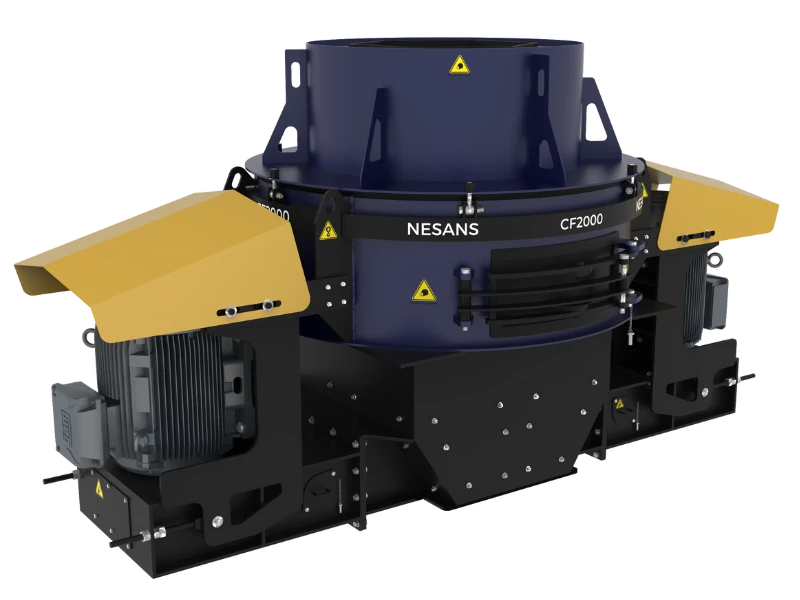
VSI rotor tips are the primary wear components in sand-making operations, directly impacting product quality, operating costs, and equipment reliability. The choice between tungsten carbide and chrome alloy tips involves trade-offs between wear life, impact resistance, and cost per tonne processed. Understanding these trade-offs enables operators to select the optimal tip material for their specific application, potentially reducing wear costs by 30-50% while maintaining consistent product quality.
Understanding VSI Rotor Tip Function
Rotor tips accelerate feed material to 60-80 m/s before impact against the anvil ring or rock shelf. This extreme velocity subjects tips to:
- Abrasive wear: Material sliding across tip surface
- Impact wear: Direct collision with feed particles
- Thermal stress: Heat from friction and impact energy
- Fatigue: Repeated stress cycles causing material breakdown
Material Comparison
Tungsten Carbide Tips
| Property | Specification | Impact on Performance |
|---|
| Hardness | 1300-1600 HV | Excellent abrasion resistance |
| Toughness | Moderate (brittle) | Susceptible to impact damage |
| Wear Rate | 0.5-1.5g per tonne | 2-4x longer life than chrome |
| Cost | ₹8,000-15,000 per tip | 3-5x higher than chrome |
| Best Application | Abrasive material, consistent feed | Granite, quartzite, silica sand |
Chrome Alloy Tips
| Property | Specification | Impact on Performance |
|---|
| Hardness | 58-65 HRC | Good abrasion resistance |
| Toughness | High | Resists impact fracture |
| Wear Rate | 2-4g per tonne | Shorter life, predictable wear |
| Cost | ₹2,000-4,000 per tip | Lower initial investment |
| Best Application | Variable feed, tramp metal risk | River gravel, recycled concrete |
Cost-Per-Tonne Analysis
| Scenario | Tungsten Carbide | Chrome Alloy | Winner |
|---|
| Hard granite, clean feed | ₹0.12/t | ₹0.18/t | Tungsten |
| Medium basalt | ₹0.10/t | ₹0.11/t | Similar |
| River gravel with debris | ₹0.25/t (breakage) | ₹0.14/t | Chrome |
| Recycled concrete | ₹0.30/t (rebar damage) | ₹0.16/t | Chrome |
Selection Guidelines
Choose Tungsten Carbide When:
- Processing highly abrasive material (AI > 0.4)
- Feed is clean and consistent (no tramp metal)
- Downtime cost exceeds tip cost (continuous operation)
- Product quality requires consistent tip geometry
Choose Chrome Alloy When:
- Tramp metal contamination is possible
- Feed contains variable hardness material
- Budget constraints limit initial investment
- Operating in remote areas (easier sourcing)
Hybrid Strategies
| Strategy | Implementation | Benefit |
|---|
| Tungsten on leading edge | Tungsten tips face feed direction | Wear life with impact protection |
| Material-based switching | Change tips with material type | Optimize for each application |
| Seasonal adjustment | Chrome in wet season (debris) | Reduce breakage losses |
Maintenance Impact
Tip Rotation Schedule
| Material | Tungsten Rotation | Chrome Rotation |
|---|
| Hard granite | Every 80-120 hours | Every 40-60 hours |
| Medium rock | Every 120-180 hours | Every 60-100 hours |
| Soft limestone | Every 200-300 hours | Every 100-150 hours |
Conclusion
The optimal rotor tip material depends on feed characteristics, operational priorities, and cost structure. Neither tungsten carbide nor chrome alloy is universally superior—each excels in specific applications. Detailed cost-per-tonne tracking over multiple tip changes provides the data needed for informed selection. The right choice reduces wear costs by 20-40% compared to inappropriate material selection.