
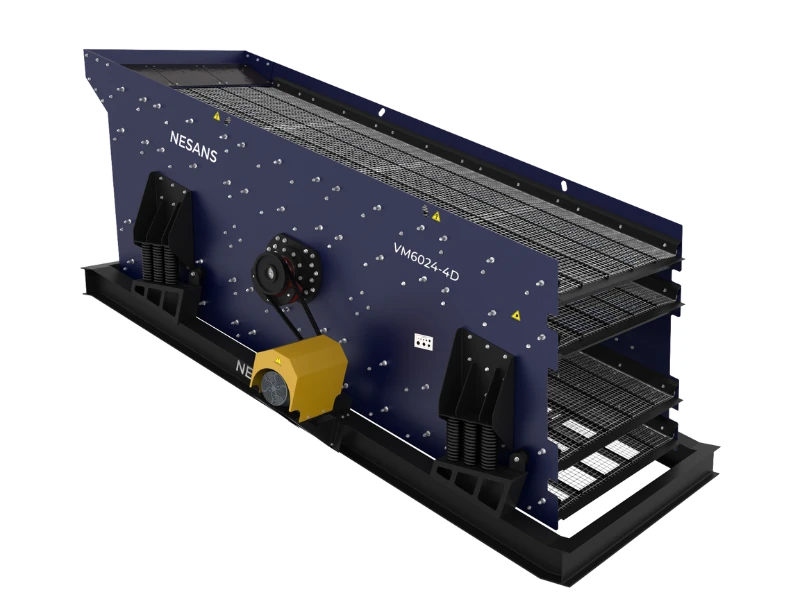
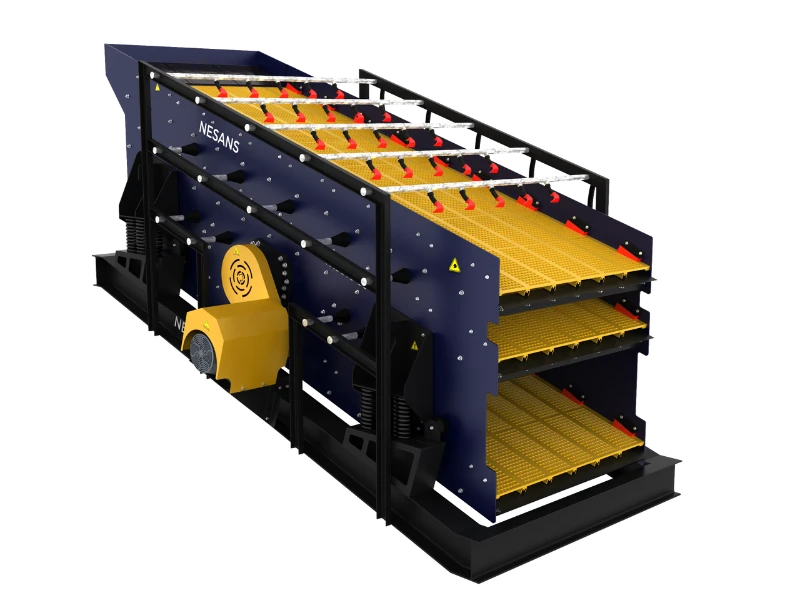
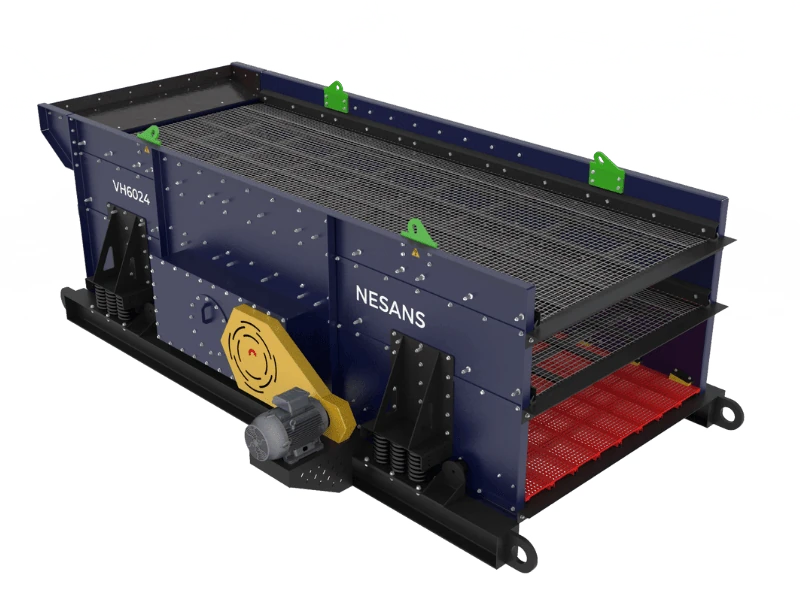
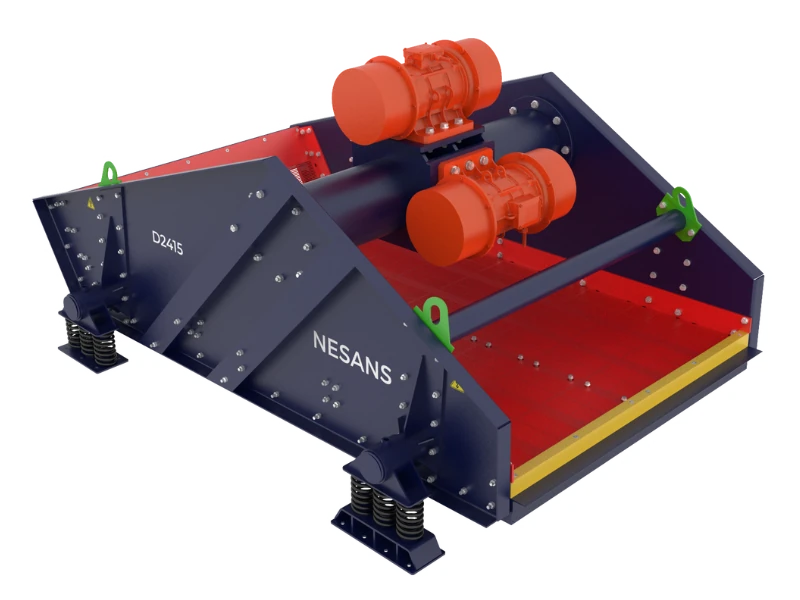
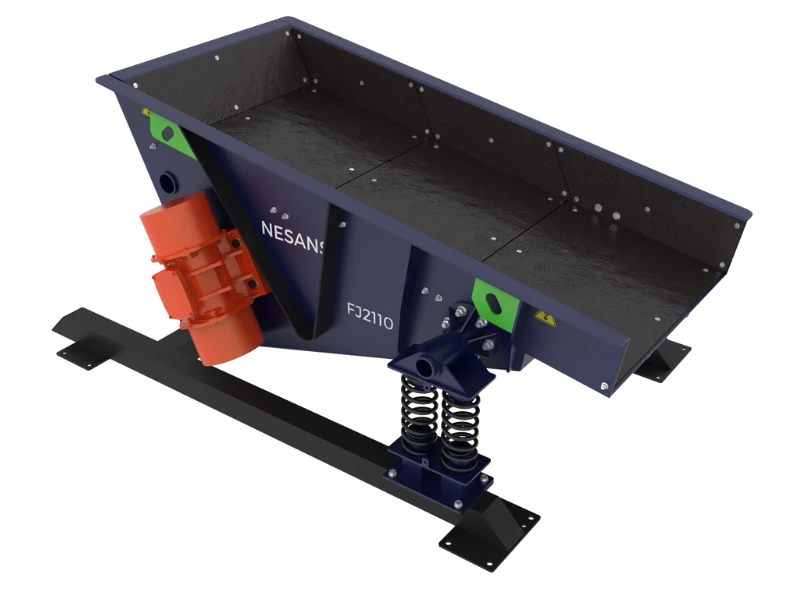
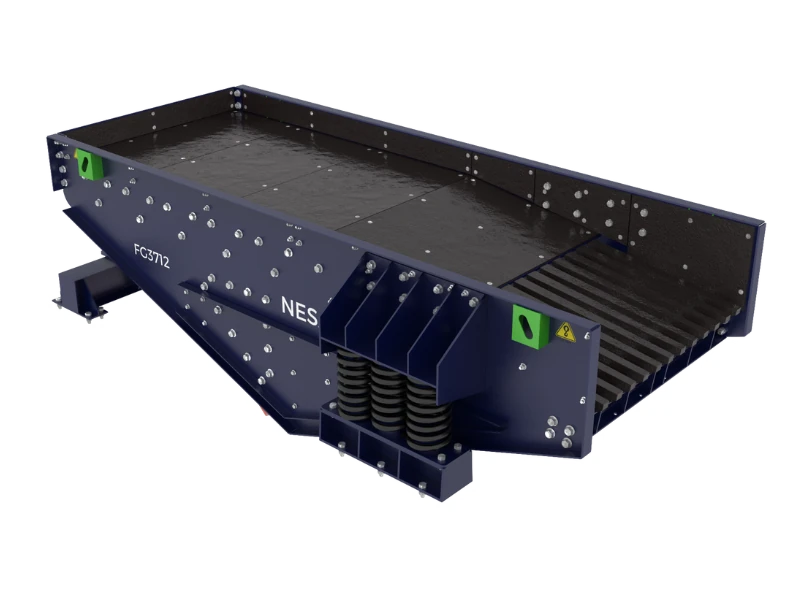








Vibrating screen bearings operate under extreme conditions—high centrifugal forces, continuous oscillation, dust ingress, and elevated temperatures. Bearing failure is the most common cause of screen downtime in aggregate plants. Understanding normal temperature ranges and recognizing warning signs enables operators to prevent catastrophic failures through timely intervention.
Understanding Vibrating Screen Bearing Loading
Vibrating screen bearings face unique challenges that differentiate them from standard rotating equipment bearings:
Load Characteristics
| Load Type | Source | Impact on Bearing |
|---|---|---|
| Centrifugal force | Exciter shaft unbalance | Primary radial loading, cyclic stress |
| Material weight | Bed depth on screen | Static and dynamic vertical load |
| Oscillating acceleration | Screen motion (3-7g typical) | Cyclic stress reversal every stroke |
| Gyroscopic effects | Angular motion of shaft | Additional moment loading on bearings |
Operating Speed and Frequency
Screen exciter bearings typically operate at high speeds with continuous cyclic loading:
- Exciter speed: 850-1200 RPM depending on design
- Stroke: 4-12mm (half amplitude)
- Load cycles per hour: 51,000-72,000 complete reversals
- Annual load cycles: 300-500 million (assuming 6,000 operating hours)
This extreme cyclic loading explains why screen bearings require specialized designs and careful temperature monitoring.
Normal Operating Temperature Ranges
Temperature is the primary indicator of bearing health. Establishing baseline values and acceptable ranges enables early detection of developing problems.
Temperature Guidelines by Bearing Type
| Bearing Type | Normal Range | Alert Level | Alarm Level | Shutdown Level |
|---|---|---|---|---|
| Spherical roller (exciter) | 50-70°C | 80°C | 90°C | 100°C |
| Cylindrical roller | 45-65°C | 75°C | 85°C | 95°C |
| Pillow block (support) | 40-55°C | 65°C | 75°C | 85°C |
Important considerations:
- Temperature limits apply to bearing outer ring, not housing surface
- Housing temperature is typically 5-15°C lower than actual bearing temperature
- Grease temperature limits (typically 120-150°C) set absolute maximum
- Ambient temperature variations must be factored into baseline
Temperature Rise Analysis
The difference between bearing temperature and ambient temperature (ΔT) provides more useful diagnostic information than absolute temperature:
| Temperature Rise (ΔT) | Condition Assessment | Recommended Action |
|---|---|---|
| <30°C above ambient | Excellent - normal operation | Continue monitoring |
| 30-40°C above ambient | Good - acceptable operation | Monitor trend closely |
| 40-50°C above ambient | Caution - elevated loading | Investigate cause, increase monitoring |
| >50°C above ambient | Warning - abnormal condition | Reduce load, plan maintenance |
Temperature Monitoring Methods
Infrared Temperature Measurement
Infrared thermometers and cameras are the most practical tools for routine bearing temperature checks:
Best practices for infrared measurement:
- Measure at same location each time for trend accuracy
- Mark measurement points with heat-resistant paint
- Measure perpendicular to surface, avoiding angles >30°
- Account for surface emissivity (steel ε ≈ 0.85-0.95)
- Avoid measuring through dust accumulation
- Take readings at consistent operating conditions
Infrared camera advantages:
- Visualizes temperature patterns across entire assembly
- Identifies hot spots indicating localized problems
- Enables comparison between bearings simultaneously
- Creates documentation for trend analysis
Continuous Temperature Monitoring
For critical screens, continuous monitoring with RTD or thermocouple sensors provides real-time protection:
| Sensor Type | Accuracy | Response Time | Installation |
|---|---|---|---|
| RTD (PT100) | ±0.3°C | 5-15 seconds | Drilled housing or surface mount |
| Thermocouple (Type K) | ±1.5°C | 1-5 seconds | Flexible installation options |
| Infrared sensor (fixed) | ±2°C | Instant | Non-contact, dust-sensitive |
Sensor mounting locations:
- Ideal: Drilled into housing with tip near outer race
- Acceptable: Surface-mounted with thermal paste
- Not recommended: Measuring housing surface without contact
Warning Signs of Bearing Deterioration
Temperature-Based Warning Signs
Temperature behavior provides critical diagnostic information:
| Temperature Behavior | Probable Cause | Severity |
|---|---|---|
| Gradual increase over weeks | Progressive bearing wear, lubrication degradation | Moderate - plan replacement |
| Sudden spike during operation | Lubrication failure, contamination ingress | High - investigate immediately |
| Temperature doesn't stabilize | Over-lubrication, seal problem | Moderate - check grease quantity |
| One bearing significantly hotter than others | Localized problem with that bearing | High - bearing-specific issue |
| High temperature at startup that decreases | Over-lubrication churning | Low - reduce grease volume |
Vibration Warning Signs
Temperature monitoring should be combined with vibration analysis for comprehensive condition assessment:
Vibration indicators of bearing problems:
- Increased overall vibration: General bearing deterioration
- High-frequency bearing tones: Defects on races or rolling elements
- Spike energy increase: Metal-to-metal contact, lubrication breakdown
- Envelope spectrum defect frequencies: BPFO, BPFI, BSF, FTF
Visual and Audible Warning Signs
Field observations that indicate bearing problems:
- Grease leakage: Seal failure or over-lubrication
- Grease discoloration: Black = contamination, brown/red = overheating
- Unusual noise: Grinding, clicking, squealing sounds
- Housing vibration change: Roughness felt on hand
- Rust staining around seals: Water or contamination ingress
Common Causes of Elevated Bearing Temperature
Lubrication-Related Causes
| Problem | Temperature Effect | Diagnostic Clues | Solution |
|---|---|---|---|
| Insufficient grease | High, increasing | Metal-to-metal noise, high vibration | Re-grease to proper level |
| Excessive grease | High at startup, may stabilize | Grease purging from seals | Reduce grease quantity |
| Wrong grease type | Elevated, erratic | Grease softening or separating | Flush and use correct grade |
| Contaminated grease | Gradually increasing | Gritty feel, discoloration | Flush and re-grease |
| Grease incompatibility | Variable, may spike | Grease hardening or liquefying | Complete flush required |
Mechanical Causes
| Problem | Temperature Effect | Diagnostic Clues | Solution |
|---|---|---|---|
| Misalignment | One end hotter than other | Uneven wear pattern, seal damage | Realign exciter assembly |
| Excessive preload | Both bearings elevated | Short bearing life, high load | Check and adjust clearance |
| Insufficient clearance | High temperature, seizure risk | Thermal expansion binding | Verify proper bearing fit |
| Housing bore damage | Variable, unstable | Bearing creep, fretting marks | Repair or replace housing |
| Shaft damage | Hot spots, uneven | Vibration pattern changes | Check shaft condition |
Operational Causes
| Problem | Temperature Effect | Diagnostic Clues | Solution |
|---|---|---|---|
| Overloading (deep bed) | All bearings elevated | Slow screening, carryover | Reduce feed rate |
| Underloading (surge feeding) | Temperature fluctuation | Screen bouncing excessively | Stabilize feed rate |
| High ambient temperature | Absolute temperature high | ΔT remains normal | Additional cooling or shade |
| Blocked discharge | Elevated from extra work | Material buildup visible | Clear discharge path |
Lubrication Best Practices for Temperature Control
Grease Selection for Vibrating Screens
Vibrating screen bearings require specialized greases designed for high-load oscillating applications:
Grease specifications for screen bearings:
- Base oil viscosity: 150-220 cSt at 40°C
- NLGI grade: 2 (standard) or 1.5 (cold climate)
- Thickener type: Lithium complex or polyurea preferred
- Operating temperature range: -20°C to 150°C minimum
- EP additives: Required for high-load applications
- Water resistance: Good to excellent rating
Recommended grease types:
| Application | Recommended Type | Key Properties |
|---|---|---|
| High-temperature (>70°C) | Polyurea based | Excellent thermal stability |
| Heavy load, moderate temp | Lithium complex + EP | High load capacity |
| Wet environment | Calcium sulfonate complex | Superior water resistance |
| Cold climate startup | Lithium complex NLGI 1.5 | Low temperature pumping |
Lubrication Quantity and Frequency
Proper grease quantity is critical—both too little and too much cause temperature problems:
Initial fill calculation:
Grease volume (grams) = 0.005 × D × B

Where:
D = Bearing outer diameter (mm)
B = Bearing width (mm)

Example for 22328 bearing (300mm × 102mm):
Volume = 0.005 × 300 × 102 = 153 grams
Re-lubrication interval calculation:
T = K × [(14,000,000 / (n × √d)) - 4D]

Where:
T = Re-lubrication interval (hours)
K = Correction factor (0.1 for vibrating screens)
n = RPM
d = Bearing bore diameter (mm)
D = Bearing outside diameter (mm)

Example for 22328 at 900 RPM:
T = 0.1 × [(14,000,000 / (900 × √140)) - 4×300]
T = 0.1 × [1,314 - 1,200] = ~11 hours

Note: This results in daily lubrication for many screen bearings
Re-lubrication quantity:
Grease per interval (grams) = 0.005 × D × B × 0.3
(30% of initial fill per interval)

For 22328: 153 × 0.3 = ~46 grams per day
Automatic Lubrication Systems
For critical screens or multiple units, automatic lubricators provide consistent greasing:
| System Type | Advantages | Considerations |
|---|---|---|
| Single-point lubricator | Simple, low cost, no power needed | Limited capacity, one bearing each |
| Progressive system | Reliable, positive displacement | More complex, requires monitoring |
| Dual-line system | Long distance, many points | Higher cost, more maintenance |
Temperature Monitoring Program Implementation
Establishing Baselines
Effective monitoring requires established baseline values for each bearing:
- Document ambient conditions: Record ambient temperature for each measurement
- Measure at consistent operating load: Same feed rate, material type
- Record for minimum 2 weeks: Build statistical baseline
- Calculate normal ΔT range: Average and standard deviation
- Set alert thresholds: Typically mean + 2 standard deviations
Monitoring Frequency
| Screen Criticality | Monitoring Frequency | Method |
|---|---|---|
| Primary/critical screen | Continuous or every shift | Installed sensors or IR camera |
| Secondary screen | Daily | Handheld IR thermometer |
| Non-critical screen | Weekly | Handheld IR thermometer |
Documentation and Trending
Recording requirements:
- Date and time of measurement
- Ambient temperature
- Each bearing temperature
- Operating conditions (feed rate, material)
- Any abnormal observations
Trend analysis indicators:
- Rising trend over days/weeks → plan replacement
- Sudden change from baseline → investigate immediately
- Increasing difference between bearings → localized problem
- Correlation with load or ambient → operational factor
Response Procedures for Abnormal Temperatures
Alert Level Response (80°C or 40°C ΔT)
- Increase monitoring frequency to every 2 hours
- Check lubrication condition and quantity
- Verify operating conditions are within specifications
- Review recent maintenance or changes
- Plan inspection at next scheduled stop
Alarm Level Response (90°C or 50°C ΔT)
- Reduce screen feed rate by 25-50%
- Monitor continuously for further increase
- Prepare for shutdown if temperature continues rising
- Order replacement bearing and components
- Schedule maintenance within 24-48 hours
Shutdown Level Response (100°C or 60°C ΔT)
- Stop screen immediately to prevent catastrophic failure
- Allow natural cooling—do not add cold grease
- Inspect bearing after cooling for damage assessment
- Replace bearing and investigate root cause
- Do not restart until problem is corrected
Systematic temperature monitoring combined with proper lubrication practices significantly extends vibrating screen bearing life and prevents costly unplanned shutdowns. The investment in monitoring equipment and operator training delivers substantial returns through improved reliability and reduced maintenance costs.
