Screen media selection determines screening efficiency, maintenance intensity, and operating costs—yet many plants default to lowest-price wire mesh without considering total cost of ownership. Properly matched screen media can deliver 3-5× longer life and 15-20% better efficiency compared to generic selections. This guide provides the framework for matching aperture style to material characteristics.
Screen Media Types Comparison
| Media Type | Life (relative) | Open Area | Cost (relative) | Best Application |
|---|
| Woven Wire Mesh | 1.0× | 60-70% | 1.0× | Clean, dry, non-abrasive |
| Heavy Duty Wire | 1.5× | 50-60% | 1.3× | Moderate abrasion |
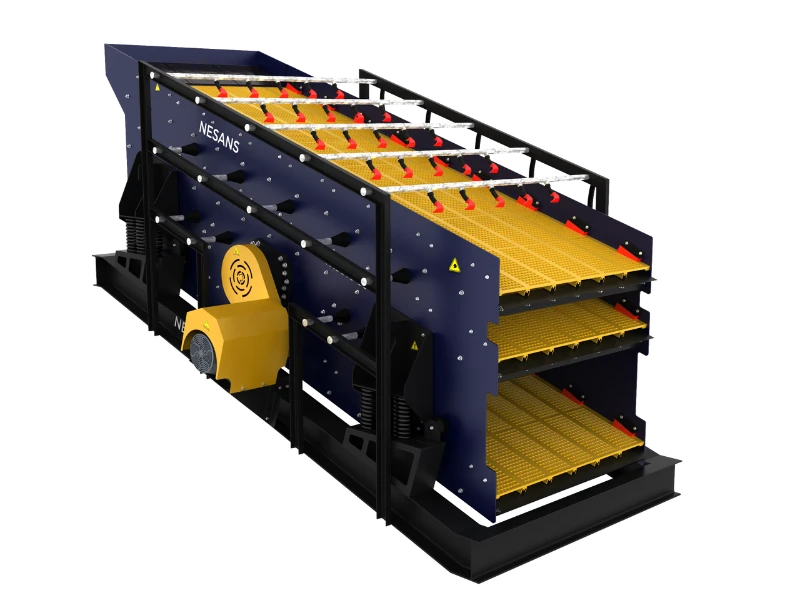
| Polyurethane (Modular) | 3-5× | 40-50% | 2-3× | Abrasive, wet, impact |
| Rubber (Modular) | 3-4× | 35-45% | 2-2.5× | High impact, sticky |
| Self-Cleaning Poly | 2-3× | 30-40% | 3-4× | Near-size, plugging |
Aperture Style Selection
By Material Characteristic
| Material | Recommended Aperture | Reason |
|---|
| Dry, cubical | Square opening | Maximum open area |
| Elongated particles | Slotted/rectangular | Prevents blinding |
| Near-size dominant | Self-cleaning flex | Resists plugging |
| Wet/sticky | Crowned polyurethane | Material release |
| High impact | Rubber modular | Energy absorption |
Aperture Sizing Guidelines
For efficient separation:
- Cut size = 85-90% of aperture dimension
- Example: For 20mm cut, use 22-24mm aperture

Open Area Requirements:
- Scalping: 55-70% open area acceptable
- Classification: >60% open area required
- Fine screening: Maximize practical open area
Wire vs. Polyurethane Cost Analysis
Example: 1800×6000mm screen, 20mm aperture, granite processing

Wire Mesh:
- Panel cost: ₹15,000
- Life: 800 hours
- Changes per year: 4 at 3000 hrs/yr
- Labor: ₹5,000 per change
- Annual cost: 4 × (₹15,000 + ₹5,000) = ₹80,000

Polyurethane Modular:
- Panel cost: ₹45,000
- Life: 3000 hours
- Changes per year: 1
- Labor: ₹3,000 (faster install)
- Annual cost: ₹48,000

Savings: ₹32,000/year (40% reduction)
Plus: Less downtime, more consistent efficiency
Installation Best Practices
| Practice | Why | Result if Ignored |
|---|
| Inspect cross members | Support integrity | Premature panel failure |
| Correct tensioning | Proper vibration transfer | Loose panels fatigue |
| Stagger panel joints | Distribute stress | Weak points at aligned joints |
| Check torque | Secure mounting | Panels work loose |
Wear Pattern Interpretation
| Pattern | Cause | Correction |
|---|
| Even wear | Normal operation | Continue monitoring |
| Feed end heavy | Impact damage | Add impact plates or switch to rubber |
| Center strip wear | Off-center loading | Adjust feed distribution |
| Edge wear | Frame contact | Resize panels or repair frame |
Conclusion
Screen media optimization requires matching material type to application conditions rather than defaulting to the lowest-cost option. Total cost analysis—including labor, downtime, and efficiency impacts—often favors premium media that appears expensive initially but delivers superior lifecycle value. Document wear patterns, track replacement intervals, and calculate actual cost per tonne screened to guide future selections.