
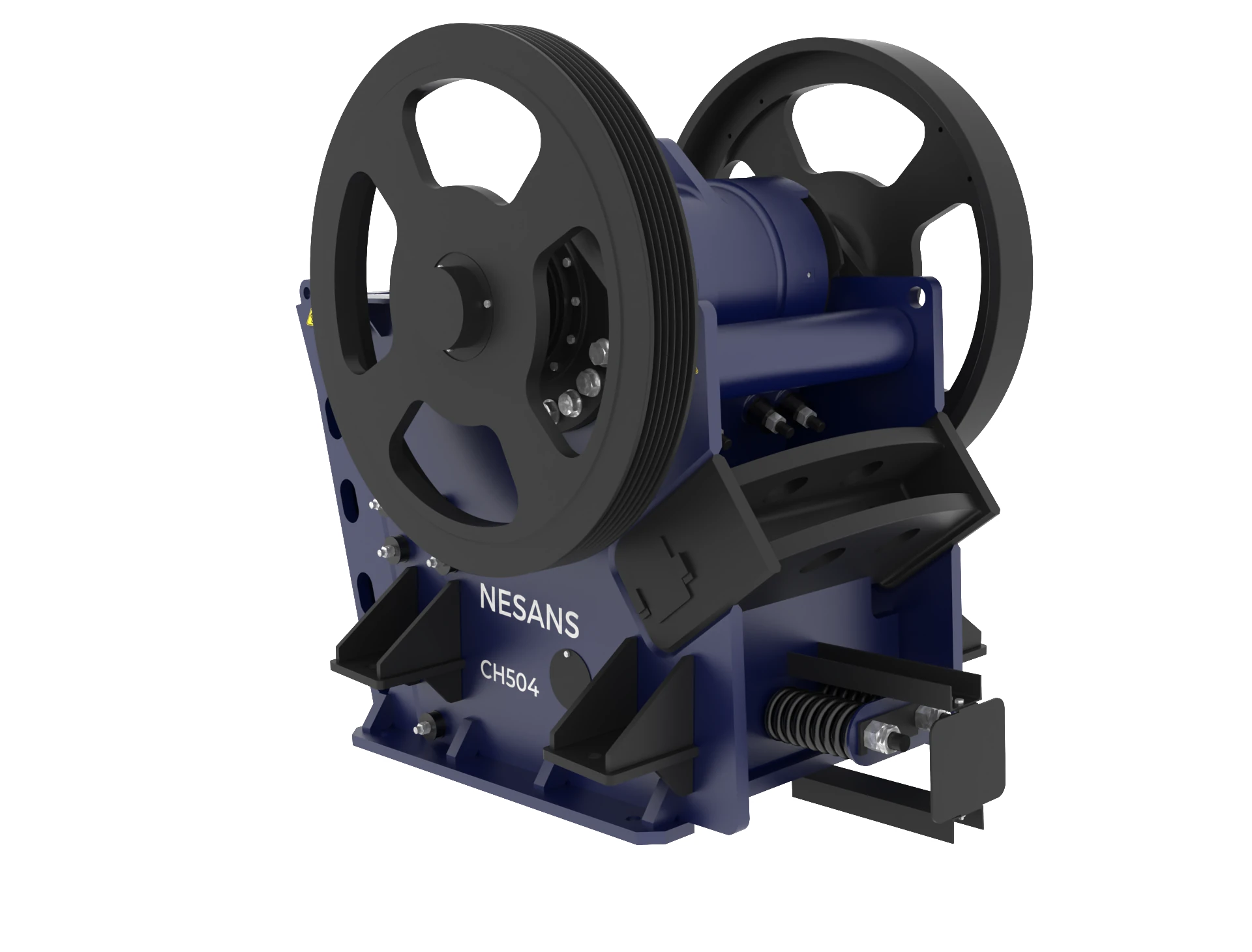
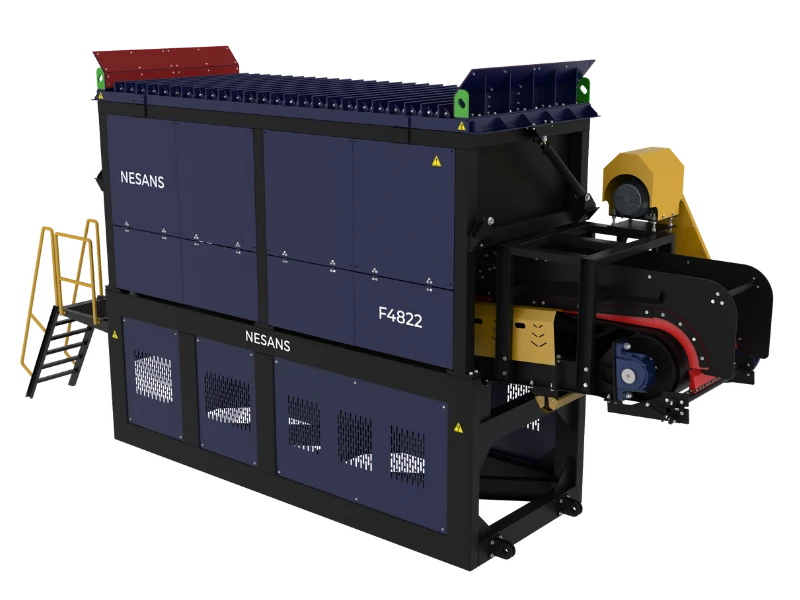
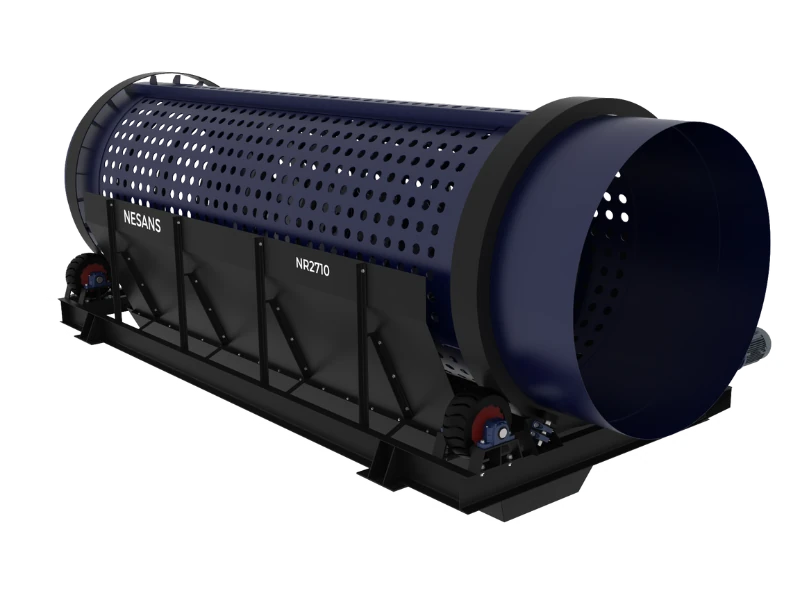
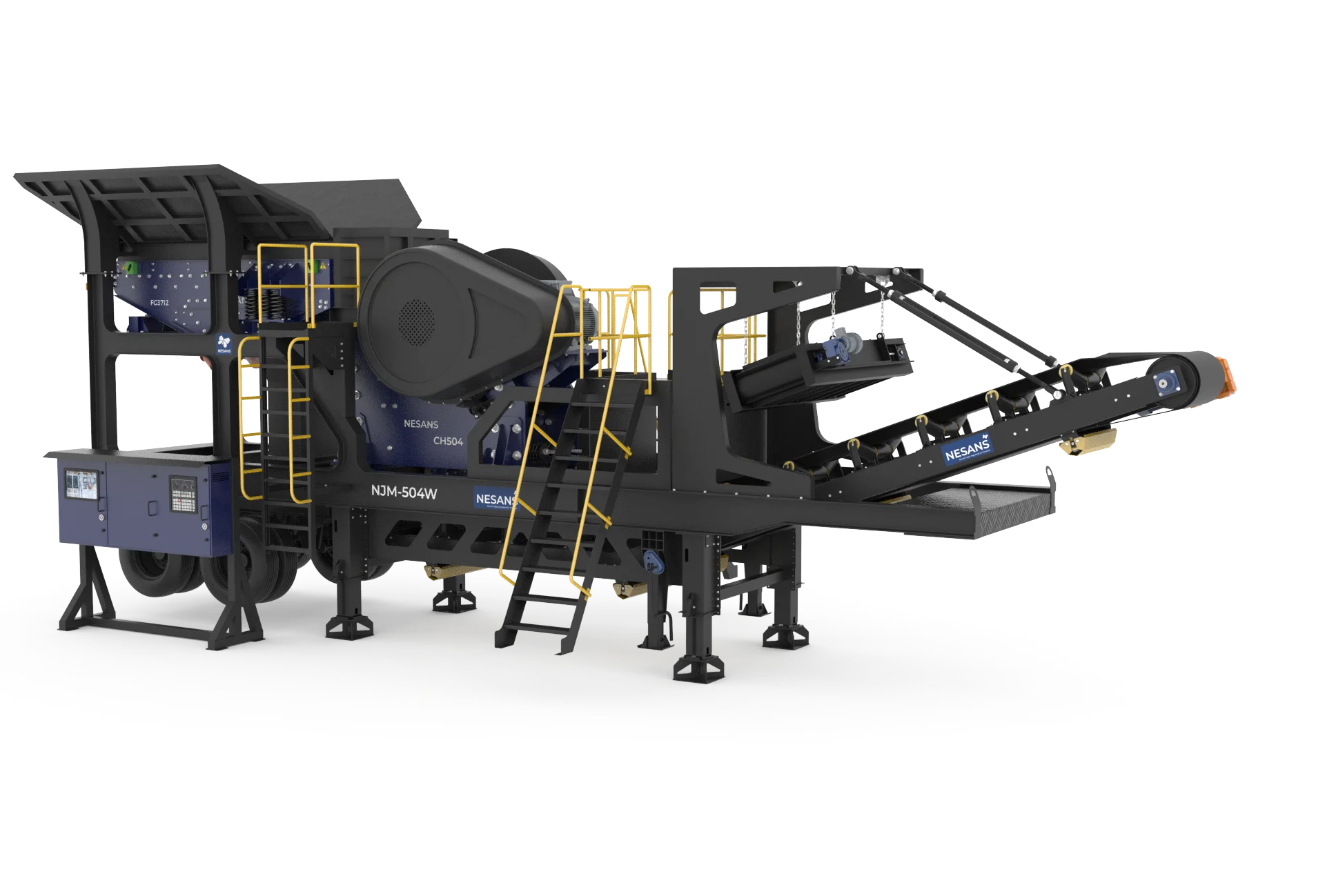
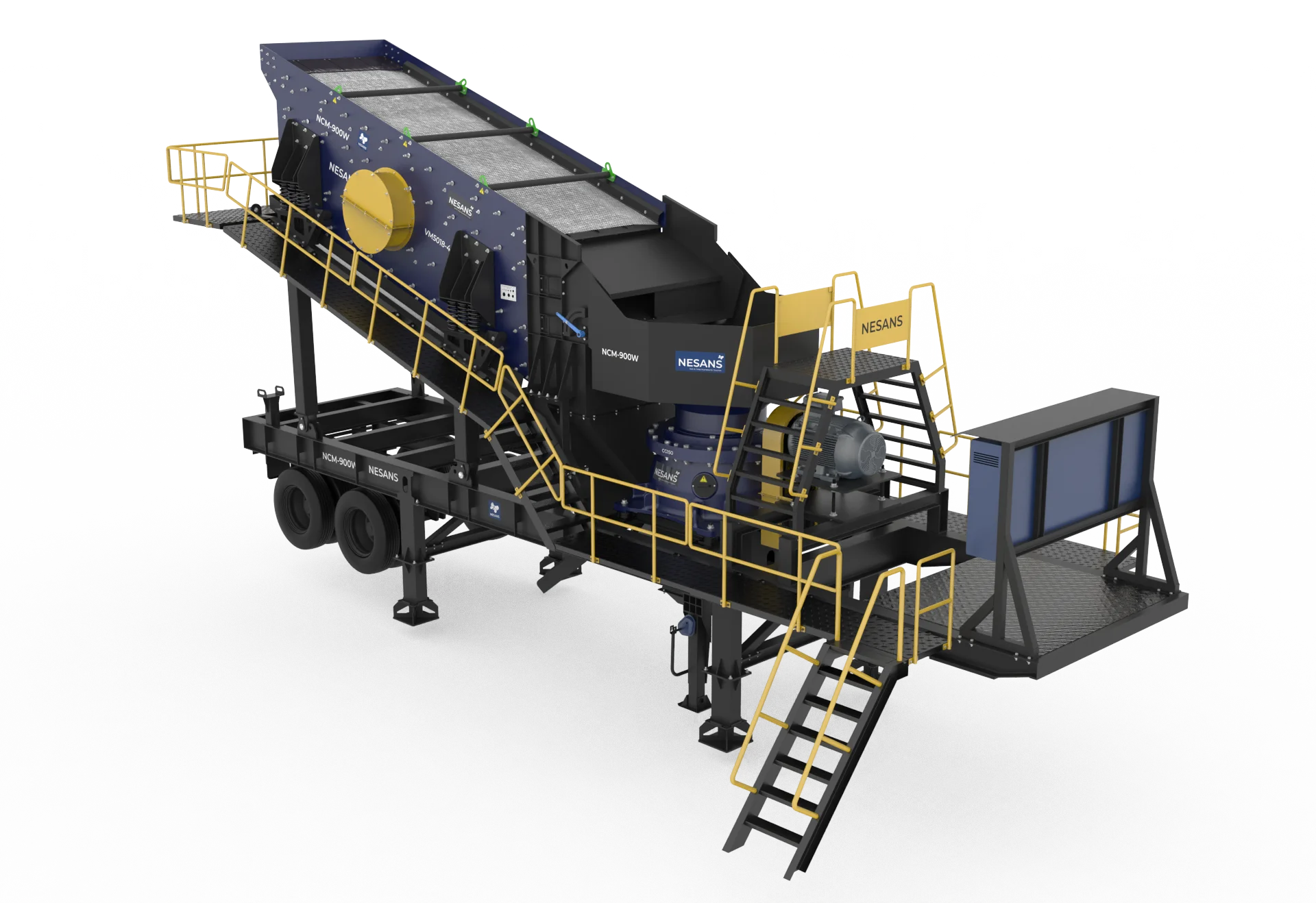
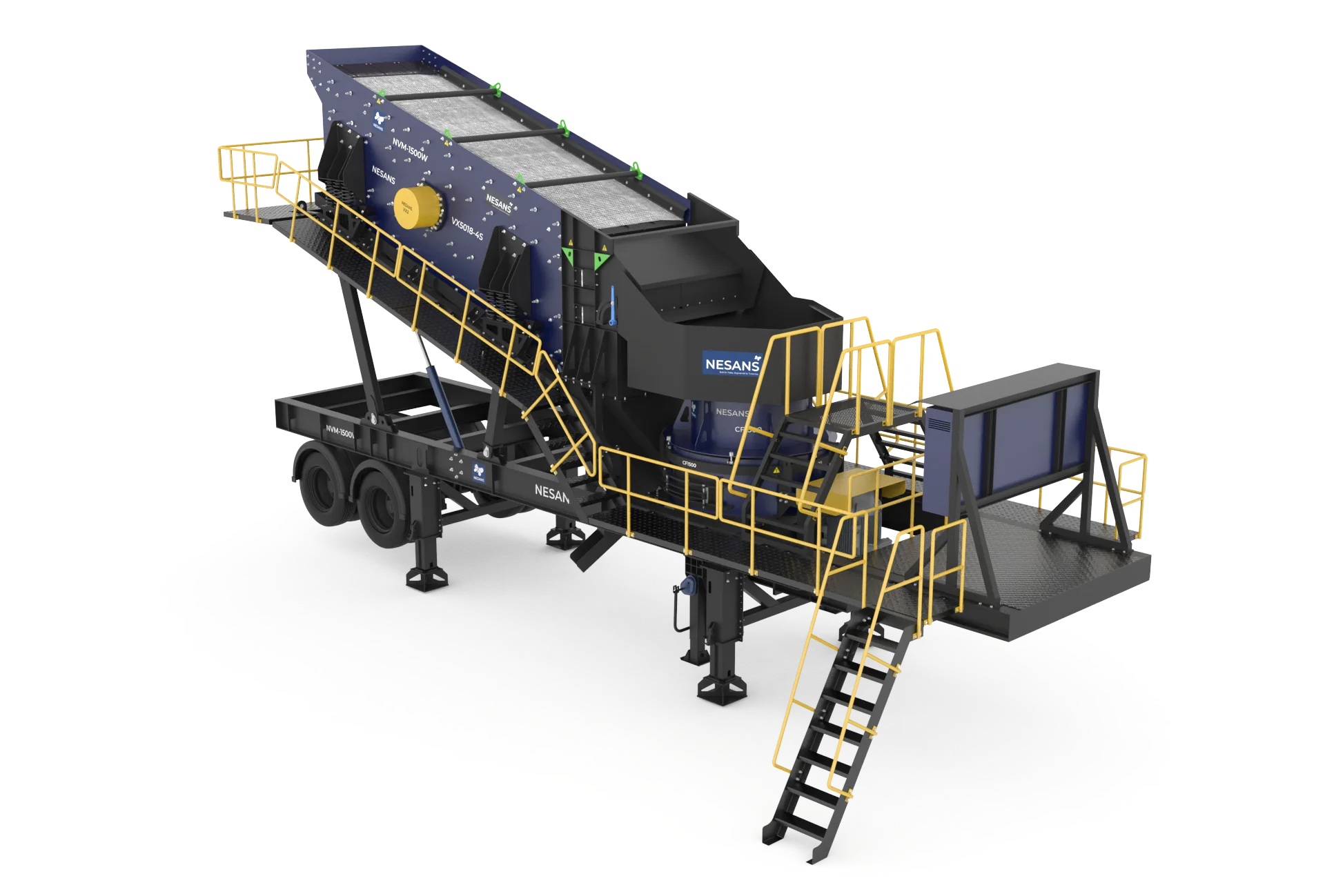
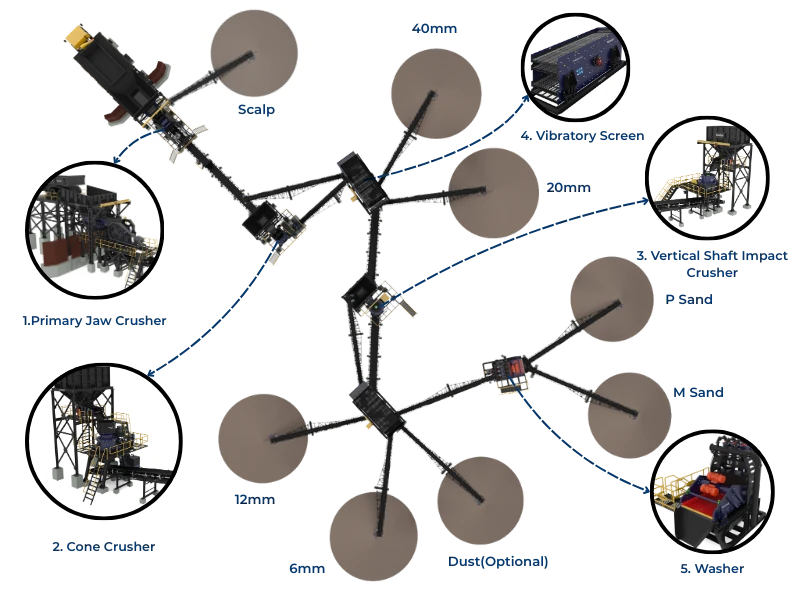
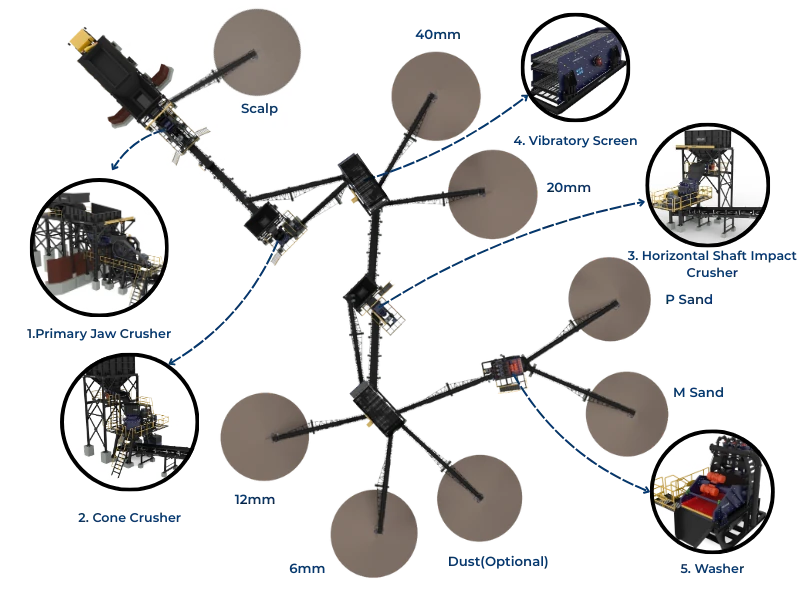
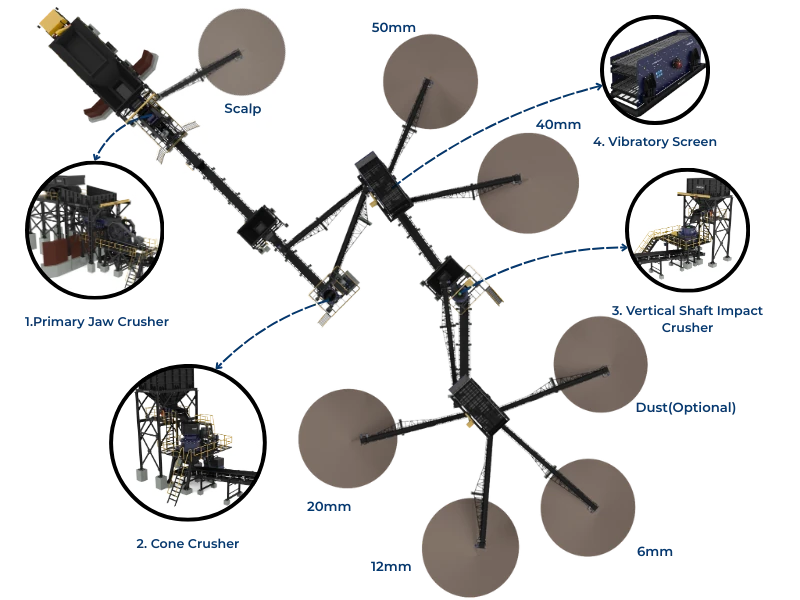
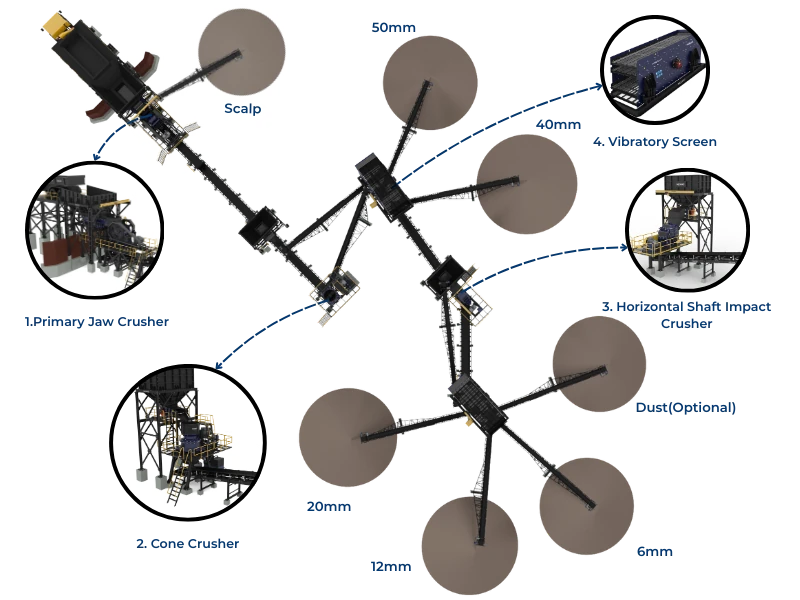
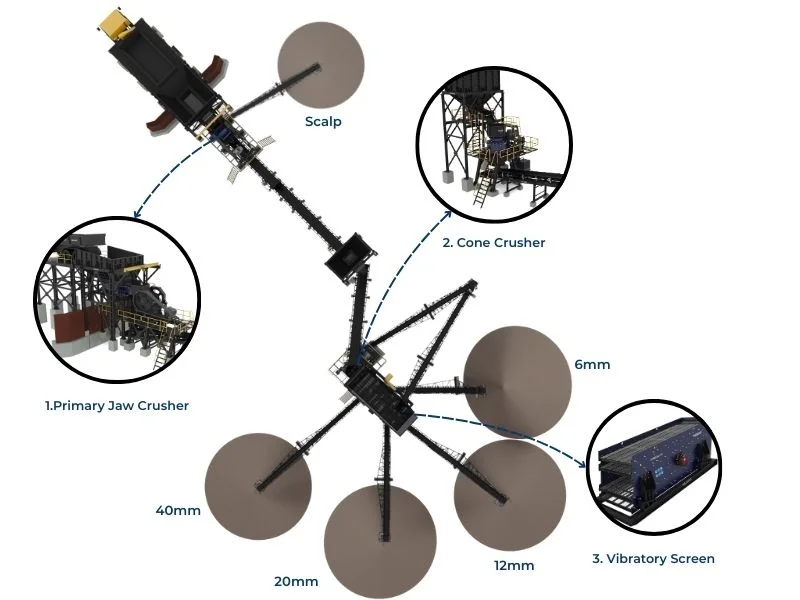
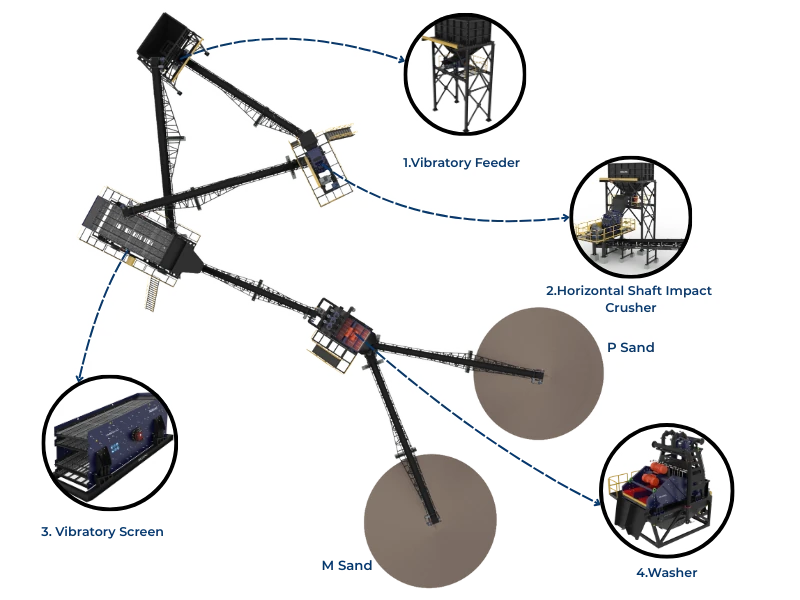
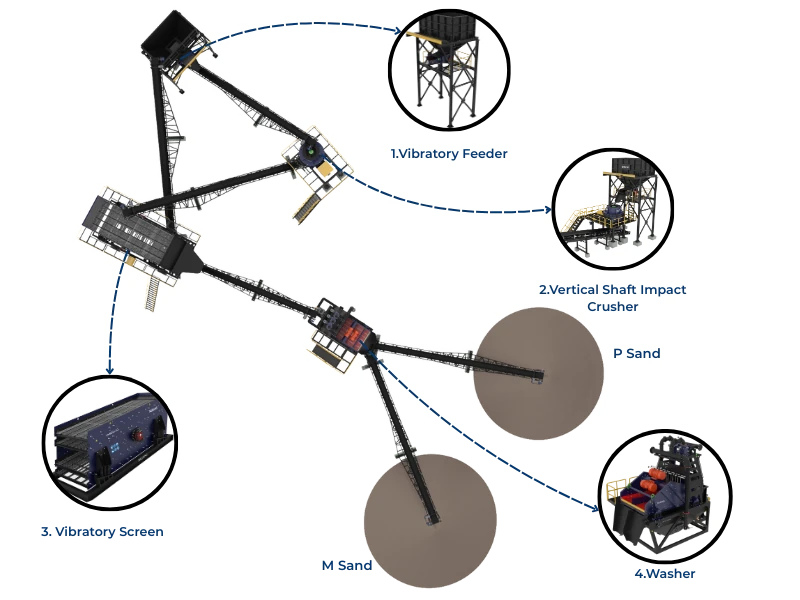




Your jaw crusher processes 200 TPH rated capacity but actually handles only 140-160 TPH due to feed contamination: 25-35% of hopper material consists of sub-CSS (closed side setting) fines that should bypass crushing entirely. These fines absorb crusher energy without productive reduction, accelerate liner wear through abrasive grinding, and reduce nip angle effectiveness by cushioning between wear surfaces. A properly designed scalping screen upstream removes material already at target size, allowing your crusher to focus energy on particles requiring reduction—cutting specific energy consumption from 2.8-3.2 kWh/ton to 1.8-2.2 kWh/ton, a ₹6-10/ton operating cost reduction while increasing effective throughput 15-25%.
Primary crushing circuits traditionally feed raw quarry material directly into jaw or gyratory crushers without size classification. This approach works when blasted rock contains minimal fines (well-controlled drill-and-blast with optimal fragmentation). However, most Indian quarry operations produce 20-35% material already below primary crusher discharge size due to weathering, excessive blasting, and soft rock seams. Processing these pre-crushed fines through the primary crusher wastes energy, accelerates wear, and constrains actual throughput below nameplate capacity.
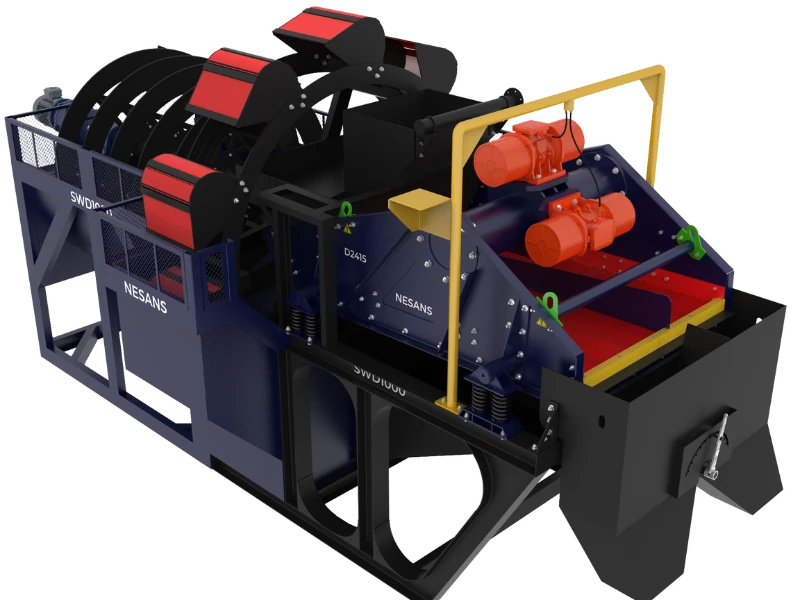
This guide examines scalping screen integration in crushing circuits, focusing on grizzly screen design, bypass system configuration, and economic analysis demonstrating ₹8-12/ton operating cost savings plus throughput improvements that generate ₹15-25 lakhs monthly additional revenue for typical 200 TPH operations.
Understanding Energy Waste from Unnecessary Crushing
Feed Characterization and Fines Content
Quarry blast fragmentation varies significantly by geology, drilling accuracy, and explosive energy:
Optimal Blast Fragmentation (Hard Rock, Controlled Blasting):
- Top size: 600-800mm (matches jaw crusher feed opening)
- Minus 100mm content: 12-18% by weight (minimal fines generation)
- Crusher CSS: 100-125mm for secondary cone circuit
- Material already below CSS: 8-12% (acceptable without scalping)
Typical Indian Quarry Fragmentation (Mixed Conditions):
- Top size: 400-1200mm (variable, indicates poor blast control)
- Minus 100mm content: 25-40% by weight
- Includes weathered rock, soft seams, overburden contamination
- Material below crusher CSS: 18-30% (significant energy waste if not removed)
Poor Blast Fragmentation (Soft Rock, Secondary Blasting):
- Excessive fines from over-blasting or weak rock: 35-50% minus 100mm
- Requires both scalping and crushing circuit optimization
- May indicate need for blast design improvement (longer-term solution)
⚠️ Energy Impact Analysis: Processing 200 TPH with 28% sub-CSS fines without scalping: Crusher handles full 200 TPH but only performs useful work on 144 TPH (72%). Energy consumption: 550-650 kW (2.75-3.25 kWh/ton based on total feed). With scalping screen removing 56 TPH fines, crusher processes 144 TPH actual reduction load at 350-420 kW (2.4-2.9 kWh/ton productive work). Total system energy: 380-450 kW (screen adds 30 kW) = 1.9-2.25 kWh/ton blended—30-35% reduction in specific energy. At ₹6.50/kWh, this saves ₹6.50-9.00/ton or ₹1.3-1.8 lakhs monthly for 200 TPH operation.
Crusher Wear Acceleration from Fines
Sub-CSS material passing through jaw crushers creates abrasive wear distinct from productive crushing:
Normal Crushing Wear (Coarse Feed Only):
- Compression fracture of particles between fixed and moving jaws
- Wear concentrated at crushing zone (lower 40-60% of liner surface)
- Jaw liner life: 3,000-5,000 hours depending on rock abrasiveness (Ai 0.2-0.6)
- Wear pattern: Uniform reduction of liner thickness, predictable replacement timing
Accelerated Wear with High Fines Content:
- Fine particles create grinding action between jaw surfaces and coarse particles
- Three-body abrasion (coarse particle - fines - liner surface) increases wear rate 40-70% vs. two-body compression
- Wear extends to upper jaw sections (normally minimal wear zone)
- Jaw liner life: 1,800-3,200 hours (40-50% reduction)
- Additional impact: Fine particles pack into crusher cavity, reducing nip angle effectiveness and throughput
Wear Cost Example:
- Jaw crusher: 1050×750mm (200 TPH capacity)
- Liner set cost: ₹3.8-4.5 lakhs (manganese steel, high-chrome options)
- Without scalping: 2,200 hour liner life, processes 440,000 tons per set = ₹8.6-10.2/ton wear cost
- With scalping: 3,600 hour liner life, processes 720,000 tons (144 TPH × 3,600 hrs + 56 TPH × 3,600 hrs bypass) = ₹5.3-6.3/ton blended wear cost
- Wear Cost Saving: ₹3.3-3.9/ton through liner life extension
Scalping Screen Design and Configuration
Grizzly Screen vs. Vibrating Screen Selection
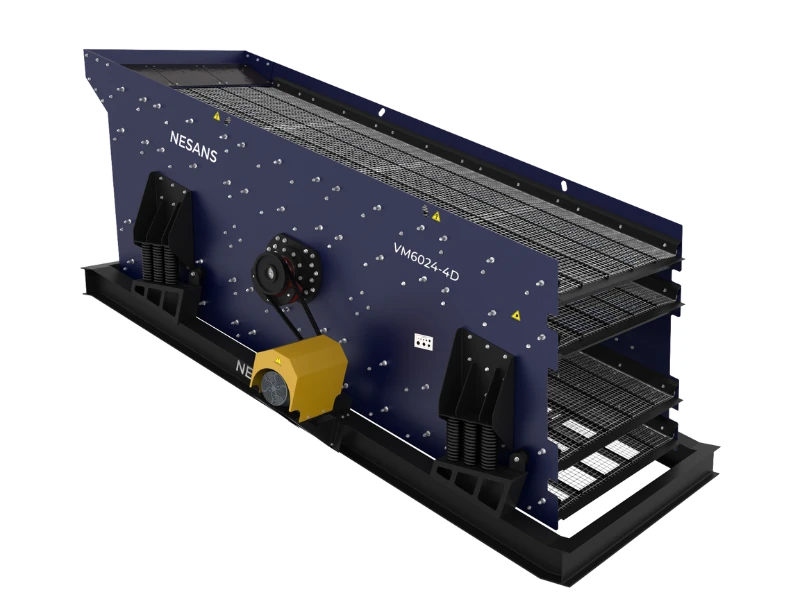
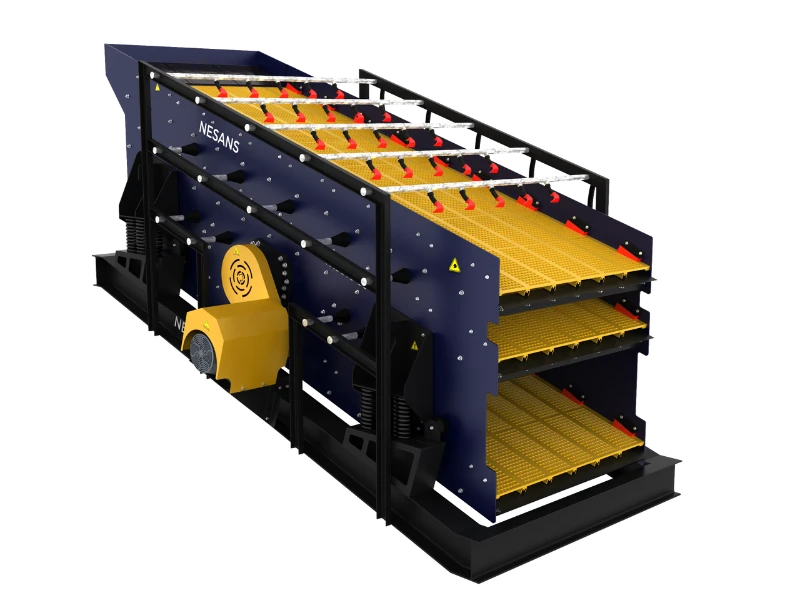
Pre-crusher scalping requires robust equipment handling large particles (up to 800mm) with high impact forces:
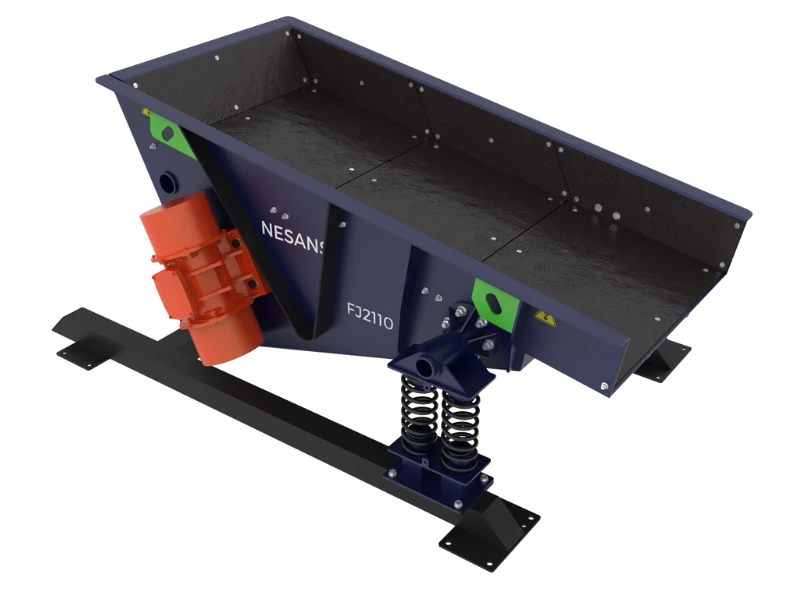
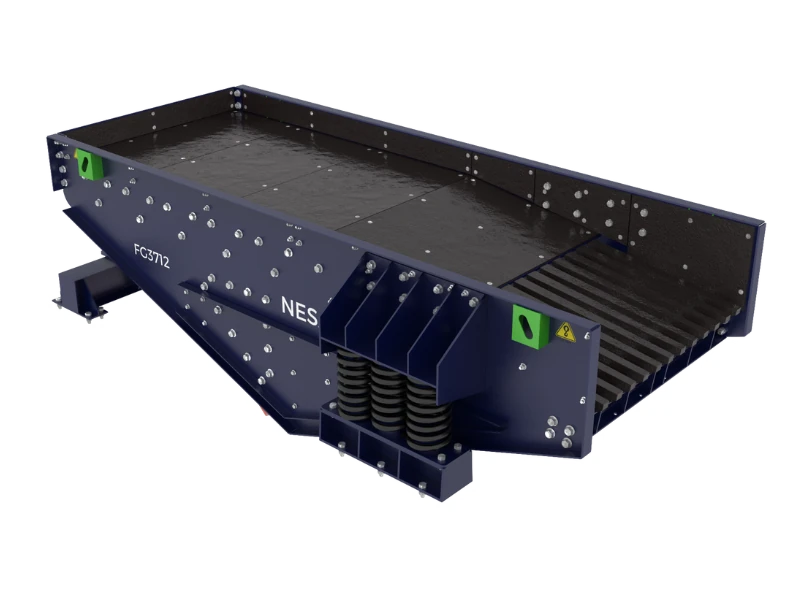
Grizzly Feeder (Heavy-Duty Bar Screen):
Design Characteristics:
- Parallel steel bars spaced 80-120mm (matching crusher CSS) on vibrating or reciprocating frame
- Bar section: 80×80mm to 120×120mm manganese steel or high-chrome iron
- Slope: 10-15° to encourage material flow while allowing fines dropout
- Stroke: 20-35mm at 280-350 RPM for vibrating type, 50-80mm at 120-180 RPM reciprocating type
- Capacity: 200-400 TPH for 3-4 meter width unit
Advantages:
- Handles high impact from loader dumping or truck discharge (3-5 meter drop height acceptable)
- Minimal blinding from sticky material (wide bar spacing, aggressive vibration)
- Simple construction, low maintenance (greased bearings, replaceable bars)
- Lower capital cost: ₹12-22 lakhs for 200 TPH unit
Limitations:
- Lower screening efficiency: 65-80% (vs. 85-95% for vibrating screen) due to coarse separation and short retention time
- Not suitable for precise size separation (±15mm tolerance typical)
- High power consumption: 0.8-1.2 kW/ton (vibration of heavy frame plus material)
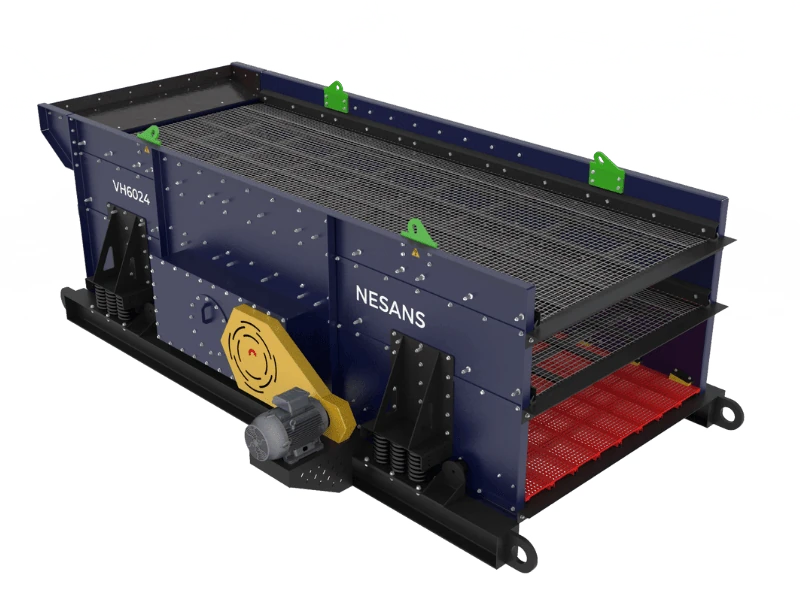
Heavy-Duty Vibrating Grizzly Screen:
Design Characteristics:
- Perforated plate or woven wire screen surface (80-120mm openings)
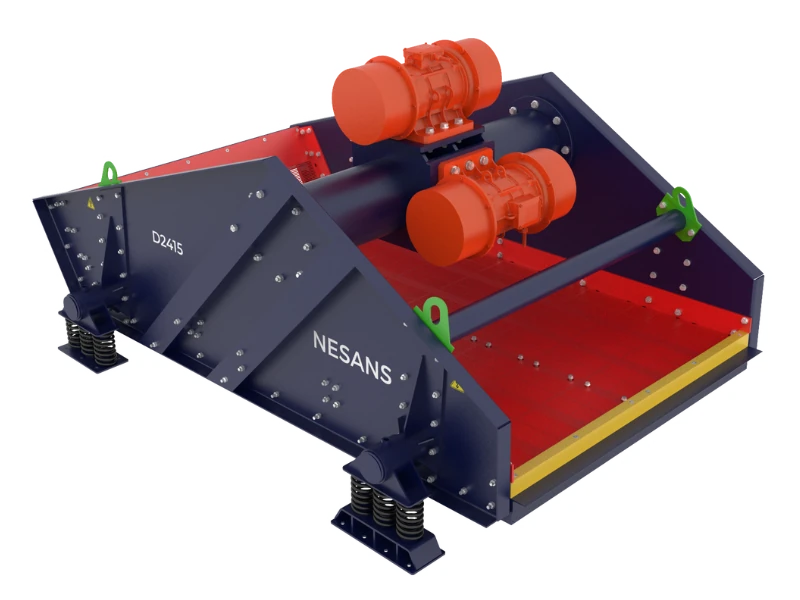
- Dual-shaft eccentric drive or linear vibration motors
- 2-3 decks possible for multi-stage classification (uncommon in primary scalping)
- Slope: 15-22° for coarse material conveyance
- Deck length: 4-6 meters for adequate retention time
Advantages:
- Higher screening efficiency: 82-92% due to longer retention and controlled vibration
- More precise separation (±8mm tolerance achievable)
- Lower power consumption: 0.4-0.6 kW/ton
- Can handle wet material better than bar grizzly (with spray wash system)
Limitations:
- Requires controlled feed (hopper or short conveyor discharge, not direct truck dumping)
- Higher capital cost: ₹25-45 lakhs for 200 TPH unit with heavy-duty construction
- More maintenance: screen media replacement every 8,000-15,000 tons, bearing service
Selection Criteria:
- Use Grizzly Feeder when: Feed is truck/loader dumped directly, material is clean (dry, non-sticky), budget constrained, screening efficiency 70-75% acceptable
- Use Vibrating Screen when: Feed is conveyor-delivered, material sticky or wet (clay content), higher efficiency required (>85%), space allows longer deck installation
Bypass System Integration
Scalped fines must be conveyed around crusher to rejoin crushed product downstream:
Direct Drop to Discharge Conveyor (Simple Configuration):
- Grizzly screen undersize chute drops directly to crusher discharge conveyor
- Requires crusher discharge conveyor positioned under or adjacent to screen
- Advantages: Minimal capital cost, no additional conveyor, simple material flow
- Limitations: Constrains plant layout, may require crusher relocation, difficult retrofit to existing plants
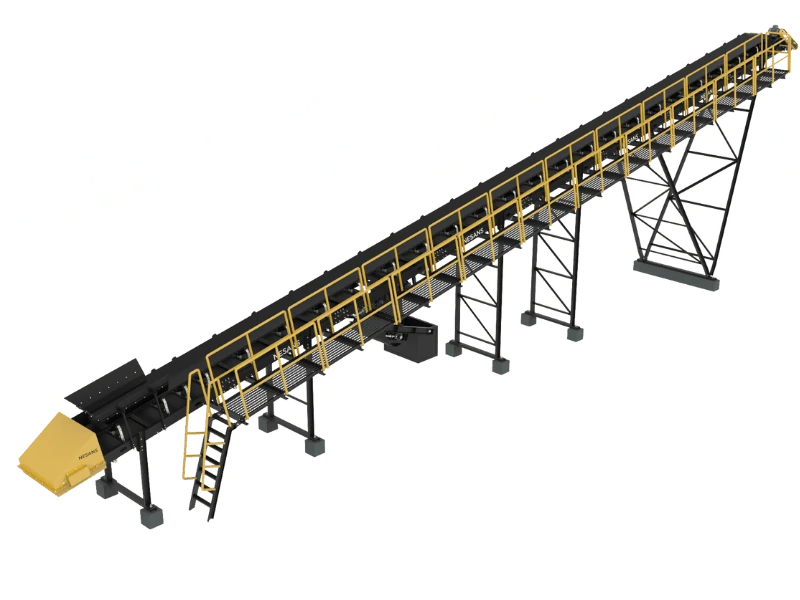
Bypass Conveyor (Flexible Configuration):
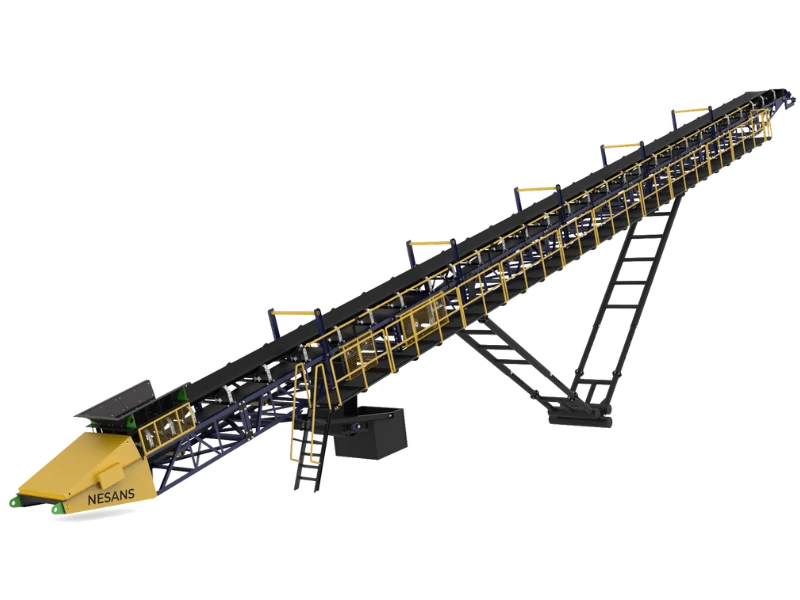
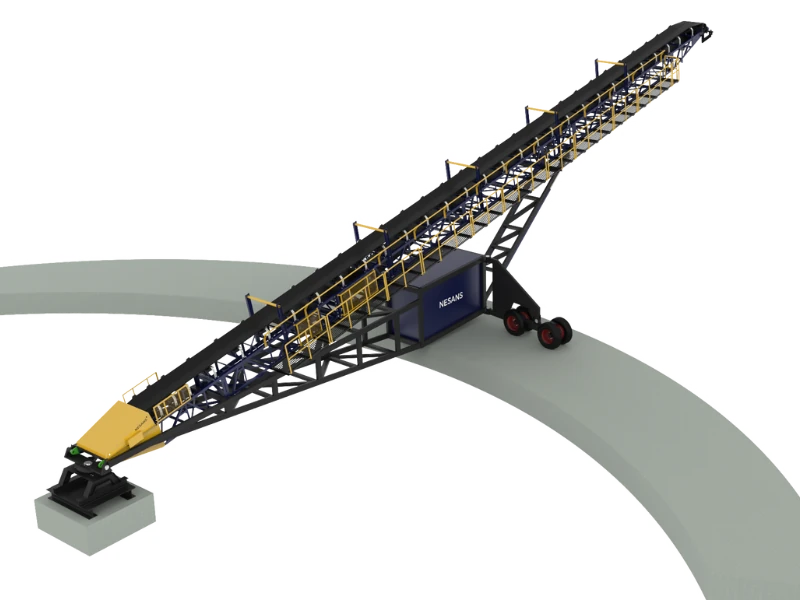
- Dedicated 30-60 TPH conveyor (18-24 inch width) carries scalped fines from screen undersize to secondary crusher feed or product stockpile
- Length: 15-35 meters typical to route around crusher
- Advantages: Flexible plant layout, easy retrofit to existing circuit, allows independent fines product stream (if desired)
- Cost: ₹8-18 lakhs depending on length and capacity
- Power: 8-15 kW (adds ₹0.25-0.45/ton to scalped material handling cost)
Fines Stockpile Option (Quality Segregation):
- Route scalped fines to separate stockpile rather than blending with crushed product
- Rationale: Scalped material may have different quality (higher weathering, clay content) than freshly crushed rock
- Market Advantage: Sell as economy aggregate at ₹450-600/ton vs. premium crushed at ₹800-1,000/ton (if quality justifies price differential)
- Consideration: Only implement if fines quality testing confirms degradation vs. crushed product (test for LA abrasion, soundness, deleterious materials)
Performance Optimization and Efficiency Factors
Screening Efficiency Drivers
Achieving target scalping efficiency (75-85% removal of sub-CSS material) requires attention to operating parameters:
Feed Distribution:
- Uniform material distribution across full screen width (avoid center-loading)
- Feed depth: 200-350mm on screen surface (deeper feed reduces efficiency, shallower reduces capacity)
- Loader operators trained to spread material evenly (single-point dumping creates surging and inefficiency)
Vibration Characteristics:
- Amplitude: 12-20mm for coarse scalping (larger particles require more movement)
- Frequency: 280-350 RPM for grizzly, 850-1,000 RPM for vibrating screen
- Direction: Linear or circular vibration (linear preferred for sticky materials, circular for high capacity)
Screen Surface Condition:
- Bar or panel wear: Replace when bars wear to 50-60% original section (rounded bars reduce efficiency 15-25%)
- Blinding prevention: Air blow-off, water spray, or rubber balls (for perforated decks) to keep openings clear
- Inspection frequency: Weekly visual check for wear, blinding, structural cracks
Moisture Management:
- Dry material (under 4% surface moisture): Optimal screening, no special treatment
- Damp material (4-8% moisture): May cause blinding, consider spray wash (0.1-0.2 m³/ton) to wet surface and prevent adhesion
- Wet material (over 8% moisture): Requires continuous spray wash, drainage system, possibly covered screen area
Crusher Throughput Impact
Removing fines increases crusher effective capacity beyond simple bypass tonnage:
Baseline (No Scalping):
- 200 TPH feed with 28% sub-CSS fines
- Crusher operates at 75-80% of rated capacity due to fines cushioning and reduced nip angle
- Actual throughput: 150-160 TPH (limited by power draw reaching motor rating)
With Scalping:
- Scalping removes 50-56 TPH (25-28% of feed at 80-85% efficiency)
- Crusher feed: 144-150 TPH of coarse material only
- Crusher operates at 90-95% of rated capacity (optimal nip angle, no fines cushioning)
- Actual crusher throughput: 180-190 TPH capacity available
- System throughput: 144 TPH crushed + 50 TPH bypassed = 194 TPH total (22-29% increase vs. no scalping)
Capacity Expansion Opportunity:
- If market demand supports higher production, increase feed to 220-230 TPH
- Scalping removes 62 TPH, crusher processes 165 TPH (within 180-190 TPH capacity)
- Total output: 227 TPH (13-16% increase over original 200 TPH target)
- Revenue impact: Additional 27 TPH × 10 hours/day × 26 days/month × ₹850/ton = ₹60 lakhs monthly incremental revenue
- Incremental cost: Minimal (quarry extraction and haulage only, crushing capacity already available)
Economic Analysis and ROI Calculation
Operating Cost Savings Breakdown
Baseline Operating Costs (200 TPH Without Scalping):
- Power (Crushing): 2.8 kWh/ton × ₹6.50/kWh = ₹18.20/ton
- Jaw Liner Wear: ₹9.00/ton (reduced life from fines abrasion)
- Cone Crusher Wear: ₹12.50/ton (secondary receives jaw product)
- Maintenance Labor: ₹4.50/ton (frequent liner changes, adjustments)
- Total Relevant Operating Cost: ₹44.20/ton
Operating Costs With Scalping Screen (200 TPH System Throughput):
Scalping Screen Costs:
- Power: 0.5 kWh/ton × ₹6.50/kWh = ₹3.25/ton (all material crosses screen)
- Screen wear (bars/panels): ₹1.20/ton (bar replacement every 12,000-18,000 hours)
- Maintenance: ₹0.80/ton (bearing grease, structural inspection)
- Subtotal: ₹5.25/ton on total feed
Crushing Costs (144 TPH Through Crusher, 56 TPH Bypass):
- Power (crusher): 2.2 kWh/ton × ₹6.50/kWh × (144/200) = ₹10.30/ton blended
- Power (bypass conveyor): 0.3 kWh/ton × ₹6.50/kWh × (56/200) = ₹0.55/ton blended
- Jaw liner wear: ₹5.50/ton × (144/200) = ₹3.96/ton blended (longer life, less abrasion)
- Cone crusher wear: ₹11.00/ton × (144/200) = ₹7.92/ton blended (better feed gradation from jaw)
- Maintenance labor: ₹3.20/ton × (144/200) = ₹2.30/ton blended
- Subtotal: ₹25.03/ton
Total Operating Cost With Scalping: ₹30.28/ton
Operating Cost Saving: ₹44.20 - ₹30.28 = ₹13.92/ton
Capital Investment and Payback
Equipment Investment for 200 TPH Scalping System:
- Grizzly feeder (vibrating bar screen): ₹18 lakhs (3.5m width × 8m length, 100mm bar spacing)
- Bypass conveyor: ₹12 lakhs (24 inch × 25 meter, 60 TPH capacity)
- Chutes and transitions: ₹3.5 lakhs (grizzly undersize to bypass, oversize to crusher, bypass discharge to main conveyor)
- Electrical and controls: ₹2.8 lakhs (screen motor starter, conveyor controls, interlock with crusher)
- Civil works: ₹4.5 lakhs (grizzly foundation, conveyor structure, discharge integration)
- Installation and commissioning: ₹3.2 lakhs (erection, alignment, testing)
Total Capital Investment: ₹44 lakhs
Annual Operating Cost Savings:
- ₹13.92/ton × 200 TPH × 10 hours/day × 26 days/month × 12 months
- = ₹13.92 × 624,000 tons/year
- = ₹86.86 lakhs annually
Payback Period: ₹44 lakhs / ₹86.86 lakhs per year = 6.1 months
Throughput Expansion Scenario
If scalping enables production increase from 160 TPH actual to 227 TPH (capacity previously constrained by fines):
Additional Revenue:
- Incremental production: 67 TPH
- Operating hours: 10 hours/day × 26 days/month = 260 hours/month
- Additional monthly volume: 67 × 260 = 17,420 tons/month
- Selling price: ₹850/ton average
- Revenue increase: ₹1.48 crores monthly
Incremental Costs:
- Quarry extraction: ₹180/ton (drilling, blasting, loading, haulage to crusher)
- Processing (scalping + crushing): ₹30.28/ton (calculated above)
- Overhead allocation: ₹35/ton (administration, supervision, etc.)
- Total incremental cost: ₹245.28/ton
- Monthly incremental cost: 17,420 × ₹245.28 = ₹42.7 lakhs
Incremental Monthly Margin: ₹1.48 crores - ₹42.7 lakhs = ₹1.053 crores
Combined Payback (Savings + Revenue):
- Monthly benefit: ₹7.24 lakhs (savings) + ₹105.3 lakhs (expansion margin) = ₹112.54 lakhs
- Payback period: ₹44 lakhs / ₹112.54 lakhs = 0.39 months (12 days)
Note: Expansion scenario assumes market demand exists and quarry extraction can increase to support higher throughput.
Implementation Case Study
Plant Profile and Baseline Conditions
Operation: 180 TPH granite crushing, 10 hours/day, 26 days/month
Equipment:
- Jaw crusher: 900×650mm, 110 kW, CSS 110mm
- Cone crusher: 1300mm diameter, 200 kW
- 3 vibrating screens for product classification
Feed Characteristics:
- Blast fragmentation: 32% minus 100mm (poorly controlled blasting in weathered granite)
- High abrasiveness: Ai 0.52 (quartz content 28-35%)
- Dry material: 2-4% surface moisture
Baseline Performance Issues:
- Jaw crusher throughput: 145-155 TPH actual vs. 180 TPH rated (fines cushioning effect)
- Jaw liner life: 2,100-2,400 hours (changed every 9-10 months)
- Specific energy: 3.1 kWh/ton (higher than expected for granite)
- Frequent CSS adjustments required to maintain discharge size (fines affect crushing action)
Scalping System Implementation
Equipment Installed:
- Vibrating grizzly screen: 3.0m × 6.5m single deck, 100mm square openings, 22 kW dual-motor drive
- Bypass conveyor: 650mm × 20m, 11 kW motor
- Integration: Grizzly installed in existing feed hopper area (minimal civil work), bypass conveyor routes to cone crusher feed conveyor
- Total cost: ₹38 lakhs (lower than estimate due to existing hopper utilization)
Commissioning Results (First 3 Months Average):
- Grizzly efficiency: 78% (removed 25% of feed as undersize vs. 32% actual content—some fines pass with oversize)
- Bypass tonnage: 45 TPH average
- Jaw crusher feed: 135 TPH (oversize from grizzly)
- System throughput: 180 TPH maintained (same as before, but with better crusher utilization)
Performance Improvements
Energy Consumption:
- Pre-scalping: 3.1 kWh/ton × 150 TPH actual = 465 kW average
- Post-scalping: (2.4 kWh/ton × 135 TPH) + 22 kW screen + 11 kW bypass = 324 + 33 = 357 kW
- Energy reduction: 23% (108 kW average savings)
- Cost saving: 108 kW × 10 hrs/day × 26 days × ₹6.50/kWh = ₹1.83 lakhs monthly
Liner Wear:
- Jaw liner life extension: 2,250 hours average to 3,400 hours (51% improvement)
- Liner sets per year: 4 sets reduced to 2.6 sets (saving 1.4 sets annually)
- Wear cost saving: 1.4 × ₹4.2 lakhs = ₹5.88 lakhs annually (₹49,000 monthly)
Throughput Expansion (Implemented Month 6):
- After proving system reliability, feed increased to 210 TPH
- Scalping removes 53 TPH, crusher processes 157 TPH (within 180 TPH capacity with clean feed)
- System output: 210 TPH (16.7% increase over baseline)
- Additional production: 30 TPH × 260 hours/month = 7,800 tons/month
- Revenue increase: 7,800 × ₹900/ton = ₹70.2 lakhs monthly
- Incremental cost: 7,800 × ₹250/ton = ₹19.5 lakhs monthly
- Incremental margin: ₹50.7 lakhs monthly
Total Economic Impact
Monthly Savings and Revenue:
- Energy savings: ₹1.83 lakhs
- Wear savings: ₹0.49 lakhs
- Throughput expansion margin: ₹50.7 lakhs
- Total monthly benefit: ₹53.02 lakhs
Investment: ₹38 lakhs
Actual payback: 0.72 months (22 days)
Annual ROI: 1,675%
Implementation Roadmap
Phase 1: Feed Characterization (Week 1-2)
- Size Distribution Analysis: Collect 10-15 representative 100kg samples from crusher feed over 5-7 days
- Screening Test: Screen samples on 100mm (or crusher CSS size) sieve to determine actual fines content
- Statistical Analysis: Calculate average, range, and standard deviation of fines percentage (target data for scalping system sizing)
- Quality Testing: Compare scalped fines vs. crusher product for LA abrasion, soundness (determines if separate stockpiling beneficial)
Phase 2: System Design and Procurement (Week 3-8)
- Equipment Sizing: Select screen type and size based on feed rate, fines content, and plant layout constraints
- Layout Design: Develop plant arrangement showing screen location, bypass routing, and integration points
- Supplier Selection: Obtain quotes from 3-4 equipment suppliers (compare not just price but efficiency guarantees, wear life, support)
- Detailed Engineering: Foundation drawings, electrical single-line, chute designs, conveyor routing
- Procurement: Place orders (typical lead time 8-12 weeks for screen, 4-6 weeks for conveyor)
Phase 3: Installation and Commissioning (Week 9-14)
- Civil Works: Screen foundation, conveyor structures (can proceed during equipment fabrication)
- Equipment Installation: Screen erection and alignment (3-5 days), conveyor installation (2-4 days)
- Electrical Work: Power supply, motor starters, interlocking with existing plant control (2-3 days)
- Dry Commissioning: Run equipment empty, verify vibration parameters, check alignment (1 day)
- Load Testing: Gradual feed increase from 50% to 100% capacity over 3-4 days, adjust parameters for optimal efficiency
Phase 4: Optimization and Stabilization (Week 15-20)
- Efficiency Verification: Sample screen undersize and oversize to verify fines removal percentage (target 75-85%)
- Power Monitoring: Log crusher kW before and during production to confirm energy reduction
- Throughput Testing: Gradually increase feed rate to determine maximum system capacity with scalping
- Operator Training: Train all shifts on screen operation, common issues (blinding, uneven feed), maintenance procedures
Common Issues and Troubleshooting
Low Screening Efficiency
Symptom: Screen removes only 50-60% of fines vs. 75-85% target, crusher throughput improvement less than expected.
Causes and Solutions:
- Uneven Feed Distribution: Material concentrated in center 40-50% of screen width (edges underutilized). Solution: Install feed distributor chute or train loader operator to spread material across full width.
- Excessive Feed Depth: Material bed over 400mm deep prevents bottom layer from contacting screen surface. Solution: Reduce feed rate or install larger screen.
- Worn Screen Surface: Bars rounded to 50-60% original section reduce sharpness of separation. Solution: Replace bars (schedule at 70% wear for optimal performance).
- Blinding from Moisture: 6-9% moisture causes near-size particles to stick in openings. Solution: Add spray wash system (0.15 m³/ton water) to wet surface thoroughly.
Screen Structural Vibration
Symptom: Excessive vibration transmitted to support structure, cracking in concrete foundation or steel mounts.
Causes and Solutions:
- Improper Spring Selection: Springs too stiff or too soft for operating weight and stroke. Solution: Verify spring rate matches manufacturer specification, replace if damaged or incorrect specification.
- Unbalanced Exciter: Eccentric weights not symmetrical or bearing wear causing wobble. Solution: Check exciter bearing clearance, verify counterweight settings, balance per manufacturer procedure.
- Foundation Resonance: Natural frequency of foundation close to screen operating frequency. Solution: Add mass to foundation (concrete pad extension) or install vibration isolators between screen and foundation.
Bypass Conveyor Overload
Symptom: Bypass conveyor belt slipping or motor overloading during operation, material spillage from overloaded belt.
Causes and Solutions:
- Undersized Conveyor: Actual scalped tonnage exceeds conveyor rating (designed for 40 TPH but receiving 55-60 TPH surges). Solution: Upgrade to higher capacity conveyor or install surge hopper with controlled discharge to smooth flow.
- Material Bridging in Chute: Scalped fines contain clay or moisture causing bridging in transfer chute, then sudden release overloads belt. Solution: Install vibrator on chute walls or redesign chute with steeper slope (60°+) and wider opening.
Advanced Optimization Opportunities
Multi-Stage Scalping
For feed with bimodal size distribution (excess fines plus excess oversize), two-stage scalping optimizes crusher performance:
Stage 1: Coarse Scalping (Oversize Removal):
- Remove material over 600-700mm (exceeds optimal crusher feed size)
- Route oversize to secondary blasting or hydraulic breaker for reduction
- Prevents jaw crusher jamming and maximizes nip angle effectiveness
Stage 2: Fine Scalping (Undersize Removal):
- Remove sub-CSS material as described in primary scalping approach
- Process middle fraction (100-600mm) through jaw crusher at optimal efficiency
Economic Justification: Only for operations with over 8-12% oversize material (typically secondary blasting operations or boulder-prone geology). Capital cost ₹15-25 lakhs additional for oversize grizzly and handling system.
Automated Feed Control
Integrate scalping screen with crusher load monitoring for optimal throughput:
- Crusher Power Monitoring: Measure jaw crusher motor kW in real-time
- VFD Feeder Control: Adjust feeder speed to maintain crusher at 85-92% of rated power (optimal loading)
- Benefit: Maximizes throughput without overloading, adapts to varying feed hardness automatically
- Cost: ₹2.5-4.5 lakhs for power monitoring and VFD feeder (if not existing)
- ROI: 3-8% throughput increase from consistent optimal loading = ₹8-15 lakhs monthly additional revenue
✓ Success Metrics: Well-designed scalping screen systems achieve: (1) 75-88% removal efficiency for sub-CSS material, (2) 25-35% reduction in specific crushing energy (kWh/ton), (3) 40-60% extension of primary crusher liner life, (4) 15-25% increase in system throughput when operating previously at capacity, (5) Under 9-month payback from operating cost savings alone, under 1 month when throughput expansion possible, and (6) 95%+ system availability after 3-month stabilization period.
