
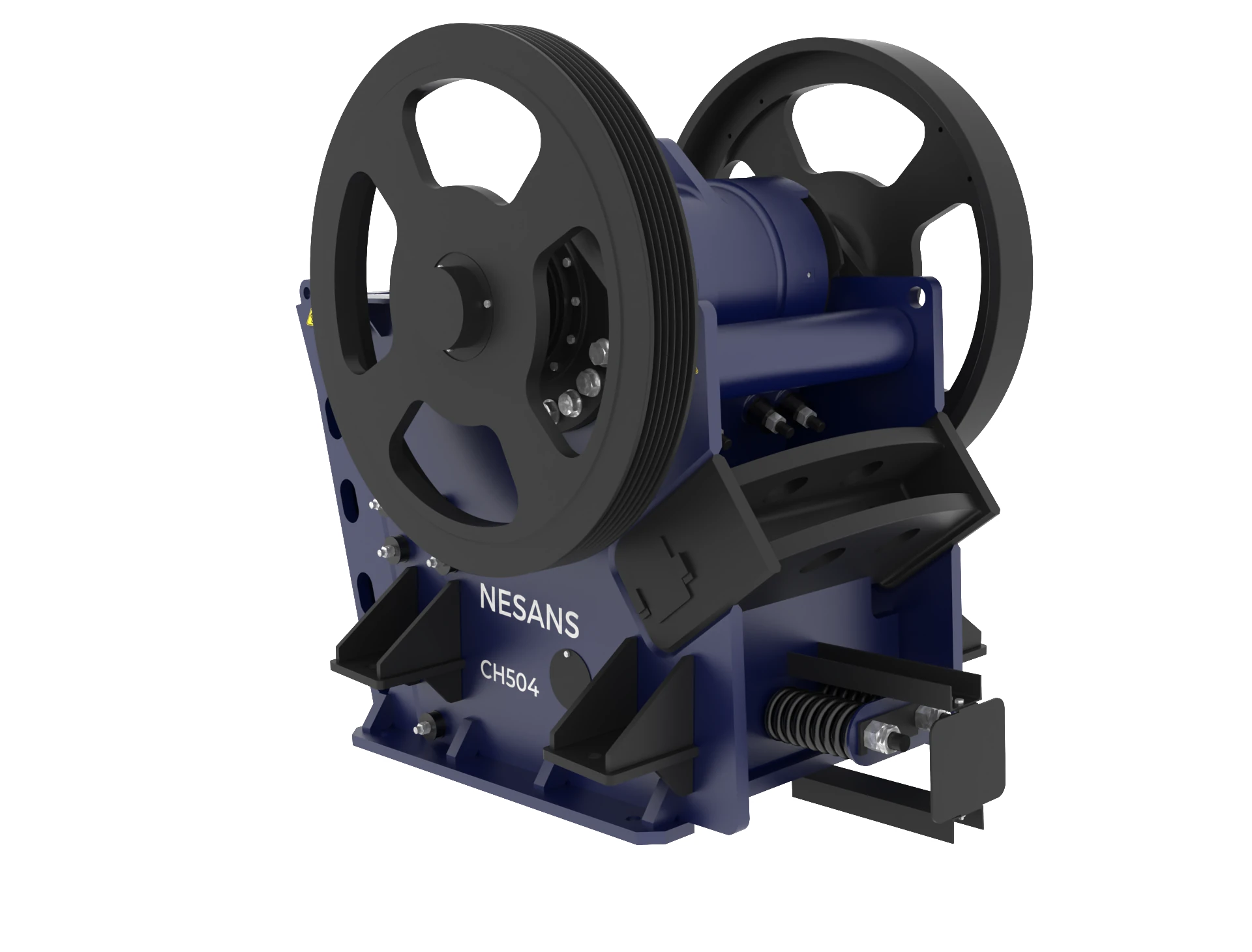


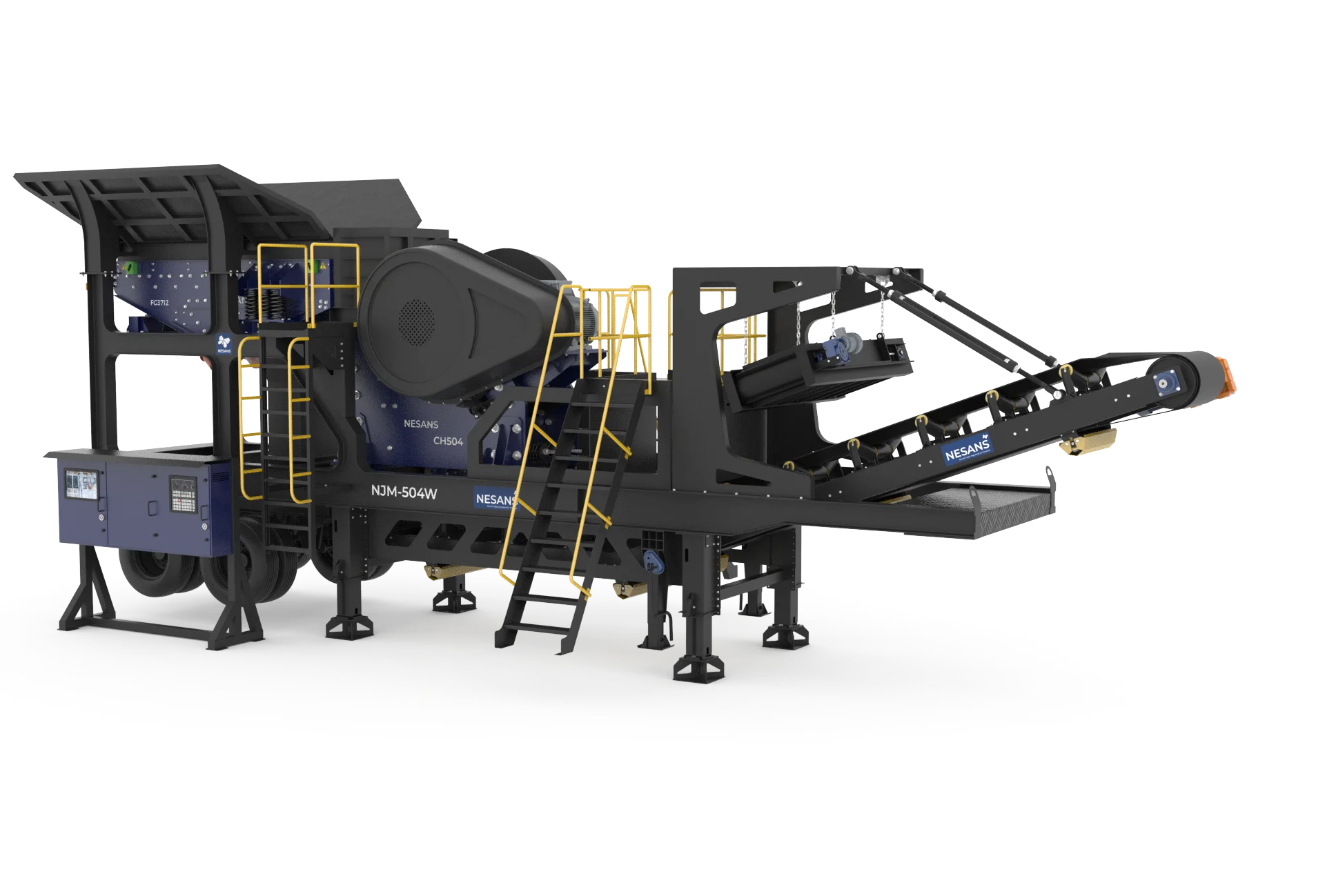








Jaw crusher flywheel inspection is a critical safety activity that prevents catastrophic failures capable of causing serious injury or death. Flywheel cracks, often invisible to casual observation, can propagate under cyclic loading until sudden, explosive failure occurs. A systematic inspection program using proper techniques can detect developing cracks before they reach critical size, allowing safe planned replacement rather than emergency response to a dangerous failure.
Understanding Flywheel Function and Failure Modes
Flywheel Function in Jaw Crushers
The flywheel serves critical functions in jaw crusher operation:
- Energy storage: Stores kinetic energy during non-crushing portion of cycle
- Energy release: Delivers stored energy during crushing stroke
- Load leveling: Smooths power draw from motor
- Speed regulation: Maintains consistent eccentric shaft speed
Operating stresses: Flywheels experience significant cyclic stresses from:
- Centrifugal force from rotation (tension in rim and spokes)
- Torque fluctuations from crushing cycle
- Belt tension from drive (asymmetric loading)
- Thermal cycling from operation
Common Failure Modes
| Failure Mode | Location | Cause | Detectability |
|---|---|---|---|
| Rim cracking | Outer edge | Centrifugal stress, impact | Visual, UT |
| Spoke cracking | Spoke roots | Cyclic bending, casting defects | MT, PT, UT |
| Hub cracking | Around keyway, bore | Press fit stress, torque cycles | PT, UT |
| Keyway damage | Key seat | Impact loading, loose fit | Visual, PT |
Consequences of Flywheel Failure
Flywheel failure is among the most dangerous events in crushing operations:
- Projectile hazard: Fragments travel at high velocity (up to 200+ m/s)
- No warning: Failure occurs instantaneously without audible warning
- Wide danger zone: Fragments can travel 100+ meters
- Secondary damage: Structural damage to plant, equipment
Visual Inspection Procedures
Preparation
Before visual inspection:
- Lock out all energy sources (electrical, mechanical, hydraulic)
- Verify crusher cannot rotate (blocking recommended)
- Clean flywheel surface of dust, grease, debris
- Ensure adequate lighting (1000+ lux recommended)
- Have magnifying glass (10×) available for detailed examination
Inspection Checklist
| Area | What to Look For | Accept/Reject Criteria |
|---|---|---|
| Rim outer surface | Cracks, chips, gouges | Any crack: Investigate. Chip >10mm: Evaluate |
| Rim inner surface | Cracks, corrosion | Any crack: Reject. Significant corrosion: Evaluate |
| Spoke surfaces | Cracks, especially at roots | Any crack: Reject |
| Hub bore | Cracks, fretting, wear | Any crack: Reject. Fretting: Evaluate |
| Keyway | Cracks, deformation, wear | Any crack: Reject. Deformation >0.5mm: Evaluate |
| Balance weights | Loose, missing, damaged | Any issue: Repair before operation |
High-Stress Areas
Pay particular attention to high-stress concentration areas:
- Spoke roots: Where spokes meet hub and rim
- Keyway corners: Sharp corners concentrate stress
- Any machined features: Holes, grooves, steps
- Repair welds: Heat-affected zones
- Casting anomalies: Porosity, inclusions, cold shuts
Non-Destructive Testing Methods
Magnetic Particle Testing (MT)
Most effective for detecting surface and near-surface cracks in ferromagnetic materials:
Application:
- Best for spoke roots, keyway areas
- Can detect cracks as small as 0.1mm
- Requires cleaning but minimal surface preparation
- Provides immediate visual indication
Procedure:
- Clean inspection area (remove oil, grease, paint)
- Apply magnetizing current (yoke or prod method)
- Apply magnetic particles (wet or dry method)
- Examine under appropriate lighting (visible or UV)
- Demagnetize after inspection
Dye Penetrant Testing (PT)
Effective for detecting surface-breaking cracks in any material:
Application:
- Useful for hub bore, machined surfaces
- Works on non-magnetic materials
- Can detect very fine cracks
- Requires thorough cleaning
Procedure:
- Clean surface thoroughly (solvent cleaner)
- Apply penetrant, allow dwell time (10-30 minutes)
- Remove excess penetrant carefully
- Apply developer, allow developing time
- Examine under appropriate lighting
Ultrasonic Testing (UT)
Can detect internal defects not visible at surface:
Application:
- Rim thickness measurement and defect detection
- Detection of subsurface cracks
- Assessment of casting soundness
- Requires trained technician
Key measurements:
- Rim thickness at multiple points (detect wear or corrosion)
- Scan spoke sections for internal defects
- Hub bore area for cracks
Inspection Frequency and Scheduling
Recommended Inspection Intervals
| Inspection Type | Frequency | Performed By |
|---|---|---|
| Visual walk-around | Daily | Operator |
| Detailed visual | Monthly | Maintenance technician |
| MT/PT critical areas | Quarterly | NDT technician |
| Comprehensive NDT | Annually | Certified NDT inspector |
| After incidents | As needed | NDT technician |
Factors Requiring Increased Frequency
- Flywheel age approaching design life
- Previous repairs or crack indications
- Severe operating conditions (impact loading, overloads)
- Visible damage or wear
- After tramp iron events
Crack Assessment and Decision Making
When Cracks Are Found
- Immediately: Stop the crusher, do not operate
- Document: Photograph, measure, record location
- Assess: Determine crack type, size, orientation
- Consult: Contact OEM or qualified engineer
- Decide: Repair (if permissible) or replace
General Guidelines (Consult Engineer for Specific Cases)
| Finding | Typical Action |
|---|---|
| Any crack in spoke | Replace flywheel |
| Crack at keyway | Replace flywheel |
| Crack in hub | Replace flywheel |
| Small rim chip (<10mm, no crack) | Blend, monitor |
| Large rim chip (>10mm) | Engineering evaluation required |
| Surface porosity (casting defect) | Engineering evaluation required |
Repair Considerations
Flywheel repair is generally NOT recommended due to:
- High consequence of failure
- Difficulty achieving original material properties
- Residual stress from welding
- Risk of hidden defects
If repair is considered (only with OEM approval):
- Must be performed by qualified welder with approved procedure
- Requires post-weld heat treatment
- Comprehensive NDT required after repair
- Reduced inspection intervals afterward
- Document everything for liability purposes
Flywheel Replacement Criteria
Mandatory Replacement Triggers
- Any crack (except as specifically evaluated and approved)
- Keyway damage beyond limits
- Bore wear exceeding tolerance
- Rim thickness below minimum
- Significant imbalance that cannot be corrected
- Age exceeding manufacturer's recommended service life
Service Life Considerations
Flywheel service life depends on:
- Material: Typically ductile iron or cast steel
- Design: Safety factors in original design
- Operating conditions: Loading severity, speed
- Maintenance: Balance, alignment, lubrication
Typical service life guidance: 15-25 years or 100,000-150,000 operating hours for well-maintained flywheels without defect indications. However, always follow OEM guidance for specific equipment.
Guard Inspection
Flywheel Guard Requirements
Guards provide the last line of defense against flywheel fragment hazards:
Guard construction requirements:
- Steel plate construction (typically 6-12mm minimum)
- Designed to contain fragments at maximum operating speed
- Secure mounting that withstands impact
- Complete enclosure of rotating mass
Guard Inspection Checklist
| Item | Check | Action if Failed |
|---|---|---|
| Guard integrity | No cracks, holes, severe corrosion | Repair or replace guard |
| Mounting security | All fasteners present and tight | Replace missing, tighten loose |
| Clearance | No contact with rotating parts | Adjust guard position |
| Coverage | Complete enclosure of flywheel | Add sections if incomplete |
| Access doors | Interlocked, secure when closed | Repair interlock, adjust door |
Documentation and Records
Inspection Records
Maintain comprehensive records including:
- Date and time of inspection
- Inspector name and qualifications
- Inspection methods used
- Areas inspected
- Findings (including "no defects found")
- Measurements (rim thickness, bore diameter)
- Photographs
- Actions taken or recommended
Equipment History File
Maintain a complete history file for each flywheel including:
- Original specifications and certificates
- Installation date and operating hours at installation
- All inspection reports
- Any repairs performed (if applicable)
- Operating conditions and any incidents
- Balance records
Conclusion
Flywheel inspection is a non-negotiable safety requirement for jaw crusher operations. The consequences of flywheel failure—potential fatalities and catastrophic damage—make thorough inspection essential. Implement daily visual checks, monthly detailed inspections, quarterly NDT on critical areas, and annual comprehensive NDT by certified inspectors. Any crack finding requires immediate shutdown and engineering evaluation. Never operate a crusher with a cracked flywheel. Maintain guards in proper condition as the last line of defense. Document all inspections thoroughly. The cost of inspection and planned replacement is insignificant compared to the potential consequences of failure.
