
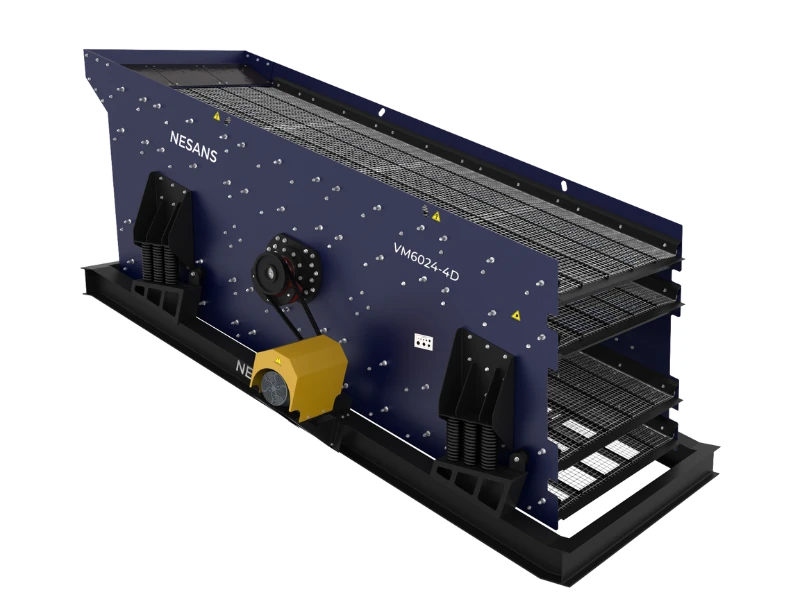
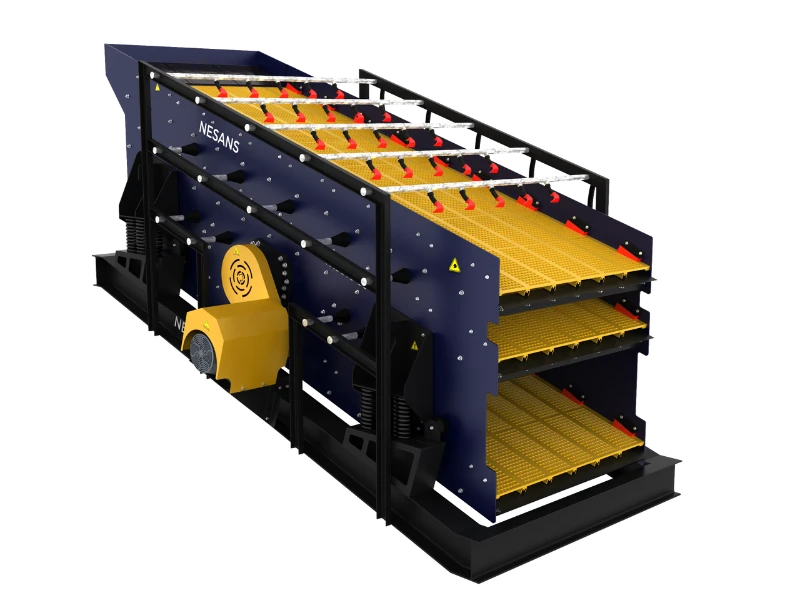
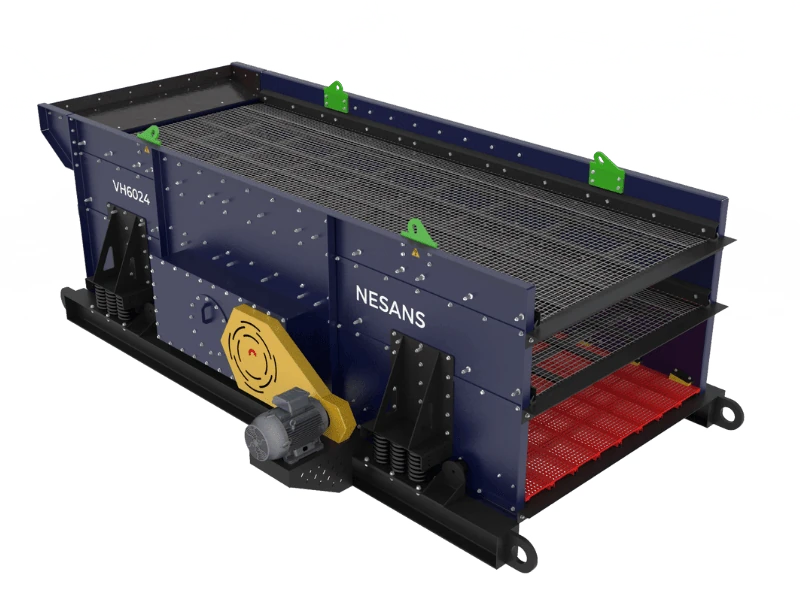
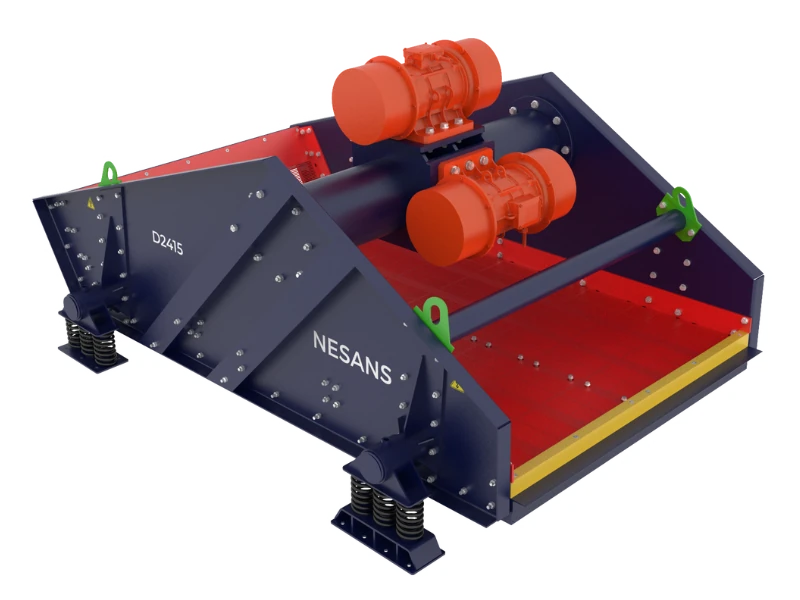





Your vibrating screen processes 300 TPH of crushed granite. The wire mesh panels you installed three months ago have worn through—again—requiring a ₹45,000 replacement and 8 hours of downtime. Meanwhile, the quarry across the valley runs similar material through polyurethane panels that last 9 months. Your annual screen media cost: ₹5.4 lakhs plus 96 hours downtime. Their cost: ₹2.8 lakhs and 16 hours downtime. The difference isn't luck—it's understanding which screen media matches which application. Wrong media selection is the most expensive recurring mistake in aggregate screening operations.
Screen media selection directly impacts screening efficiency, product quality, operating costs, and maintenance downtime. The "best" media type depends on material characteristics, aperture size, screen configuration, and operating conditions. A media choice that excels in one application fails catastrophically in another.
This comprehensive guide compares wire mesh, polyurethane, and rubber screen media across all performance dimensions. We provide specific selection criteria, cost calculations, and application guidelines for Indian aggregate and mining operations. Whether screening primary crusher product or producing IS 383-compliant manufactured sand, this analysis ensures optimal media selection for your operation.
Chapter 1: Understanding Screen Media Fundamentals
1.1 The Role of Screen Media
Screen media performs three essential functions:
- Size Classification: Separate particles by size through defined apertures
- Material Support: Carry material load while transmitting vibration energy
- Wear Surface: Withstand abrasion from moving material
Screen Media Performance Parameters:
| Parameter | Definition | Impact on Operation |
|---|---|---|
| Open Area (%) | Percentage of media surface that is aperture | Higher = more capacity, but less strength |
| Aperture Accuracy | Consistency of hole size | Affects cut point precision |
| Wear Life | Operating hours before replacement | Maintenance cost and downtime |
| Pegging Resistance | Resistance to particle lodging in apertures | Affects efficiency and blinding |
| Noise Level | Sound generated during operation | Worker exposure, compliance |
| Weight | Mass per unit area | Screen structural load, handling |
1.2 Media Type Overview
| Media Type | Primary Material | Typical Aperture Range | Primary Applications |
|---|---|---|---|
| Woven Wire Mesh | High-carbon steel, stainless steel | 1mm - 150mm | All screening applications |
| Polyurethane Panels | Polyurethane elastomer | 0.5mm - 100mm | Fine/medium screening, wet applications |
| Rubber Panels | Natural/synthetic rubber | 5mm - 150mm | Coarse screening, high-impact |
| Combination/Composite | PU/rubber with steel frame | Various | Specialized applications |
| Perforated Plate | Steel plate with punched holes | 3mm - 200mm | Scalping, heavy-duty |
Chapter 2: Wire Mesh Screen Media
2.1 Wire Mesh Types and Specifications
Wire Mesh Weave Patterns:
| Weave Type | Description | Open Area | Best Application |
|---|---|---|---|
| Plain Weave | Over-under alternating pattern | 60-70% | General screening, fine sizes |
| Double Crimp | Both wires crimped at intersection | 55-65% | Abrasive materials |
| Triple Crimp | Extra crimps for stability | 50-60% | Heavy-duty, large apertures |
| Flat Top | Top wires flattened | 55-65% | High wear, stratification |
| Lock Crimp | Interlocked crimp pattern | 50-60% | Heavy loads, mining |
| Slotted | Rectangular apertures | 45-55% | Wet screening, elongated particles |
Wire Material Specifications:
| Material | Hardness | Tensile Strength | Wear Resistance | Cost Factor |
|---|---|---|---|---|
| High Carbon Steel (65Mn) | 45-50 HRC | 1400-1600 MPa | Good | 1.0x |
| Spring Steel (55Si2Mn) | 48-53 HRC | 1500-1800 MPa | Very Good | 1.2x |
| Hardened Steel | 55-60 HRC | 1800-2000 MPa | Excellent | 1.5x |
| Stainless Steel (304) | 25-30 HRC | 600-800 MPa | Moderate (corrosion resistant) | 3.0x |
| Stainless Steel (316) | 25-30 HRC | 600-800 MPa | Moderate (high corrosion) | 4.0x |
| Manganese Steel | Work hardens | 1000-1200 MPa | Excellent (impact) | 2.0x |
2.2 Wire Mesh Advantages
| Advantage | Technical Basis | Operational Benefit |
|---|---|---|
| Highest Open Area | Wire geometry allows 60-70% open area | Maximum capacity per unit area |
| Precise Apertures | Manufactured to tight tolerances | Accurate particle size separation |
| Cost Effective | Established manufacturing, commodity pricing | Lowest initial cost |
| Wide Size Range | Can produce any aperture 1mm to 150mm+ | Suits any application |
| Self-Cleaning (Vibration) | Wire flexibility creates movement | Reduces blinding on inclined screens |
| Easy Availability | Standard product, multiple suppliers | Short lead times |
2.3 Wire Mesh Disadvantages
| Disadvantage | Technical Cause | Impact |
|---|---|---|
| Shorter Wear Life | Point contact wear at wire intersections | More frequent replacement |
| Noise Generation | Metal-to-metal contact | 90-100+ dBA, hearing protection required |
| Pegging/Blinding | Rigid apertures trap near-size particles | Reduced efficiency, cleaning required |
| Corrosion | Steel exposed to moisture/chemicals | Accelerated wear in wet applications |
| Fatigue Failure | Wire work-hardens and cracks | Sudden failure, contamination risk |
| Installation Time | Tensioning requirements, hook strips | Longer changeout time |
2.4 Wire Mesh Performance Data
Typical Wear Life by Application:
| Application | Material | Aperture | Expected Life (hours) |
|---|---|---|---|
| Primary scalping | High carbon steel | 75-100mm | 1,500-2,500 |
| Secondary dry screening | Spring steel | 20-40mm | 1,000-2,000 |
| Tertiary product screening | Spring steel | 5-20mm | 600-1,200 |
| Fine screening (dry) | Stainless steel | 1-5mm | 400-800 |
| Wet screening | Stainless steel | Any | 600-1,000 |
| Sand production | High carbon | 5-10mm | 500-1,000 |
Chapter 3: Polyurethane Screen Media
3.1 Polyurethane Types and Properties
Polyurethane Chemistry Options:
| PU Type | Hardness Range | Properties | Best Application |
|---|---|---|---|
| Polyester-based | 70-95 Shore A | High abrasion resistance, moderate hydrolysis resistance | Dry screening, abrasive materials |
| Polyether-based | 70-95 Shore A | Excellent hydrolysis resistance, good abrasion | Wet screening, washing |
| MDI-based | 80-95 Shore A | Higher mechanical strength | Heavy-duty applications |
| TDI-based | 70-90 Shore A | Better flex properties | Fine screening, pegging resistance |
Polyurethane Panel Configurations:
| Configuration | Description | Typical Size | Application |
|---|---|---|---|
| Modular Panels | Individual panels, bolt or pin mounting | 305 x 305mm to 610 x 1220mm | Most screening applications |
| Cross-tension Panels | Long panels tensioned across screen width | Full width x 300-600mm | High-capacity fine screening |
| Injection Molded | Single-piece precision molded | Various | High-precision applications |
| Cast Panels | Poured and cured in molds | Various | Standard applications |
| Steel-backed | PU bonded to steel plate | Various | Heavy-duty, high-impact |
3.2 Polyurethane Advantages
| Advantage | Technical Basis | Operational Benefit |
|---|---|---|
| Superior Wear Life | Elastomer distributes wear across surface | 3-5x life of wire mesh in abrasive applications |
| Reduced Noise | Elastomer dampens vibration | 10-15 dBA reduction vs wire mesh |
| Anti-Pegging | Flexible apertures release trapped particles | Higher effective open area maintained |
| Chemical Resistance | Resistant to oils, mild acids/bases | Suitable for recycling, industrial applications |
| Lower Maintenance | No tensioning, quick-change mounting | Faster panel changes |
| Reduced Contamination | No wire breakage, no rust particles | Cleaner product |
3.3 Polyurethane Disadvantages
| Disadvantage | Technical Cause | Impact |
|---|---|---|
| Lower Open Area | Thicker aperture walls required for strength | 15-25% less capacity than wire mesh |
| Higher Initial Cost | Material and manufacturing cost | 2-4x wire mesh purchase price |
| Temperature Sensitivity | Properties change with temperature | Limited to -20°C to +80°C continuous |
| UV Degradation | Sunlight breaks down polymer chains | Reduced life in outdoor applications |
| Aperture Stretching | Elastomer deforms under load | Aperture size increases 5-10% over life |
| Limited Coarse Sizes | Difficult to mold large accurate apertures | Generally limited to <100mm apertures |
3.4 Polyurethane Performance Data
Typical Wear Life by Application:
| Application | PU Type | Aperture | Expected Life (hours) | vs Wire Mesh |
|---|---|---|---|---|
| Fine aggregate screening | Polyether 85A | 5-10mm | 2,500-4,000 | 3-4x |
| Medium aggregate | Polyester 90A | 10-25mm | 3,000-5,000 | 3-4x |
| Coarse aggregate | Polyester 95A | 25-50mm | 4,000-6,000 | 2-3x |
| Wet screening | Polyether 85A | Any | 3,000-5,000 | 4-5x |
| Sand washing | Polyether 80A | 0.5-3mm | 2,000-3,500 | 4-6x |
| Dewatering | Polyether 75A | 0.3-1mm | 1,500-2,500 | 3-4x |
Chapter 4: Rubber Screen Media
4.1 Rubber Types and Properties
Rubber Compound Options:
| Rubber Type | Hardness Range | Properties | Best Application |
|---|---|---|---|
| Natural Rubber (NR) | 40-70 Shore A | Excellent tear and impact resistance | High-impact scalping |
| Styrene Butadiene (SBR) | 50-80 Shore A | Good abrasion, moderate cost | General screening |
| Nitrile (NBR) | 50-80 Shore A | Oil and chemical resistant | Recycling, industrial |
| EPDM | 50-80 Shore A | Weather and ozone resistant | Outdoor applications |
| Blend (NR/SBR) | 55-75 Shore A | Balanced properties | Most aggregate applications |
Rubber Panel Configurations:
| Configuration | Description | Aperture Types | Application |
|---|---|---|---|
| Modular Panels | Bolt-on panels, steel frame | Square, round, slot | Standard screening |
| Tensioned Sheets | Full-width rubber with hook edges | Square, slot | Quick-change applications |
| Steel-core Panels | Steel cables embedded in rubber | Square | Heavy-duty, high-impact |
| Ceramic Insert | Ceramic tiles bonded in rubber | Various | Extreme abrasion |
| Flip-Flop Mats | Loose rubber mats with agitation | Large square/round | Sticky/clay material |
4.2 Rubber Advantages
| Advantage | Technical Basis | Operational Benefit |
|---|---|---|
| Impact Resistance | Elastic deformation absorbs energy | Excellent for primary scalping |
| Lowest Noise | Maximum vibration damping | 15-20 dBA reduction vs wire mesh |
| Anti-Blinding | Flexible apertures, some designs vibrate panels | Handles sticky/clay materials |
| Light Weight | Lower density than steel or PU | Easier handling, lower screen load |
| Self-Cleaning | Flexible surfaces release material | Reduced carryover |
| Lowest Total Cost | Long life in suitable applications | Best economics for coarse/impact |
4.3 Rubber Disadvantages
| Disadvantage | Technical Cause | Impact |
|---|---|---|
| Lowest Open Area | Thick aperture walls for strength | 25-35% less capacity than wire mesh |
| Poor Fine Screening | Cannot maintain small accurate apertures | Generally limited to >5mm apertures |
| Temperature Limits | Rubber degrades at high temperature | Limited to 60-70°C continuous |
| Cut Resistance | Sharp materials can slice rubber | Poor for angular/sharp particles |
| Aperture Distortion | Rubber stretches under load | Cut point less precise than wire mesh |
| Oil/Solvent Damage | Some compounds swell in hydrocarbons | Not suitable for oily materials |
4.4 Rubber Performance Data
Typical Wear Life by Application:
| Application | Rubber Type | Aperture | Expected Life (hours) | vs Wire Mesh |
|---|---|---|---|---|
| Primary scalping | NR/SBR blend | 75-150mm | 4,000-8,000 | 2-3x |
| Secondary (impact) | SBR | 40-75mm | 3,000-5,000 | 2-3x |
| Coarse product | SBR | 20-40mm | 2,500-4,000 | 2-2.5x |
| Sticky material | Flip-flop NR | 25-50mm | 3,000-5,000 | Unique application |
| Recycling | NBR | Various | 2,500-4,000 | 2-3x |
Chapter 5: Comparative Analysis
5.1 Performance Comparison Matrix
| Performance Factor | Wire Mesh | Polyurethane | Rubber |
|---|---|---|---|
| Open Area | ★★★★★ (60-70%) | ★★★☆☆ (35-50%) | ★★☆☆☆ (25-40%) |
| Wear Life | ★★☆☆☆ | ★★★★★ | ★★★★☆ |
| Aperture Precision | ★★★★★ | ★★★★☆ | ★★★☆☆ |
| Impact Resistance | ★★☆☆☆ | ★★★☆☆ | ★★★★★ |
| Noise Level | ★☆☆☆☆ (Highest) | ★★★★☆ (Low) | ★★★★★ (Lowest) |
| Anti-Pegging | ★★☆☆☆ | ★★★★★ | ★★★★☆ |
| Fine Screening | ★★★★★ | ★★★★☆ | ★☆☆☆☆ |
| Wet Screening | ★★☆☆☆ | ★★★★★ | ★★★☆☆ |
| Initial Cost | ★★★★★ (Lowest) | ★★☆☆☆ | ★★★☆☆ |
| Change Time | ★★☆☆☆ (Slowest) | ★★★★☆ | ★★★★☆ |
5.2 Cost Comparison Analysis
Initial Cost Comparison (per m² of screen area):
| Media Type | Fine (5mm) | Medium (20mm) | Coarse (50mm) | Scalping (100mm) |
|---|---|---|---|---|
| Wire Mesh | ₹3,500-5,000 | ₹2,500-3,500 | ₹2,000-3,000 | ₹1,800-2,500 |
| Polyurethane | ₹12,000-18,000 | ₹10,000-15,000 | ₹8,000-12,000 | ₹7,000-10,000 |
| Rubber | N/A | ₹6,000-9,000 | ₹5,000-7,500 | ₹4,000-6,000 |
Total Cost of Ownership (TCO) Calculation Example:
Scenario: 6' x 20' screen, 20mm aperture, dry granite screening, 250 TPH, 4,000 hours/year
| Factor | Wire Mesh | Polyurethane | Rubber |
|---|---|---|---|
| Media cost per set | ₹85,000 | ₹3,20,000 | ₹1,90,000 |
| Expected life (hours) | 1,200 | 4,500 | 3,500 |
| Sets per year | 3.3 | 0.9 | 1.1 |
| Annual media cost | ₹2,80,500 | ₹2,88,000 | ₹2,09,000 |
| Change time (hours) | 8 | 4 | 4 |
| Changes per year | 3.3 | 0.9 | 1.1 |
| Downtime hours/year | 26.4 | 3.6 | 4.4 |
| Production loss @ ₹200/ton | ₹13,20,000 | ₹1,80,000 | ₹2,20,000 |
| Labor cost @ ₹2,000/change | ₹6,600 | ₹1,800 | ₹2,200 |
| Total Annual Cost | ₹16,07,100 | ₹4,69,800 | ₹4,31,200 |
| Cost per ton processed | ₹1.61 | ₹0.47 | ₹0.43 |
⚠️ Key Insight: Despite 3-4x higher purchase price, polyurethane and rubber provide lower total cost per ton due to extended wear life and reduced downtime. The production loss from frequent changeovers often exceeds media purchase cost differences.
5.3 Application-Specific Recommendations
| Application | Recommended Media | Alternative | Avoid |
|---|---|---|---|
| Primary scalping (>75mm) | Rubber | Heavy wire mesh | Polyurethane |
| Secondary screening (20-40mm) | Polyurethane | Wire mesh (low hours) | - |
| Fine aggregate (5-20mm) | Polyurethane | Wire mesh | Rubber |
| Sand production (<5mm) | Polyurethane | Stainless wire mesh | Rubber |
| Wet screening | Polyurethane (polyether) | Stainless mesh | Carbon steel |
| Dewatering | Polyurethane | Stainless mesh | Rubber |
| Sticky/clay material | Rubber (flip-flop) | Polyurethane | Wire mesh |
| High precision cut | Wire mesh | Polyurethane | Rubber |
| Recycling (C&D waste) | Rubber | Polyurethane | Wire mesh |
| Low budget, short term | Wire mesh | - | - |
Chapter 6: Selection Methodology
6.1 Decision Tree Approach
Step 1: Determine Aperture Requirement
- Aperture <3mm → Wire mesh or polyurethane only
- Aperture 3-10mm → Polyurethane preferred, wire mesh acceptable
- Aperture 10-40mm → All three options viable—proceed to step 2
- Aperture 40-75mm → Rubber or polyurethane preferred
- Aperture >75mm → Rubber preferred for impact, wire mesh for precision
Step 2: Assess Material Characteristics
- Highly abrasive (granite, basalt, quartzite) → Polyurethane or rubber
- Moderate abrasion (limestone, sandstone) → Any type based on other factors
- Wet material → Polyether polyurethane or stainless mesh
- Sticky/clay content → Rubber (flip-flop) or soft polyurethane
- Sharp/angular particles → Avoid rubber, use wire mesh or hard PU
- High temperature material → Wire mesh only
Step 3: Evaluate Operational Requirements
- Maximum capacity needed → Wire mesh (highest open area)
- Minimum noise required → Rubber (lowest noise)
- 24/7 operation, minimal downtime → Polyurethane (longest life)
- Frequent product changes → Modular panels (quick change)
- Precise cut point critical → Wire mesh or precision PU
Step 4: Calculate Total Cost
- Include media purchase, changeover labor, and production losses
- Use expected life data for your specific application
- Factor in indirect costs (noise PPE, cleaning downtime)
6.2 Material Property Assessment
Abrasiveness Classification:
| Abrasion Index (Ai) | Classification | Typical Materials | Recommended Media |
|---|---|---|---|
| <0.1 | Low | Limestone, marble, coal | Wire mesh economical |
| 0.1-0.3 | Moderate | Sandstone, some granites | Any type viable |
| 0.3-0.5 | High | Granite, basalt, quartzite | Polyurethane or rubber |
| >0.5 | Extreme | Taconite, some ores | Polyurethane with ceramic |
Moisture Content Impact:
| Moisture Level | Wire Mesh | Polyurethane | Rubber |
|---|---|---|---|
| <3% (dry) | Excellent | Excellent | Excellent |
| 3-6% (damp) | Good | Excellent | Good |
| 6-10% (wet) | Blinding risk | Good | Moderate |
| >10% (saturated) | Poor (use stainless) | Good (polyether) | Poor |
Chapter 7: Installation and Maintenance
7.1 Wire Mesh Installation
Critical Installation Steps:
- Pre-Tensioning: Mesh must be tensioned before final clamping
- Draw mesh tight along length using tensioning equipment
- Ensure even tension across full width
- Target 2-3% elongation for optimal performance
- Clamping:
- Use appropriate clamp bars for mesh gauge
- Tighten bolts in sequence (center outward)
- Verify no loose areas or ripples
- Crowned Surface:
- Mesh should crown slightly (higher in center)
- Crown prevents material tracking to edges
Common Wire Mesh Installation Errors:
| Error | Result | Prevention |
|---|---|---|
| Insufficient tension | Rapid fatigue failure, poor screening | Use tensioning tools, verify elongation |
| Over-tension | Wire breakage, accelerated wear | Follow manufacturer specifications |
| Uneven tension | Localized wear, tracking problems | Sequential tightening pattern |
| Wrong mesh orientation | Rapid blinding, reduced capacity | Follow marking, warp wires along flow |
| Damaged mesh installed | Premature failure, contamination | Inspect before installation |
7.2 Modular Panel Installation
Polyurethane/Rubber Panel Installation:
- Surface Preparation:
- Clean frame rails of debris and old material
- Inspect rail condition—repair damage before installation
- Check bolt holes—clean and chase threads if needed
- Panel Placement:
- Start at discharge end, work toward feed
- Ensure panels seat fully on support rails
- Check panel orientation (flow direction marking)
- Fastening:
- Use correct bolt length—too long damages panel
- Tighten bolts to specified torque (typically 25-40 Nm)
- Do not over-tighten—compresses panel, reduces life
- Gap Check:
- No gaps between panels (allows bypass)
- No panel overlap (causes wear, trapping)
Modular Panel Change Time Comparison:
| Screen Size | Wire Mesh | Bolt-On Modular | Pin-Style Modular |
|---|---|---|---|
| 5' x 12' (single deck) | 4-6 hours | 2-3 hours | 1-1.5 hours |
| 6' x 20' (single deck) | 6-10 hours | 3-5 hours | 1.5-2.5 hours |
| 6' x 20' (triple deck) | 20-30 hours | 10-15 hours | 5-8 hours |
| 8' x 24' (double deck) | 15-20 hours | 8-12 hours | 4-6 hours |
7.3 Maintenance Practices
Daily Inspection Checklist:
- ☐ Visual check for broken wires, torn panels, holes
- ☐ Listen for unusual rattling (loose panels or mesh)
- ☐ Check for material buildup causing blinding
- ☐ Verify product gradation (indicates media condition)
- ☐ Inspect discharge for oversize (media failure sign)
Weekly Inspection:
- ☐ Measure aperture sizes at multiple points
- ☐ Check tension on wire mesh (deflection test)
- ☐ Inspect panel mounting bolts for looseness
- ☐ Look for wear patterns indicating feed problems
- ☐ Check support rails for wear
When to Replace Screen Media:
| Indicator | Wire Mesh | Polyurethane | Rubber |
|---|---|---|---|
| Aperture increase | >15% | >20% | >25% |
| Visible wear | Wire diameter <50% | Aperture walls thin | Holes visible |
| Broken sections | Any broken wires | Any torn apertures | Any holes through |
| Product contamination | Oversize in product | Oversize in product | Oversize in product |
| Blinding | Cannot clean | Cannot clean | Cannot clean |
Chapter 8: Troubleshooting Guide
8.1 Common Problems and Solutions
| Problem | Possible Causes | Solutions |
|---|---|---|
| Rapid wire mesh wear | Wrong wire grade; excessive load; high abrasion material | Upgrade wire grade; reduce bed depth; consider PU/rubber |
| Wire mesh blinding | Near-size particles; moisture; wrong aperture shape | Use anti-blinding devices; slotted apertures; increase crown |
| PU panel tearing | Impact damage; wrong hardness; overtightened bolts | Add impact protection; use harder grade; check torque |
| Rubber panel cutting | Sharp particles; wrong compound | Switch to harder compound or PU |
| Uneven wear pattern | Uneven feed distribution; screen slope wrong | Adjust feed chute; check screen level |
| Excessive noise | Loose panels; worn panels; metal contamination | Tighten fasteners; replace worn media; add metal detection |
| Product contamination | Media failure; gaps between panels | Replace media; check panel fit |
| Low efficiency | Blinding; wrong aperture; overloading | Address blinding; adjust aperture; reduce feed rate |
8.2 Wear Pattern Analysis
| Wear Pattern | Indicates | Action |
|---|---|---|
| Even wear across screen | Normal operation | Continue monitoring |
| Heavy wear at feed end | Excessive drop height; poor feed distribution | Lower drop; install feed box |
| Heavy wear at discharge end | Overloading; material backing up | Reduce feed; check downstream |
| Heavy wear at center | Material tracking to center; crown inadequate | Improve feed distribution; increase crown |
| Heavy wear at sides | Material tracking to sides; over-crown | Reduce crown; check side seals |
| Localized holes | Impact damage; tramp metal | Install metal protection; reduce drop |
Chapter 9: Cost Optimization Strategies
9.1 Media Life Extension Techniques
| Technique | Applicable To | Life Extension | Cost |
|---|---|---|---|
| Proper tensioning | Wire mesh | +30-50% | Training only |
| Correct aperture selection | All types | +20-40% | Analysis only |
| Feed distribution improvement | All types | +25-50% | Feed box installation |
| Drop height reduction | All types | +20-40% | Chute modifications |
| Panel rotation | Modular panels | +15-25% | Labor only |
| Anti-blinding devices | Wire mesh, PU | +20-30% | Ball tray installation |
| Metal detection/removal | All types | +30-60% | Metal detector system |
9.2 Hybrid Approaches
Mixed Media Strategies:
| Strategy | Configuration | Benefit |
|---|---|---|
| Impact zone protection | PU/rubber at feed end, wire mesh remainder | Cost savings with impact protection |
| Wear zone targeting | PU in high-wear center, wire mesh at sides | Extended life where needed most |
| Deck optimization | Wire mesh top deck, PU lower decks | Capacity on top, life where harder to change |
| Scalping protection | Rubber scalping, PU sizing | Impact resistance + precision |
Chapter 10: Future Developments
10.1 Emerging Technologies
| Technology | Description | Benefit | Availability |
|---|---|---|---|
| Self-cleaning designs | Vibrating panels, active apertures | Eliminate blinding | Available now |
| Wear sensors | Embedded sensors in panels | Predictive replacement | Emerging |
| Ceramic-polymer composites | Ceramic particles in PU matrix | 2-3x wear life | Available, premium cost |
| 3D-printed apertures | Custom aperture shapes | Application-specific optimization | Prototype stage |
| Smart media | IoT-enabled monitoring | Real-time performance data | Emerging |
Conclusion
Key Recommendations
- Calculate Total Cost: Never select screen media on purchase price alone—include changeover costs and production losses
- Match Media to Application: Use the selection methodology to identify optimal media type
- Consider Hybrid Approaches: Mix media types to optimize performance and cost
- Maintain Properly: Correct installation and regular inspection extend life significantly
- Track Performance: Document media life to optimize future selections
Quick Selection Summary
| If Your Priority Is... | Choose... |
|---|---|
| Maximum capacity | Wire mesh |
| Longest wear life | Polyurethane |
| Impact resistance | Rubber |
| Lowest noise | Rubber |
| Wet/washing application | Polyether polyurethane |
| Fine screening (<5mm) | Wire mesh or polyurethane |
| Sticky material | Rubber (flip-flop) |
| Lowest total cost (high hours) | Polyurethane or rubber |
| Lowest initial investment | Wire mesh |
For application-specific screen media recommendations or wear analysis, contact Nesans technical support at service@nesansindia.in.
