
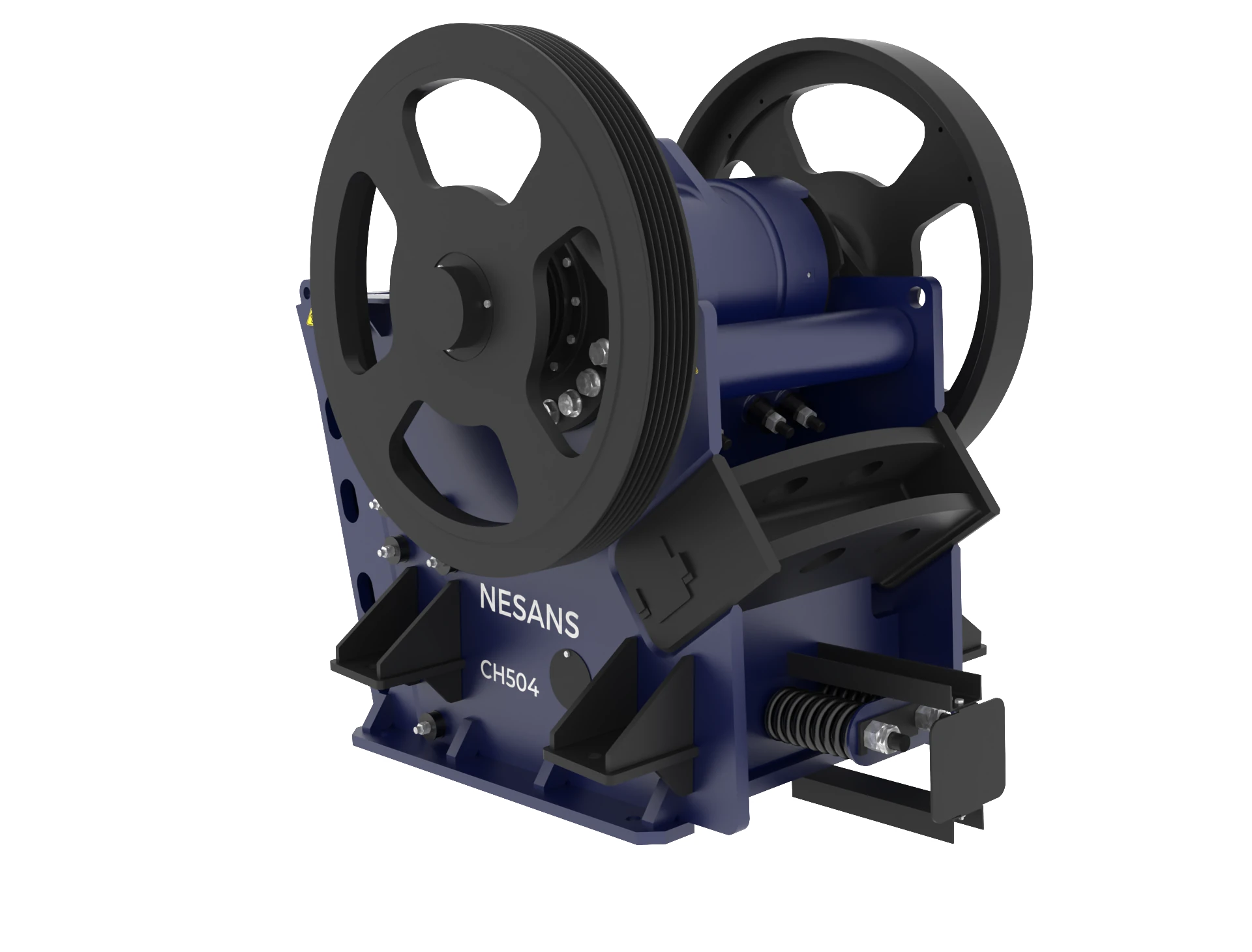
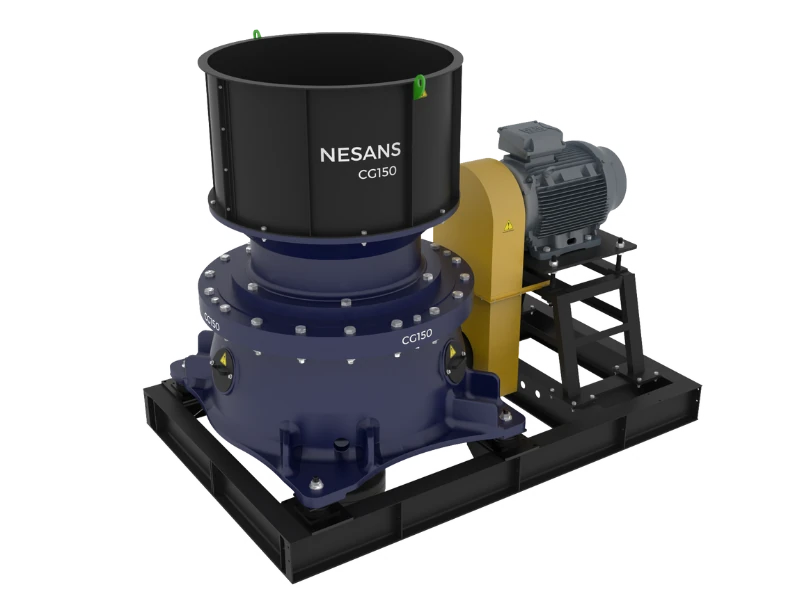
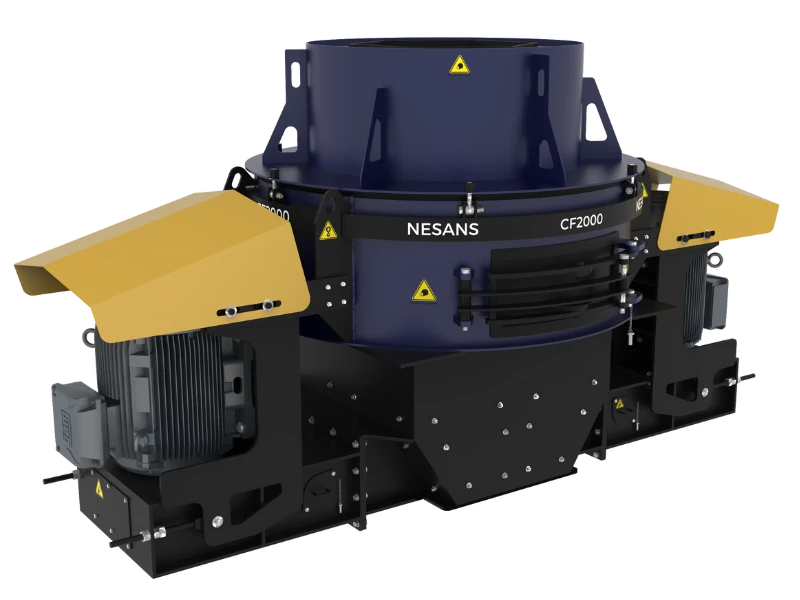
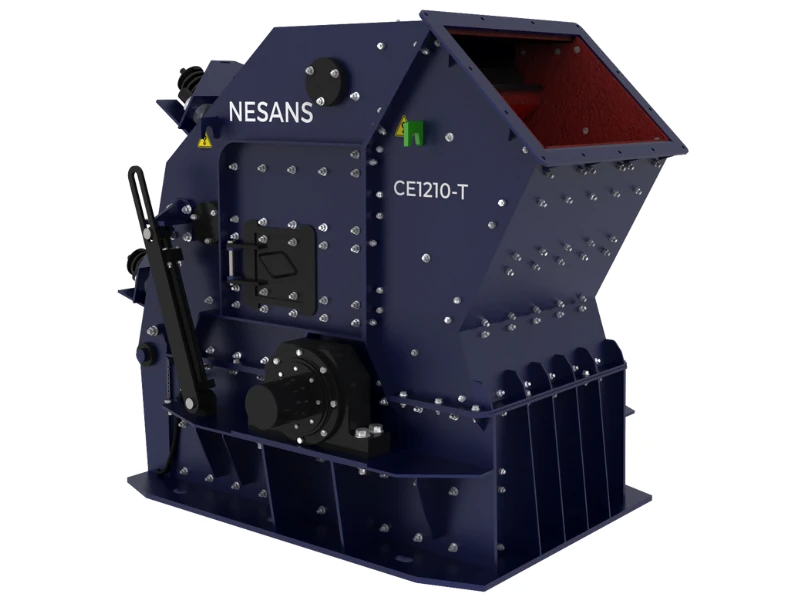
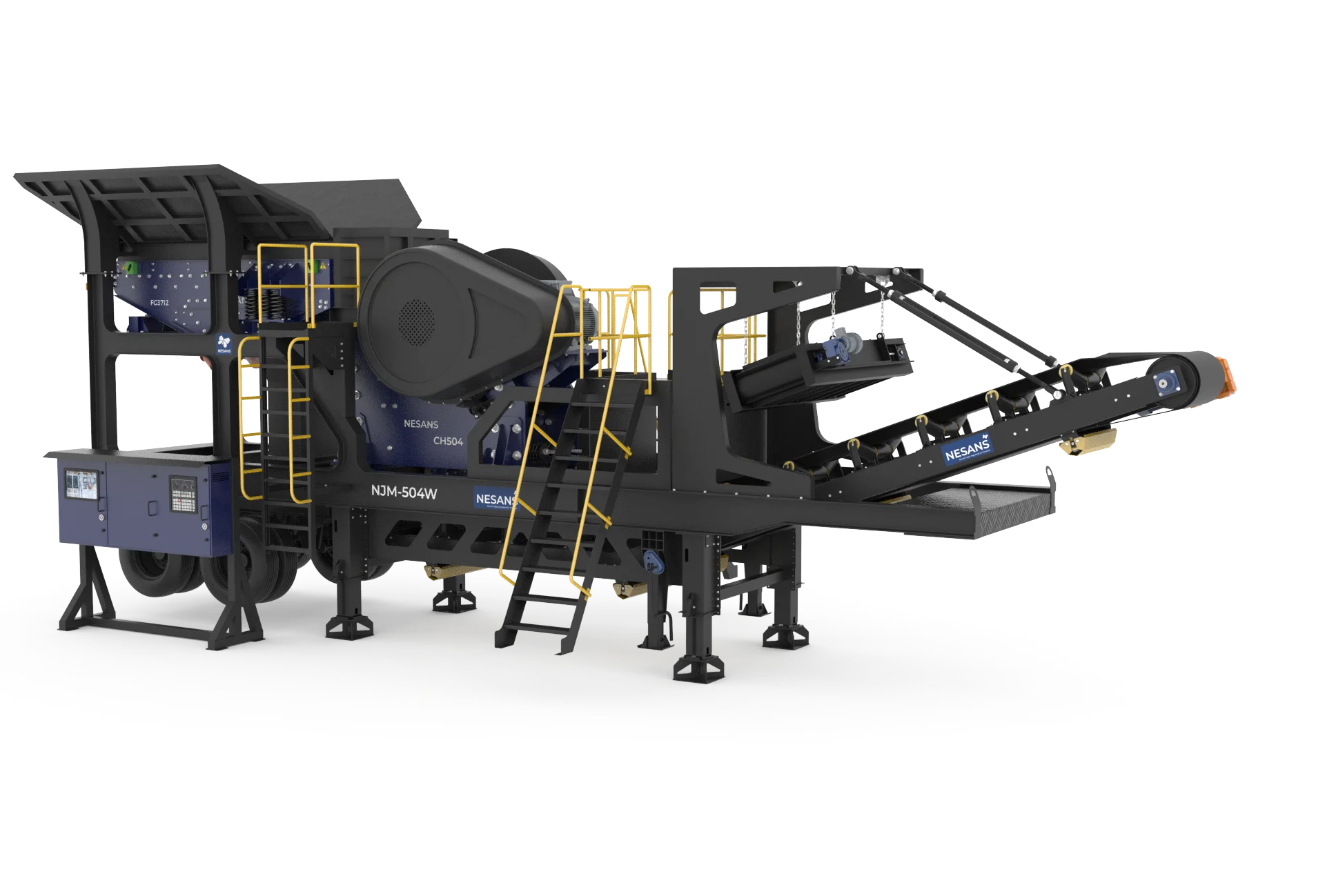
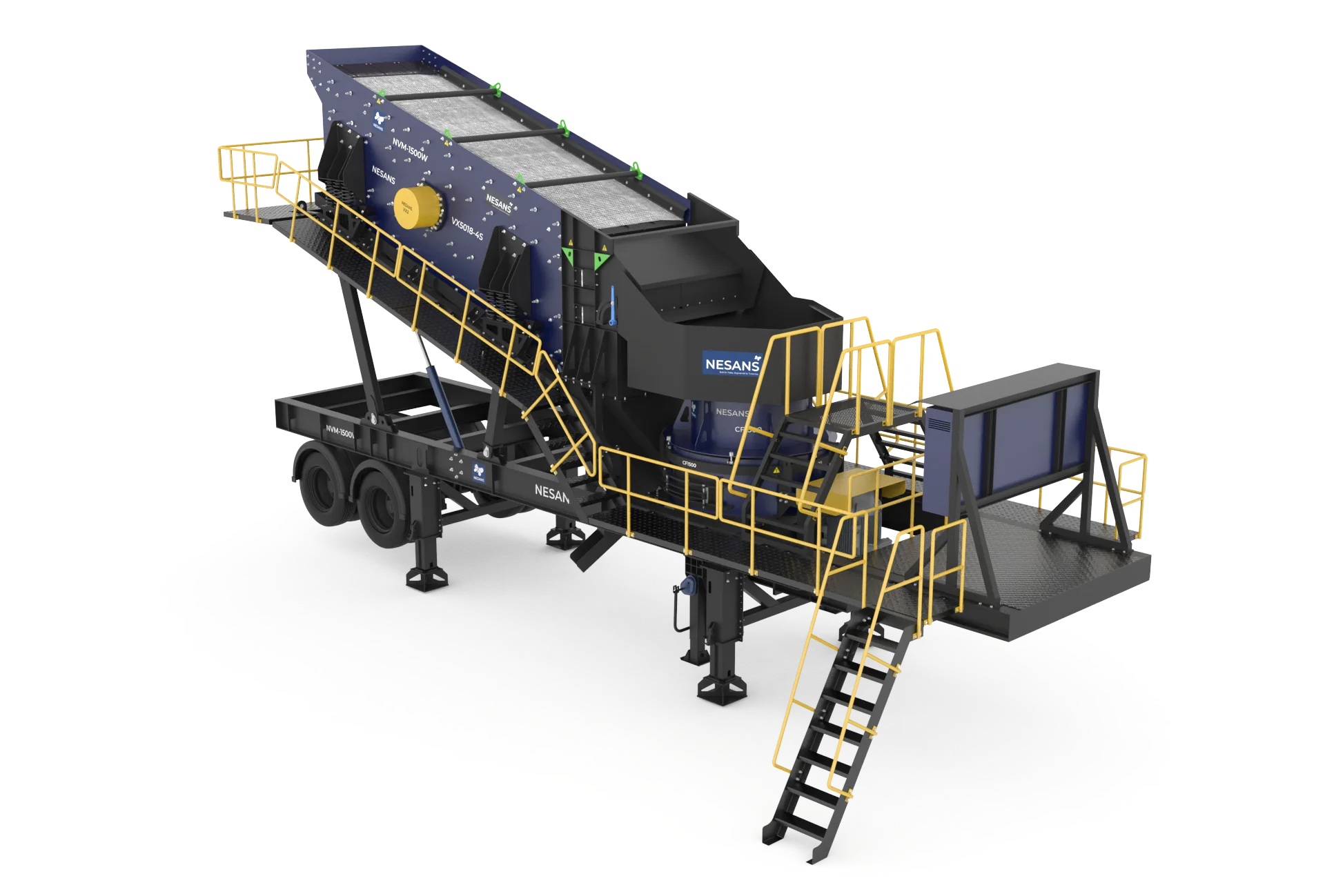
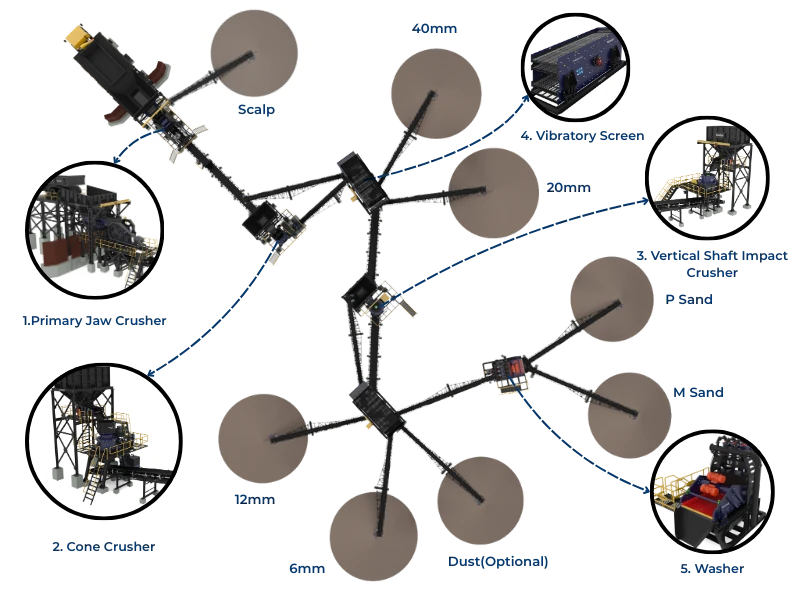
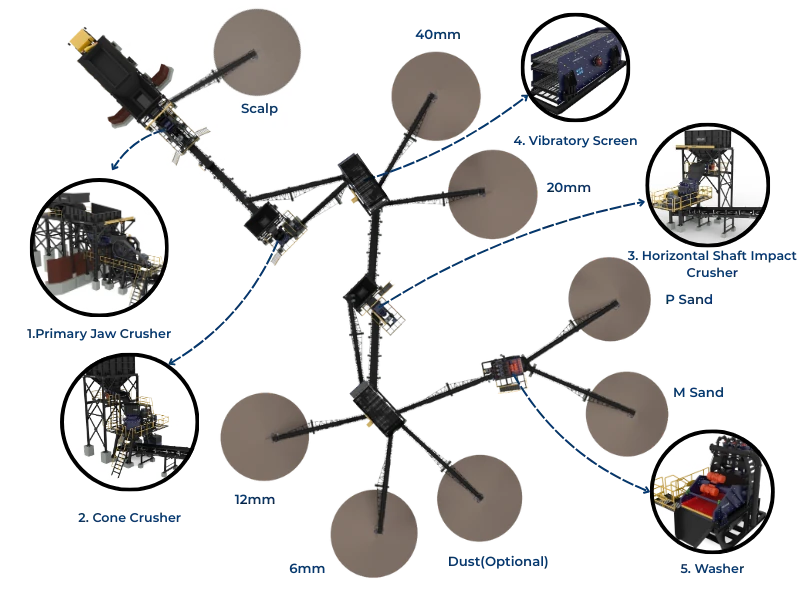
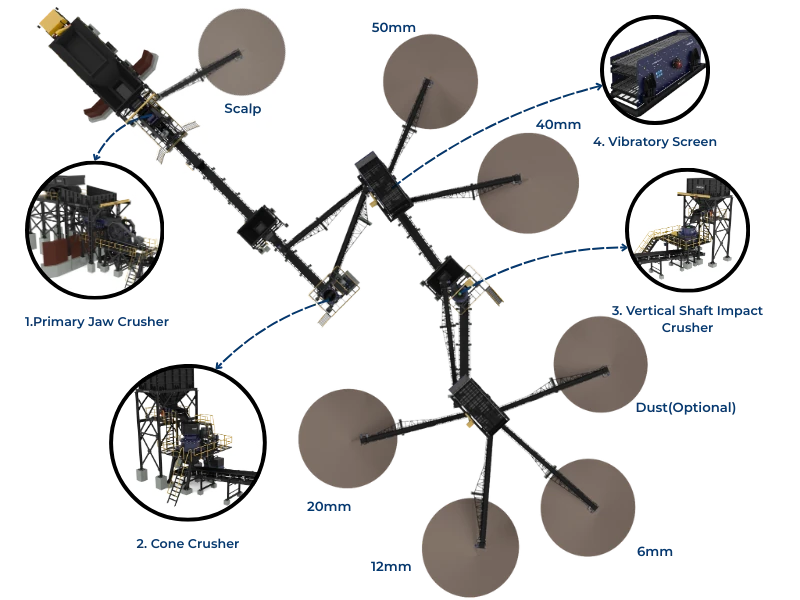
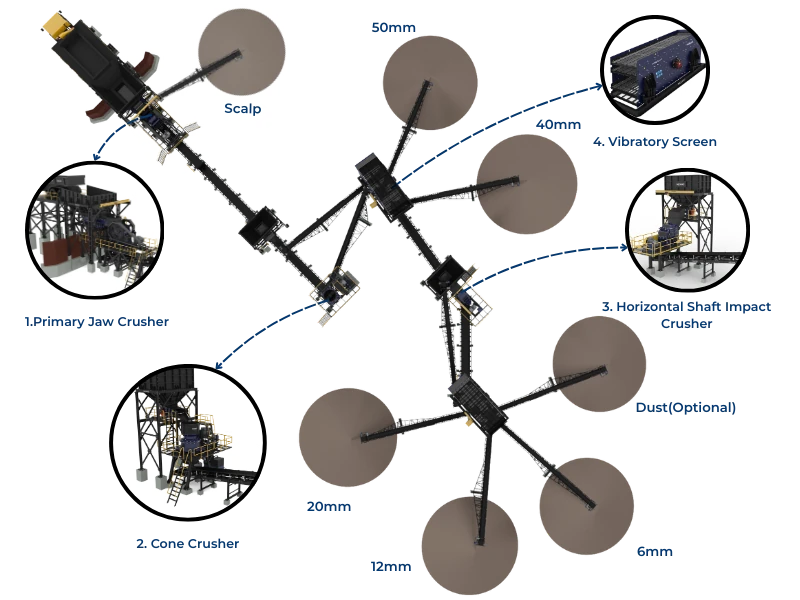
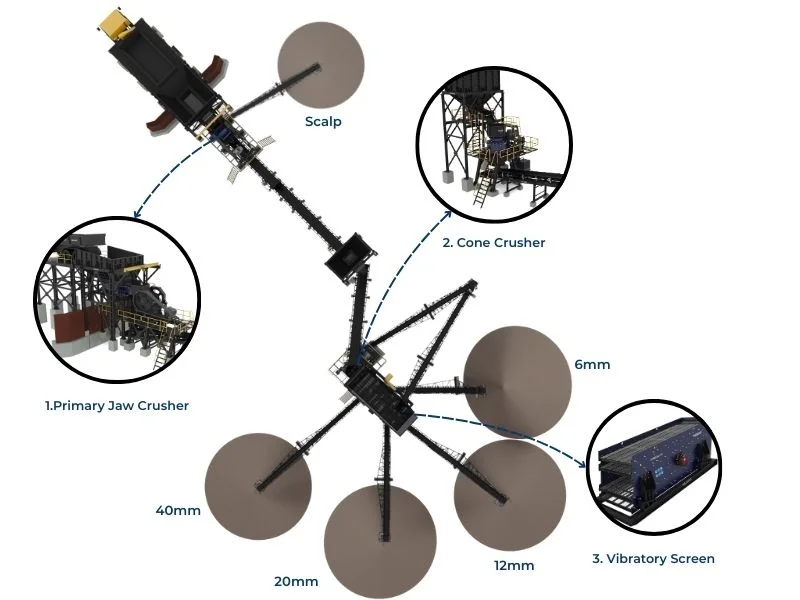
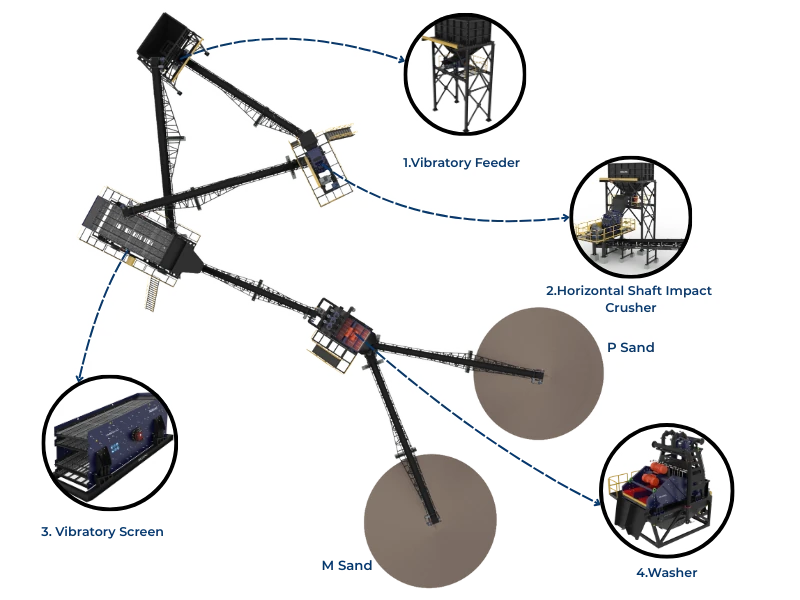
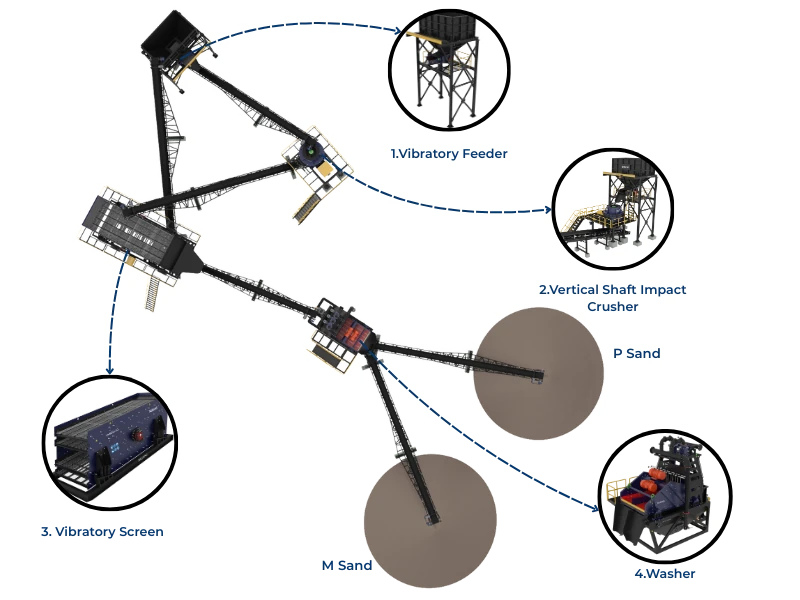








Mobile crushing plants represent a significant capital investment, with complete setups ranging from ₹1.5 crore for basic jaw crusher units to ₹8+ crore for comprehensive multi-stage systems. Despite this substantial investment, many operations achieve only 50-65% of rated capacity due to improper setup and operational practices. Understanding the factors that influence mobile crushing productivity can unlock the remaining 35-50% capacity potential and transform your operation's profitability.
Understanding Mobile Plant Productivity Fundamentals
Mobile crushing productivity is governed by a complex interplay of factors that differ significantly from stationary installations. The fundamental equation for mobile plant output is:
Actual Output = Rated Capacity × Availability × Utilization × Performance Efficiency
For a 200 TPH rated mobile jaw crusher:
- Availability: Time equipment is operational vs total scheduled time (target: 92%+)
- Utilization: Time actually crushing vs available time (target: 85%+)
- Performance Efficiency: Actual TPH vs rated TPH during operation (target: 90%+)
Multiplying these factors: 200 × 0.92 × 0.85 × 0.90 = 140.8 TPH actual output, or 70% of rated capacity. This represents good performance—many operations achieve only 50-60%.
Site Preparation for Maximum Productivity
Mobile plant productivity begins before the crusher arrives. Proper site preparation prevents numerous operational issues that plague unprepared locations.
Ground Preparation Requirements
| Ground Condition | Requirement | Consequence of Failure |
|---|---|---|
| Surface Grade | Level within 2% slope | Uneven feeding, premature bearing wear |
| Bearing Capacity | Minimum 150 kN/m² for jaw crushers | Ground settling, misalignment |
| Drainage | Positive drainage away from plant | Track system damage, electrical issues |
| Access Roads | Minimum 4m width, 12m turning radius | Loader/excavator productivity loss |
| Stockpile Area | Minimum 3× daily production capacity | Production stoppages, material segregation |
Feed Material Staging
Proper feed staging is critical for consistent production. The feed stockpile should maintain a minimum of 2-hour production capacity at all times to buffer excavator or loader delays. Position the feed stockpile to minimize loader travel distance—every 10 meters of additional travel distance reduces loader productivity by approximately 3-4%.
For operations using excavator direct feed, establish a feed bench that places the excavator bucket at optimal height for the crusher feed hopper. The ideal configuration positions the excavator on a bench 2-3 meters above the mobile plant ground level, allowing gravity-assisted loading.
Plant Setup and Configuration
Crusher Setting Optimization
The closed side setting (CSS) directly determines product gradation and throughput. For mobile jaw crushers processing typical Indian granite or basalt:
| Target Product | Recommended CSS | Expected Throughput Factor |
|---|---|---|
| Road base (0-100mm) | 100-120mm | 100% rated capacity |
| Aggregate feed (0-75mm) | 75-90mm | 85-90% rated capacity |
| Direct aggregate (0-40mm) | 40-50mm | 60-70% rated capacity |
| Fine crushing (0-25mm) | 25-30mm | 45-55% rated capacity |
A common mistake is setting CSS too tight for the application, sacrificing throughput for product size. Calculate the economic optimum by comparing throughput reduction against screening and re-crushing costs for the secondary stage.
Grizzly Feeder Configuration
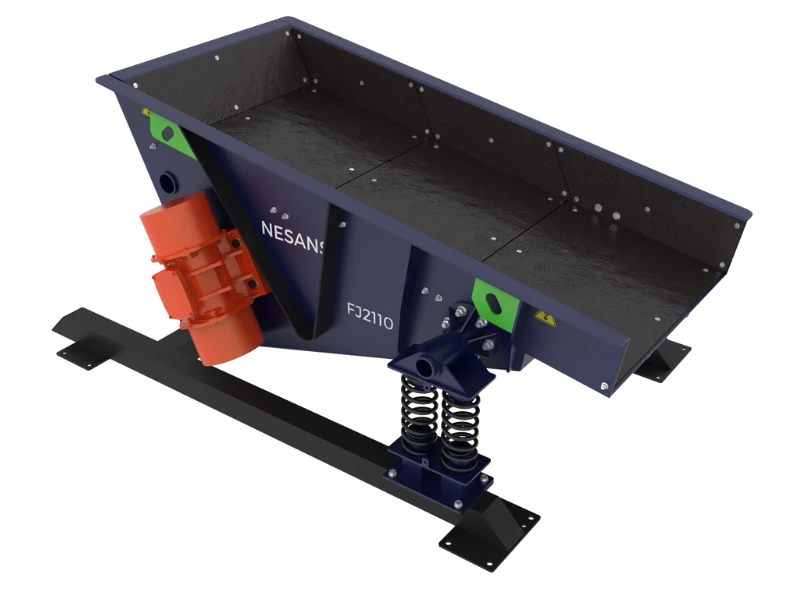
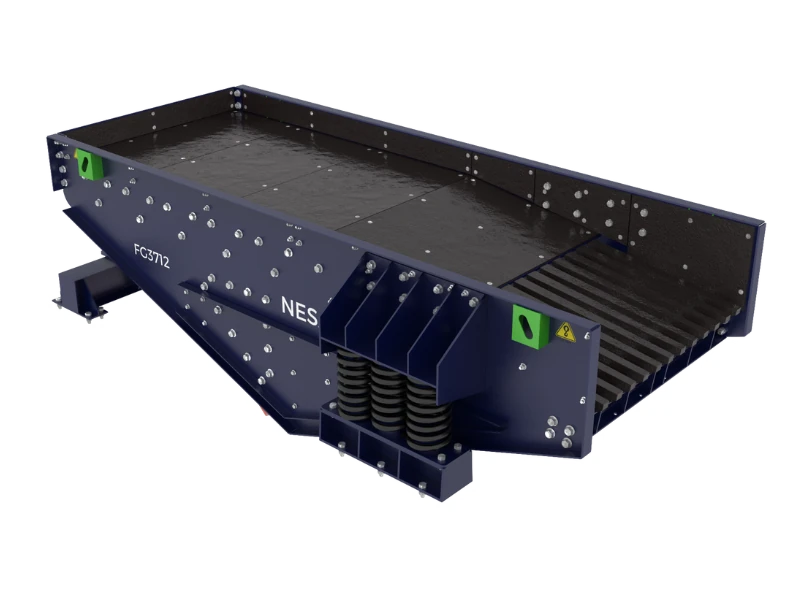
The vibrating grizzly feeder serves dual purposes: regulating feed rate and scalping fines. Proper configuration involves:
Grizzly Bar Spacing: Set bars at 60-70% of the crusher CSS. For a 100mm CSS, use 60-70mm bar spacing. This removes undersize material that consumes crusher energy without size reduction.
Feeder Speed: Start at 70% speed and increase gradually until consistent choke feeding is achieved. Choke feeding (crusher cavity maintained 60-75% full) maximizes throughput and produces more cubical product.
Feeder Vibration Amplitude: Increase amplitude for wet or sticky materials to prevent bridging. Decrease for dry, free-flowing materials to prevent material bouncing over grizzly bars.
Operational Best Practices
Feed Management for Maximum Throughput
Consistent feeding is the single most important factor in mobile crushing productivity. The feeding operation should maintain:
- Consistent feed rate: Vary within ±15% of target rate to maintain choke feeding
- Centered loading: Material should enter the crusher cavity center, not preferentially to one side
- Size distribution: Blend oversize and fine material to prevent segregated feeding
- Moisture management: Add water during dry conditions to suppress dust without creating slurry
The 80/20 Feed Rule
For optimal jaw crusher performance, maintain feed size distribution where 80% of material is smaller than 80% of the feed opening. For a crusher with 1000×600mm feed opening:
- Maximum feed size: 850mm (85% of 1000mm width)
- 80% of feed should be smaller than: 680mm (80% of 850mm)
Oversized material causes:
- Bridging at the crusher inlet
- Reduced throughput (up to 40% reduction with consistent oversize)
- Increased liner wear
- Higher power consumption per tonne
Loader Operator Training
The loader or excavator operator directly controls crusher productivity. Essential operator practices include:
| Practice | Productivity Impact | Implementation |
|---|---|---|
| Continuous feeding | +20-30% throughput | Time bucket cycles, maintain rhythm |
| Full bucket loads | +10-15% throughput | Train proper bucket filling technique |
| Centered dumping | +5-10% throughput | Visual reference markers on hopper |
| Selective feeding | +15-20% throughput | Blend oversize with normal material |
| Communication | Prevents stoppages | Radio contact with plant operator |
Preventive Maintenance for High Availability
Daily Maintenance Checklist
High availability requires disciplined daily maintenance. Implement a 30-minute pre-shift inspection covering:
- Visual inspection: Check for loose bolts, wear indicators, unusual vibration signs
- Lubrication: Grease all points per manufacturer schedule (typically 4-8 points)
- Hydraulic system: Check oil level, filter condition, hose integrity
- Track system: Inspect track tension, sprocket condition, roller wear
- Electrical: Check connections, clean dust from control panels
- Wear parts: Measure liner thickness, check for uneven wear patterns
Weekly Maintenance Tasks
| System | Weekly Task | Time Required |
|---|---|---|
| Crusher | Check toggle plate condition, measure CSS | 30 minutes |
| Feeder | Inspect springs, check grizzly bar wear | 20 minutes |
| Conveyor | Check belt tracking, tension, scraper condition | 25 minutes |
| Engine | Check air filter, coolant level, belt tension | 20 minutes |
| Hydraulics | Sample oil, check pressure readings | 15 minutes |
Wear Part Management
Proactive wear part management prevents unplanned downtime. Track wear rates and establish replacement thresholds:
Jaw Plates: Replace when wear reaches 75% of original thickness or when feed acceptance becomes restricted. Typical life on Indian granite: 80,000-150,000 tonnes depending on abrasiveness.
Toggle Plates: Designed as a sacrificial component to protect the crusher frame. Inspect daily for cracks. Replace immediately if damage detected.
Cheek Plates: Often overlooked but critical for maintaining crusher geometry. Replace when 50% worn to prevent jaw plate edge damage.
Maximizing Utilization
Minimizing Non-Productive Time
Track and minimize all non-crushing time to improve utilization. Common time losses and solutions:
| Time Loss Category | Typical Impact | Reduction Strategy |
|---|---|---|
| Start-up/shutdown | 30-45 min/day | Standardize procedures, pre-warm engines |
| Waiting for feed | 60-90 min/day | Improve loader coordination, buffer stockpile |
| Product stockout | 30-60 min/day | Larger stockpile area, coordinated dispatch |
| Maintenance | 45-60 min/day | Move to off-shift, improve planning |
| Blockages | 20-40 min/day | Feed management, operator training |
Shift Organization
Optimize shift schedules to maximize crushing hours. For operations running two shifts:
- Overlap shifts by 30 minutes: Allows handover briefing without stopping production
- Pre-position feed material: Night shift stages material for morning start-up
- Schedule maintenance during shift changes: Use handover period for quick inspections
- Stagger breaks: Maintain continuous feeding during operator breaks
Performance Monitoring and Optimization
Key Performance Indicators
Implement systematic performance tracking to identify improvement opportunities:
| KPI | Target | Calculation |
|---|---|---|
| Overall Equipment Effectiveness (OEE) | 75%+ | Availability × Utilization × Performance |
| Cost per Tonne | ₹60-100 | Total operating cost ÷ Production tonnes |
| Fuel Efficiency | 0.8-1.2 L/tonne | Fuel consumed ÷ Production tonnes |
| Wear Cost | ₹15-25/tonne | Wear part cost ÷ Production tonnes |
| Availability | 92%+ | Operating time ÷ Scheduled time |
Production Logging
Maintain detailed production logs to identify patterns and improvement opportunities. Record hourly:
- Production tonnage (from belt scale or truck counts)
- Fuel consumption
- Downtime events with cause codes
- Feed characteristics (wet/dry, size, hardness)
- Operator observations
Common Productivity Problems and Solutions
Problem: Low Throughput Despite Continuous Feeding
Possible causes:
- CSS too tight for application
- Worn liners reducing nip angle
- Sticky material bridging in cavity
- Insufficient grizzly scalping
Solutions:
- Open CSS to next standard size increment
- Rotate or replace liners
- Increase grizzly vibration, add water spray
- Reduce grizzly bar spacing
Problem: Frequent Tripping/Overloads
Possible causes:
- Oversized material entering crusher
- Tramp iron or uncrushable material
- Sudden feed surges
- CSS too tight
Solutions:
- Improve feed screening, train loader operator
- Install metal detector before crusher
- Regulate feeder speed, maintain consistent loading
- Open CSS, verify setting is achievable
Problem: Excessive Wear Rates
Possible causes:
- Running with insufficient choke
- Uneven feed distribution
- Incorrect liner material selection
- Material harder than expected
Solutions:
- Maintain 60-75% cavity fill at all times
- Center feed in hopper
- Upgrade to higher manganese content liners
- Test material abrasiveness, adjust expectations
Economic Impact of Productivity Improvement
The financial impact of productivity improvement is substantial. Consider a 200 TPH rated mobile jaw crusher operating 10 hours per day, 25 days per month:
| Scenario | OEE | Monthly Output | Revenue at ₹450/tonne |
|---|---|---|---|
| Poor performance | 50% | 25,000 tonnes | ₹1.12 crore |
| Average performance | 65% | 32,500 tonnes | ₹1.46 crore |
| Good performance | 75% | 37,500 tonnes | ₹1.69 crore |
| Excellent performance | 85% | 42,500 tonnes | ₹1.91 crore |
Improving from average (65%) to good (75%) performance generates an additional ₹23 lakh monthly revenue, or ₹2.76 crore annually—often exceeding the cost of a second mobile plant. This improvement typically requires no capital investment, only operational discipline and proper maintenance practices.
Conclusion
Mobile crushing productivity is not limited by equipment capability but by operational practices. The difference between 50% and 85% OEE represents nearly doubling your effective production capacity without additional capital investment. Focus on proper site preparation, optimized crusher settings, disciplined maintenance, and systematic performance monitoring to unlock your mobile plant's full potential. Start with the fundamentals: level ground, consistent feeding, proper CSS, and preventive maintenance. Build from there with operator training, performance tracking, and continuous improvement processes.
