
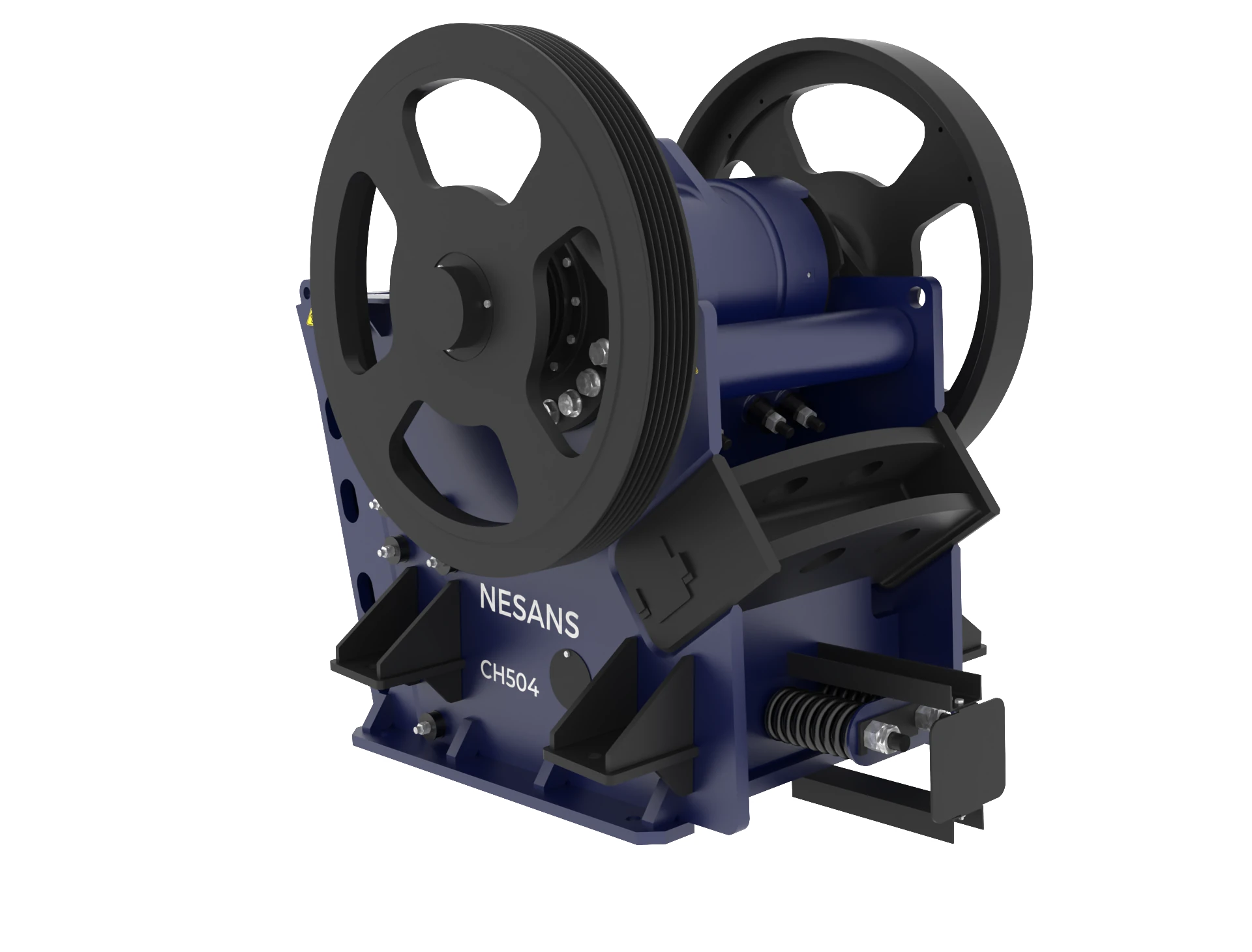








The 200 TPH jaw crusher that anchors your aggregate operation stops mid-shift. The operator reports a loud bang followed by sudden silence. Investigation reveals the toggle plate—a ₹15,000 component—has shattered, dropping the swing jaw and damaging the ₹8 lakh pitman assembly in the process. Total repair cost: ₹12 lakhs. Downtime: 5 days waiting for parts. Production loss: 8,000 tons. The toggle plate did exactly what it was designed to do—fail to protect more expensive components—but it failed prematurely due to preventable causes. Understanding toggle plate function, failure modes, and prevention strategies transforms this "sacrificial" component from a recurring expense into a predictable maintenance item.
Toggle plates serve as the critical mechanical fuse in jaw crusher systems, protecting expensive main components from catastrophic damage during overload events. Yet many operations experience toggle plate failures far more frequently than necessary, treating each failure as an unavoidable cost of crushing rather than a symptom of preventable operational issues.
This comprehensive technical guide examines toggle plate design, failure mechanisms, early warning indicators, and prevention strategies. We provide specific inspection procedures, load calculations, and operational adjustments that extend toggle plate life while maintaining crusher protection. Whether operating a 100 TPH portable jaw or a 500 TPH stationary primary, these principles apply across all single-toggle and double-toggle jaw crusher designs.
Chapter 1: Understanding Toggle Plate Function and Design
1.1 The Role of Toggle Plates in Jaw Crushers
Toggle plates perform three essential functions in jaw crusher operation:
- Motion Transmission: Convert eccentric shaft rotation into swing jaw reciprocating motion
- Force Multiplication: Leverage mechanical advantage to generate crushing force
- Overload Protection: Fail predictably to prevent damage to frame, bearings, and shaft
Single Toggle vs Double Toggle Configuration:
| Characteristic | Single Toggle | Double Toggle |
|---|---|---|
| Toggle plates | One (rear) | Two (front and rear) |
| Motion type | Elliptical (crushing + feeding) | Purely reciprocating |
| Mechanical advantage | Moderate | High |
| Toggle plate load | High (carries crushing force) | Distributed (both plates share) |
| Common applications | Mobile, medium capacity | Stationary, high capacity |
| Toggle failure frequency | More common | Less common |
1.2 Toggle Plate Mechanical Properties
Toggle plates are engineered to fail at specific loads, protecting components worth 50-100 times their replacement cost. Understanding the design parameters helps predict service life and identify abnormal conditions.
Standard Toggle Plate Specifications:
| Crusher Size (Feed Opening) | Toggle Plate Dimensions | Material Grade | Design Breaking Load (tons) | Safety Factor |
|---|---|---|---|---|
| 600 x 400mm | 400 x 150 x 25mm | Grey cast iron Grade 20 | 35-45 | 1.5-2.0 |
| 900 x 600mm | 600 x 200 x 35mm | Grey cast iron Grade 25 | 60-80 | 1.5-2.0 |
| 1000 x 800mm | 800 x 250 x 45mm | Grey cast iron Grade 25 | 100-130 | 1.5-2.0 |
| 1200 x 900mm | 900 x 300 x 50mm | Grey cast iron Grade 30 | 150-200 | 1.5-2.0 |
| 1500 x 1200mm | 1200 x 350 x 60mm | Grey cast iron Grade 30 | 250-350 | 1.5-2.0 |
Material Properties—Grey Cast Iron for Toggle Plates:
| Property | Grade 20 | Grade 25 | Grade 30 | Relevance |
|---|---|---|---|---|
| Tensile Strength (MPa) | 200 | 250 | 300 | Determines breaking load |
| Compressive Strength (MPa) | 600-700 | 750-850 | 900-1000 | Primary loading mode |
| Hardness (BHN) | 150-180 | 180-220 | 200-250 | Affects wear at contact |
| Elongation (%) | <1 | <1 | <1 | Brittle fracture (desirable) |
| Notch Sensitivity | High | High | High | Ensures clean break |
Why Grey Cast Iron?
Toggle plates use grey cast iron specifically because it:
- Fractures Predictably: Brittle failure at calculated load without plastic deformation
- Fails Cleanly: Breaks into large pieces (not fragments) for easy removal
- Provides Warning: Develops visible cracks before catastrophic failure
- Economical: Low material and casting cost
- Dampens Vibration: Graphite flakes absorb shock loads
⚠️ Critical Warning: Never substitute steel plates, hardened steel, or ductile iron for toggle plates. These materials will not fail at the design load, transferring overload forces to the pitman, bearings, and frame—causing damage costing 10-50 times the toggle plate price.
1.3 Load Distribution and Stress Analysis
Understanding how loads develop and distribute through toggle systems helps identify conditions leading to premature failure.
Normal Operating Loads:
During normal crushing, toggle plate loads cycle between minimum and maximum values:
| Crushing Stage | Toggle Load (% of Breaking) | Frequency | Fatigue Impact |
|---|---|---|---|
| Jaw open (no rock) | 5-10% | Every stroke | Minimal |
| Normal crushing | 20-40% | Every stroke with rock | Low |
| Hard rock crushing | 40-60% | Variable | Moderate |
| Oversize rock | 60-80% | Occasional | Significant |
| Near overload | 80-95% | Rare | High |
| Overload (tramp iron) | >100% | Should be rare | Immediate failure |
Toggle Plate Stress Distribution:
- End Contact Zones: Highest stress concentration at toggle seat interfaces
- Center Section: Primarily compressive stress, lower magnitude
- Edges: Tensile stress develops if bending occurs (misalignment)
- Notch/Groove: Intentional stress concentrator to control fracture location
Fatigue Life Estimation:
Toggle plate fatigue life depends on load cycling:
| Average Load (% Breaking) | Estimated Cycles to Failure | Operating Hours @ 250 RPM |
|---|---|---|
| 20-30% | >50 million | >3,300 hours (indefinite) |
| 30-40% | 10-50 million | 670-3,300 hours |
| 40-50% | 2-10 million | 130-670 hours |
| 50-60% | 500,000-2 million | 33-130 hours |
| 60-70% | 100,000-500,000 | 7-33 hours |
| >70% | <100,000 | <7 hours |
Chapter 2: Causes of Toggle Plate Failure
2.1 Overload Conditions
Overload is the primary cause of toggle plate failure and occurs in several forms:
2.1.1 Tramp Iron and Uncrushable Objects
The most common overload source—metal objects that cannot be crushed:
| Tramp Iron Source | Typical Objects | Frequency | Prevention |
|---|---|---|---|
| Drilling/blasting | Drill steel, bit fragments | Common | Magnet over conveyor |
| Vehicle components | Track pads, bucket teeth | Moderate | Visual inspection, training |
| Maintenance debris | Bolts, tools, wire | Occasional | Tool accountability |
| Wear part fragments | Liner pieces, wear plates | Rare | Wear monitoring |
| External contamination | Construction debris, scrap | Site-dependent | Source control |
Tramp Iron Detection and Removal:
| Detection Method | Effectiveness | Installation Location | Investment (₹) |
|---|---|---|---|
| Overhead magnet (permanent) | Good for ferrous | Over feed conveyor | 3-5 lakhs |
| Overhead magnet (electro) | Excellent for ferrous | Over feed conveyor | 8-15 lakhs |
| Magnetic head pulley | Moderate | Feed conveyor head | 1-3 lakhs |
| Metal detector | All metals | Before crusher feed | 5-12 lakhs |
| Visual inspection station | Large objects only | At hopper/feed point | Operational cost |
2.1.2 Oversized Feed Material
Rock larger than the crusher can handle creates excessive crushing forces:
| Feed Size vs Opening | Effect on Toggle Load | Result |
|---|---|---|
| >100% of opening (bridging) | No crushing, material jams | Manual clearing required |
| 85-100% of opening | 150-200% normal load | Accelerated fatigue, frequent failures |
| 80-85% of opening | 120-150% normal load | Reduced toggle life |
| 70-80% of opening | 100-120% normal load | Normal operation |
| <70% of opening | 80-100% normal load | Optimal operation |
Feed Size Management:
- Blast Fragmentation: Adjust drilling pattern and explosive loading for 80% passing 80% of crusher opening
- Scalping Grizzly: Install grizzly ahead of primary to reject oversize
- Hydraulic Breaker: Station breaker at feed point to reduce oversized boulders
- Operator Training: Train excavator operators to reject oversized material
2.1.3 Incorrect CSS Setting
Closed-side setting too small for the material increases toggle loads substantially:
| CSS vs Recommended | Toggle Load Increase | Capacity Effect | Toggle Life Effect |
|---|---|---|---|
| 50% of recommended | +80-120% | -40-50% | Premature failure |
| 75% of recommended | +30-50% | -15-25% | Significantly reduced |
| 100% recommended | Normal | Normal | Normal |
| 125% of recommended | -15-20% | +10-15% | Extended |
CSS Recommendations by Material:
| Material Type | Compressive Strength (MPa) | Minimum CSS (mm) | Recommended CSS (mm) |
|---|---|---|---|
| Soft limestone | 50-80 | 75 | 100-125 |
| Hard limestone | 80-150 | 100 | 125-150 |
| Granite | 150-250 | 125 | 150-200 |
| Basalt | 200-350 | 150 | 175-225 |
| Quartzite | 150-300 | 125 | 150-200 |
| Gneiss | 100-200 | 100 | 125-175 |
2.2 Operating Condition Issues
2.2.1 Choke Feeding vs Trickle Feeding
Feed pattern affects toggle plate loading significantly:
| Feed Pattern | Description | Toggle Load Pattern | Effect on Toggle Life |
|---|---|---|---|
| Proper choke feed | Chamber 70-80% full continuously | Consistent, moderate cycling | Optimal life |
| Flood feeding | Chamber overfilled | Sustained high loads | Accelerated fatigue |
| Trickle feeding | Occasional small batches | Impact loading each batch | Impact fatigue damage |
| Surge feeding | Heavy-light-heavy cycling | High variation, impacts | Reduced life |
2.2.2 Jaw Plate Wear Condition
Worn jaw plates change crusher geometry and loading:
| Wear Condition | Effect | Toggle Impact | Action Required |
|---|---|---|---|
| Normal wear (50%) | Slight CSS increase | Minimal | Monitor, adjust CSS |
| Heavy wear (70%) | Poor nip angle, slippage | Impact loading increases | Plan replacement |
| Worn through | Metal-to-metal contact risk | Severe impact loading | Immediate replacement |
| Uneven wear | Eccentric loading | Concentrated stress | Investigate cause, replace |
2.2.3 Toggle Seat Condition
Toggle plate seats (pitman and frame) wear and affect load distribution:
| Seat Condition | Effect on Toggle Plate | Symptom | Correction |
|---|---|---|---|
| Normal (new) | Full contact, even loading | None | None needed |
| Minor wear | Slight contact reduction | Occasional noise | Monitor closely |
| Moderate wear | Line contact, stress concentration | Toggle plate edge damage | Weld repair seats |
| Severe wear | Point contact, extreme stress | Repeated toggle failures | Machine or replace seats |
| Contaminated | Debris prevents seating | Noise, rapid wear | Clean and inspect |
2.3 Material and Quality Issues
2.3.1 Toggle Plate Quality Problems
| Quality Issue | Cause | Effect | Detection Method |
|---|---|---|---|
| Porosity | Gas in casting | Reduced strength (30-50%) | Visual, ultrasonic |
| Shrinkage cavities | Poor feeding during solidification | Stress concentrators | Visual, X-ray |
| Cold shuts | Poor metal flow | Weak planes | Visual inspection |
| Incorrect composition | Poor foundry control | Wrong strength/brittleness | Chemical analysis |
| Dimensional errors | Pattern/mold issues | Poor seat contact | Measurement |
Toggle Plate Quality Verification:
- Visual Inspection: Check for cracks, porosity, cold shuts on all surfaces
- Dimensional Check: Verify length, width, thickness, and end radii against drawing
- Hardness Test: Confirm hardness within specification (typically 180-220 BHN)
- Sound Test: Suspend and tap—clear ring indicates good casting; dull sound suggests defects
- Material Certificate: Request test certificate from reputable suppliers
2.3.2 Counterfeit and Substandard Parts
The market contains many substandard toggle plates that fail prematurely:
| Quality Level | Typical Source | Price (vs OEM) | Expected Life (vs OEM) |
|---|---|---|---|
| OEM genuine | Equipment manufacturer | 100% | 100% |
| Quality aftermarket | Reputable foundries | 60-80% | 80-100% |
| Standard aftermarket | Various foundries | 40-60% | 50-80% |
| Low-cost | Uncontrolled sources | 20-40% | 20-50% |
⚠️ Important: A toggle plate costing ₹10,000 that lasts 2,000 hours costs ₹5/hour. A toggle plate costing ₹5,000 that lasts 500 hours costs ₹10/hour—plus the cost of 4 changeovers instead of one. Always calculate cost per operating hour, not purchase price.
2.4 Environmental Factors
| Factor | Effect on Toggle Plate | Mechanism | Mitigation |
|---|---|---|---|
| Temperature cycling | Thermal stress | Expansion/contraction fatigue | Warm-up procedures |
| Moisture/corrosion | Surface pitting | Stress concentration at pits | Protective coating, storage |
| Vibration during storage | Micro-cracking | Fatigue from transport | Proper packaging |
| Impact during handling | Crack initiation | Brittle material damaged | Handle carefully |
Chapter 3: Warning Signs of Impending Failure
3.1 Visual Indicators
Regular inspection catches most developing problems:
| Visual Sign | Location | Severity | Action Timeline |
|---|---|---|---|
| Hairline cracks | Any surface | Moderate | Replace within 50 hours |
| Visible cracks | End sections | High | Replace within 8 hours |
| Cracks at notch | Center groove | Critical | Replace immediately |
| Surface spalling | Contact areas | Moderate | Replace within 100 hours |
| Edge chipping | Toggle ends | Low-Moderate | Monitor, replace at next opportunity |
| Wear grooves | Seat contact | Low | Check seat condition |
| Discoloration | Contact areas | Low | Check for overheating cause |
Crack Progression Patterns:
- Fatigue Cracks: Start at stress concentrators (notch, edges); progress slowly; beach marks visible under magnification
- Overload Cracks: Start at center or end; rapid propagation; rough fracture surface
- Thermal Cracks: Network pattern; often multiple small cracks; associated with heat discoloration
3.2 Audible Indicators
| Sound | Source | Indicates | Action |
|---|---|---|---|
| Knocking (regular) | Toggle seat area | Loose toggle, worn seats | Shut down, inspect seats |
| Clicking (irregular) | Toggle ends | Cracked toggle, poor contact | Inspect toggle immediately |
| Grinding | Toggle seats | Debris in seats, severe wear | Clean and inspect |
| High-pitched squeal | Toggle/seat interface | Dry contact, misalignment | Lubricate, check alignment |
Sound Monitoring Protocol:
- Establish baseline sound levels at commissioning
- Train operators to recognize normal vs abnormal sounds
- Investigate any new or changed sounds promptly
- Use stethoscope or vibration probe for detailed diagnosis
- Document sound changes with date/hours for pattern analysis
3.3 Operational Indicators
| Indicator | Measurement Method | Warning Level | Likely Cause |
|---|---|---|---|
| Increased power draw | Ammeter reading | >15% above normal | Tight CSS, worn plates, overload |
| CSS drift | Product size check | Unexpected coarsening | Toggle wear, seat wear |
| Production drop | TPH measurement | >10% unexplained | Various mechanical issues |
| Increased vibration | Vibration monitor | >20% above baseline | Loose toggle, worn bearings |
| Temperature rise | Thermal measurement | >10°C above normal | Friction, overload |
3.4 Toggle Plate Inspection Procedure
Daily Quick Inspection (5 minutes):
- ☐ Visual check of accessible toggle areas through inspection door
- ☐ Listen for abnormal sounds during startup and running
- ☐ Check for debris accumulation around toggle seats
- ☐ Verify toggle tension spring/adjustment hasn't changed
Weekly Detailed Inspection (30 minutes, stopped):
- ☐ Lock out/tag out crusher
- ☐ Access toggle plate through side access door
- ☐ Clean toggle plate surfaces with wire brush
- ☐ Inspect entire toggle surface for cracks with flashlight
- ☐ Check toggle seat contact pattern (powder test if needed)
- ☐ Measure toggle plate thickness at ends and center
- ☐ Inspect toggle seats for wear, cracking, or damage
- ☐ Check toggle adjustment mechanism condition
- ☐ Document findings with date and hours
Monthly Comprehensive Inspection (2 hours, stopped):
- ☐ All weekly checks
- ☐ Dye penetrant inspection of toggle plate (critical applications)
- ☐ Measure toggle seat wear with straight edge
- ☐ Check pitman and frame condition around toggle area
- ☐ Inspect toggle tension spring for cracks, loss of tension
- ☐ Verify toggle lock mechanism functions properly
- ☐ Review toggle plate operating hours and replacement history
- ☐ Compare current condition to replacement criteria
Chapter 4: Prevention Strategies
4.1 Feed Material Management
Tramp Iron Prevention System:
| Protection Level | Equipment | Investment | Effectiveness |
|---|---|---|---|
| Basic | Visual inspection + magnetic head pulley | ₹2-4 lakhs | 60-70% |
| Standard | Above + overhead magnet | ₹6-10 lakhs | 80-85% |
| Enhanced | Above + metal detector with auto stop | ₹15-25 lakhs | 95%+ |
| Premium | Above + X-ray/vision system | ₹40-60 lakhs | 99%+ |
Feed Size Control:
- Blasting Optimization: Work with blasting contractor to achieve optimal fragmentation
- Scalping Grizzly: Install grizzly with 80% of crusher opening spacing
- Oversized Boulder Protocol: Define procedure for handling oversize without crusher feeding
- Excavator Operator Training: Train to identify and reject oversize material
4.2 Operational Best Practices
4.2.1 Proper Feeding Techniques
| Practice | Method | Benefit |
|---|---|---|
| Maintain choke feed | Keep chamber 70-80% full | Consistent loading, rock-on-rock crushing |
| Distribute feed across width | Use spreading feeder or movable chute | Even jaw plate wear, balanced loads |
| Avoid impact feeding | Control drop height <3m | Reduce impact loading on toggle |
| Prevent bridging | Install bridging breakers or vibrators | Continuous feed, no surge loading |
4.2.2 CSS Management
| Action | Frequency | Benefit |
|---|---|---|
| Measure CSS | Daily | Detect drift, maintain product |
| Adjust for jaw wear | Weekly | Maintain required product size |
| Never exceed capacity | Always | Prevent overload |
| Open CSS in hard material | As needed | Reduce toggle loading |
4.2.3 Warm-Up Procedures
Proper warm-up reduces thermal shock and lubrication issues:
| Temperature Range | Warm-Up Time | Procedure |
|---|---|---|
| >15°C | 5 minutes | Run empty before feeding |
| 5-15°C | 10 minutes | Run empty, verify oil circulation |
| 0-5°C | 15 minutes | Run empty, check oil temperature |
| <0°C | 20+ minutes | Pre-heat oil if possible, extended warm-up |
4.3 Maintenance Practices
4.3.1 Toggle Seat Maintenance
| Maintenance Action | Frequency | Specification |
|---|---|---|
| Clean toggle seats | Weekly | Remove all debris, dust |
| Inspect seat contact | Weekly | Full contact required |
| Measure seat wear | Monthly | Max 2mm wear depression |
| Dress minor damage | As needed | Hand grind to restore surface |
| Weld repair wear | When >2mm | Build up and machine flat |
| Replace seat inserts | When beyond repair | OEM or equivalent parts |
Toggle Seat Repair Procedure:
- Clean seat thoroughly
- Preheat to 150-200°C
- Weld with hardfacing electrode (400-450 BHN)
- Build up 3-5mm above original surface
- Allow slow cooling
- Machine to flat surface with correct profile
- Check surface finish (Ra 3.2 or better)
- Apply layout blue, test contact with toggle plate
4.3.2 Lubrication
Toggle seats benefit from proper lubrication:
| Application Point | Lubricant Type | Frequency | Benefit |
|---|---|---|---|
| Toggle seat surfaces | Molybdenum grease | Weekly | Reduces friction, wear |
| Toggle adjustment threads | Anti-seize compound | Monthly | Prevents galling |
| Tension spring | Light oil | Monthly | Prevents corrosion |
4.4 Spare Parts Management
Recommended Toggle Plate Inventory:
| Operation Type | Minimum Stock | Reorder Point | Reasoning |
|---|---|---|---|
| Single crusher, local supply | 2 pieces | 1 remaining | Allow for quality issues |
| Single crusher, remote | 4 pieces | 2 remaining | Extended lead time |
| Multiple crushers | 1 per crusher + 2 | 1 per crusher | Shared inventory efficiency |
| Critical production | 4+ pieces | 2 remaining | Zero downtime tolerance |
Toggle Plate Storage Requirements:
- Location: Indoor, dry storage preferred
- Position: Store flat, supported full length
- Protection: Apply rust preventive if outdoor/humid storage
- Handling: Use slings, not chains; avoid impacts
- Rotation: Use FIFO (first in, first out)
Chapter 5: Toggle Plate Replacement Procedure
5.1 Preparation
Required Tools and Equipment:
| Item | Specification | Purpose |
|---|---|---|
| Crane/hoist | 500 kg minimum | Toggle plate handling |
| Come-along or chain block | 2-ton capacity | Swing jaw manipulation |
| Pry bars | Various sizes | Toggle positioning |
| Wire brush | Steel wire | Seat cleaning |
| Grease gun | With moly grease | Seat lubrication |
| Measurement tools | Tape, calipers | CSS verification |
| Torque wrench | Range for adjustment bolts | Proper reassembly |
| Safety equipment | PPE, lockout tags | Personnel protection |
Pre-Replacement Checklist:
- ☐ Crusher fully stopped and cooled
- ☐ Energy isolation verified (lockout/tagout)
- ☐ Work permit obtained (if required)
- ☐ New toggle plate inspected and approved
- ☐ Tools and equipment staged
- ☐ Work area cleaned and safe
- ☐ Adequate lighting available
- ☐ Personnel briefed on procedure
5.2 Step-by-Step Replacement
Toggle Plate Removal:
- Access: Open side access door; remove guards if needed
- Support Swing Jaw: Install chain block to support swing jaw when toggle removed
- Release Tension: Back off toggle tension adjustment until spring is slack
- Remove Tension Spring: Disconnect and remove tension spring assembly
- Lower Swing Jaw: Using chain block, carefully lower swing jaw to release toggle plate
- Extract Toggle: Slide or lift toggle plate out of machine
- Clean Seats: Thoroughly clean toggle seats on pitman and frame
- Inspect Seats: Check for wear, damage, proper profile
- Repair if Needed: Address any seat damage before installing new toggle
New Toggle Installation:
- Verify Dimensions: Confirm new toggle plate matches original specifications
- Apply Lubricant: Apply moly grease to toggle ends and seats
- Position Toggle: Insert toggle plate, seating in frame pocket first
- Raise Swing Jaw: Using chain block, raise swing jaw to seat pitman end
- Center Toggle: Ensure toggle plate is centered left-to-right
- Install Tension Spring: Reconnect tension spring assembly
- Apply Tension: Tighten adjustment until spring exerts specified preload
- Check Clearances: Verify toggle not binding, free to rock slightly
- Measure CSS: Confirm closed-side setting is correct
- Remove Supports: Remove chain block and temporary supports
- Final Inspection: Check all fasteners, guards, clearances
5.3 Post-Replacement Verification
- Visual Check: All components properly installed
- CSS Measurement: Record new CSS setting
- Trial Run (Empty): Run crusher empty for 5 minutes
- Listen for abnormal sounds
- Watch for unusual vibration
- Check for interference
- Loaded Trial: Feed small amount of material
- Verify crushing action normal
- Check toggle area for unusual heat
- Confirm CSS maintained
- Documentation: Record replacement in maintenance log with hours, date, part number
Chapter 6: Cost Analysis and ROI of Prevention
6.1 Toggle Failure Cost Breakdown
Direct Costs of Unplanned Toggle Failure:
| Cost Component | Typical Range (₹) | Notes |
|---|---|---|
| Toggle plate (replacement) | 12,000-35,000 | Depending on size |
| Labor (2-4 hours) | 2,000-5,000 | Regular hours |
| Production loss (4-8 hours) | 80,000-400,000 | 200 TPH × ₹200/ton margin |
| Total (toggle only) | 94,000-440,000 | - |
When Toggle Failure Causes Secondary Damage:
| Damage Type | Repair Cost (₹) | Downtime | Frequency |
|---|---|---|---|
| Toggle seat damage | 30,000-80,000 | 8-16 hours | 20% of failures |
| Pitman damage | 3,00,000-12,00,000 | 3-10 days | 5% of failures |
| Frame cracking | 5,00,000-25,00,000 | 1-4 weeks | 1% of failures |
| Eccentric shaft damage | 8,00,000-20,00,000 | 2-4 weeks | <1% of failures |
6.2 Prevention Investment ROI
Example: Tramp Iron Protection System
| Factor | Without Protection | With Protection |
|---|---|---|
| Toggle failures per year | 8 | 2 |
| Toggle cost per failure | ₹2,00,000 avg | ₹2,00,000 avg |
| Annual toggle costs | ₹16,00,000 | ₹4,00,000 |
| Protection system cost | - | ₹15,00,000 (one-time) |
| Annual savings | - | ₹12,00,000 |
| Payback period | - | 15 months |
Comprehensive Prevention Program ROI:
| Prevention Element | Investment | Annual Savings | Payback |
|---|---|---|---|
| Overhead magnet | ₹5,00,000 | ₹4,00,000 | 15 months |
| Metal detector | ₹10,00,000 | ₹6,00,000 | 20 months |
| Inspection program | ₹50,000/year | ₹3,00,000 | 2 months |
| Operator training | ₹25,000/year | ₹2,00,000 | 1.5 months |
| Quality toggle plates | +₹30,000/year | ₹1,50,000 | 2.5 months |
Chapter 7: Case Studies
7.1 Case Study: Recurring Toggle Failures
Situation: A 180 TPH granite quarry experienced toggle plate failure every 200-300 operating hours, far below the expected 1,500+ hours. Annual toggle cost: ₹4.5 lakhs for parts plus ₹12 lakhs in downtime.
Investigation Findings:
- Feed material contained occasional drill steel fragments from blasting
- CSS set at 100mm against recommendation of 150mm for the granite hardness
- Toggle plates sourced from low-cost supplier without quality verification
- Toggle seats showed 4mm wear depression (2mm limit)
Corrective Actions:
- Installed overhead magnet on feed conveyor (₹4.5 lakhs)
- Increased CSS to 125mm, added third crushing stage for required product
- Switched to OEM-equivalent quality toggle plates (₹8,000 more per plate)
- Welded and machined toggle seats to restore specification
Results:
- Toggle life extended to 1,800+ hours
- Annual toggle failures reduced from 12 to 2
- Annual savings: ₹14 lakhs
- Investment payback: 5 months
7.2 Case Study: Catastrophic Failure Prevention
Situation: Routine weekly inspection on a 350 TPH jaw crusher revealed hairline cracks on toggle plate at 1,100 hours (normal life 1,500 hours).
Investigation:
- Cracks originated at center notch—fatigue pattern
- Recent production push had increased operating hours 30%
- Material hardness slightly higher than usual batch
Action Taken:
- Scheduled replacement during planned weekend shutdown
- Inspected toggle seats—minor wear within limits
- Analyzed failed plate—confirmed fatigue, no defects
- Adjusted monitoring frequency for high-production periods
Prevented Damage:
- If failure occurred during operation: estimated ₹8 lakh pitman repair
- Actual cost: ₹20,000 toggle + planned changeover
- Savings: ₹7.8 lakhs + 5 days downtime avoided
Chapter 8: Conclusion
8.1 Key Takeaways
Toggle plate management requires understanding that these "sacrificial" components should fail only when performing their protection function—not from preventable operational issues:
- Prevention is Economical: Investment in tramp iron protection, feed control, and inspection programs pays back quickly
- Quality Matters: Substandard toggle plates cost more per operating hour despite lower purchase price
- Inspection Prevents Catastrophe: Regular inspection catches developing failures before secondary damage occurs
- Operational Discipline: Proper feeding, CSS management, and warm-up procedures extend toggle life significantly
- Seat Condition Critical: Worn toggle seats cause repeated failures until repaired
8.2 Quick Reference: Toggle Plate Life Targets
| Operating Condition | Expected Toggle Life | If Achieved, Operations Are |
|---|---|---|
| Excellent | 2,500+ hours | Best-in-class prevention |
| Good | 1,500-2,500 hours | Good practices in place |
| Acceptable | 1,000-1,500 hours | Normal operations |
| Poor | 500-1,000 hours | Investigation needed |
| Critical | <500 hours | Immediate action required |
8.3 Support Resources
For assistance with toggle plate issues, failure analysis, or prevention program development, Nesans provides:
- Technical Support: Failure analysis and recommendations
- Quality Toggle Plates: OEM and certified aftermarket supply
- Tramp Iron Protection: Magnet and metal detector systems
- Training Programs: Operator and maintenance training
- Site Assessments: Comprehensive crushing circuit evaluation
Contact our technical team at service@nesansindia.in for toggle plate specifications, failure analysis, or prevention program development.
