
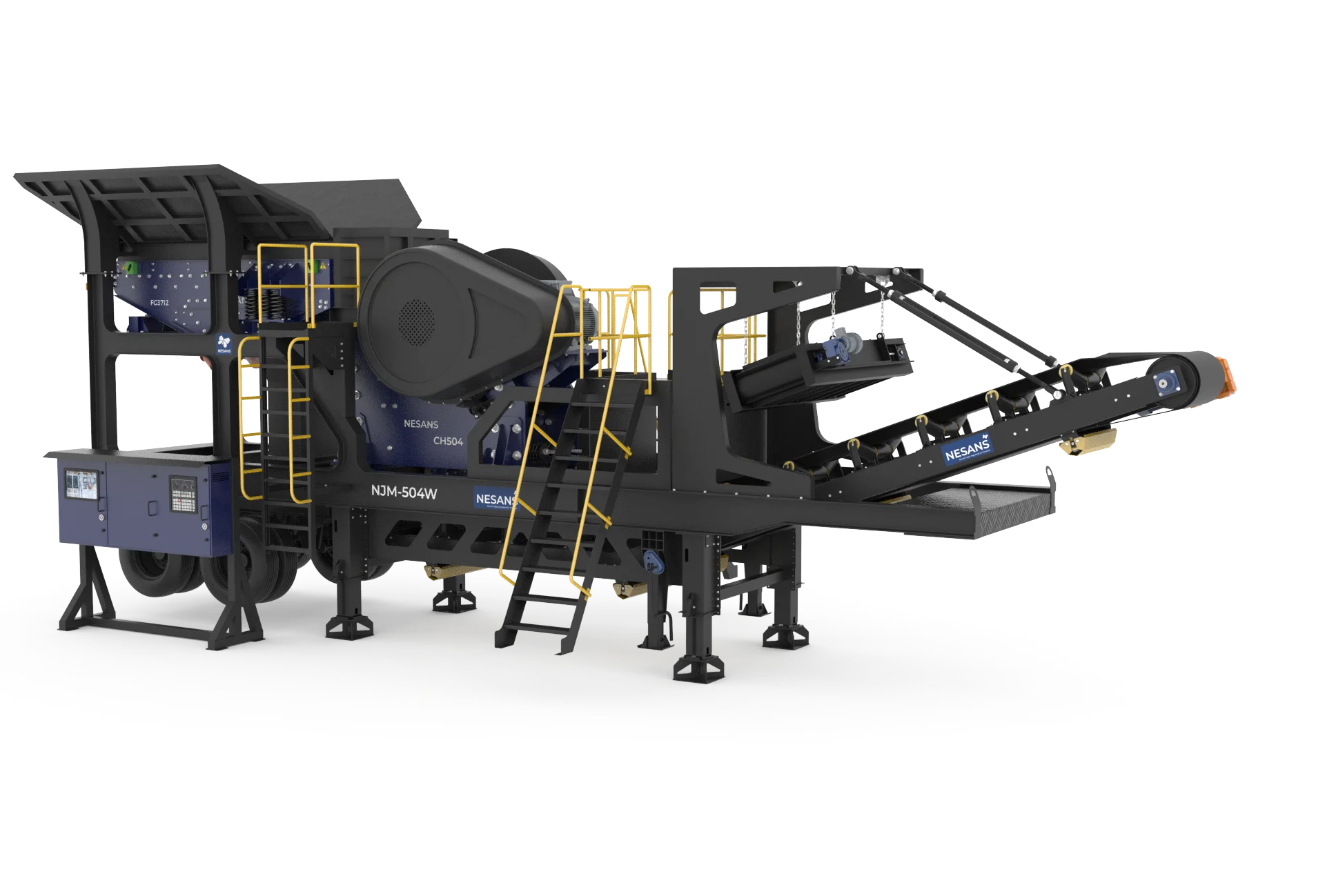








The hydraulic system is the nervous system of a mobile jaw crusher, controlling critical functions from CSS adjustment to tramp iron relief. When hydraulics fail, the entire machine stops—and troubleshooting in the field without proper understanding can turn a minor issue into a major repair. Understanding hydraulic system operation and systematic troubleshooting approaches enables rapid diagnosis and repair that minimizes downtime and prevents secondary damage.
Understanding Mobile Crusher Hydraulic Systems
System Architecture
Mobile jaw crusher hydraulic systems typically include multiple circuits:
| Circuit | Function | Typical Pressure | Flow Requirement |
|---|---|---|---|
| CSS adjustment | Toggle position control | 200-280 bar | Low (positioning) |
| Tramp iron relief | Overload protection | 280-350 bar | High (fast response) |
| Feeder drive | Feeder motor power | 200-280 bar | Medium-high |
| Conveyor fold | Transport configuration | 150-200 bar | Low |
| Track drive | Machine mobility | 280-350 bar | High |
| Auxiliary | Lubrication pump, cooling | 50-150 bar | Variable |
Key Components
Hydraulic pump: Usually axial piston, load-sensing design for efficiency. Typical flow: 80-200 L/min depending on machine size.
Control valves: Proportional directional valves for precise control of cylinder movement and motor speed.
Accumulators: Bladder or piston type, store energy for tramp iron relief response. Pre-charge pressure typically 60-70% of system pressure.
Cylinders: Double-acting for most functions; CSS cylinders may include position feedback.
Filters: Return line filtration (typically 10-25 micron) and sometimes pressure line filtration (3-10 micron).
Common Hydraulic Problems
Problem: No Cylinder Movement
When a cylinder doesn't move despite control input:
| Symptom | Probable Cause | Diagnostic Step | Solution |
|---|---|---|---|
| No movement, no pressure | Pump failure, relief stuck open | Check pump output, relief setting | Repair pump, adjust/replace relief |
| No movement, pressure OK | Valve not shifting, blocked line | Check valve spool position, line continuity | Replace valve, clear blockage |
| Slow movement | Low flow, internal bypass | Measure flow rate, check for heating | Address pump or valve wear |
| Intermittent movement | Electrical signal, contamination | Check solenoid, filter indicators | Replace solenoid, change filters |
Problem: Cylinder Drift
When a cylinder slowly moves without command (particularly CSS cylinders):
| Symptom | Probable Cause | Diagnostic Step | Solution |
|---|---|---|---|
| Drift under load | Check valve leak, cylinder seal | Isolate circuit, pressure test | Replace check valve, reseal cylinder |
| Drift both directions | Spool wear, pilot pressure | Check valve centering | Replace valve or seals |
| Temperature-related | Thermal expansion, viscosity change | Measure temperature effect | Check oil grade, accumulator precharge |
Problem: System Overheating
Hydraulic systems should operate at 40-65°C. Overheating indicates energy loss:
| Symptom | Probable Cause | Diagnostic Step | Solution |
|---|---|---|---|
| Gradual temp rise | Cooler ineffective, low oil level | Check cooler airflow, oil level | Clean cooler, add oil |
| Rapid temp rise | Relief valve passing, internal leak | Check relief setting, pump case drain | Adjust relief, repair pump |
| High temp one circuit | Restriction, blocked return | IR scan for hot spots | Clear restriction, repair return line |
| Cycling temperature | Thermostat or cooler bypass | Check bypass valve operation | Replace thermostat or bypass valve |
Problem: Tramp Iron Relief Not Working
Tramp iron relief system must respond within milliseconds to protect the crusher:
| Symptom | Probable Cause | Diagnostic Step | Solution |
|---|---|---|---|
| No relief, crusher stalls | Accumulator failed, valve stuck | Check accumulator pre-charge, valve operation | Recharge or replace accumulator, replace valve |
| Slow relief response | Low pre-charge, orifice restriction | Check accumulator pressure, flow path | Recharge accumulator, clear orifice |
| Relief trips too easily | Pre-charge too high, setting low | Check pre-charge ratio, relief setting | Adjust pre-charge, reset relief pressure |
| Chattering relief | Contamination, worn seat | Inspect valve, check oil cleanliness | Replace valve, filter oil |
Systematic Troubleshooting Process
Step 1: Gather Information
Before touching the machine:
- What exactly is the symptom? (No movement, slow, hot, noisy?)
- When did it start? (Sudden or gradual?)
- What changed? (New oil, filter change, repairs?)
- What were operating conditions? (Load, temperature, running time?)
- Are there any error codes or alarms?
Step 2: Check the Basics
Eliminate simple causes first:
- Oil level: Check with machine level, engine off, all cylinders retracted
- Oil condition: Color, smell, contamination (water, particles)
- Filter indicators: Check bypass indicators on all filters
- Electrical: Check fuses, control power, emergency stops
- Visual inspection: Leaks, damage, loose connections
Step 3: Pressure Testing
Install pressure gauges at key test points:
| Test Point | Expected Reading | Low Reading Indicates | High Reading Indicates |
|---|---|---|---|
| Pump outlet | Varies with load | Pump wear, relief issue | Blockage downstream |
| System relief | At setting (250-350 bar) | Relief stuck open, pump weak | Relief stuck closed |
| Pilot pressure | Per specification (20-35 bar) | Pilot pump issue | Pilot relief issue |
| Case drain | <2 bar typically | Normal | Pump wear, restriction |
Step 4: Flow Testing
If pressure is correct but function is slow:
- Install flow meter in suspect circuit
- Operate function and measure flow rate
- Compare to specification
- Low flow indicates pump wear, valve bypass, or restriction
Step 5: Temperature Mapping
Use infrared thermometer or camera to identify heat sources:
- Hot spots indicate energy loss (leakage, restriction)
- Compare temperature across similar components
- Relief valves should be similar temperature to tank unless bypassing
- Pump case should not be significantly hotter than tank
Preventive Maintenance
Daily Checks
- Oil level verification
- Visual leak check (cylinders, hoses, fittings)
- Filter indicator check
- Operating temperature monitoring
- Function test (CSS adjustment, relief system)
Weekly Checks
- Sample oil for analysis (or monthly for less critical applications)
- Check accumulator pre-charge pressure
- Inspect hoses for wear, abrasion, routing
- Clean cooler fins if dusty
- Verify relief pressure settings
Scheduled Maintenance
| Interval | Task | Notes |
|---|---|---|
| 250 hours | Change return filter | More frequent if indicated |
| 500 hours | Change pressure filters | If equipped |
| 1000 hours | Oil analysis or change | Condition-based if analyzing |
| 2000 hours | Complete system inspection | All hoses, fittings, cylinders |
| Annual | Accumulator recertification | If required by regulations |
Oil Analysis and Contamination Control
Oil Sampling
Regular oil analysis predicts problems before failure:
Sampling procedure:
- Sample with machine at operating temperature
- Sample from designated port (not drain plug)
- Use clean sampling equipment
- Fill sample bottle correctly (avoid air space)
- Record operating hours, any recent changes
Key analysis parameters:
| Parameter | Normal | Action Level | Indicates |
|---|---|---|---|
| Particle count (ISO code) | 18/16/13 | >19/17/14 | Contamination, wear |
| Water content | <0.1% | >0.2% | Seal leak, condensation |
| Viscosity change | ±10% | ±15% | Wrong oil, degradation |
| Iron (ppm) | <50 | >100 | Pump, motor, cylinder wear |
| Copper (ppm) | <25 | >50 | Bushing, bearing wear |
Contamination Control
Most hydraulic failures relate to contamination:
Contamination sources:
- Built-in (manufacturing debris, assembly contamination)
- Ingressed (dust through seals, breathers, during service)
- Generated (wear particles from pumps, valves, cylinders)
Control measures:
- Keep oil containers sealed until use
- Use desiccant breathers on reservoir
- Clean around ports before disconnecting
- Cap all open lines immediately
- Filter new oil before adding (kidney loop preferred)
Component Repair vs. Replacement
Field Repair Capabilities
Some repairs are practical in the field:
| Component | Field Repair | Rebuild Facility | Replace Only |
|---|---|---|---|
| Hoses | ✓ Replace with spare | ||
| Fittings | ✓ Replace with spare | ||
| Filters | ✓ Replace elements | ||
| Cylinders | Seal kits if equipped | ✓ Full rebuild | |
| Directional valves | Solenoid replacement | ✓ Spool/seal kits | Complex valves |
| Pumps | ✓ Rebuild kits | Often more economical | |
| Motors | ✓ Rebuild kits | Often more economical |
Spare Parts Strategy
Recommended spares for field service:
Must-have spares:
- Filter elements (all sizes)
- Commonly used hose assemblies
- Fitting assortment
- Seal kits for CSS cylinders
- Solenoid coils
- Accumulator charging kit
Insurance spares:
- Main hydraulic pump
- Key directional valves
- Complete cylinder assemblies
- Hydraulic motor for feeder
Safety Considerations
Hydraulic Safety Rules
- Never search for leaks with bare hands: High-pressure fluid injection causes severe injury
- Relieve pressure before disconnecting: Use gauge to verify zero pressure
- Support raised components: Never rely on hydraulics alone to hold loads
- Use proper PPE: Safety glasses, gloves when handling oil
- Handle hot oil carefully: Operating temperature can cause burns
Environmental Considerations
- Contain spills immediately
- Dispose of used oil and filters properly
- Consider biodegradable hydraulic fluids for sensitive areas
- Document and report significant releases
Conclusion
Mobile jaw crusher hydraulic systems are complex but follow logical principles. Systematic troubleshooting—starting with symptoms, checking basics, then proceeding to pressure and flow testing—enables efficient diagnosis. Preventive maintenance, particularly contamination control and regular oil analysis, prevents most failures before they occur. Keep appropriate spare parts on hand for rapid field repair. Understand the interrelation of circuits—a problem in one area may cause symptoms in another. With proper maintenance and troubleshooting skills, hydraulic downtime can be reduced by 70-80% compared to reactive approaches. The investment in training, test equipment, and preventive maintenance pays returns many times over through improved availability and reduced repair costs.
