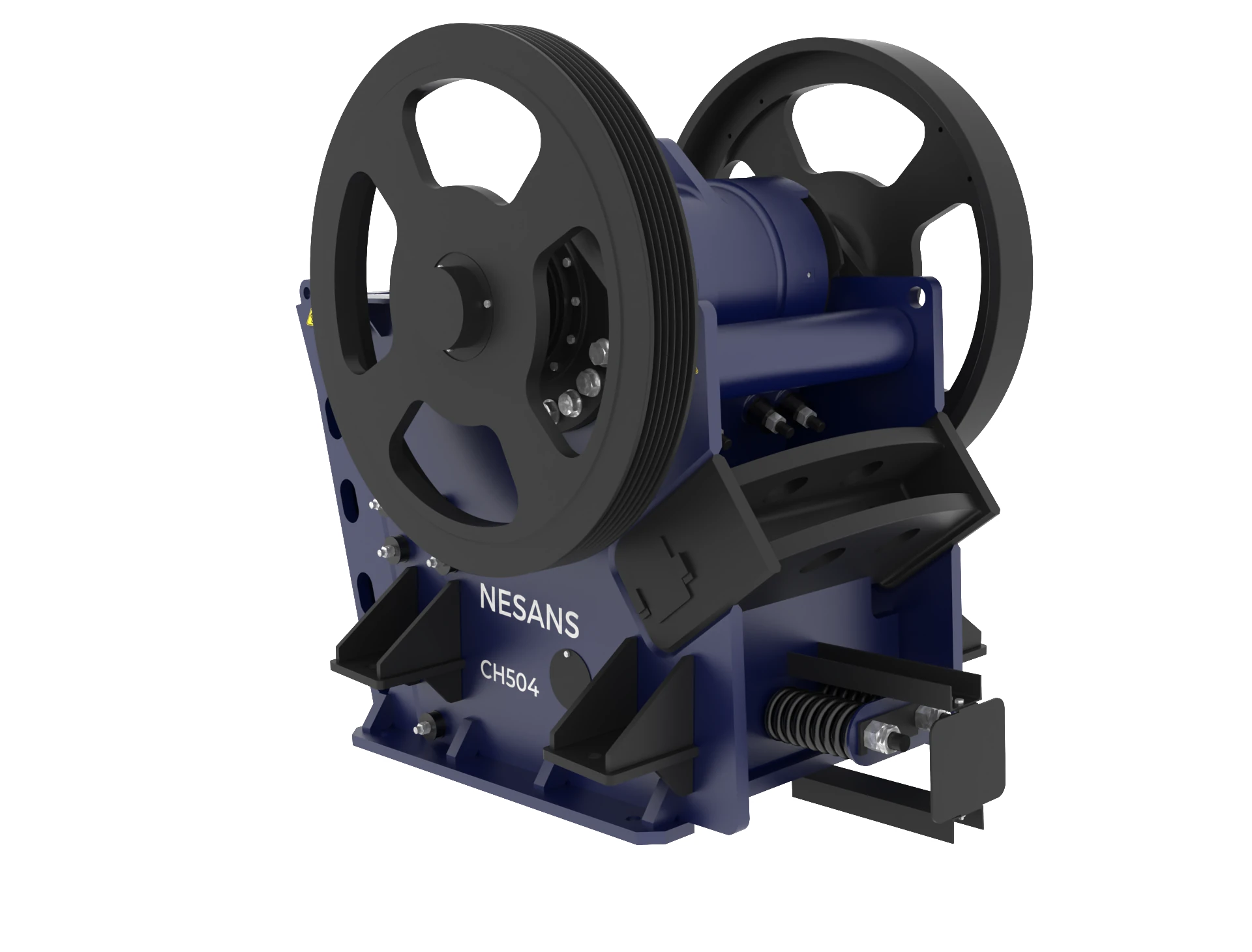
Eccentric shaft bearings are the heart of jaw crusher operation—their failure stops production instantly and costs ₹5-15 lakhs in parts plus days of downtime. Yet 80% of premature bearing failures result from preventable causes: lubrication failure, contamination, and overloading. This guide establishes maintenance protocols that achieve 15,000-25,000 operating hours from bearings designed for 10,000-hour service life.
Understanding Eccentric Shaft Bearing Loads
Load Components
| Load Type | Source | Magnitude | Bearing Impact |
|---|
| Radial crushing force | Material compression | 500-2000 kN | Primary fatigue load |
| Gyrating motion | Eccentric rotation | Continuous cycling | Fatigue stress |
| Axial thrust | Toggle plate angle | 50-200 kN | Thrust bearing load |
| Impact shock | Large feed, tramp metal | Variable spikes | Surface damage |
Lubrication System Requirements
Oil Bath System Specifications
| Parameter | Specification | Consequence if Wrong |
|---|
| Oil type | ISO VG 150-220 EP | Insufficient film, accelerated wear |
| Oil level | Sight glass center | Low: starvation; High: churning heat |
| Temperature | 40-70°C operating | >80°C indicates problems |
| Change interval | 2000-3000 hours or annually | Contamination buildup |
Circulating Oil System
| Component | Check Point | Action |
|---|
| Oil pump | Flow rate and pressure | Verify per specification |
| Filter | Pressure differential | Replace when ΔP > 1 bar |
| Cooler | Outlet temperature | Clean if Δ >15°C from ambient |
| Flow switch | Operation test | Must stop crusher on low flow |
Daily Inspection Protocol
| Check | Method | Normal | Action Threshold |
|---|
| Oil level | Sight glass | Center mark | Add oil if low |
| Oil condition | Visual through sight glass | Clear, amber color | Investigate milky or dark |
| Bearing temperature | IR thermometer | 40-70°C | >80°C: stop and investigate |
| Unusual noise | Listening | Smooth operation | Any grinding or knocking |
| Vibration | Touch or meter | Consistent pattern | Increased or irregular |
Oil Analysis Program
| Test | Frequency | Normal Limits | Indicates |
|---|
| Viscosity | Quarterly | ±10% of new oil | Degradation or contamination |
| Water content | Quarterly | <0.1% | Seal leakage, condensation |
| Iron particles | Quarterly | <50 ppm | Bearing/gear wear |
| Copper particles | Quarterly | <20 ppm | Bushing wear |
| Silica | Quarterly | <15 ppm | Dust contamination |
Bearing Replacement Indicators
| Indicator | Measurement | Replace When |
|---|
| Radial clearance | Dial indicator | >0.3mm increase from new |
| Temperature trend | Daily log | Progressive increase >10°C |
| Oil analysis metals | Lab results | Iron >100ppm or increasing trend |
| Noise/vibration | Observation | Any significant change |
| Operating hours | Hour meter | Plan replacement at 15,000-20,000 hrs |
Replacement Procedure Summary
- Plan replacement during scheduled downtime (24-48 hour job)
- Document all clearances before disassembly
- Clean all surfaces meticulously before assembly
- Pre-heat bearing inner races for installation
- Verify all clearances match specifications
- Fill with fresh oil and bleed air from system
- Run at reduced load for break-in period
Conclusion
Eccentric shaft bearings respond predictably to proper maintenance. Consistent lubrication, temperature monitoring, and oil analysis catch developing problems before catastrophic failure. Plants that follow these protocols achieve 15,000-25,000 hours between bearing replacements—more than doubling the value from this critical investment while avoiding the unplanned downtime that devastates production schedules and profitability.