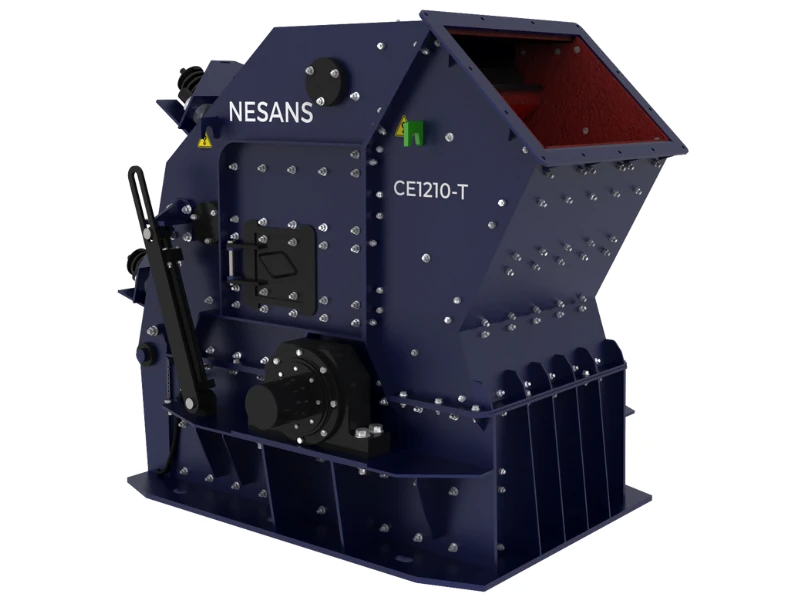
HSI blow bar rotation strategy can double wear life while maintaining consistent product quality. Yet many operations run bars to complete failure, wasting 40-50% of potential wear life and risking rotor damage. This guide establishes systematic rotation protocols that extract maximum value from every blow bar while protecting critical crusher components.
Blow Bar Wear Patterns
Normal Wear Profile
A properly operating HSI develops characteristic wear on blow bars:
- Leading Edge: Highest wear (65-70% of total)
- Trailing Edge: Moderate wear (20-25%)
- Body Surface: Light polishing (10-15%)
Wear Rate by Material
| Material Type | Typical Wear (mm/1000t) | Expected Life (tonnes) |
|---|
| Limestone (soft) | 1.5-2.5 | 80,000-120,000 |
| Granite (medium) | 3-5 | 40,000-65,000 |
| Basalt (hard) | 5-8 | 25,000-40,000 |
| Quartzite (abrasive) | 8-12 | 15,000-25,000 |
Rotation Protocol
4-Position Rotation Schedule
| Stage | Bar Orientation | Life Used | Remaining Value |
|---|
| 1. Initial Install | New bar, edge 1 leading | 0-35% | 100% |
| 2. First Rotation | Flip 180°, edge 2 leading | 35-65% | 65% |
| 3. End-to-End Swap | Swap ends, edge 1 leading | 65-85% | 35% |
| 4. Final Position | Flip 180°, edge 2 leading | 85-100% | 15% |
Rotation Timing Indicators
| Indicator | Measurement | Action Threshold |
|---|
| Leading edge wear | Depth gauge | >30mm from new |
| Weight loss | Scale comparison | >25% of new weight |
| Product coarseness | Sieve analysis | >15% coarser than target |
| Motor current increase | Ammeter | >10% above baseline |
Rotation Procedure
- Lock out/tag out crusher and conveyor systems
- Document bar positions and measurements before removal
- Remove bars using proper lifting equipment
- Inspect rotor mounting surfaces for damage
- Clean mounting surfaces of all debris
- Rotate bars according to schedule
- Verify balance (weight difference <200g between opposing bars)
- Reinstall with correct torque on fasteners
- Document new positions and measurements
Balance Requirements
| Rotor Configuration | Maximum Imbalance | Consequence if Exceeded |
|---|
| 2-bar rotor | 200g between bars | Vibration, bearing wear |
| 3-bar rotor | 150g between bars | Uneven wear pattern |
| 4-bar rotor | 100g between opposing pairs | Reduced efficiency |
Cost-Benefit Analysis
Without Rotation:
- Bar cost: ₹40,000
- Life achieved: 35,000 tonnes
- Cost per tonne: ₹1.14

With 4-Position Rotation:
- Same bar cost: ₹40,000
- Life achieved: 60,000 tonnes
- Cost per tonne: ₹0.67

Savings: ₹0.47/tonne = 41% reduction
Annual savings (200 TPH × 3000 hrs): ₹2.8 lakhs
Conclusion
Systematic blow bar rotation extracts 70-100% more life from the same initial investment. The 30-minute procedure per rotation returns hours of extended operation and significantly reduced wear costs. Track measurements consistently, rotate at appropriate intervals, and maintain balance—these simple practices transform blow bar economics from a necessary expense into a manageable, predictable operating cost.