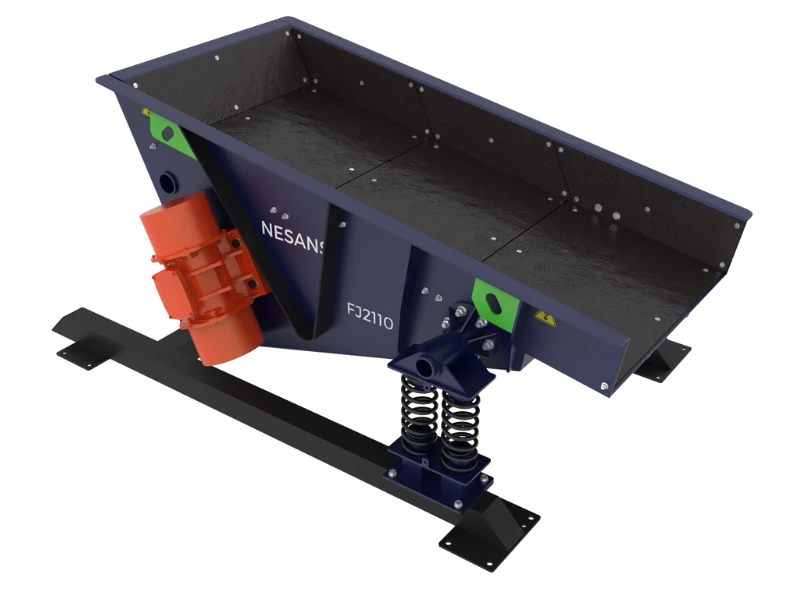
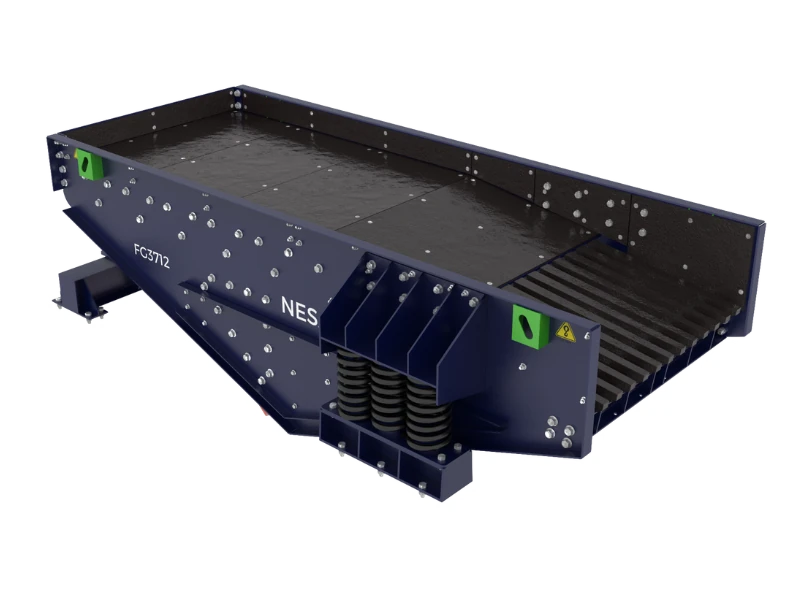
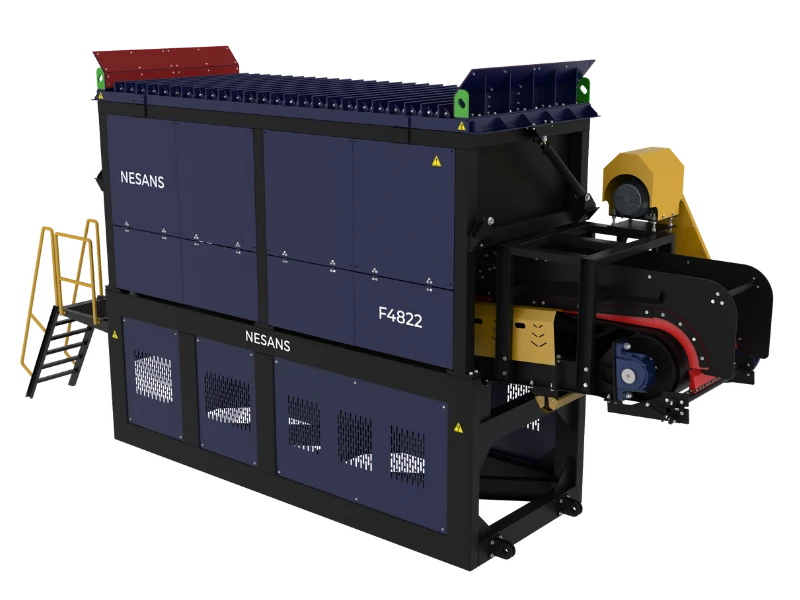
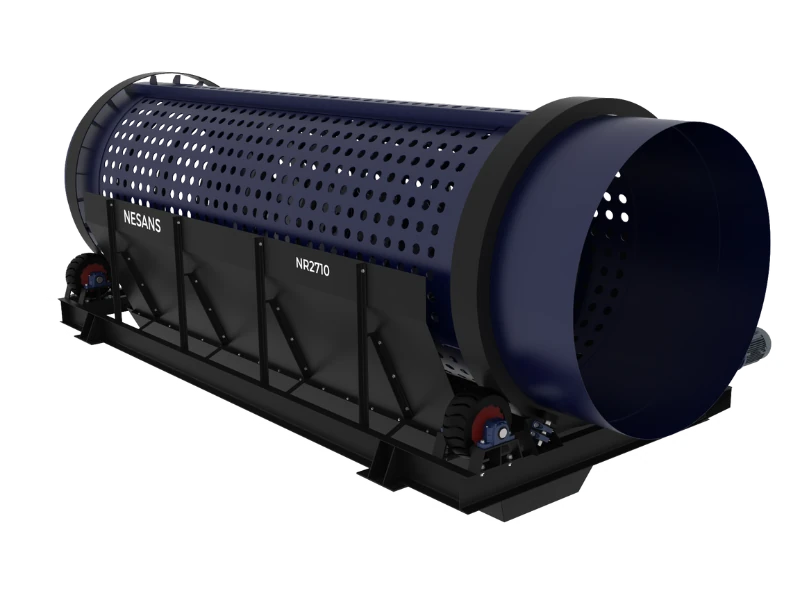
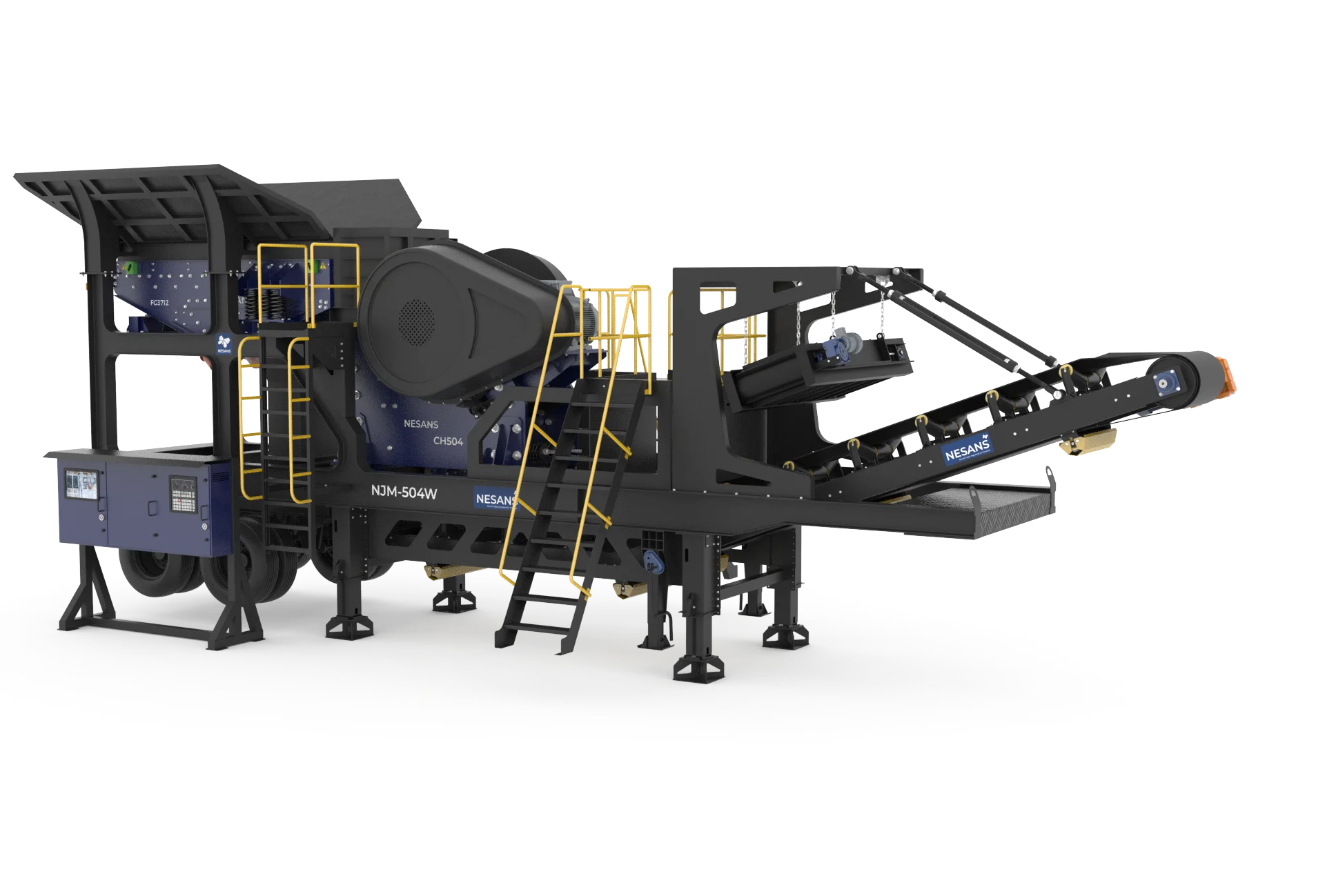
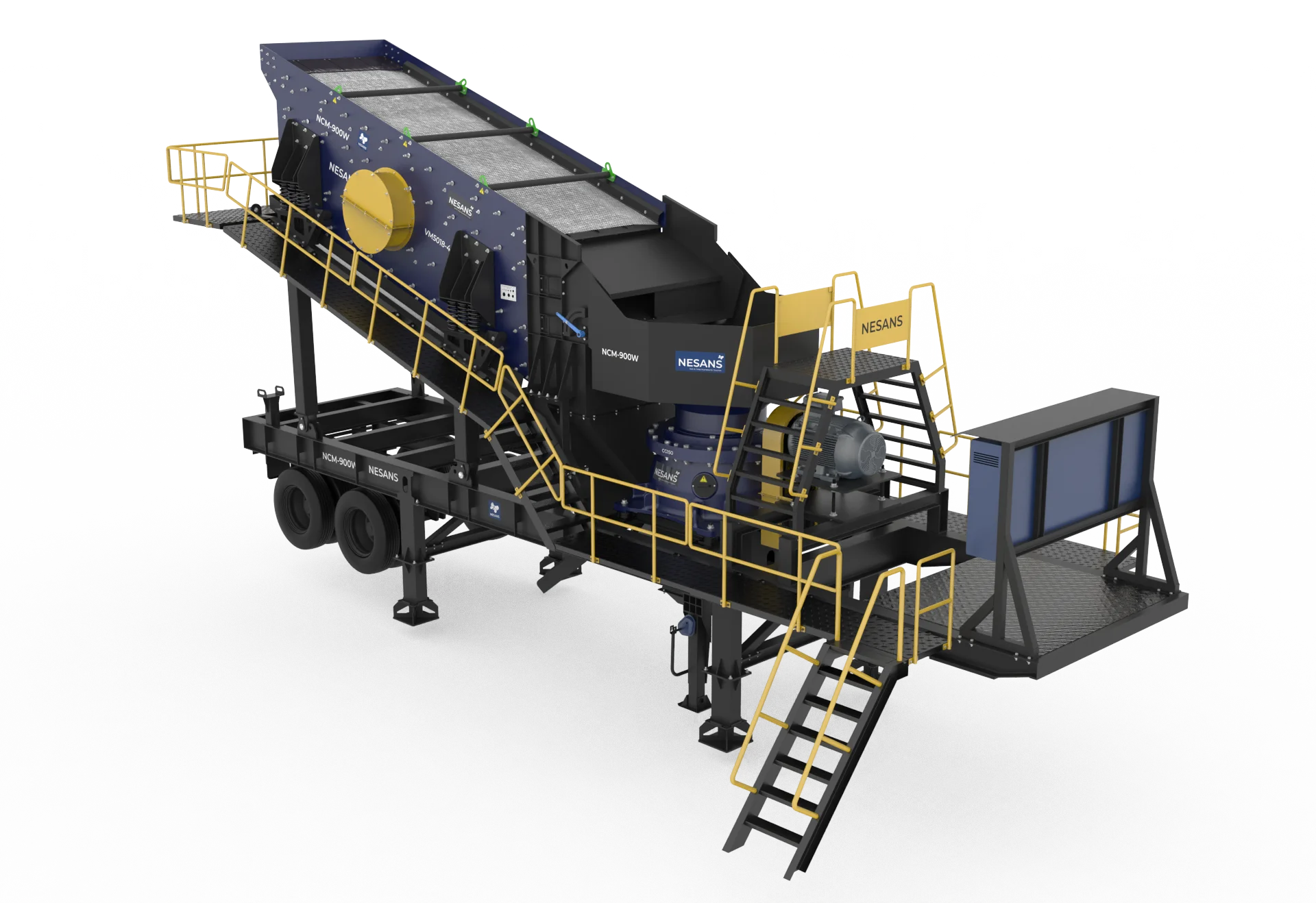
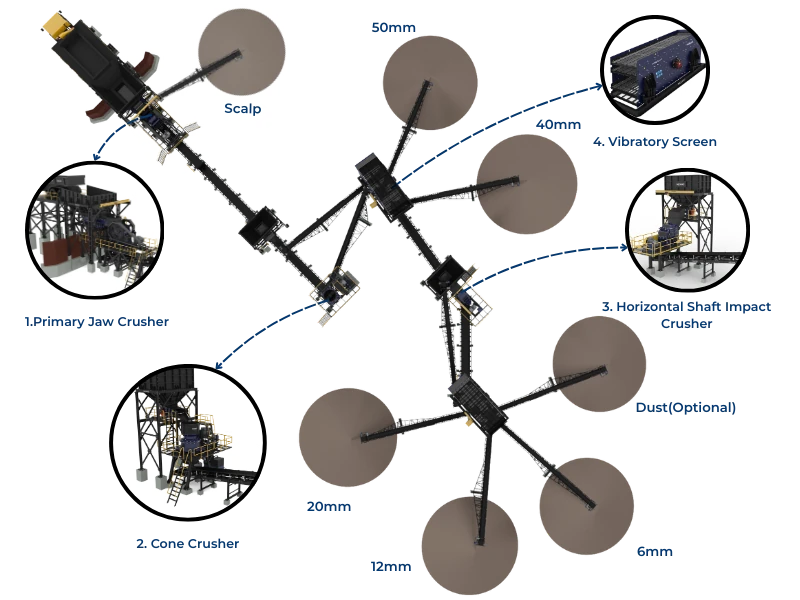
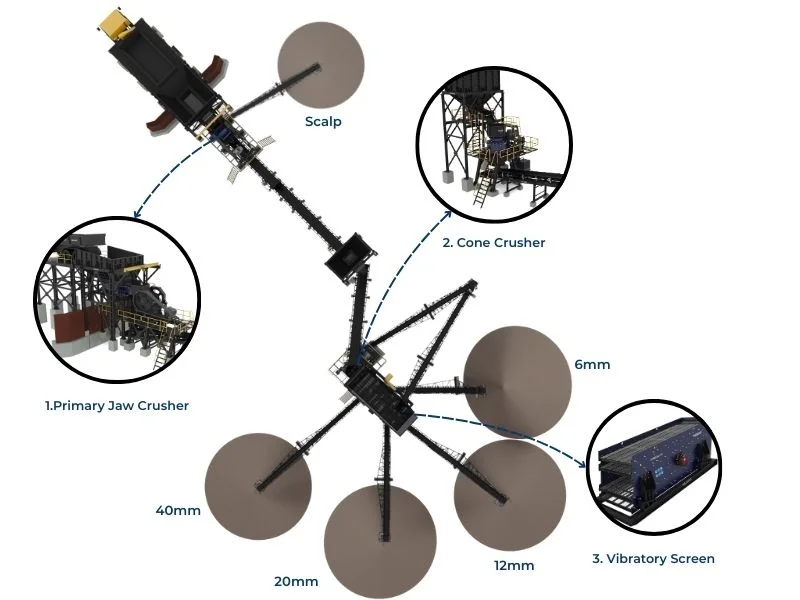
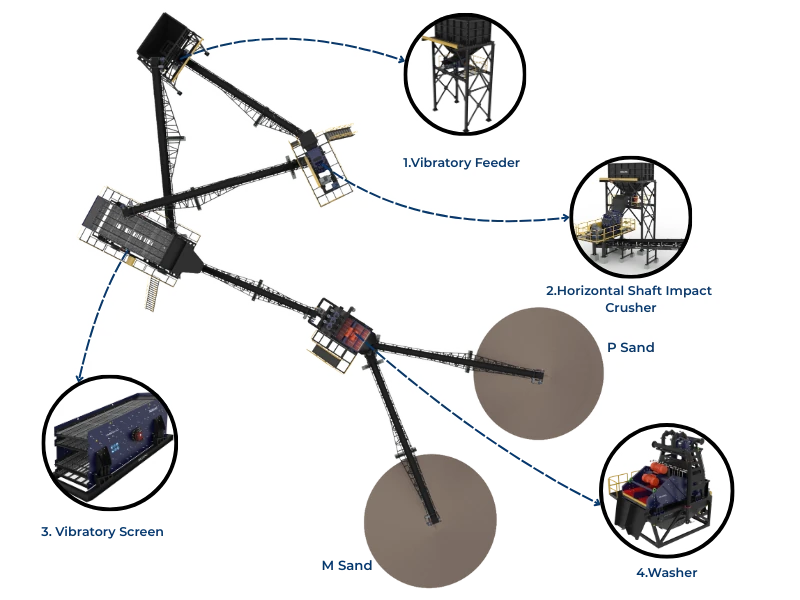
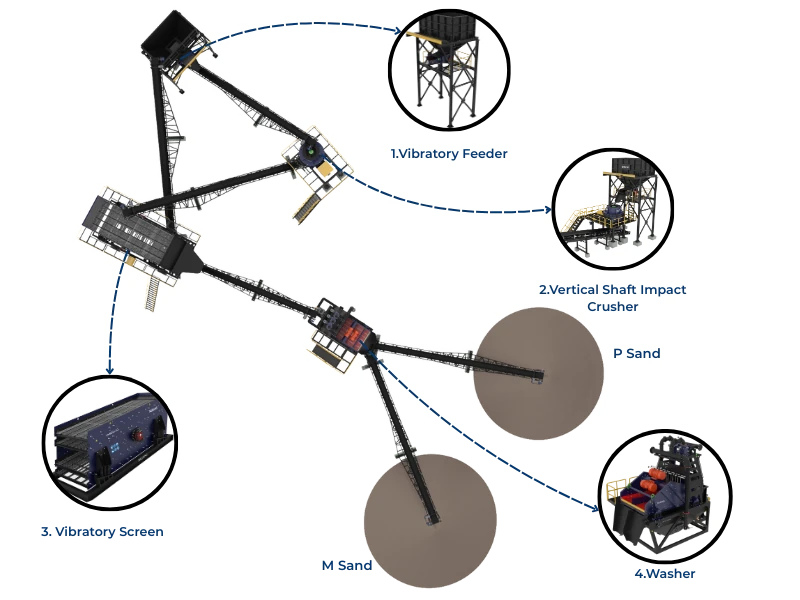
Grizzly feeder bar spacing determines how much material bypasses primary crushing—and optimal spacing can reduce crusher wear by 20-30% while increasing throughput 10-15%. Yet most plants run with original factory spacing regardless of their specific feed material and product requirements. This guide provides the engineering framework for optimizing scalping efficiency through proper bar spacing selection.
Grizzly Scalping Fundamentals
Purpose of Scalping
- Remove undersized material that doesn't need crushing
- Reduce crusher feed volume and wear
- Improve crusher efficiency through consistent feed
- Protect downstream equipment from surge feeding
Scalping Efficiency Formula
Scalping Efficiency = (Undersized Removed / Total Undersized in Feed) × 100%

Target: >85% scalping efficiency for optimal crusher protection
Bar Spacing Selection
Spacing Based on Crusher CSS
| Primary Crusher CSS | Recommended Bar Spacing | Scalping Target |
|---|
| 100mm | 75-100mm | Remove -75mm material |
| 125mm | 100-125mm | Remove -100mm material |
| 150mm | 125-150mm | Remove -125mm material |
| 175mm | 150-175mm | Remove -150mm material |
Design Rule
Bar spacing = 75-100% of crusher CSS
This ensures material passing through grizzly is larger than crusher's closed side setting and will be actually reduced in size.
Factors Affecting Optimal Spacing
| Factor | Effect on Spacing | Rationale |
|---|
| High fines in feed (>30% passing CSS) | Wider spacing acceptable | More material bypasses anyway |
| Low fines in feed (<15%) | Narrower spacing beneficial | Maximize bypass of undersized |
| Sticky/wet material | Wider spacing (25% larger) | Prevent bridging between bars |
| Elongated particles | Consider slotted bars | Better throughput |
| High clay content | Wider spacing + self-cleaning | Prevent buildup |
Bar Configuration Options
| Configuration | Application | Advantages | Limitations |
|---|
| Parallel bars | Standard scalping | Simple, low cost | Can blind with elongated material |
| Stepped/cascade | High throughput | Better material flow | More complex |
| Finger bars | Sticky material | Self-cleaning action | Higher maintenance |
| Chain curtain | Extreme conditions | No blinding | Less precise sizing |
Impact on Crusher Performance
Proper Spacing Benefits
Example: 300 TPH feed with 25% passing 100mm CSS

Without Scalping:
- Crusher processes 300 TPH
- 75 TPH passes through without reduction
- Wasted energy: 75 × 0.8 kWh = 60 kWh

With Optimal Scalping (90% efficiency):
- Crusher processes 232.5 TPH
- Energy saved: 54 kWh (67.5 TPH × 0.8 kWh)
- Wear reduction: 25% less abrasive fines in chamber
Cost Impact
| Parameter | Without Scalping | With Optimal Scalping | Savings |
|---|
| Jaw liner life | 150,000 tonnes | 190,000 tonnes | 27% |
| Power consumption | 0.85 kWh/t | 0.72 kWh/t | 15% |
| Throughput capacity | 280 TPH effective | 315 TPH effective | 12% |
Maintenance Considerations
| Item | Inspection | Frequency | Replace When |
|---|
| Bar wear | Measure cross-section | Monthly | >30% reduction |
| Bar spacing | Measure gaps | Monthly | >15% deviation from spec |
| Bar straightness | Visual + straightedge | Weekly | Visible bending |
| Mounting bolts | Torque check | Weekly | Any looseness |
Conclusion
Grizzly bar spacing optimization is a low-cost, high-impact improvement that directly reduces crusher operating costs. Match spacing to your CSS, consider material characteristics, and monitor wear regularly. The 30-minute analysis and potential spacing adjustment yields benefits measured in lakhs of rupees annually through extended liner life and improved throughput efficiency.