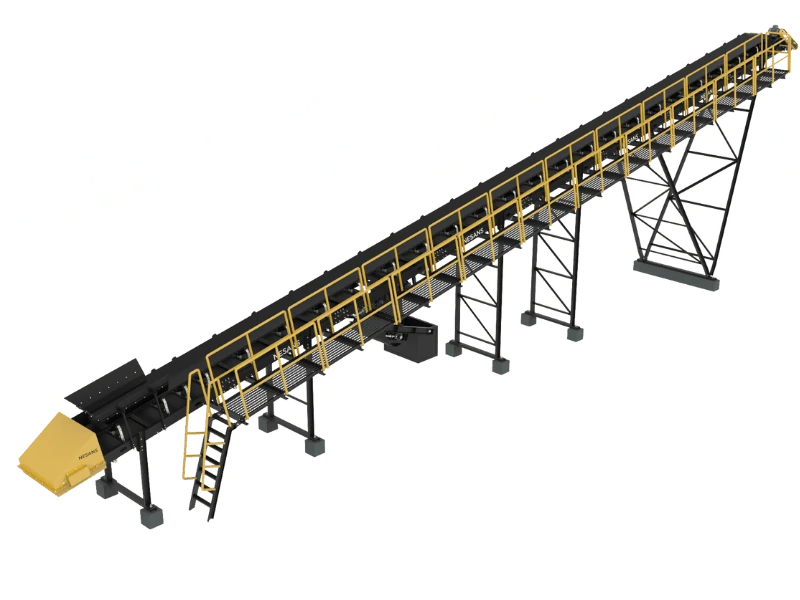
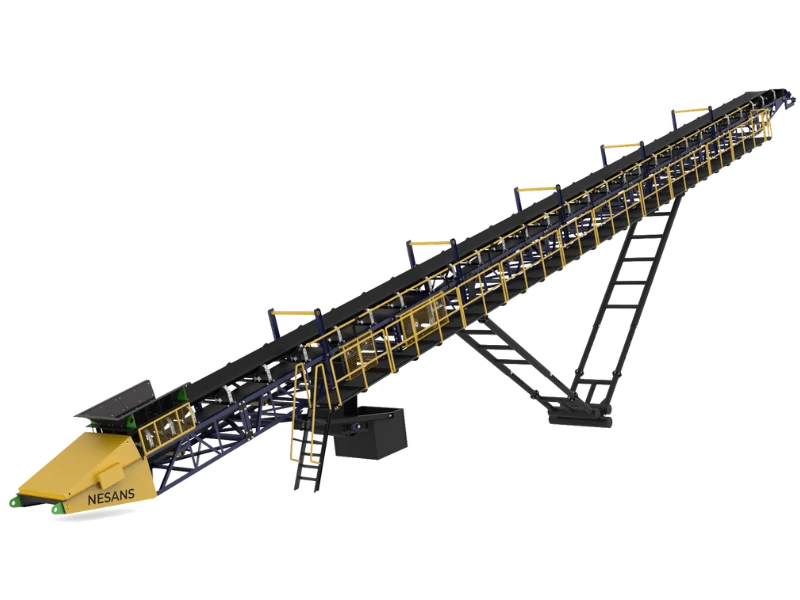
Belt tracking problems cause 70% of conveyor-related downtime and are responsible for premature belt replacement, spillage cleanup costs, and safety incidents. Yet most tracking issues stem from just five root causes that can be systematically identified and corrected. This guide provides a diagnostic framework for identifying tracking problems at their source rather than chasing symptoms with endless idler adjustments.
Understanding Belt Tracking
A properly tracking belt maintains center alignment within ±25mm across its full length. Misalignment beyond this threshold causes:
- Belt edge damage and fraying
- Material spillage at transfer points
- Increased idler and pulley wear
- Structural damage to conveyor frame
- Fire risk from friction on structure
Root Cause Analysis Framework
The Five Primary Causes
| Root Cause | Frequency | Diagnostic Signs | Location Pattern |
|---|
| Off-center loading | 35% | Mistracking after load point only | Carry side after loading |
| Pulley misalignment | 25% | Consistent run-off at pulleys | Near head, tail, or bend pulley |
| Belt splice issue | 15% | Mistracking cycles with belt rotation | Varies with splice position |
| Idler misalignment | 15% | Progressive drift along conveyor | Carry or return side specific |
| Belt damage | 10% | Erratic, unpredictable tracking | Variable |
Diagnostic Procedure
Step 1: Observe Full Belt Cycle
- Run conveyor unloaded for minimum 3 belt cycles
- Mark a reference point on belt edge
- Observe if mistracking follows specific belt section
- If yes: splice or belt damage likely
- If no: proceed to structure/alignment checks
Step 2: Loaded vs. Unloaded Comparison
- If tracks well empty but mistrracks loaded: loading problem
- If mistracks empty and loaded: structural/alignment issue
Step 3: Systematic Location Check
| Check Point | Alignment Method | Tolerance |
|---|
| Head pulley | Piano wire or laser | Perpendicular ±3mm per meter width |
| Tail pulley | Piano wire or laser | Perpendicular ±3mm per meter width |
| Snub/bend pulleys | Piano wire reference | Parallel to drive pulley |
| Carry idlers | Square to frame, level | ±6mm across width |
| Return idlers | Square to frame | ±6mm across width |
Cause-Specific Corrections
Off-Center Loading
- Adjust feed chute to center material flow
- Install impact bed centered on belt
- Check upstream conveyor discharge alignment
- Install training idlers after loading zone
Pulley Misalignment
- Loosen mounting bolts
- Align using piano wire or laser
- Verify perpendicular to belt travel
- Retorque and recheck
Belt Splice Issues
- Check splice alignment (should be perpendicular)
- Verify splice tension uniformity
- Replace crooked or failing splice
Training Idler Application
| Type | Application | Adjustment |
|---|
| Self-aligning pivot | General tracking | Automatic response |
| Side guide rollers | Edge containment | Set 25mm gap from edge |
| V-return idlers | Return side tracking | Angle 2-3° toward center |
Prevention Protocol
| Inspection Item | Frequency | Action |
|---|
| Belt edge condition | Daily | Report fraying or damage |
| Tracking observation | Daily | Note drift patterns |
| Pulley alignment | Quarterly | Verify with instruments |
| Idler alignment | Quarterly | Square check |
| Splice condition | Monthly | Visual inspection |
Conclusion
Effective belt tracking requires systematic root cause identification rather than reactive adjustment. Use the diagnostic framework to identify the actual cause, apply appropriate corrections, and implement preventive monitoring. This approach resolves tracking issues permanently rather than creating endless adjustment cycles that never address underlying problems.