
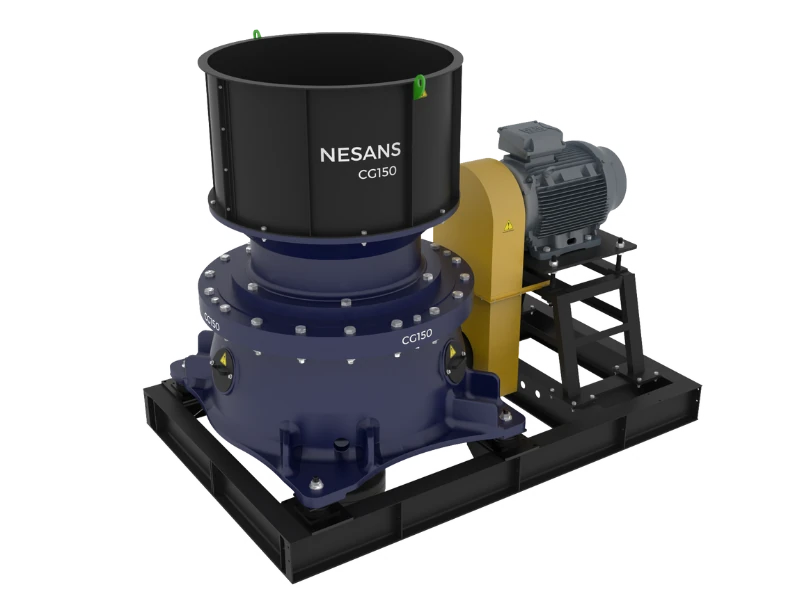






Cone crusher lubrication systems represent one of the most critical—and often misunderstood—aspects of crusher maintenance. The lubricating oil in a cone crusher performs multiple essential functions: reducing friction between moving components, carrying away heat, flushing wear particles, and protecting surfaces from corrosion. Regular oil analysis provides a window into crusher health that visual inspection cannot match, enabling predictive maintenance that prevents catastrophic failures and extends equipment life.
Understanding Cone Crusher Lubrication Systems
Modern cone crushers utilize forced lubrication systems that circulate oil continuously through critical wear surfaces. Understanding this system is essential for meaningful oil analysis interpretation.
Key Lubrication Points
The primary lubrication points in a typical cone crusher include:
| Component | Function | Oil Film Thickness | Failure Consequence |
|---|---|---|---|
| Eccentric Bushing | Supports main shaft rotation | 0.1-0.3mm | Shaft seizure, ₹25-40 lakh repair |
| Thrust Bearing | Carries vertical crushing load | 0.05-0.15mm | Bearing failure, frame damage |
| Countershaft Bearings | Support drive system | 0.05-0.1mm | Drive failure, secondary damage |
| Socket Liner | Guides mantle movement | 0.2-0.5mm | Liner wear, misalignment |
| Head Ball | Allows gyratory motion | 0.1-0.2mm | Erratic motion, liner damage |
Oil Flow and Heat Management
A typical 300 TPH cone crusher circulates 150-250 liters of oil per minute through the system. This oil performs crucial thermal management:
- Heat absorption: Oil absorbs friction heat at bearing surfaces
- Heat transport: Circulating oil carries heat to the cooler
- Heat rejection: Oil cooler dissipates heat to atmosphere
Operating oil temperature should maintain 40-55°C. Temperatures above 60°C indicate cooling system problems or excessive internal friction. Each 10°C rise above optimal temperature halves the oil's effective life.
Essential Oil Analysis Parameters
Viscosity
Viscosity is the oil's resistance to flow and the most critical property for lubrication effectiveness. Cone crushers typically require ISO VG 150 or VG 220 grade oils, depending on manufacturer specification and ambient temperature.
Interpreting viscosity changes:
| Viscosity Change | Possible Cause | Action Required |
|---|---|---|
| Decrease >10% | Fuel or solvent contamination, thermal degradation | Investigate source, consider oil change |
| Decrease >20% | Severe contamination or wrong oil added | Immediate oil change, system flush |
| Increase >10% | Oxidation, water contamination, soot buildup | Check operating temperature, test for water |
| Increase >20% | Severe oxidation or contamination | Immediate oil change, investigate cause |
Wear Metal Analysis
Spectrometric analysis identifies metal particles in oil, indicating which components are wearing. Understanding normal wear metal levels enables early problem detection:
| Metal | Primary Source | Normal Level (ppm) | Caution Level (ppm) | Critical Level (ppm) |
|---|---|---|---|---|
| Iron (Fe) | Gears, shafts, bearings | <100 | 100-200 | >200 |
| Copper (Cu) | Bronze bushings, thrust bearings | <50 | 50-100 | >100 |
| Lead (Pb) | Bearing overlay, seals | <20 | 20-50 | >50 |
| Tin (Sn) | Bronze bushings, babbitt | <10 | 10-25 | >25 |
| Aluminum (Al) | Pistons, thrust washers | <15 | 15-30 | >30 |
| Chromium (Cr) | Hardened components, rings | <10 | 10-20 | >20 |
Interpreting Wear Metal Trends
Single readings have limited value—trend analysis reveals developing problems. Track wear metals over time using these guidelines:
Normal wear pattern: Stable levels with slight increase as oil ages. No action required beyond scheduled oil changes.
Accelerating wear: Each sample shows increasing metal levels. Investigate for root cause, schedule component inspection.
Sudden spike: Dramatic increase from previous sample. Indicates component failure beginning—schedule immediate inspection.
Metal ratio changes: Shifting ratios between copper and tin, for example, indicates bearing composition change, suggesting overlay wear into base metal.
Contamination Analysis
Water Contamination
Water is extremely damaging to crusher lubrication systems. Even small quantities cause:
- Reduced oil film strength: Water displaces oil from bearing surfaces
- Corrosion: Water promotes rust on iron components
- Additive depletion: Water reacts with oil additives, reducing effectiveness
- Emulsification: Water-in-oil emulsions have poor lubricating properties
Water content limits:
| Water Level | Condition | Action Required |
|---|---|---|
| <0.05% (500 ppm) | Normal | Continue monitoring |
| 0.05-0.1% | Caution | Investigate source, monitor closely |
| 0.1-0.2% | Action required | Identify and fix leak, consider oil change |
| >0.2% | Critical | Stop crusher, drain oil, repair seals |
Water Contamination Sources
Common sources of water ingress in cone crushers:
- Dust seal failure: Allows wash water and material moisture to enter
- Oil cooler leak: Water from cooling circuit enters oil system
- Condensation: Temperature cycling condenses atmospheric moisture
- Breather contamination: Saturated or damaged breather admits moisture
Particle Contamination
Particle counts indicate overall oil cleanliness. Cone crusher oil should maintain ISO cleanliness code 18/16/13 or better:
| ISO Code | Particles >4μm per mL | Particles >6μm per mL | Particles >14μm per mL |
|---|---|---|---|
| 18/16/13 (Target) | 1,300-2,500 | 320-640 | 40-80 |
| 19/17/14 (Acceptable) | 2,500-5,000 | 640-1,300 | 80-160 |
| 20/18/15 (Marginal) | 5,000-10,000 | 1,300-2,500 | 160-320 |
| >20/18/15 (Unacceptable) | >10,000 | >2,500 | >320 |
High particle counts accelerate component wear exponentially. Particles similar in size to oil film thickness cause the most damage—typically 10-50 microns for cone crusher bearings.
Oil Condition Monitoring
Total Acid Number (TAN)
TAN measures acidic compounds formed as oil oxidizes. Fresh mineral oil typically has TAN of 0.2-0.5 mg KOH/g. As oil degrades:
| TAN Level | Oil Condition | Action |
|---|---|---|
| <1.0 | Good | Continue normal operation |
| 1.0-1.5 | Monitor closely | Plan oil change within 500 hours |
| 1.5-2.0 | Schedule change | Change oil within 200 hours |
| >2.0 | Change immediately | Oil change required now |
Total Base Number (TBN)
TBN measures remaining alkaline reserve to neutralize acids. Cone crusher oils typically start with TBN of 5-8 mg KOH/g. Replace oil when TBN drops to 50% of original value.
Oxidation and Nitration
Infrared analysis quantifies oxidation and nitration byproducts. These increase as oil thermally degrades. Elevated levels with normal TAN indicate oil reaching end of useful life, even if acid buildup hasn't occurred.
Sampling Best Practices
Oil analysis results are only as good as the sample quality. Poor sampling techniques produce misleading results.
Sampling Location
The ideal sampling point is a dedicated valve in the return line, after the filter but before the reservoir. This location provides:
- Representative sample of circulating oil
- Particles too large for filter captured by analysis
- Consistent sampling point for trend analysis
Avoid sampling from:
- Drain plugs (settled contaminants give high readings)
- Fill ports (surface oil unrepresentative of system)
- Before filters (excessive particle counts)
Sampling Procedure
Follow this procedure for consistent, representative samples:
- Run crusher for 30 minutes minimum: Ensures oil is mixed and at operating temperature
- Clean sampling area: Prevent external contamination from entering sample
- Flush sample line: Discard first 100-200mL to purge stagnant oil
- Use clean sample bottles: Lab-supplied bottles ensure no contamination
- Fill to proper level: Most labs require 100-150mL sample
- Label immediately: Include date, equipment ID, operating hours, oil type
- Submit promptly: Analysis within 48 hours of sampling preferred
Sampling Frequency
| Operating Condition | Recommended Frequency |
|---|---|
| Normal operation | Every 500 operating hours or monthly |
| Heavy duty/high throughput | Every 250 hours or bi-weekly |
| After major repair | At 50, 100, and 250 hours post-repair |
| New or rebuilt equipment | Every 100 hours for first 500 hours |
| Suspected problem | Immediately, then 50 hours later |
Predictive Maintenance from Oil Analysis
Establishing Baselines
Effective predictive maintenance requires establishing baseline values for your specific equipment and operating conditions. Collect at least 5-6 samples over 3,000+ operating hours to establish meaningful baselines. Generic limits from labs may not apply to your specific conditions.
Trend Analysis Techniques
Use these trending methods to identify developing problems:
Rate of change analysis: Calculate the rate of wear metal increase between samples. Accelerating rates indicate progressing damage.
Statistical process control: Establish control limits based on historical data. Values exceeding 2 standard deviations warrant investigation; 3 standard deviations require immediate action.
Correlation analysis: Track relationships between metals. Increasing copper with stable iron suggests bushing wear. Increasing iron with stable copper suggests gear or shaft wear.
Case Study: Eccentric Bushing Failure Prediction
A 400 TPH cone crusher showed this copper trend over six months:
| Month | Copper (ppm) | Change from Previous | Status |
|---|---|---|---|
| January | 35 | — | Normal |
| February | 38 | +3 | Normal |
| March | 42 | +4 | Normal |
| April | 55 | +13 | Accelerating |
| May | 78 | +23 | Action required |
| June | 125 | +47 | Critical |
The accelerating copper trend indicated eccentric bushing degradation. Inspection at the June sample confirmed bushing wear beyond limits. Planned replacement cost ₹4.5 lakh. Had the bushing failed completely, emergency repair would have cost ₹18-25 lakh including shaft damage and extended downtime.
Oil Change Optimization
Condition-Based Oil Changes
Traditional time-based oil changes waste money by replacing good oil or risk equipment by running degraded oil too long. Condition-based changes optimize both cost and protection:
Continue operating if:
- Viscosity within ±10% of original
- TAN below 1.5 mg KOH/g
- Water content below 0.1%
- Particle count meets ISO 19/17/14 or better
- All wear metals below caution levels
Change oil immediately if:
- Viscosity change exceeds 20%
- TAN exceeds 2.0 mg KOH/g
- Water content exceeds 0.2%
- Any wear metal at critical level
- Rapid deterioration trend in any parameter
Oil Change Economics
Consider the full cost of oil changes versus the risk of equipment damage:
| Cost Element | Typical Range |
|---|---|
| Oil cost (400L system) | ₹40,000-60,000 |
| Labor (4 hours) | ₹2,000-4,000 |
| Disposal | ₹2,000-5,000 |
| Production loss (4 hours) | ₹30,000-50,000 |
| Total oil change cost | ₹74,000-119,000 |
Compare this to potential damage from running degraded oil:
- Eccentric bushing failure: ₹15-25 lakh
- Thrust bearing failure: ₹8-15 lakh
- Main shaft damage: ₹35-50 lakh
Integrating Oil Analysis into Maintenance Programs
CMMS Integration
Link oil analysis results to your Computerized Maintenance Management System (CMMS) for automated work order generation. Set trigger levels that automatically schedule inspections when parameters exceed thresholds.
Failure Mode Correlation
Correlate oil analysis trends with failure modes to build predictive capability:
| Oil Analysis Finding | Likely Failure Mode | Inspection Focus |
|---|---|---|
| Rising copper + tin | Bronze bushing wear | Eccentric bushing, socket liner |
| Rising iron + chromium | Gear or shaft wear | Pinion, countershaft |
| Rising lead only | Bearing overlay wear | Thrust bearing condition |
| Increasing water | Seal failure | Dust seal, oil cooler |
| Increasing silicon | Dust ingress | Breathers, seals |
Conclusion
Oil analysis transforms cone crusher maintenance from reactive to predictive. By understanding what oil parameters indicate and tracking trends over time, maintenance teams can schedule component replacement before failure occurs. This approach typically reduces unplanned downtime by 50-70% and extends major component life by 20-30%. The investment in regular oil analysis—typically ₹2,000-3,000 per sample—pays returns of 10:1 or better through prevented failures and optimized oil change intervals. Implement a systematic sampling program, establish baselines for your equipment, and use trend analysis to predict maintenance needs. Your cone crusher will reward this attention with reliable, cost-effective operation.
