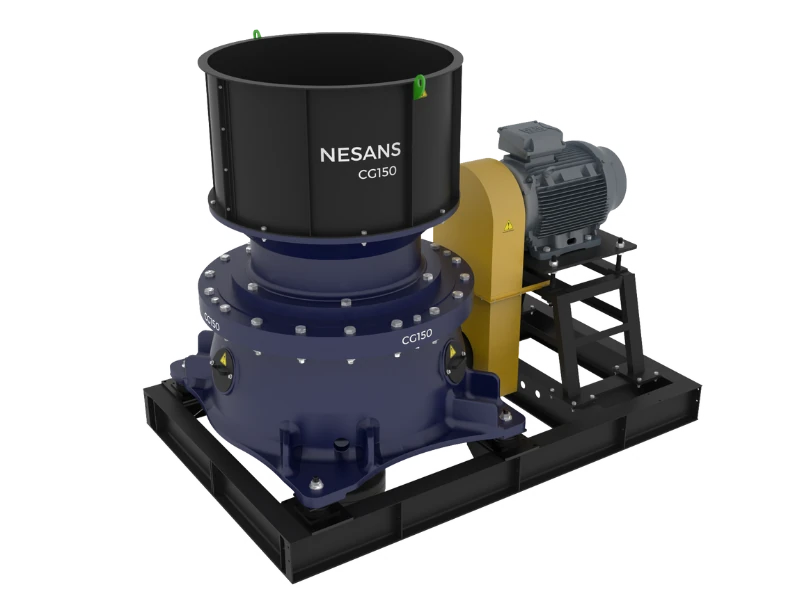
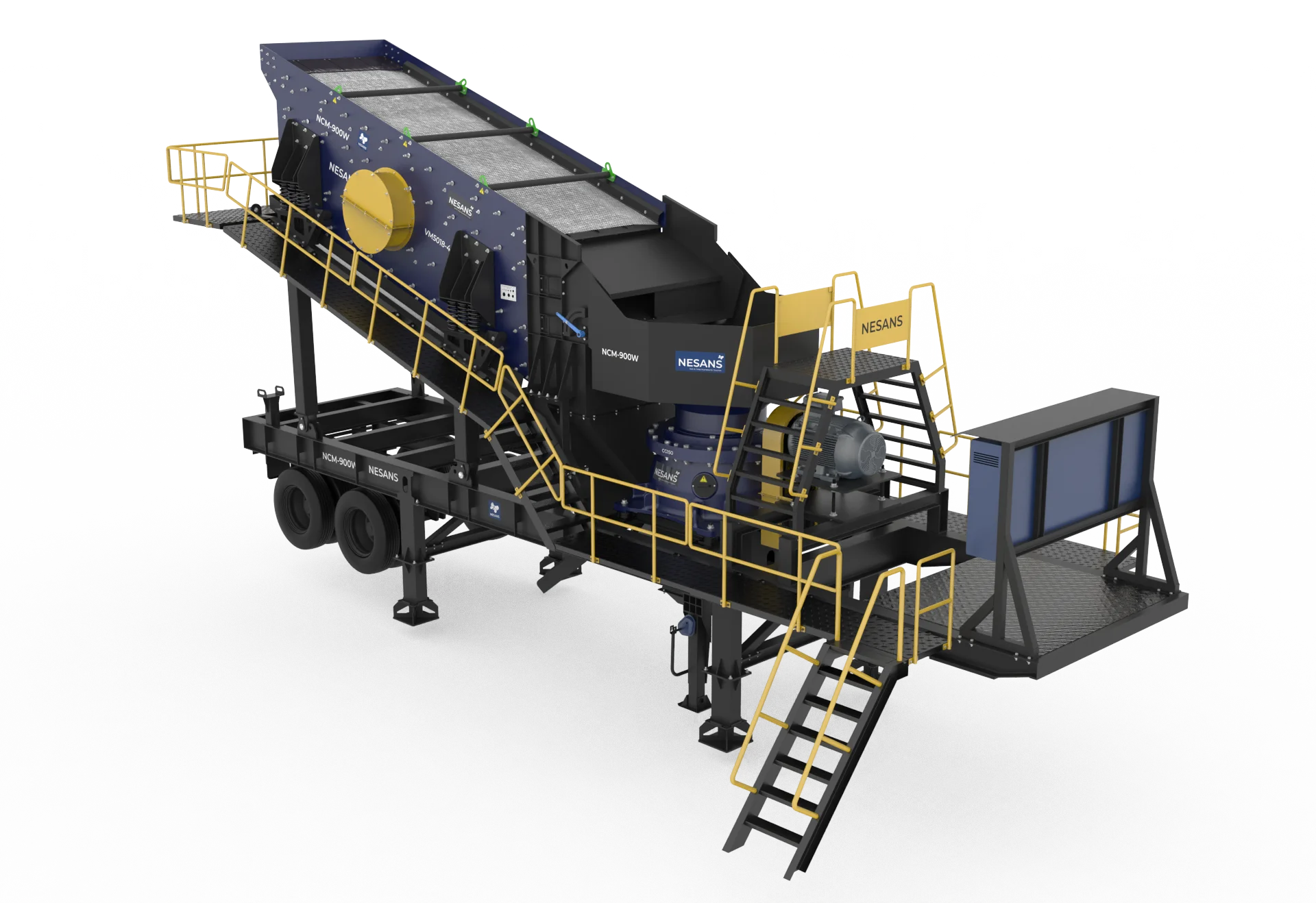
Closed Side Setting (CSS) is the single most important operating parameter in cone crushing—it determines product size, throughput, power consumption, and liner wear. Yet many operators treat CSS as a set-and-forget parameter when in reality it requires regular verification and adjustment to maintain optimal performance. This guide provides complete CSS management protocols from initial setting through ongoing monitoring and adjustment.
Understanding CSS Fundamentals
What CSS Controls
| Output Characteristic | Effect of Tighter CSS | Effect of Wider CSS |
|---|
| Product P80 | Finer (smaller) | Coarser (larger) |
| Throughput | Reduced capacity | Increased capacity |
| Power draw | Higher kWh/tonne | Lower kWh/tonne |
| Liner wear | Accelerated wear | Reduced wear |
| Product shape | Better cubicity | More elongated |
| Recirculation load | Lower (less oversize) | Higher (more oversize) |
CSS Measurement Methods
| Method | Accuracy | Equipment | Procedure |
|---|
| Lead balls | ±2mm | Lead balls (various sizes) | Drop through chamber, measure compressed balls |
| CSS gauge | ±1mm | Manufacturer-specific gauge | Insert at multiple points, average readings |
| Zeroing + calculation | ±3mm | Position indicator | Zero at touch, add hydraulic lift distance |
| Product size analysis | Indirect | Sieve analysis | P80 ≈ CSS + 10-15% |
CSS Setting Guidelines
By Application
| Application | Typical CSS Range | Rationale |
|---|
| Secondary crushing (coarse) | 25-50mm | Capacity priority, further reduction downstream |
| Secondary crushing (fine) | 15-25mm | Direct to screen, minimize tertiary load |
| Tertiary crushing | 10-20mm | Final size reduction before screening |
| M-sand production | 8-15mm | Maximize fines generation |
Minimum CSS by Crusher Size
| Cone Diameter | Minimum Practical CSS | Reason for Limit |
|---|
| 36" (900mm) | 10mm | Packing, heat, throughput |
| 48" (1200mm) | 13mm | Hydraulic relief, liner stress |
| 52" (1300mm) | 16mm | Power consumption limits |
| 60" (1500mm) | 19mm | Maximum designed reduction |
CSS Adjustment Procedure
Hydraulic Adjustment System
- Stop feed to crusher; allow chamber to empty
- Record current CSS setting and position indicator reading
- Activate hydraulic adjustment (raise/lower bowl)
- Move in small increments (2-3mm maximum per adjustment)
- Verify new CSS with measurement method
- Document new setting
- Resume feeding at reduced rate initially
- Monitor power draw and product size
Wedge/Shim Adjustment System
- Lock out power and hydraulic systems
- Access wedge adjustment mechanism
- Loosen adjustment bolts
- Reposition wedges per required CSS change
- Retighten bolts to specification
- Measure CSS at multiple points
- Verify uniformity around circumference
CSS Monitoring and Correction
Why CSS Changes During Operation
| Cause | Effect on CSS | Rate of Change |
|---|
| Liner wear | Opens CSS gradually | 1-2mm per 10,000 tonnes |
| Thermal expansion | Closes CSS when hot | 2-5mm from cold to operating |
| Hydraulic pressure loss | Opens CSS | Sudden if relief valve trips |
| Backing compound settling | Opens CSS | Most in first 1000 tonnes |
Monitoring Schedule
| Check | Frequency | Action if Deviation |
|---|
| Product size verification | Every shift | Adjust CSS if P80 > target + 3mm |
| CSS measurement | Weekly | Document and adjust as needed |
| Full circumference check | Monthly | Investigate if variance > 3mm |
| Liner wear measurement | Monthly | Predict CSS compensation needed |
Optimization Strategy
Finding Optimal CSS
Start with: CSS = Target P80 × 0.85

Test and adjust:
- If P80 > target: tighten CSS by 2mm
- If P80 < target with good capacity: consider opening CSS
- Monitor power consumption—should be 70-85% of motor rating
- Check recirculation load (target 15-30% of new feed)
Balancing Factors
| Priority | CSS Strategy | Trade-off |
|---|
| Maximum capacity | Open to limit power | Coarser product, more recirc |
| Product specification | Set for P80 target | Capacity may be limited |
| Minimum liner wear | Open as far as acceptable | May need more tertiary work |
| Best product shape | Tighter CSS with higher recirc | Lower throughput |
Conclusion
CSS management is fundamental to cone crusher optimization. Measure CSS regularly using consistent methods, adjust systematically when product requirements change or liners wear, and document settings for trend analysis. The time invested in proper CSS management returns through consistent product quality, optimized throughput, and predictable liner life. Don't treat CSS as a mystery—it's a precise, measurable parameter that responds predictably to adjustment.