
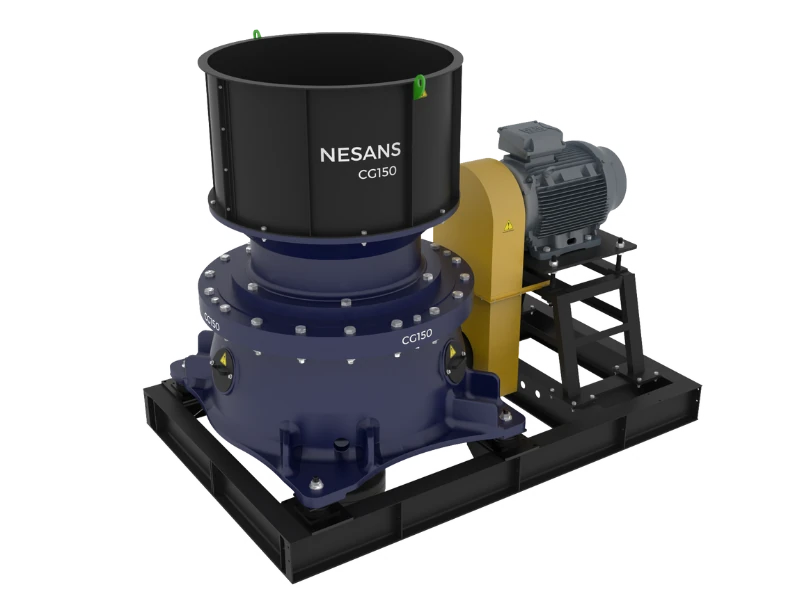





Your cone crusher's bowl liner tells a story. Every groove, ridge, and wear pattern recorded in that manganese steel surface documents months of crushing operations—revealing feed distribution problems, CSS setting errors, tramp metal incidents, and lubrication failures that may have gone unnoticed. Understanding how to read these patterns transforms liner inspection from a routine replacement decision into a powerful diagnostic tool that prevents catastrophic failures and optimizes crushing performance.
Cone crusher bowl liners represent significant expense—₹8-15 lakhs for a standard liner set—and their wear patterns directly impact product quality, throughput, and crusher health. A liner that wears evenly and predictably indicates optimal operation. Irregular wear patterns signal problems requiring immediate attention. The difference between reading these signals correctly and missing them can mean the difference between a controlled liner change and an emergency bearing replacement costing ten times more.
This guide examines every common bowl liner wear pattern, explains the operational or mechanical causes behind each, and provides actionable corrective measures. Whether you're a plant manager reviewing inspection reports or an operator performing daily checks, this knowledge ensures your cone crusher delivers maximum value from every liner set.
Understanding Cone Crusher Geometry
Before interpreting wear patterns, understand the basic geometry of cone crushing:
Crushing Chamber Zones
| Zone | Location | Function | Expected Wear Characteristics |
|---|---|---|---|
| Feed Zone | Upper 1/3 of chamber | Initial material capture and compression | Moderate wear from impact; grooves from feed material |
| Crushing Zone | Middle 1/3 of chamber | Primary size reduction through compression | Heaviest wear; determines liner life |
| Discharge Zone | Lower 1/3 of chamber | Final sizing, product discharge | Smoothing wear; abrasion from fine particles |
| Parallel Zone | Bottom section (in standard cones) | Consistent CSS dimension | Uniform polishing; sets final product size |
Liner Material Properties
| Property | Standard Manganese (14%) | High Manganese (18-22%) | Influence on Wear |
|---|---|---|---|
| Initial Hardness | 200-230 BHN | 180-210 BHN | Softer initially but work-hardens |
| Work-Hardened Surface | 450-500 BHN | 500-550 BHN | Higher final hardness resists abrasion |
| Toughness | High | Very High | Resists cracking from impact |
| Work-Hardening Rate | Moderate | High | Faster formation of hard surface layer |
Normal Wear Patterns
Ideal Wear Profile
A properly operated cone crusher produces predictable, even wear:
- Feed Zone: Light grooving parallel to material flow, no deep gouges
- Crushing Zone: Even wear around full circumference, approximately 60-65% of total wear occurs here
- Discharge Zone: Smooth, polished surface with gradual thickness reduction
- Overall: Liner profile maintains original geometry scaled proportionally thinner
Acceptable Wear Rates
| Material Type | Expected Wear Rate (mm/10,000 tonnes) | Typical Liner Life (tonnes) | Notes |
|---|---|---|---|
| Granite (medium) | 3-5mm | 150,000-250,000 | Well work-hardened surface |
| Basalt (abrasive) | 5-8mm | 100,000-180,000 | Higher silica accelerates wear |
| Limestone (soft) | 2-4mm | 200,000-300,000 | May not fully work-harden |
| River Gravel | 4-6mm | 120,000-200,000 | Variable depending on origin |
| Recycled Concrete | 6-10mm | 80,000-150,000 | Rebar contamination accelerates wear |
Abnormal Wear Patterns and Diagnosis
Pattern 1: Localized Deep Wear (One Side Heavy)
Description: One sector (60-120° arc) shows significantly deeper wear than the rest of the circumference. Difference exceeds 15-20mm between thickest and thinnest points.
Visual Indicators:
- Visible step between worn and less-worn sections
- Bowl liner thickness varies dramatically around circumference
- Mantle shows corresponding pattern
Causes:
| Cause | Probability | How to Verify | Correction |
|---|---|---|---|
| Uncentered feed | Very High (70%) | Observe feed distribution during operation; check chute alignment | Adjust feed chute to center material; install distribution cone |
| Segregated feed | High (20%) | Check if coarse material concentrates on one side | Install rock box; homogenize feed |
| Worn feed distributor | Medium (10%) | Inspect distributor plate/cone | Replace or rebuild distributor |
Cost Impact: Reduces liner life by 30-50%. A liner set costing ₹12 lakhs that should last 200,000 tonnes may fail at 100,000 tonnes. Direct loss: ₹6 lakhs per liner set.
Corrective Action Priority: High—address within one week of identification.
Pattern 2: Cupping/Grooving in Feed Zone
Description: Deep grooves or cup-shaped wear in the upper portion of the bowl liner, often in a spiral or irregular pattern.
Visual Indicators:
- Channels worn into liner surface
- Material may pack into grooves
- Grooves deeper than 15-20mm into liner surface
Causes:
| Cause | Probability | How to Verify | Correction |
|---|---|---|---|
| Oversized feed | Very High (60%) | Measure feed size vs. crusher feed opening specification | Reduce primary crusher CSS; add scalping screen |
| Feed drop height too high | High (25%) | Measure drop from conveyor to crusher opening | Lower feed conveyor or install rock ladder |
| Insufficient feed volume | Medium (15%) | Check if crusher is surge-fed or continuous | Choke feed continuously; add surge bin |
Technical Explanation: Large rocks impacting at high velocity create localized stress exceeding the liner's work-hardened surface layer. Instead of sliding and compressing, material gouges the softer subsurface.
Cost Impact: Accelerates overall wear by 25-40%. Risk of liner cracking increases substantially.
Pattern 3: Smooth/Polished Surface Without Work-Hardening
Description: Liner surface remains soft and polished rather than developing the characteristic work-hardened matte finish. Surface Brinell hardness below 400 BHN.
Visual Indicators:
- Shiny, reflective surface even after thousands of tonnes
- Scratches easily with hardened steel tool
- Wear rate higher than expected for material type
Causes:
| Cause | Probability | How to Verify | Correction |
|---|---|---|---|
| Material too soft | High (40%) | Test rock compressive strength (<100 MPa indicates soft material) | Manganese requires impact to work-harden; consider alternative liner material |
| Feed too fine | High (35%) | Check percentage of material smaller than CSS | Scalp fine material before crusher; open CSS |
| CSS too open | Medium (25%) | Measure actual CSS; compare to product size | Tighten CSS; increase crushing chamber loading |
Technical Explanation: Manganese steel work-hardens through repeated high-stress compression. Soft material or fine particles don't generate sufficient stress to trigger work-hardening. The liner remains at its initial soft hardness (~200 BHN) and wears rapidly.
Solution Options:
- Switch to alloy steel liners if material is consistently soft
- Blend harder material into feed to trigger work-hardening
- Accept higher wear rates as cost of processing soft material
Pattern 4: Cracking (Thermal or Impact)
Description: Visible cracks in liner surface, ranging from surface crazing to deep through-thickness cracks.
Types and Indicators:
| Crack Type | Appearance | Location | Cause | Severity |
|---|---|---|---|---|
| Thermal Crazing | Network of fine surface cracks, "alligator skin" | Throughout liner | Excessive heat from friction | Monitor—early stage |
| Impact Cracks | Radial cracks originating from impact point | Feed zone typically | Oversized feed, tramp metal | High—failure imminent |
| Fatigue Cracks | Linear cracks following stress lines | Transitions between zones | Excessive operating hours | Plan replacement |
| Spalling | Chunks breaking away | Variable | Advanced cracking; internal stress | Critical—replace immediately |
Thermal Cracking Causes:
- Operating with CSS too tight (excessive pressure and heat)
- Material packing in crushing zone (increased friction)
- Continuous high-load operation without cooling breaks
Impact Cracking Causes:
- Tramp metal (bolts, loader teeth, excavator bucket teeth)
- Oversized feed exceeding crusher capacity
- Insufficient choke feeding (single large rocks instead of bed compression)
Corrective Actions:
| Crack Type | Immediate Action | Preventive Measure |
|---|---|---|
| Thermal Crazing | Open CSS 5-10mm; reduce feed rate temporarily | Install temperature monitoring; avoid tight CSS |
| Impact Cracks | Stop and inspect; plan liner change if deep | Install metal detector; control feed size |
| Fatigue Cracks | Schedule liner replacement | Track operating hours; replace before crack initiation |
| Spalling | Immediate shutdown; remove spalled material from chamber | Replace liners before spalling stage |
Pattern 5: Ring Groove (Step Wear)
Description: Distinct horizontal ring or step worn into liner at a specific height, creating a shelf in the crushing profile.
Visual Indicators:
- Sharp-edged horizontal groove around full circumference
- Groove depth 10-30mm into liner surface
- Material may hang up above groove
Causes:
| Cause | Mechanism | Verification | Correction |
|---|---|---|---|
| Constant CSS operation | Same material size always processed at same point | Check if CSS never adjusted | Vary CSS periodically to distribute wear |
| Narrow feed gradation | All feed material same size | Perform feed size analysis | Vary feed sizes or blend materials |
| Excessive fines in feed | Fine material erodes specific zone | Check % passing CSS in feed | Scalp fines before crusher |
Technical Explanation: When CSS remains constant and feed gradation is narrow, the same crushing action occurs at the same point continuously. The corresponding liner surface experiences concentrated wear while adjacent areas see minimal action.
Recommended Practice: Adjust CSS by 5-10mm every 50,000-100,000 tonnes to distribute wear across the full liner profile.
Pattern 6: Flaring at Discharge (Bell-Mouth Wear)
Description: Excessive wear at the bottom of the bowl liner, creating a flared or bell-mouth shape that significantly increases the CSS.
Visual Indicators:
- Bottom edge of liner much thinner than middle section
- CSS measurement at bottom significantly larger than at top of parallel zone
- Flaky product shape; oversized material in product
Causes:
| Cause | Probability | How to Verify | Correction |
|---|---|---|---|
| CSS too tight | Very High (50%) | Measure CSS at multiple heights | Open CSS; excessive packing accelerates discharge zone wear |
| Excessive fines in feed | High (30%) | Feed analysis showing >30% passing CSS | Scalp fines or accept increased wear |
| High-abrasion material | Medium (20%) | Material silica content >65% | Accept higher wear rate; adjust liner selection |
Impact: Bell-mouth wear reduces crushing efficiency and produces inconsistent product sizes. The crusher's effective CSS increases despite adjusted CSS settings, resulting in coarser product than intended.
Pattern 7: Mantle-Bowl Mismatch
Description: Bowl liner and mantle show asymmetric wear patterns that don't correspond—one liner wears faster or differently than the other.
Visual Indicators:
- Bowl liner worn 60% while mantle at 40% (or vice versa)
- Wear patterns don't mirror between liner and mantle
- One component requires replacement while other has significant life remaining
Causes:
| Cause | Mechanism | Correction |
|---|---|---|
| Mismatched liner materials | Different hardness/wear rates between bowl and mantle | Ensure liner set from same supplier, matched specifications |
| Incorrect liner combination | Fine chamber bowl with coarse mantle (or reverse) | Match chamber type: Fine/Fine, Medium/Medium, Coarse/Coarse |
| Operating issues | Specific causes favoring one liner's wear | Diagnose using other wear patterns |
Best Practice: Always replace bowl liner and mantle as a matched set from the same manufacturer. Mixed combinations create inefficient crushing and unpredictable wear.
Wear Measurement Techniques
Manual Measurement Procedure
| Measurement Point | Method | Frequency | Record |
|---|---|---|---|
| CSS (Closed Side Setting) | Lead balls or CSS gauge at 3-4 points around circumference | Weekly | Average and range |
| Liner Thickness | Ultrasonic thickness gauge at 8-12 points | Monthly | Thickness map showing wear pattern |
| Profile Shape | Template gauge comparing to new liner profile | Monthly | Profile trace or photo comparison |
| Crack Inspection | Visual + magnetic particle inspection if cracks suspected | Weekly visual; MPI quarterly | Crack location, length, depth |
Ultrasonic Measurement Points
Standard 8-point measurement pattern:
- Circumference: 0°, 90°, 180°, 270° (four quadrants)
- Height: Top 1/3, Middle, Bottom 1/3
- Additional: Any visible wear concentration areas
Wear Rate Calculation
Wear Rate (mm/10,000 tonnes) = (Initial Thickness - Current Thickness) ÷ (Tonnes Processed ÷ 10,000)

Example:
- Initial Thickness: 125mm
- Current Thickness: 110mm
- Tonnes Processed: 50,000

Wear Rate = (125 - 110) ÷ (50,000 ÷ 10,000) = 15 ÷ 5 = 3mm/10,000 tonnes

Projected Life = (Initial - Minimum Thickness) ÷ Wear Rate × 10,000 tonnes
            = (125 - 40) ÷ 3 × 10,000 = 283,333 tonnes
Minimum Liner Thickness Guidelines
| Liner Type | Minimum Thickness Before Replacement | Risk if Exceeded |
|---|---|---|
| Bowl Liner | 30-40mm remaining | Cracking, bolt head exposure, chamber collapse |
| Mantle | 30-40mm remaining | Mantle spinning, head damage, socket failure |
| Feed Cone | 15-20mm remaining | Feed distribution issues |
Optimizing Liner Life
Operational Best Practices
| Practice | Impact on Liner Life | Implementation |
|---|---|---|
| Choke Feed Continuously | +20-30% | Maintain full chamber; avoid surge feeding |
| Centered Feed Distribution | +30-50% | Properly aligned feed chute; working distributor |
| Control Feed Size | +15-25% | Scalp oversize; remove fines when excessive |
| Rotate CSS Setting | +10-15% | Adjust CSS by 5-10mm every 50,000 tonnes |
| Remove Tramp Metal | Prevents catastrophic failure | Magnet over feed belt; metal detector |
| Maintain Lubrication | Prevents bearing-related liner damage | Proper oil level, temperature monitoring |
Feed Material Optimization
| Parameter | Optimal Range | Why |
|---|---|---|
| Maximum Feed Size | 80-85% of feed opening | Prevents impact damage |
| Fines in Feed (<CSS) | <15-20% | Excessive fines don't crush; erode liners |
| Moisture | <5% | Wet material packs; increases friction |
| Clay Content | <3% | Clay packs and causes slippage |
Liner Selection for Application
| Material Characteristic | Recommended Liner | Chamber Profile |
|---|---|---|
| Hard, abrasive (granite, basalt) | High-manganese (18-22%) | Standard or fine |
| Medium hardness | Standard manganese (14%) | Medium |
| Soft (limestone, riverbed) | Alloy steel or standard manganese | Coarse (faster throughput) |
| Mixed/variable | Standard manganese with work-hardening tolerance | Medium |
Inspection Scheduling
Recommended Inspection Frequency
| Inspection Type | Frequency | Personnel | Duration |
|---|---|---|---|
| Visual Check (CSS, cracks) | Daily | Operator | 10 minutes |
| CSS Measurement | Weekly | Operator/Supervisor | 30 minutes |
| Thickness Measurement | Monthly | Maintenance | 2 hours |
| Full Profile Analysis | Quarterly | Engineer | 4 hours |
| Supplier Technical Review | Annually or at liner change | Supplier representative | Half day |
Documentation Requirements
Maintain records for each liner set:
- Installation date and initial measurements
- Weekly CSS readings with tonnage processed
- Monthly thickness measurements (8-12 points)
- Any abnormal observations or incidents (tramp metal, packing, etc.)
- Final measurements at removal
- Photographs at installation and removal
- Total tonnes processed and operating hours
Case Studies: Wear Pattern Analysis
Case 1: Granite Quarry with 40% Liner Life Reduction
Situation: Bowl liner wearing out at 120,000 tonnes instead of expected 200,000 tonnes. Wear concentrated on one side.
Analysis:
- Thickness measurements showed 25mm difference between quadrants
- Feed observation revealed material consistently landing off-center
- Feed chute position had shifted after conveyor head pulley replacement
Solution:
- Realigned feed chute to center material
- Installed distribution cone above crusher
- Next liner set achieved 210,000 tonnes—75% improvement
Cost Impact: Previous pattern cost ₹15 lakhs/year extra in liner expense. Fix paid for itself in 3 months.
Case 2: Basalt Operation with Thermal Cracking
Situation: Bowl liners developing surface cracks at 80,000 tonnes. Two consecutive liner sets failed prematurely.
Analysis:
- Operating CSS measured at 16mm (spec minimum was 20mm)
- Operators were tightening CSS to maximize fines production
- Oil temperature running at upper limit (78°C vs. 65°C normal)
Solution:
- Established minimum CSS limit of 22mm
- Installed oil cooler upgrade
- Retrained operators on proper CSS management
- Cracking eliminated; liner life restored to 180,000 tonnes
Case 3: Limestone Operation with No Work-Hardening
Situation: Manganese liners wearing at 8mm/10,000 tonnes instead of expected 3mm. Surface remained soft and shiny.
Analysis:
- Limestone compressive strength only 80 MPa (vs. 150+ MPa for granite)
- Surface hardness testing showed only 280 BHN (should be 450+)
- Material too soft to work-harden manganese effectively
Solution:
- Switched to alloy steel liners (naturally hard, no work-hardening required)
- Cost per liner set increased 20%, but life improved 150%
- Net cost per tonne reduced by 35%
Conclusion
Bowl liner wear patterns are diagnostic tools revealing operational issues, feed problems, and mechanical conditions that might otherwise remain hidden until causing major failures. Every irregular wear pattern has causes that can be identified and corrected—there's no such thing as "just abnormal wear."
The investment in systematic liner inspection pays returns far exceeding the time required. A single prevented catastrophic failure avoids weeks of downtime and lakhs in bearing or frame repairs. Optimizing wear patterns extends liner life by 30-50%, directly reducing operating costs.
Develop the habit of reading liner stories: the grooves, steps, cracks, and wear patterns are written records of your operation's history. Learn to interpret them, and you'll anticipate problems weeks before they become emergencies. That predictive capability distinguishes professional operations from those perpetually reacting to unexpected failures.
Your bowl liner is talking. Are you listening?
